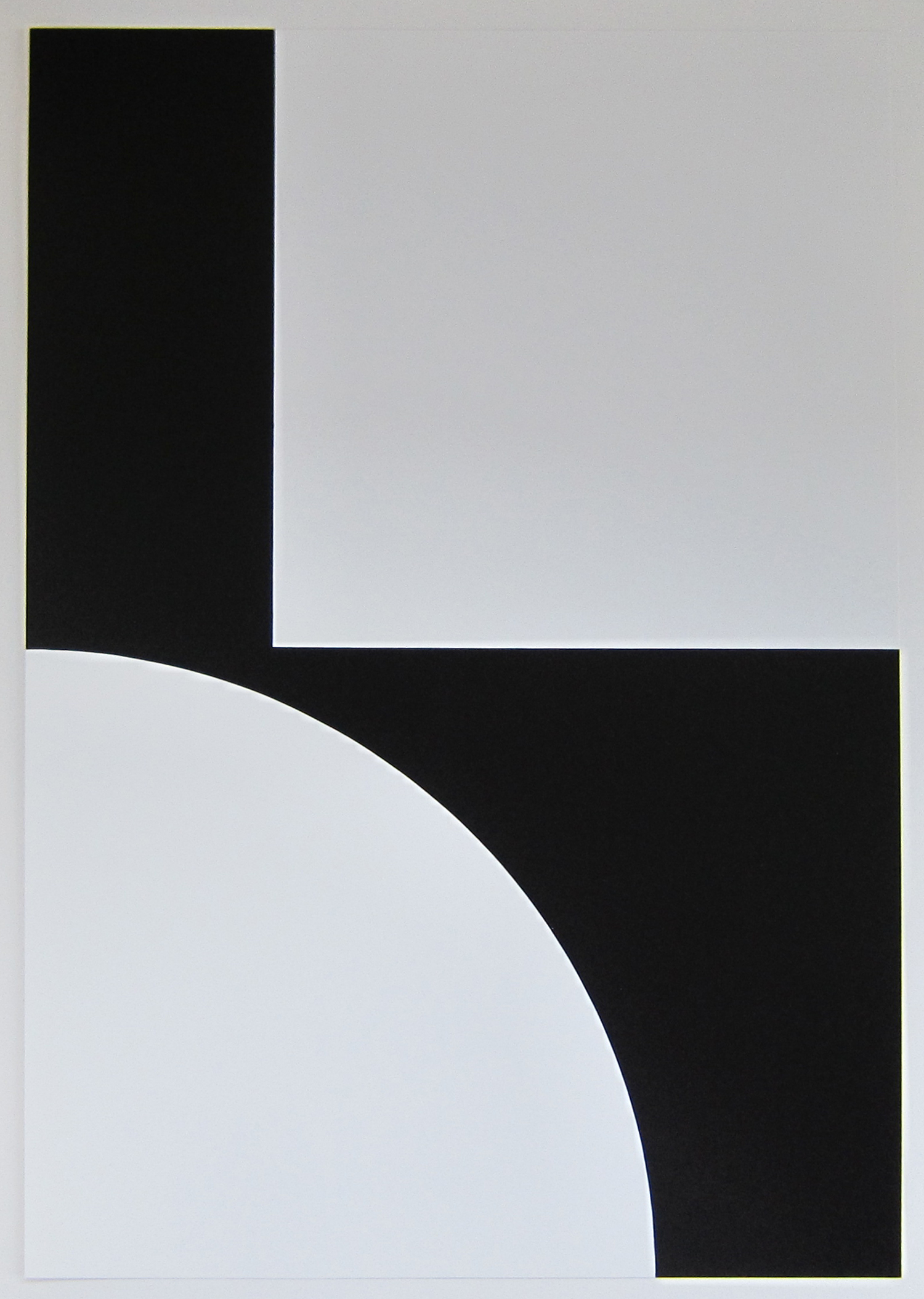
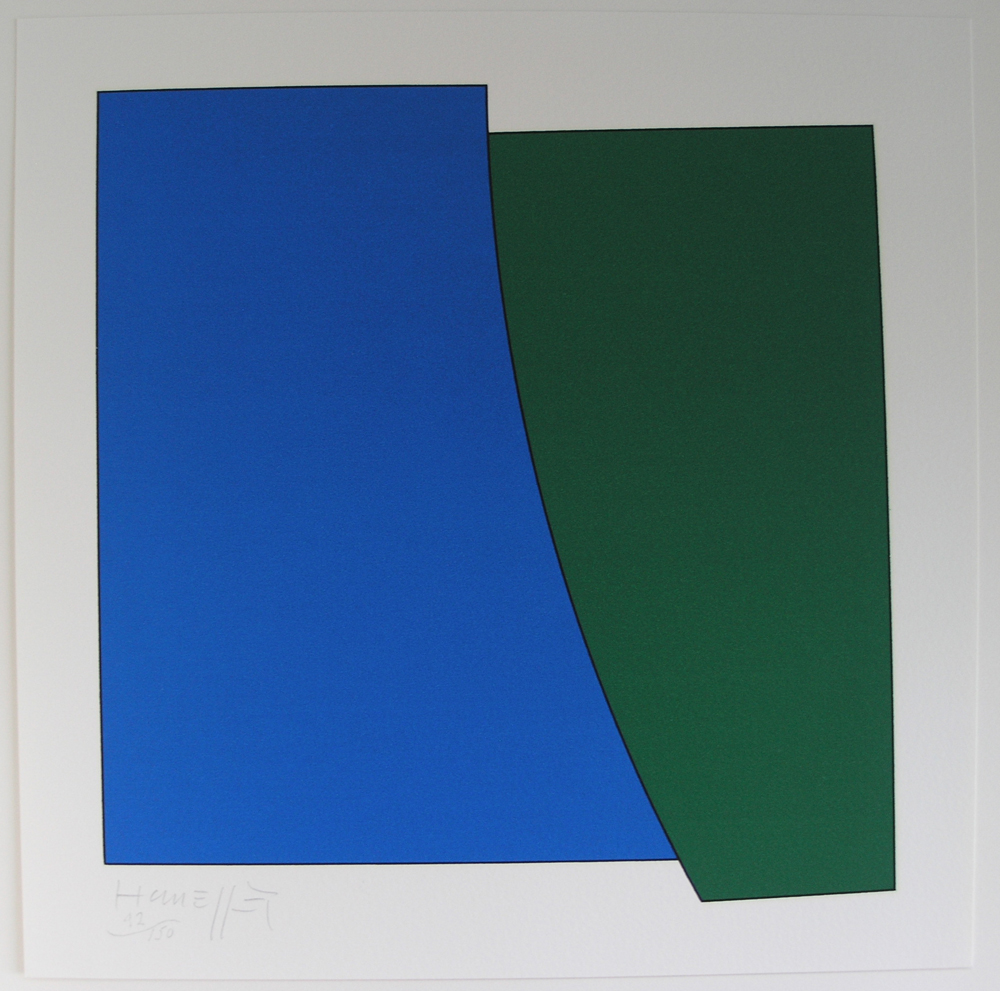
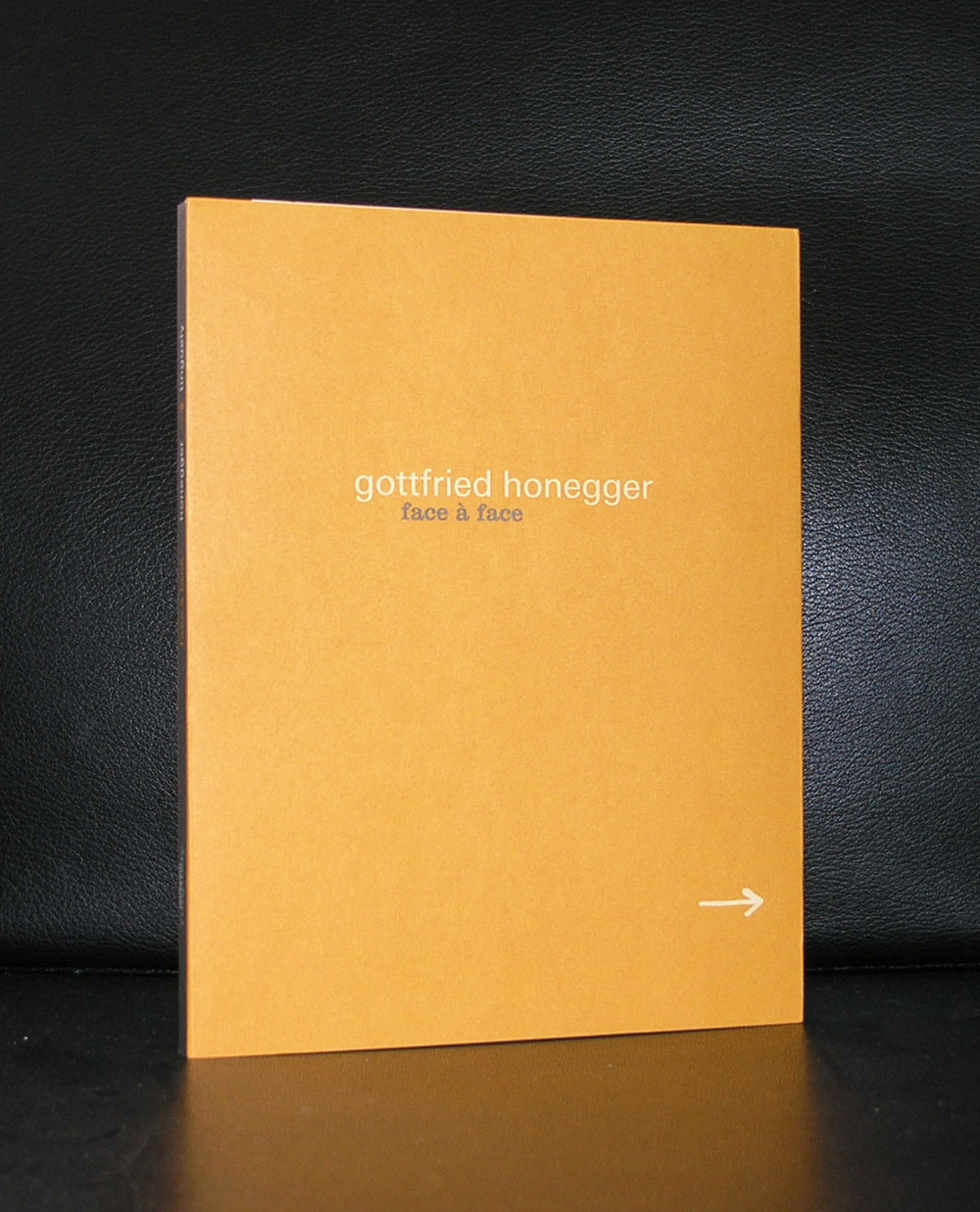
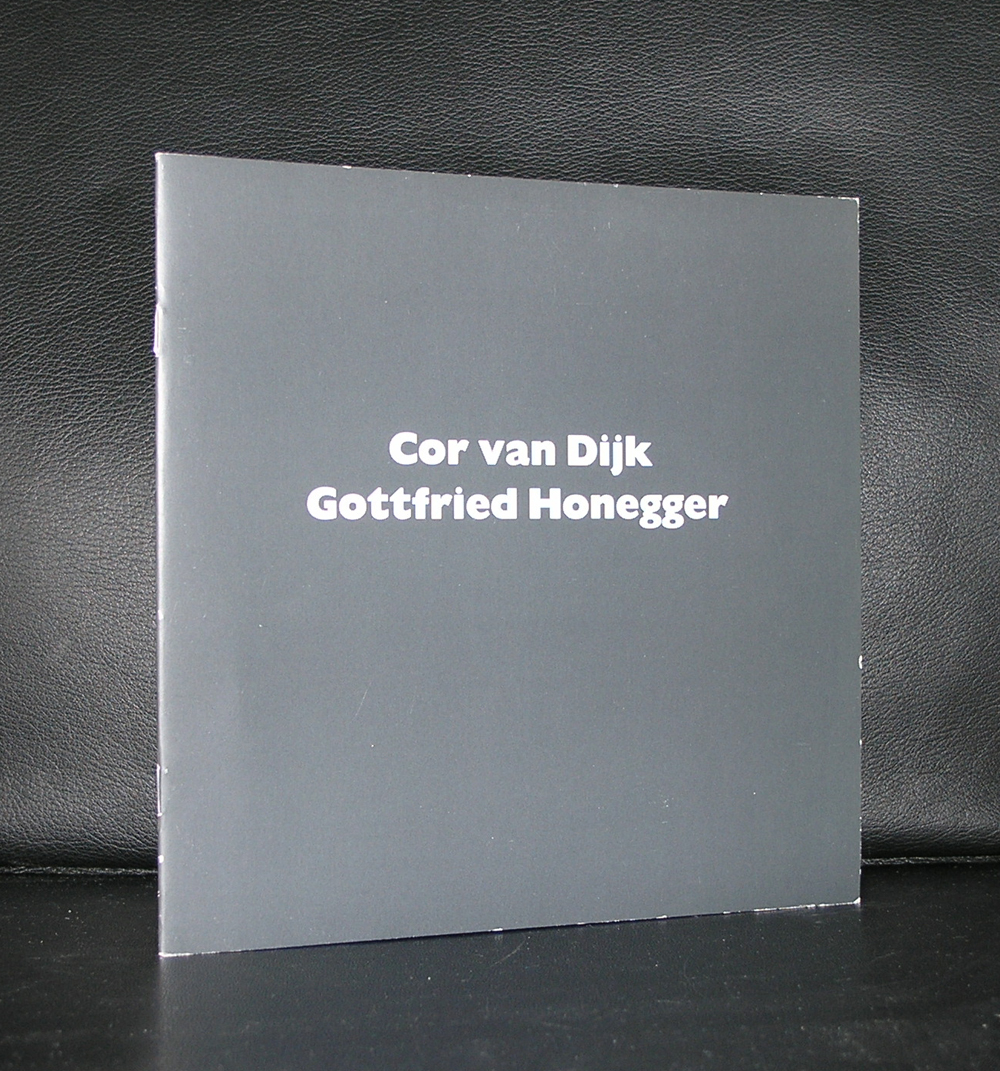
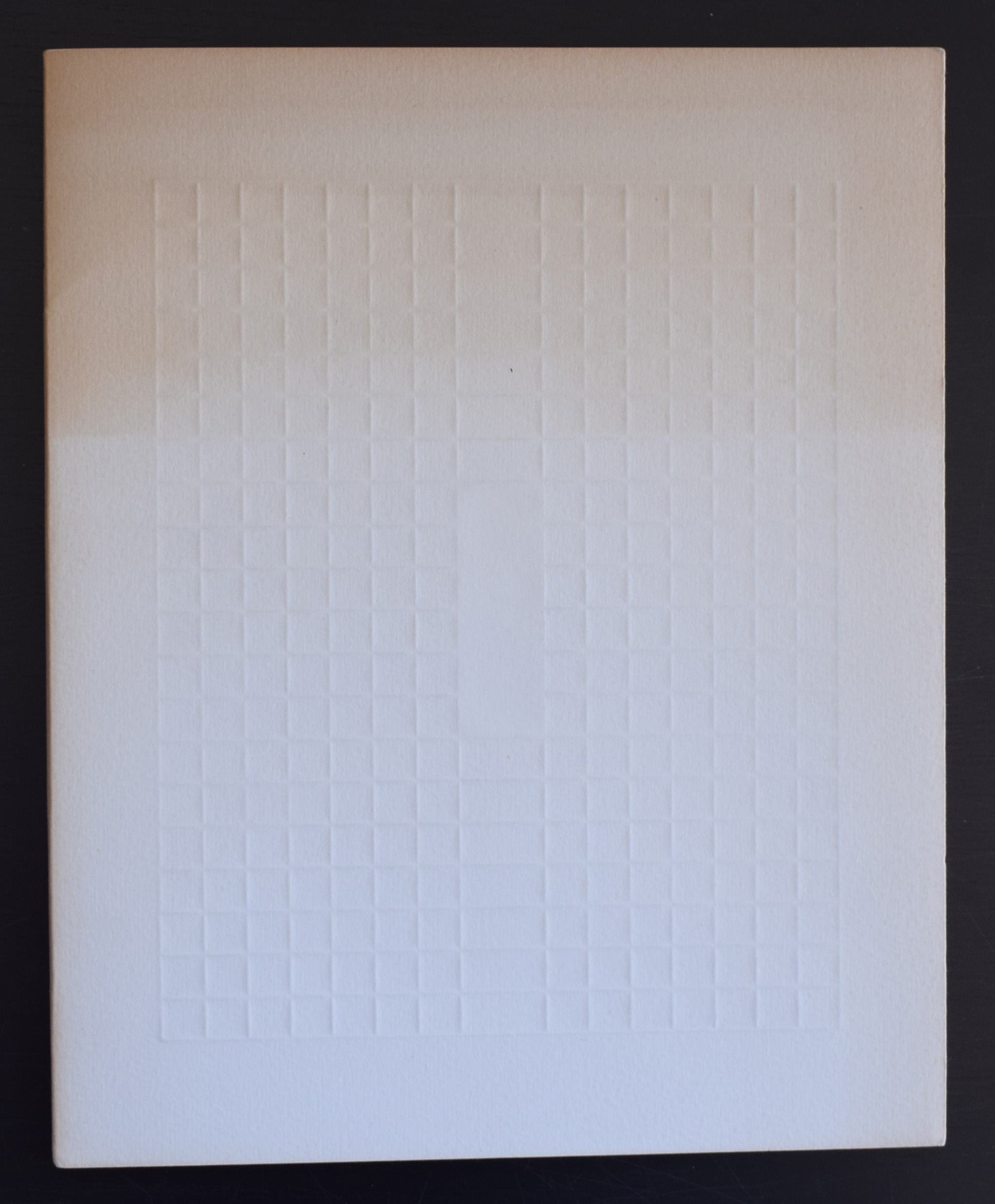
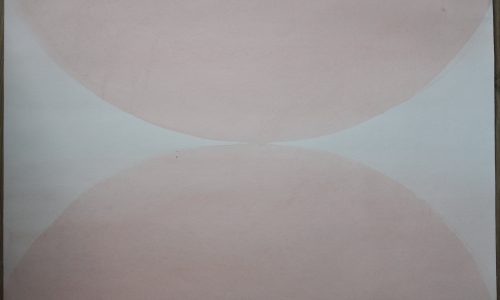
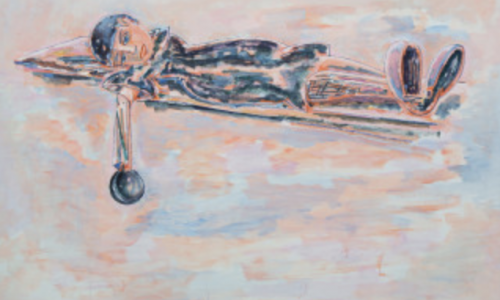
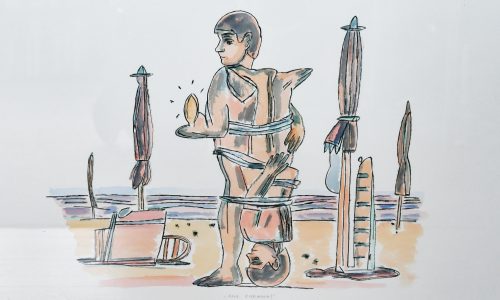
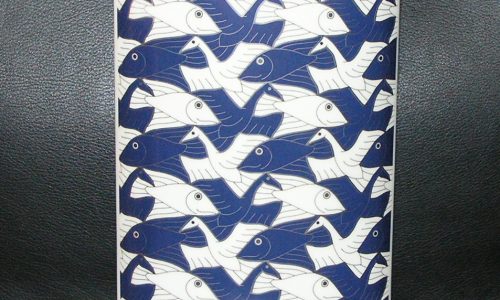
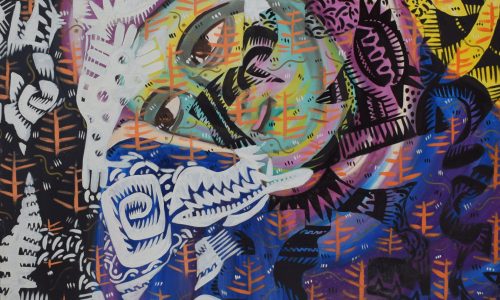
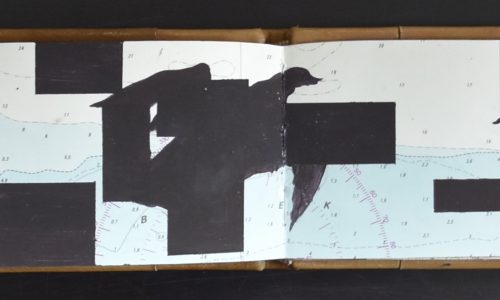
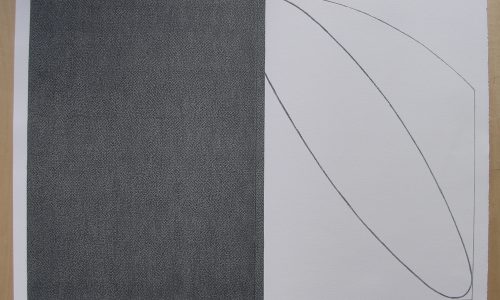
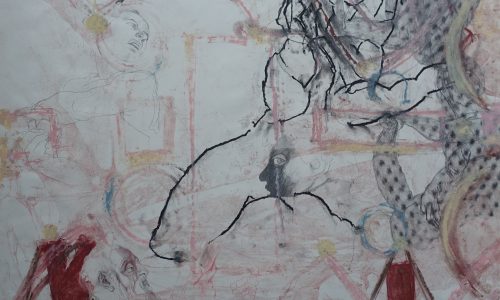
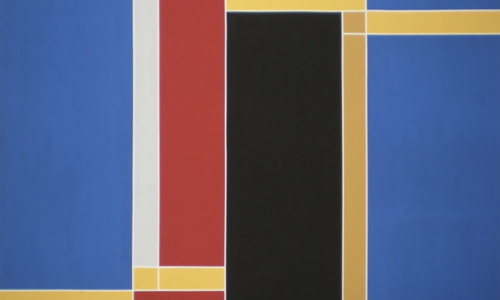
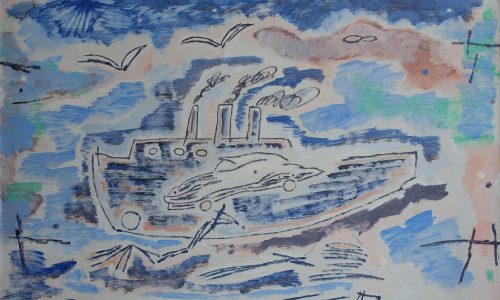
Nearly 100 years , Gottfried Honegger died at the age of 98 in 2016 and left us a beautiful ouevre of Geometric and constructivist art.
was a Swiss artist and graphic designer. He was married to the Swiss illustrator Warja Lavater. He studied shop-window display at the Zurich Kunstgewerbeschule and taught there from 1948. His early work was commercial graphic design.
From 1955-1958 he was art director at Geigy. He lived in New York City between 1958 and 1960, and held his first exhibition there. In 1961 he moved to Paris and concentrated on painting, which concentrated on exacting explorations of circles and squares,[4] and (from 1968), sculpture.
OLYMPUS DIGITAL CAMERA
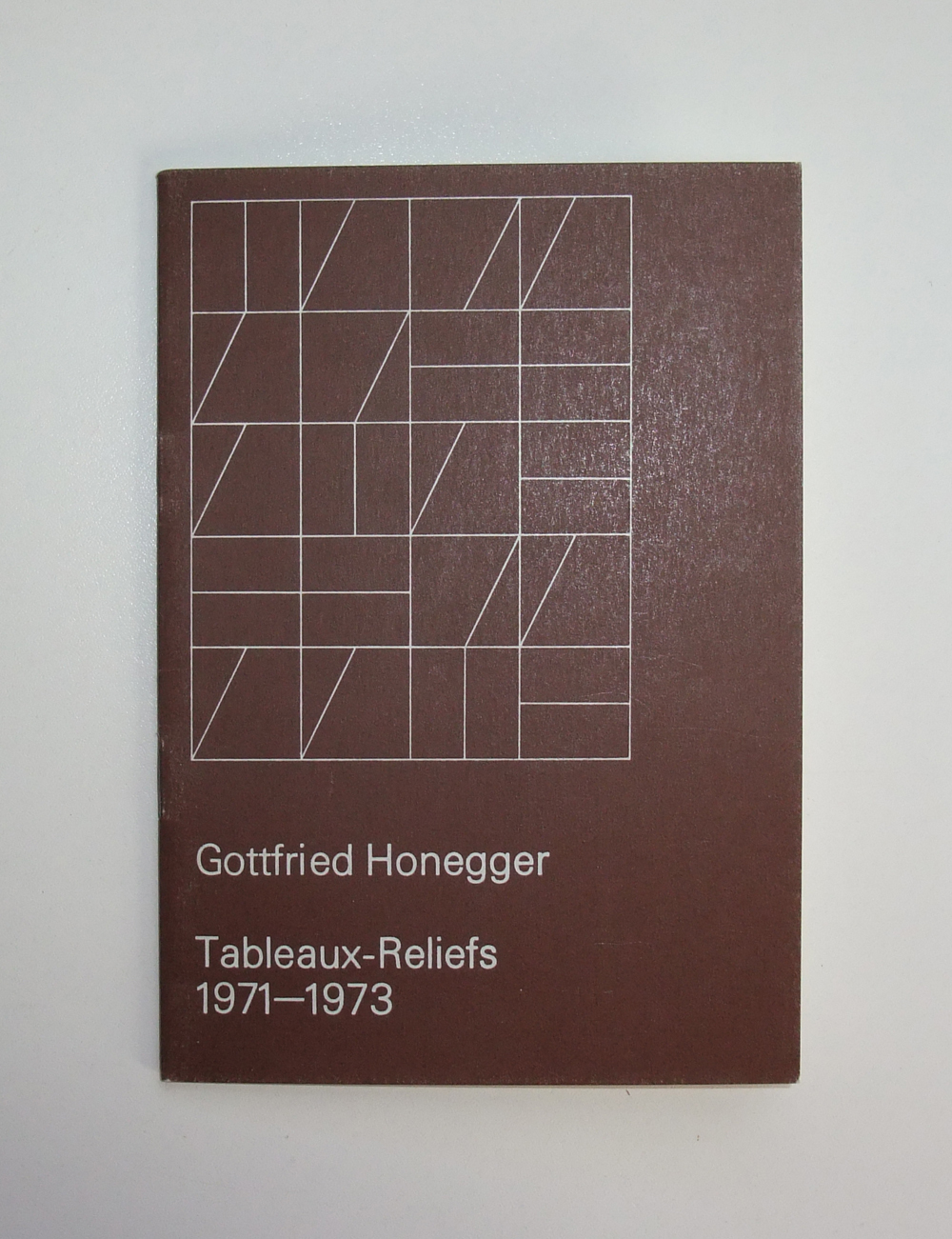
Honegger also spent time in Dallas, Texas as the artist in residence at the University of Dallas. Honegger died at his home in Zürich, Switzerland from a short-illness on 17 January 2016, aged 98. The first time i heard of this artist when i acquired a beautiful series of books which included 2 special prints by Honegger. The first artist i thought of was Ellsworth Kelly, but no this was for me an unknown Swiss artist who had the same quality as Kelly only only a much smaller scale. These works are time less and deserve to be collected by all great museum in the Modern Art world, but until now only in a few museums in Switzerland and Germany i encountered these works. It was easier for me to find some great publications on this artist which are now available at www.ftn-books.com
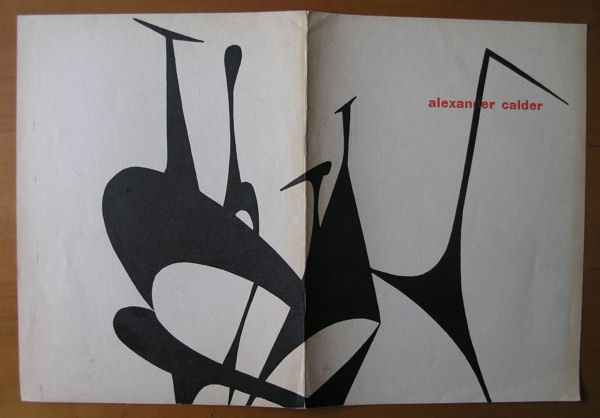
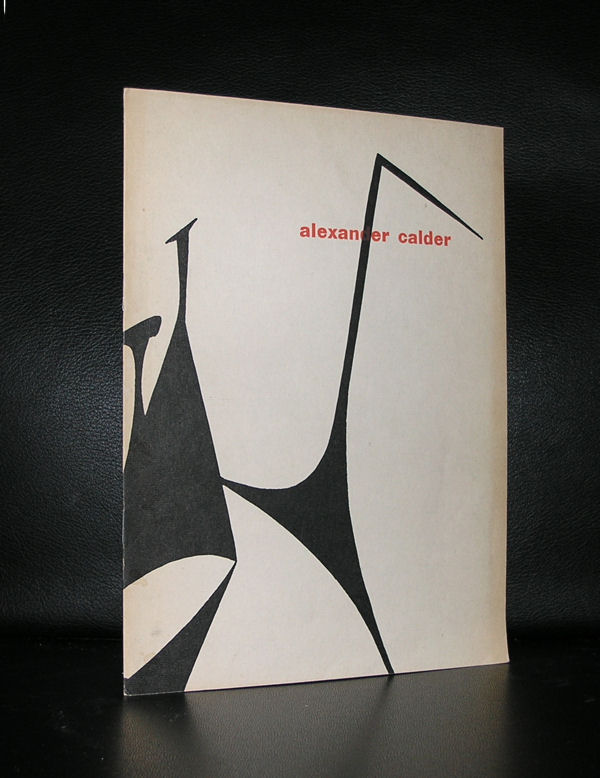
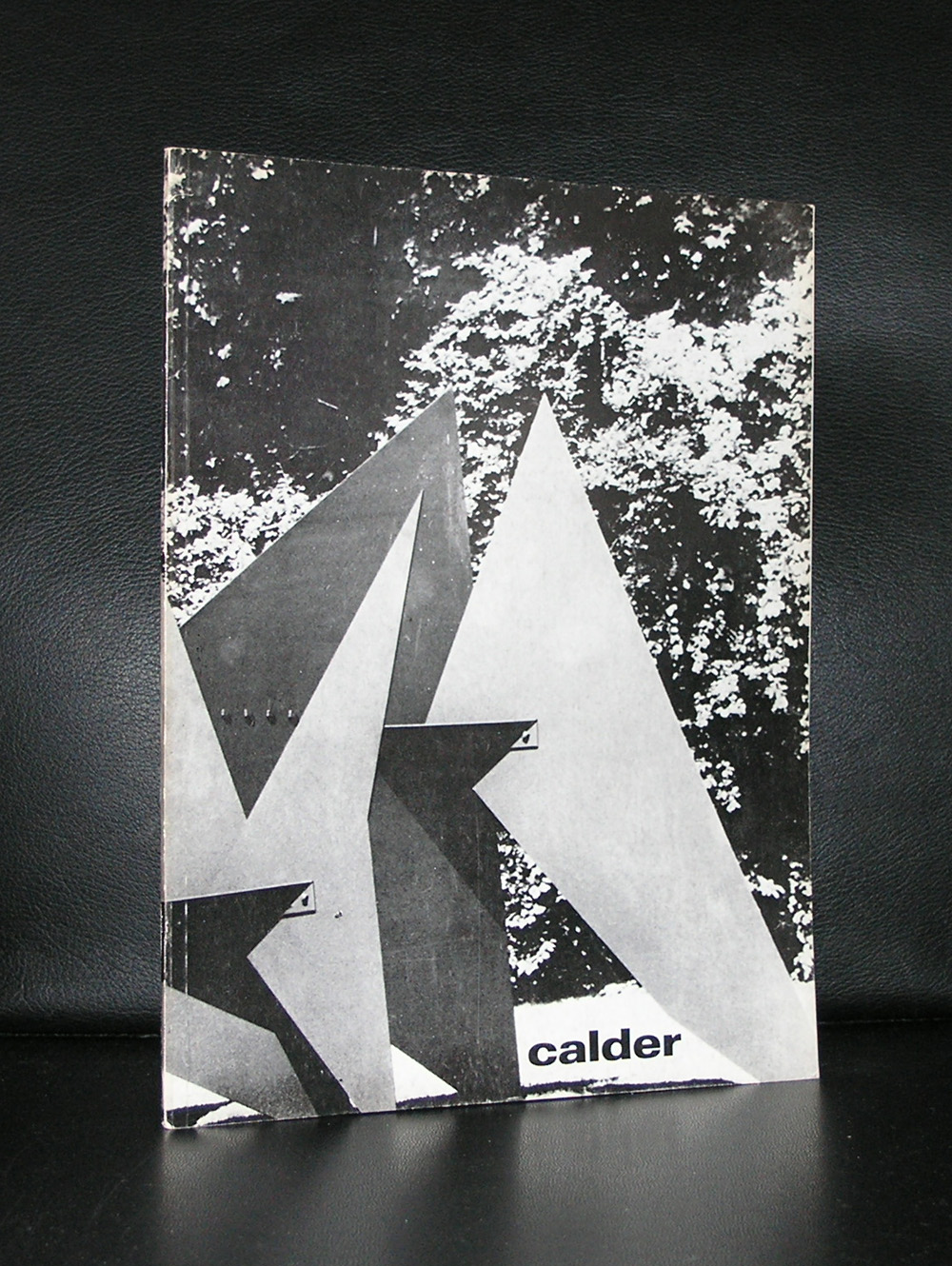
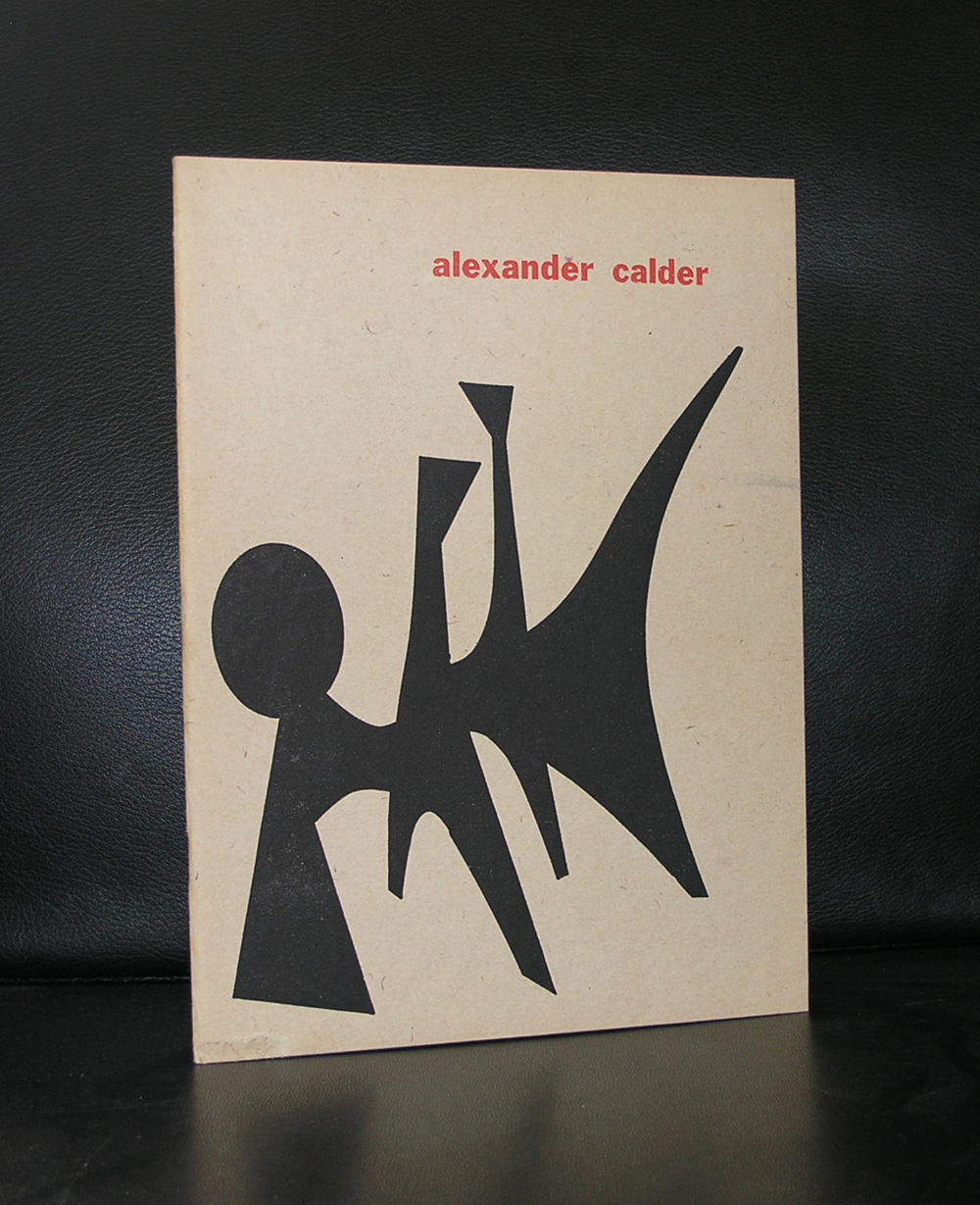
There are 3 Calder catalogues published by the Stedelijk Museum ( 1947,1959 and 1969). 2 of them are available through www.ftn-books.com. The first 2 were designed by Willem Sandberg and the last one by Wim Crouwel. Many colelctors like the 1959 catalogue , this because of the bald design and great prints on the cover, but for me the 1949 is the best, much more subtle and a catalogue that shows the design path Sandberg is going to take. Choice of paper, typography and illustrations make this the perfect early Sandberg publication.
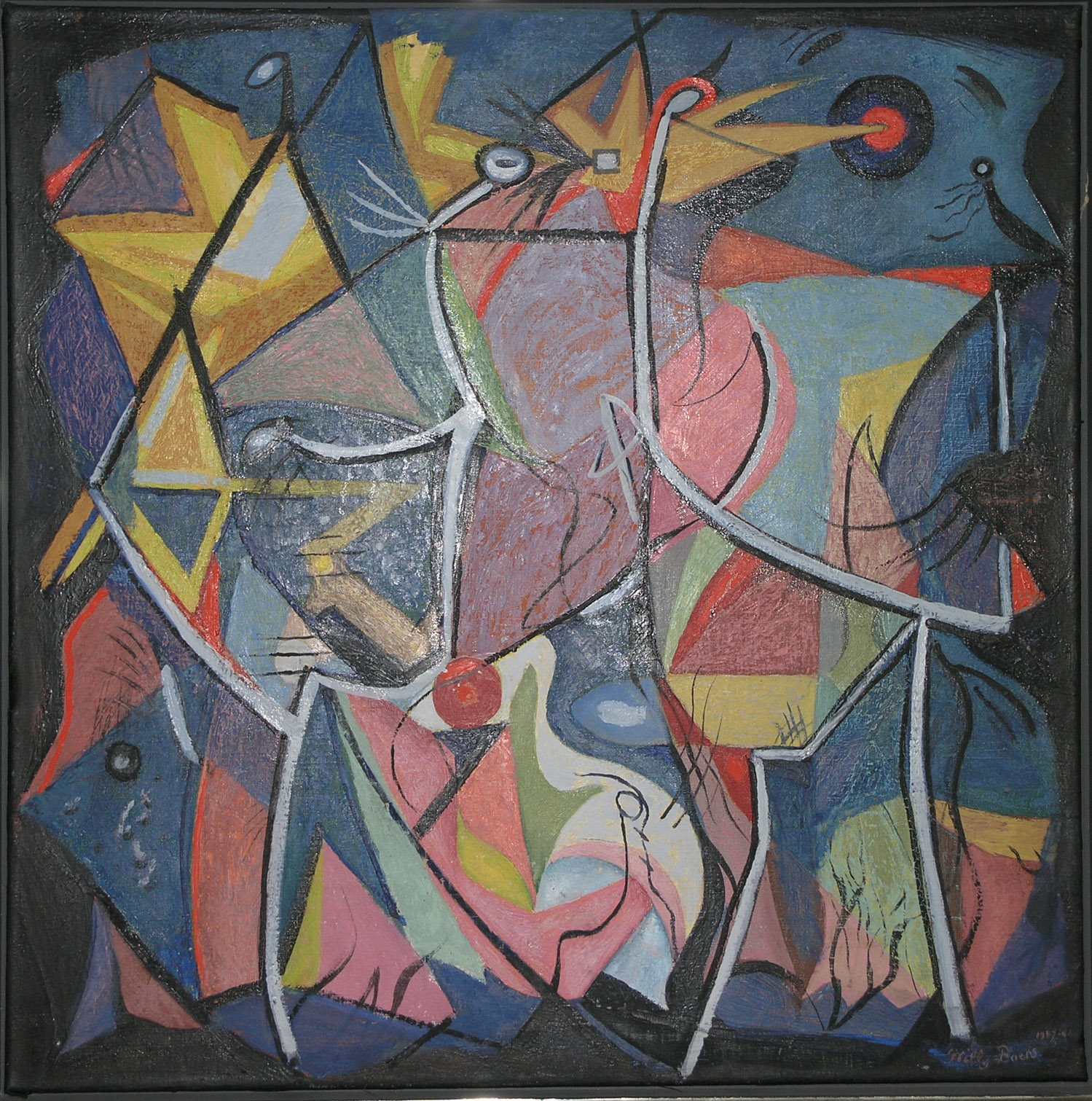
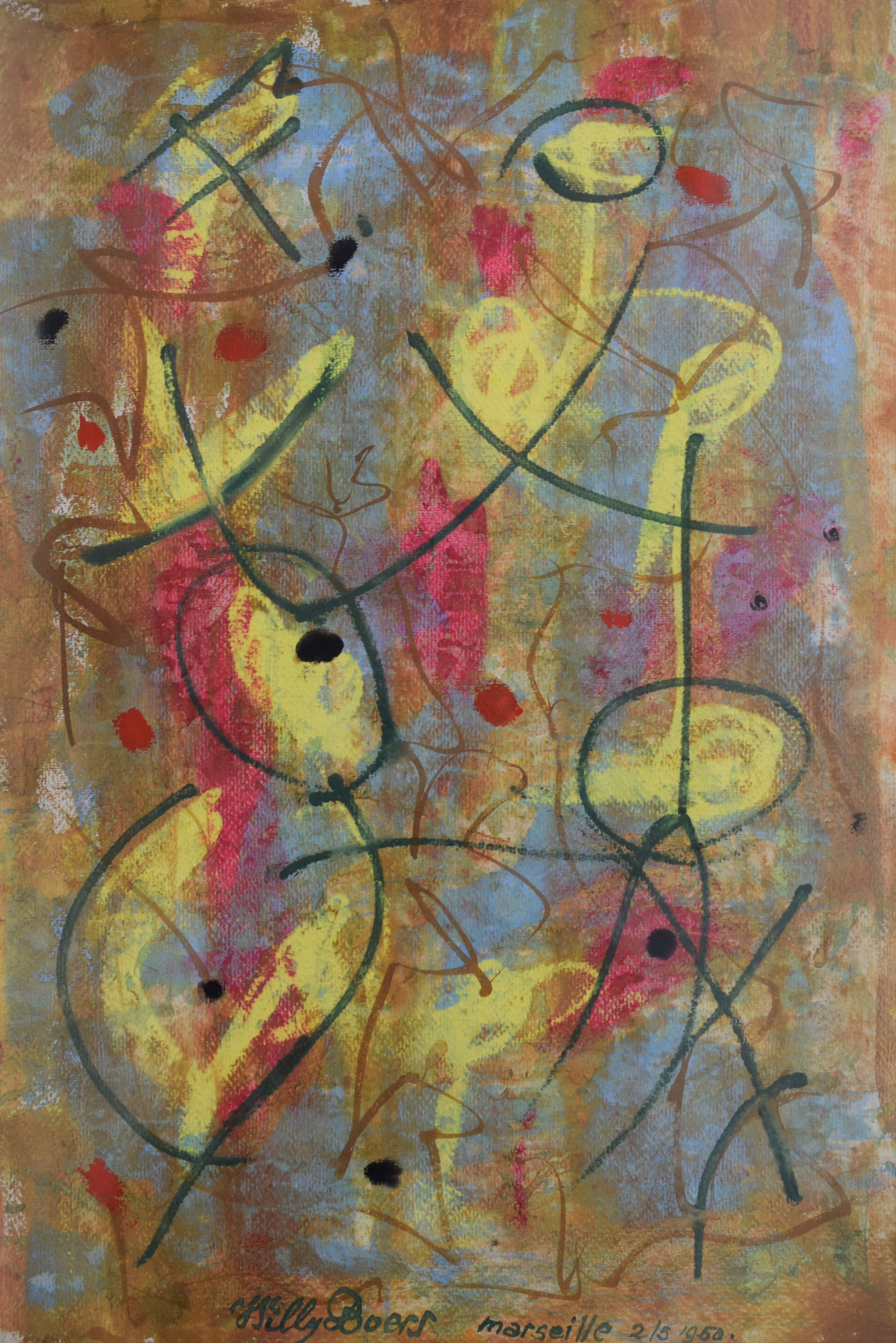
Willy Boers, Dutch art ” insiders ” will know the name and the works he stands for. But for those less familiar with the artist Willy Boers here is a short biography. Willy Boers developed his art from realistic scenes into abstract, even hard edge art over a period of some 40 years. He stood at the cradle of the first dutch modern abstract expressionist paintings. Probably influenced by Miro and Picasso he developed his art into something very typical and recognizable as a Willy Boers painting.
OLYMPUS DIGITAL CAMERA
When i first read the catalogue EEN NIEUWE SYNTHESE ( available at www.ftn-books.com) , there were 2 artist which immediately caught my eye. There was of course Willem Hussem and ….Willy Boers.
Boers was far less familiar, because i already had seen some Hussem paintings at gallery Nouvelles Images, but it was not until 10 years ago that i finally had a chance to admire some paintings by Boers “live” . It was at the gallery of Henk Klasema who had bought the remainder of the Boers studio and was selling these Willy Boers paintings. Because he had all periods available i could discover his development into hard edge abstract art, but was mostly convinced of the art he made in the period between 1949 and 1955.
Now is finally the time that Willy Boers is being recognized for the great dutch artist he was . A true pioneer in dutch Modern Art and sometimes his works come now available at auction. Keep this in mind… Boers is still affordable, but it will not last 10 years before his art will be picked up by many more art dealers and collectors, making it far less affordable than these works are right now.
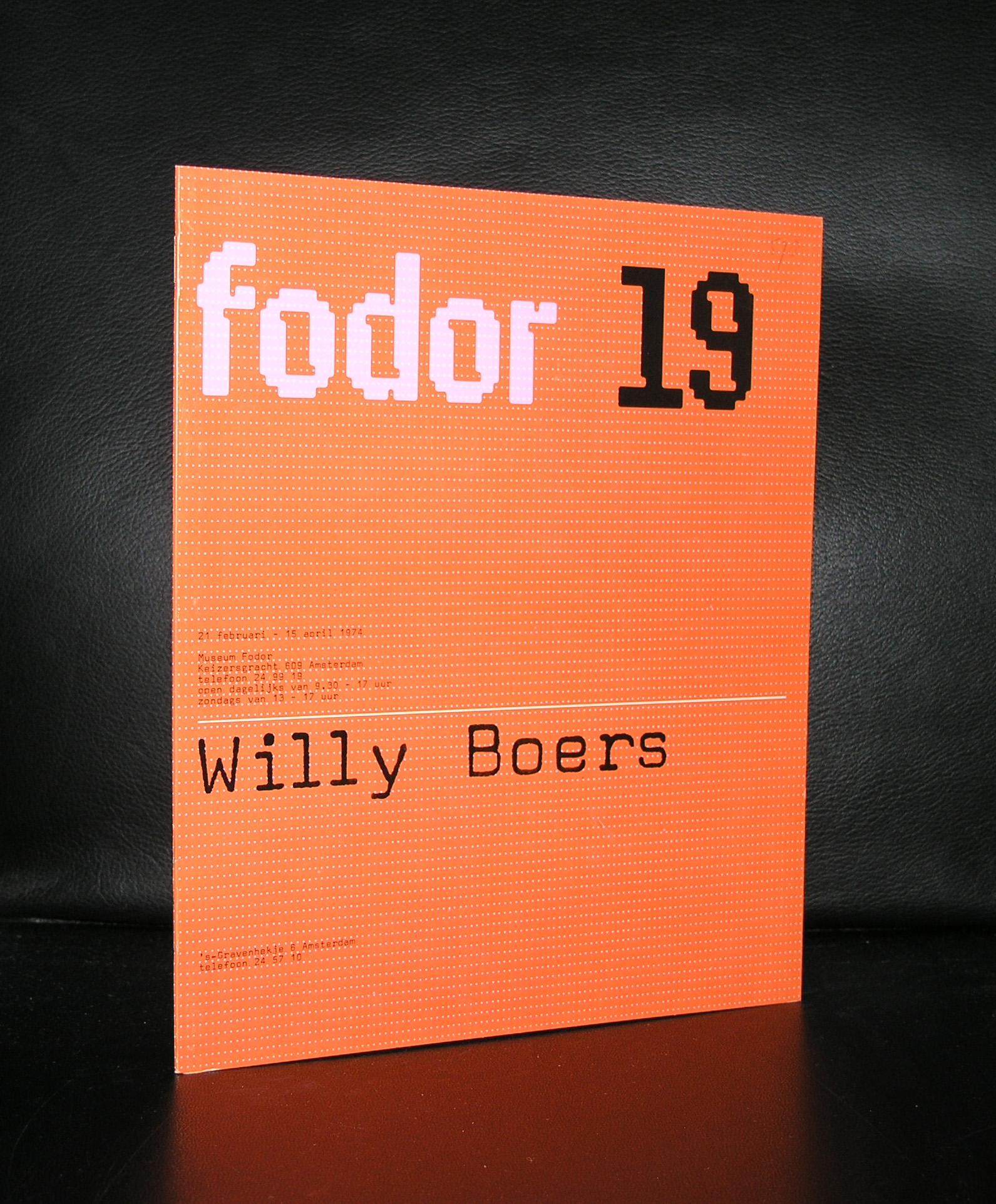
There are some nice Boers publications available at www.ftn-books.com including the which was made for his Stedelijk Museum exhibition.
Without knowing , many people have contributed to the popularity of this artist and his works nowadays. He was one of the key artist who first started making his works available through dutch “Artotheeks” and art libraries. This started in the late Sixties and continued until the mid eighties. Art Libraries were fond of his works , because they were very colorful, abstract and even a little mystic, making them attractive for many of their members. These works are now recognized as typical Sixties/Seventies works of abstract art and belong to the best and most appreciated art works from these decades in the Netherlands. They are the colorful paintings Willem Hussem would have made when he still had lived . They are far less affordable than a decade ago, but still very affordable and promiss a steep increase in value for the decades to come. Start searching in art databases and visit some galeries who have a nice selection of these works available and start here ….. www.ftn-books.com ( Ftn art ) has a beautiful painting for sale and for some reading search for Leewens at www.ftn-books.com
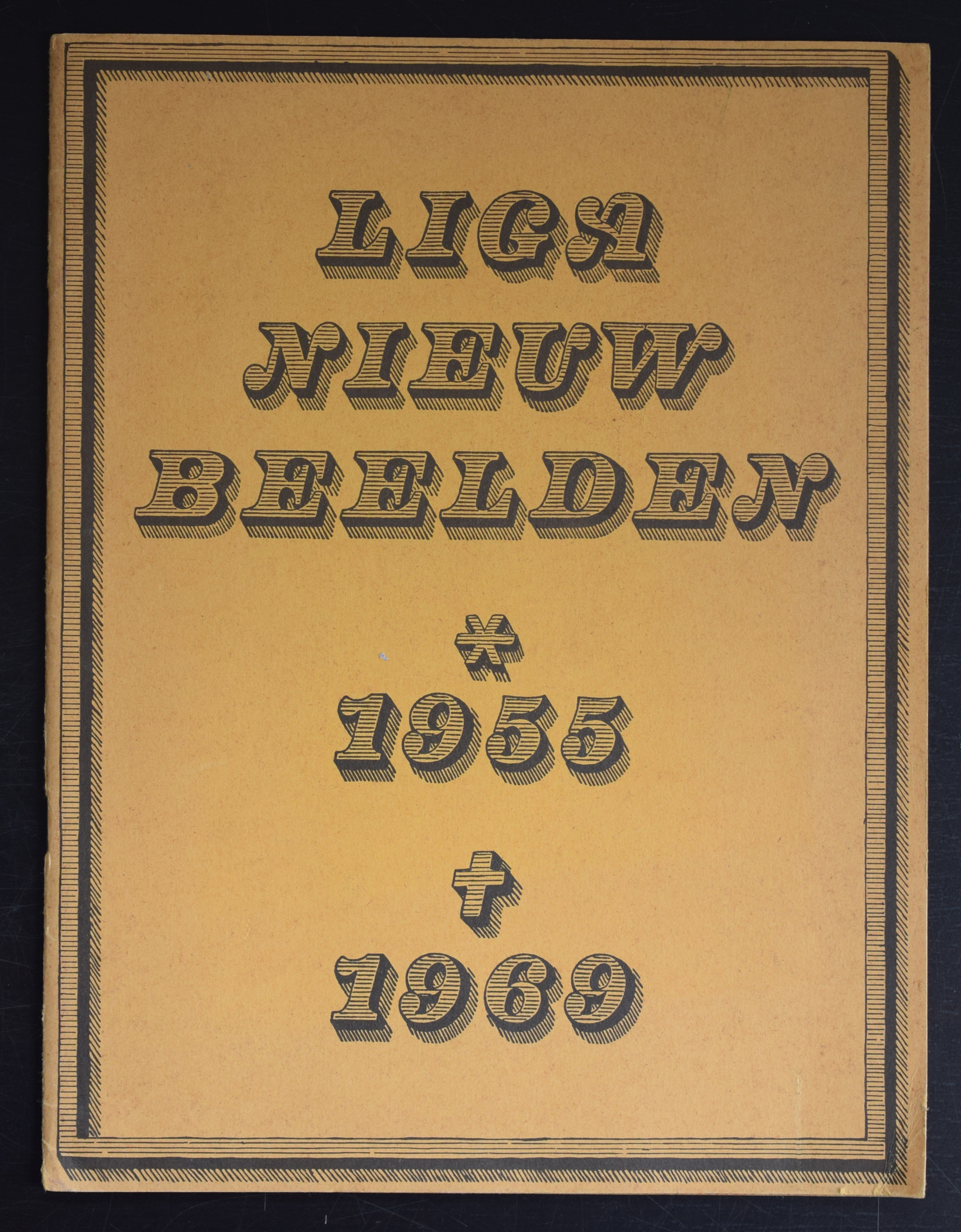
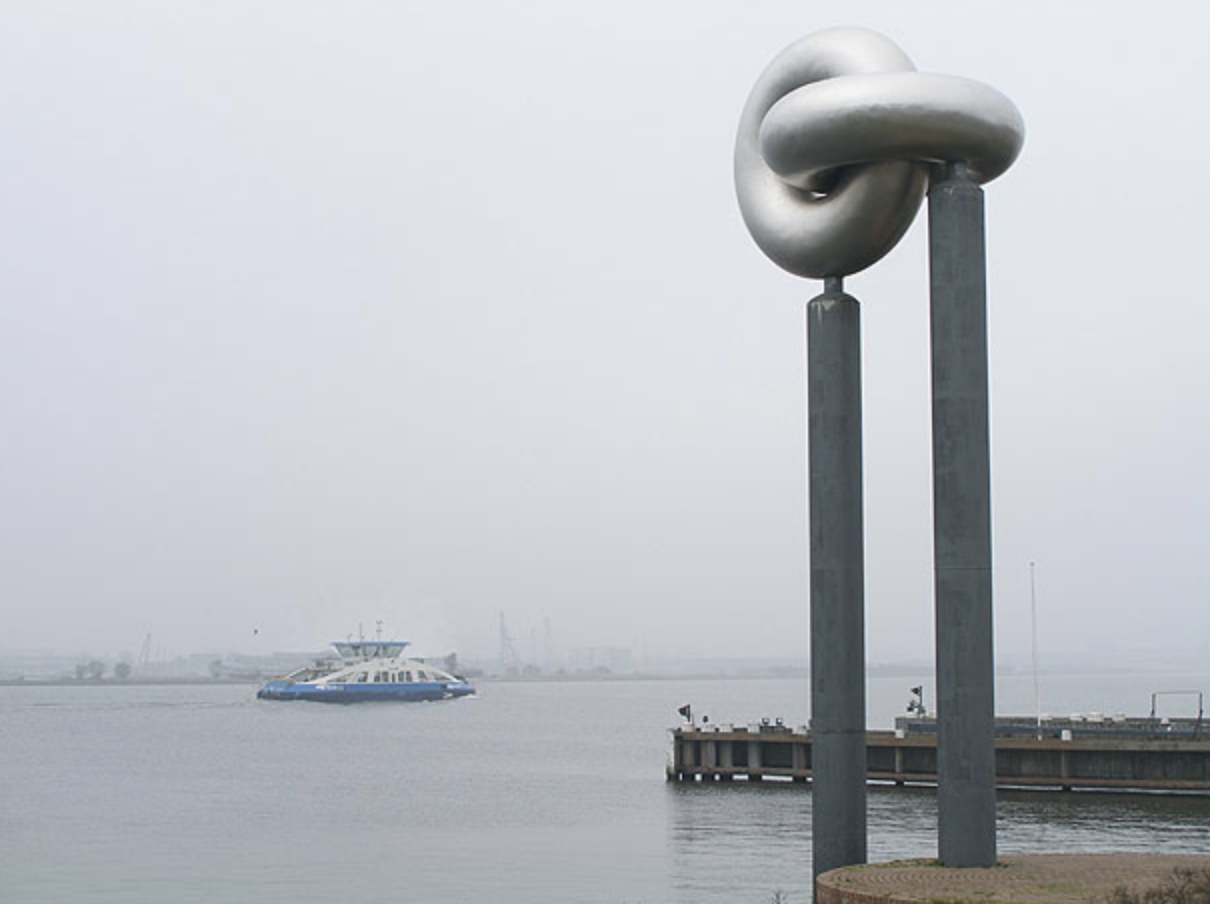
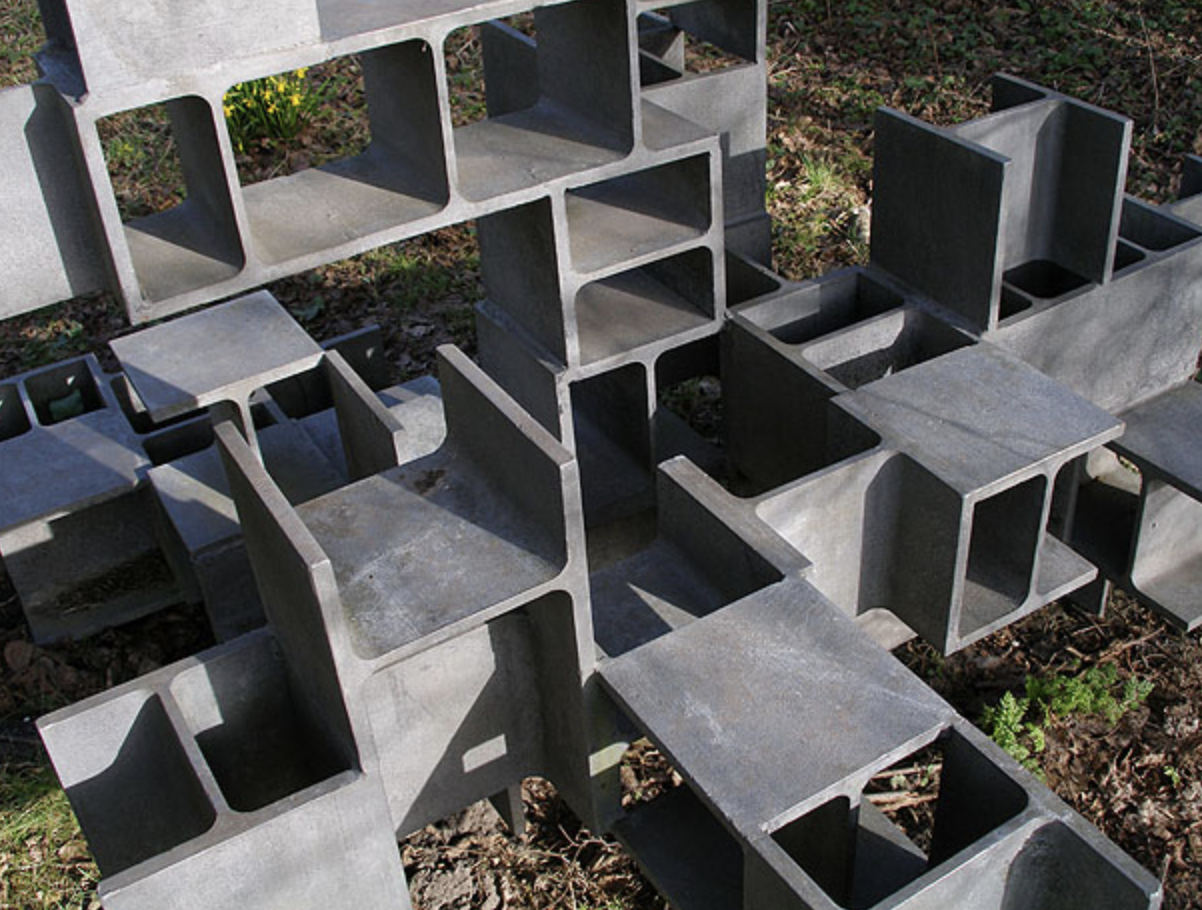
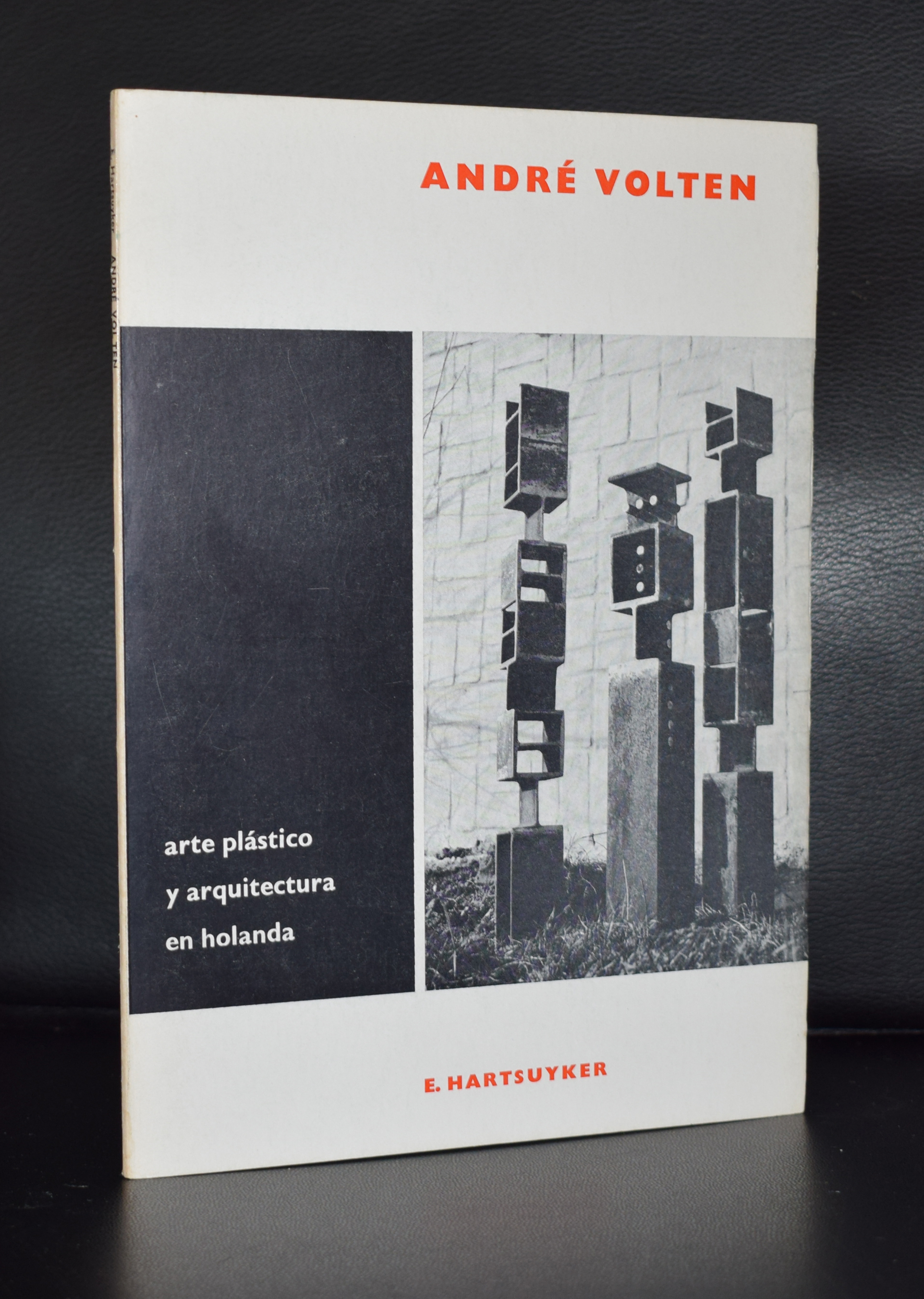
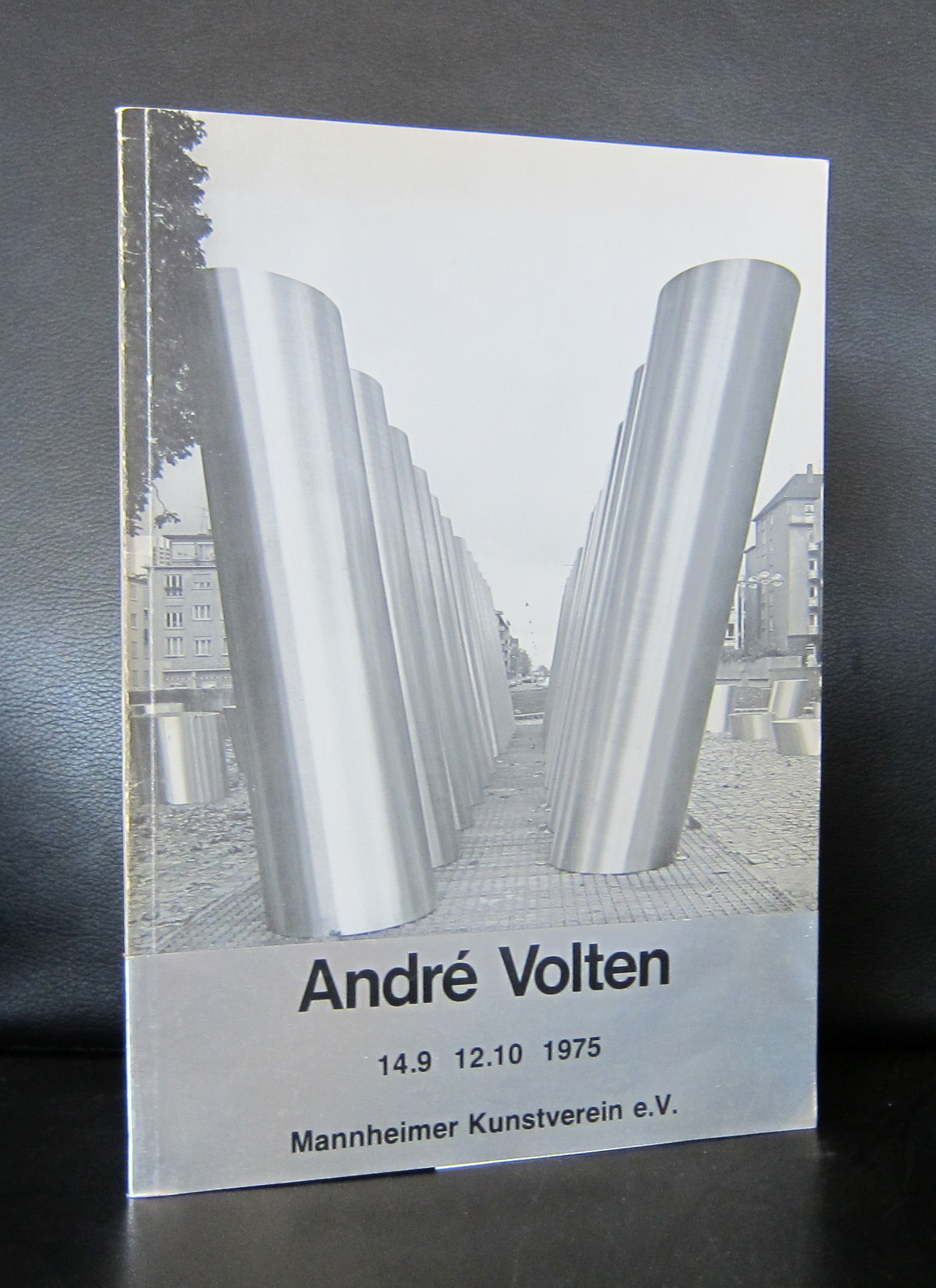
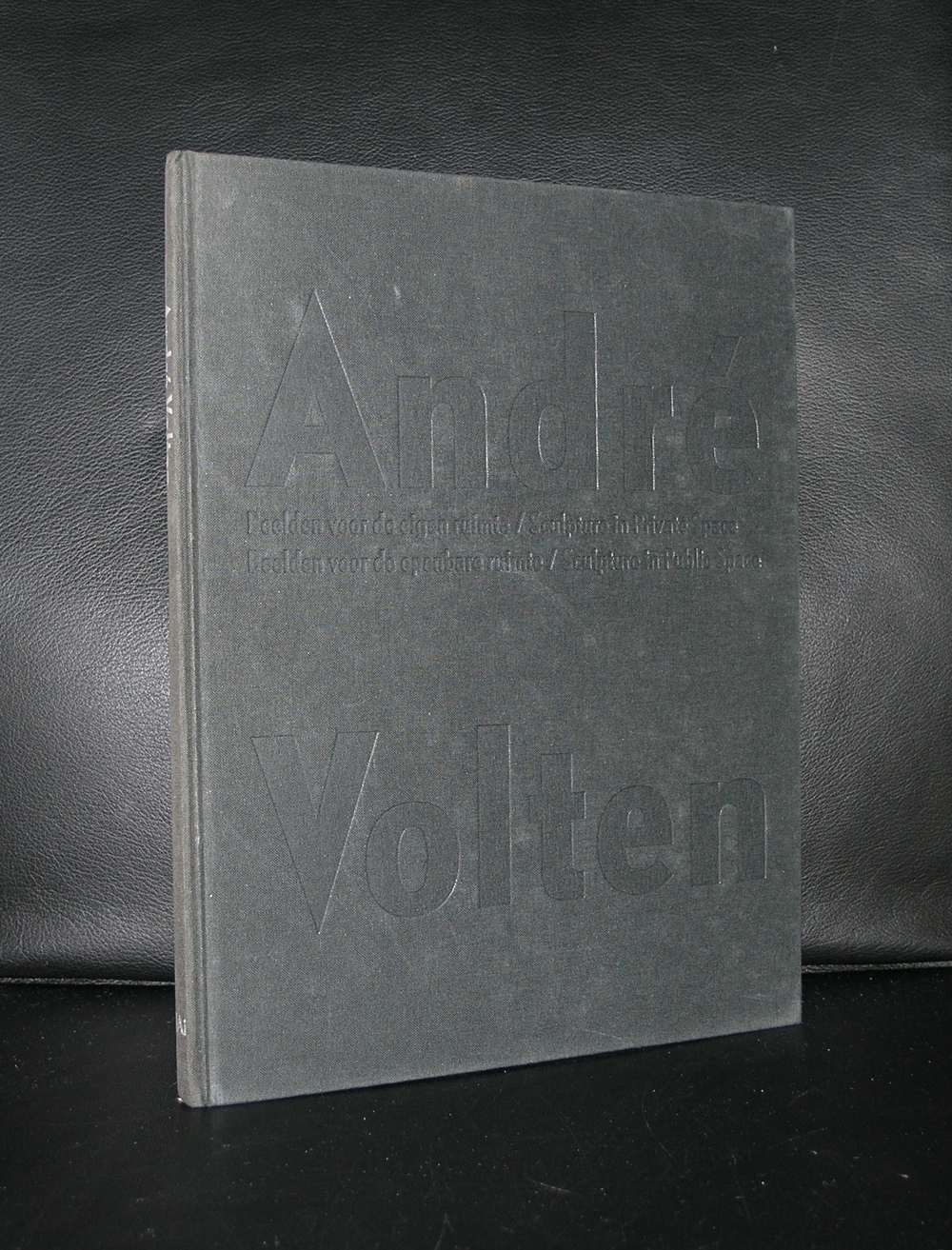
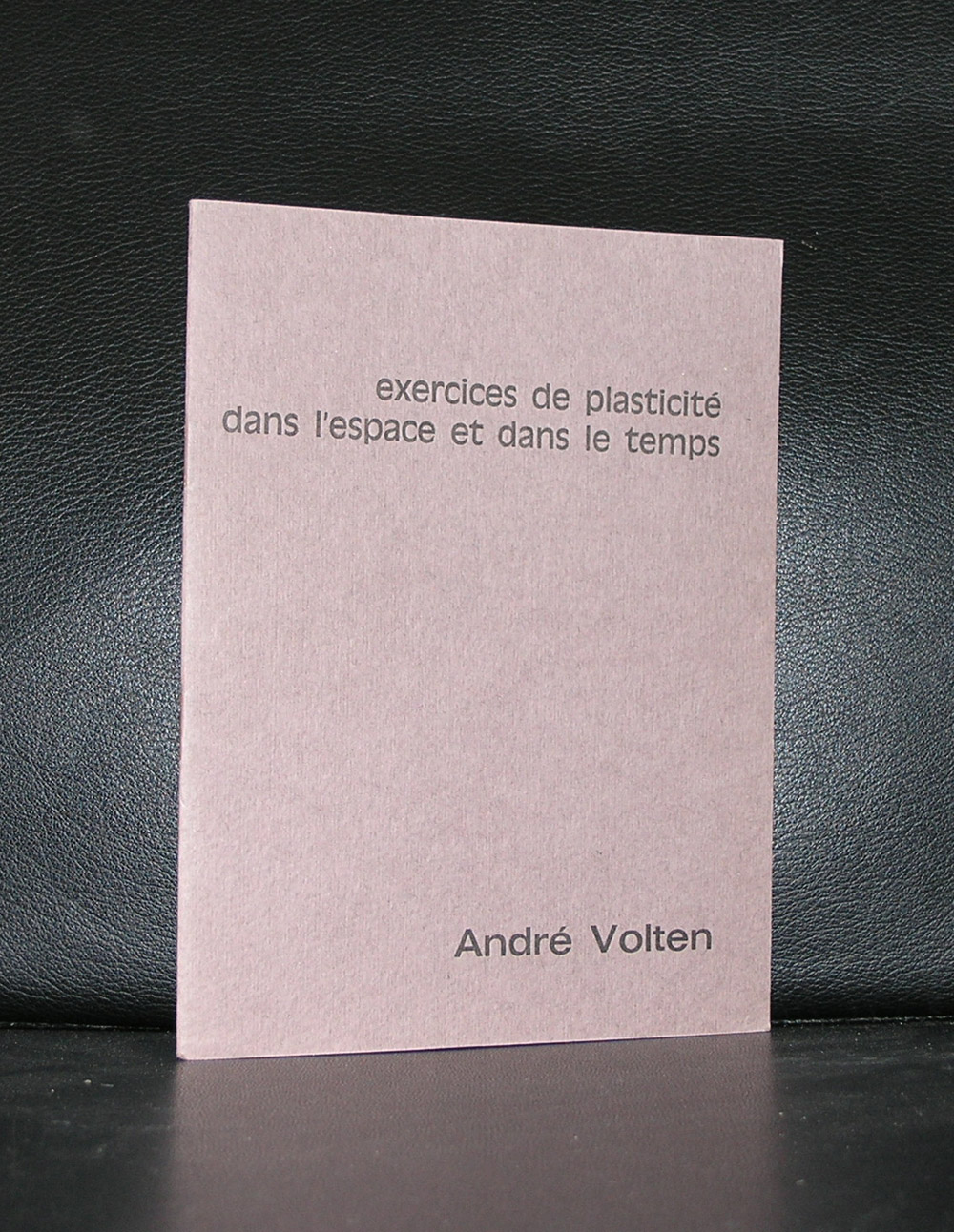
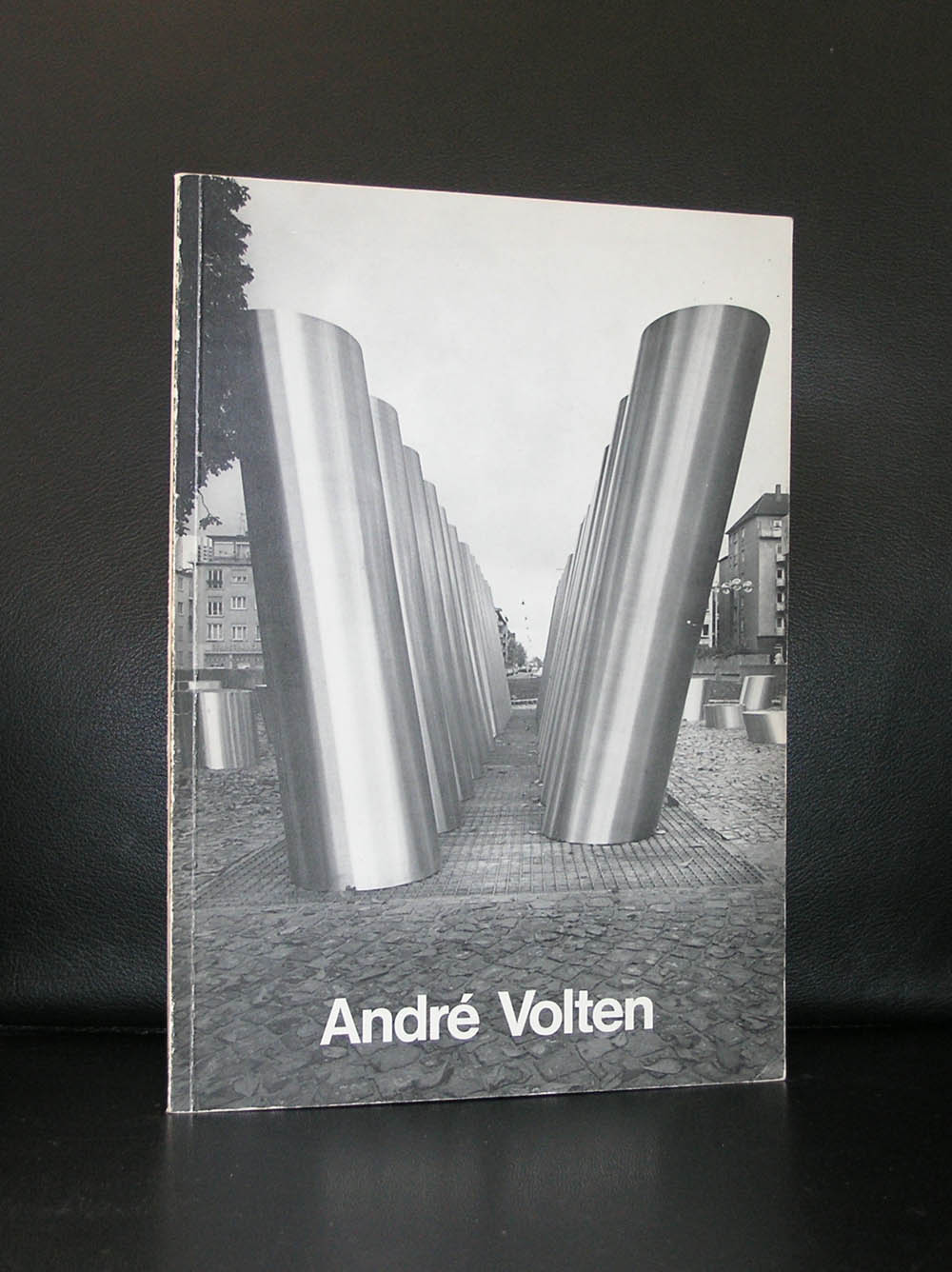
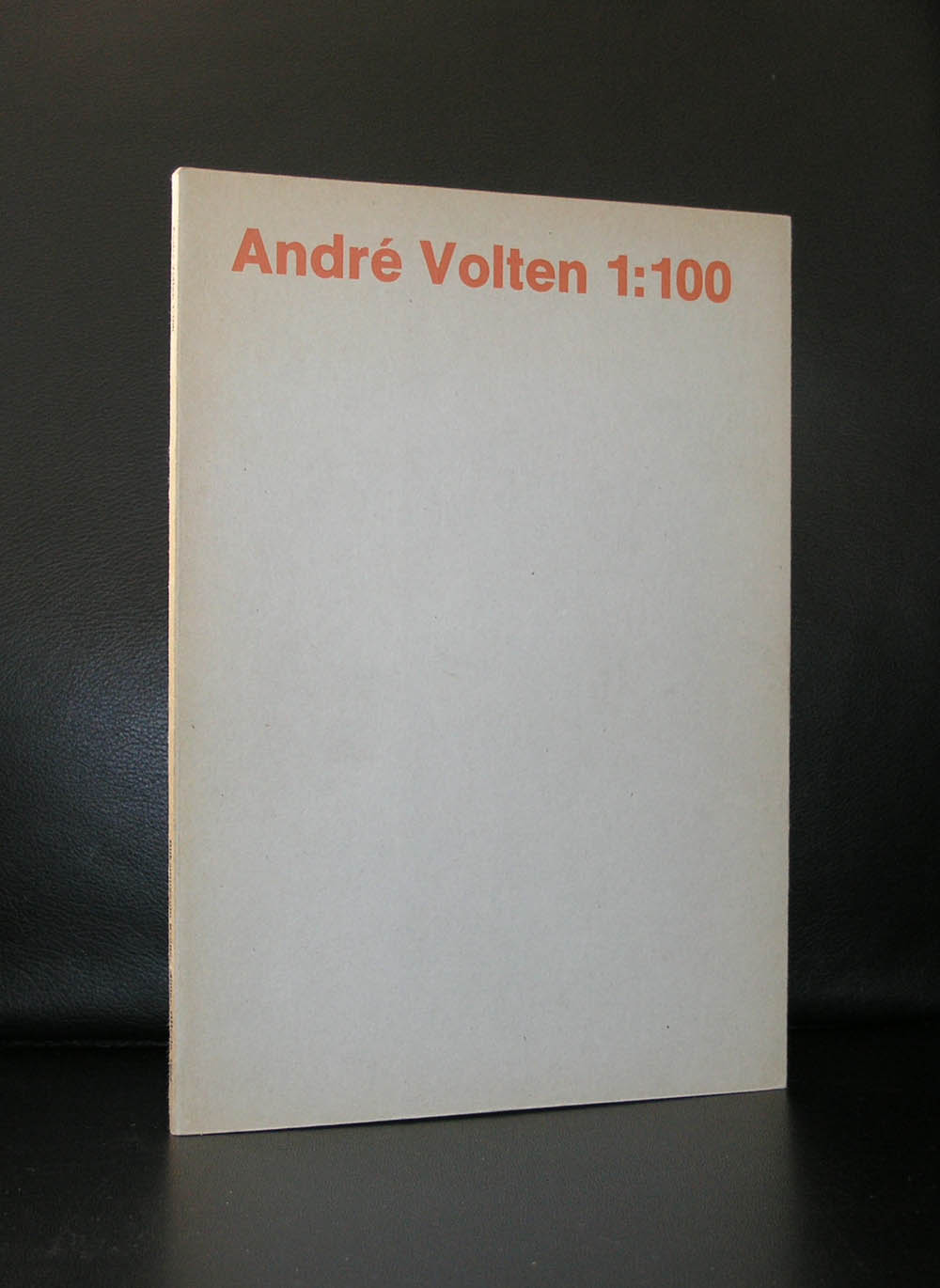
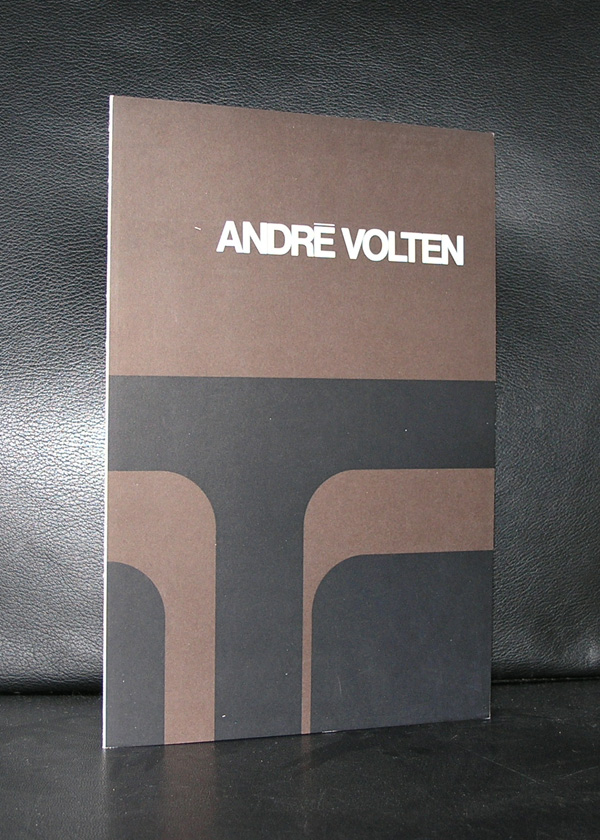
Andre Volten is arguably the greatest sculptor form the second half of last century in the Netherlands. Educated in Amsterdam he soon became friends with contemporary artists like Ongenae. AAfter his arrival in Amsterdam he founded the LIGA NIEUWE BEELDEN and developed his art into a very personal form of abstract expressionism. Because he was at one time employed as a welder, steel and other metals were like wax in his hands and he could bend and transform them into the sculptures he wanted to make from the available materials. The result …. some magnificent large sculptures in public places. Sometimes they are hidden , but in many cases they are in the open. Just look at these 2 examples and find many more in classic publications on this artist at www.ftn-books.com. Among them iconic Wim Crouwel designed in brown and black cover . One of my personal favorites.
For more information on Volten please look at the www.andrevolten.nl site for information on the Volten foundation
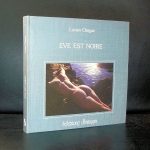
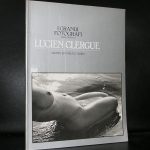
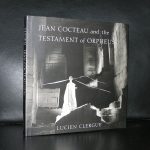
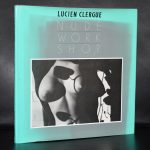
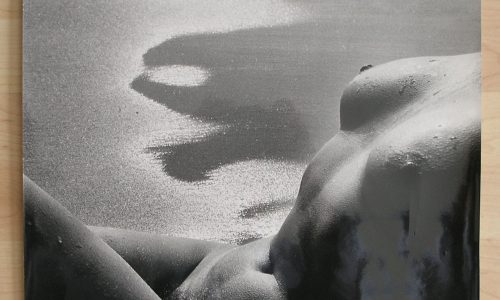
Here is a classic photographer who made his name with the Corrida, Picasso and the southern French nudes. There is a story on Clergue and myself. In the early Seventies there was a gallery in the Kazernestraat in Den Haag called Arta. In the gallery graphic art was sold to members at really affordable prices and i, as a young student, could afford me some graphic works by young artists who sold their works for as little as 20 guilders. A small sum to be paid for an original work of art by mainly dutch artist, but there were exceptions which were also on offer, some sets with multiple etchings and the occasional photograph…one of them an original photograph by Lucien Clergue. A nude in the sea, sand around her torso , no face…just a body….but such an impressive photograph i had to have it.
I took a loan with my parents and bought it and since , it has been in my collection. Later i learned the photograph came from one of the most famous series Lucien Clergue has ever made on THE SEA, shot in the Camargue in France in 1972 and resulting in one of the most iconic nude photo series any photographer has made . The photograph has now become for sale at FTN art. This is a classic Clergue photograph in a small edition , stamped ,signed and numbered by Lucien Clergue and in immaculate condition.
For more publications on Lucien Clergue, please visit www.ftn-books.com
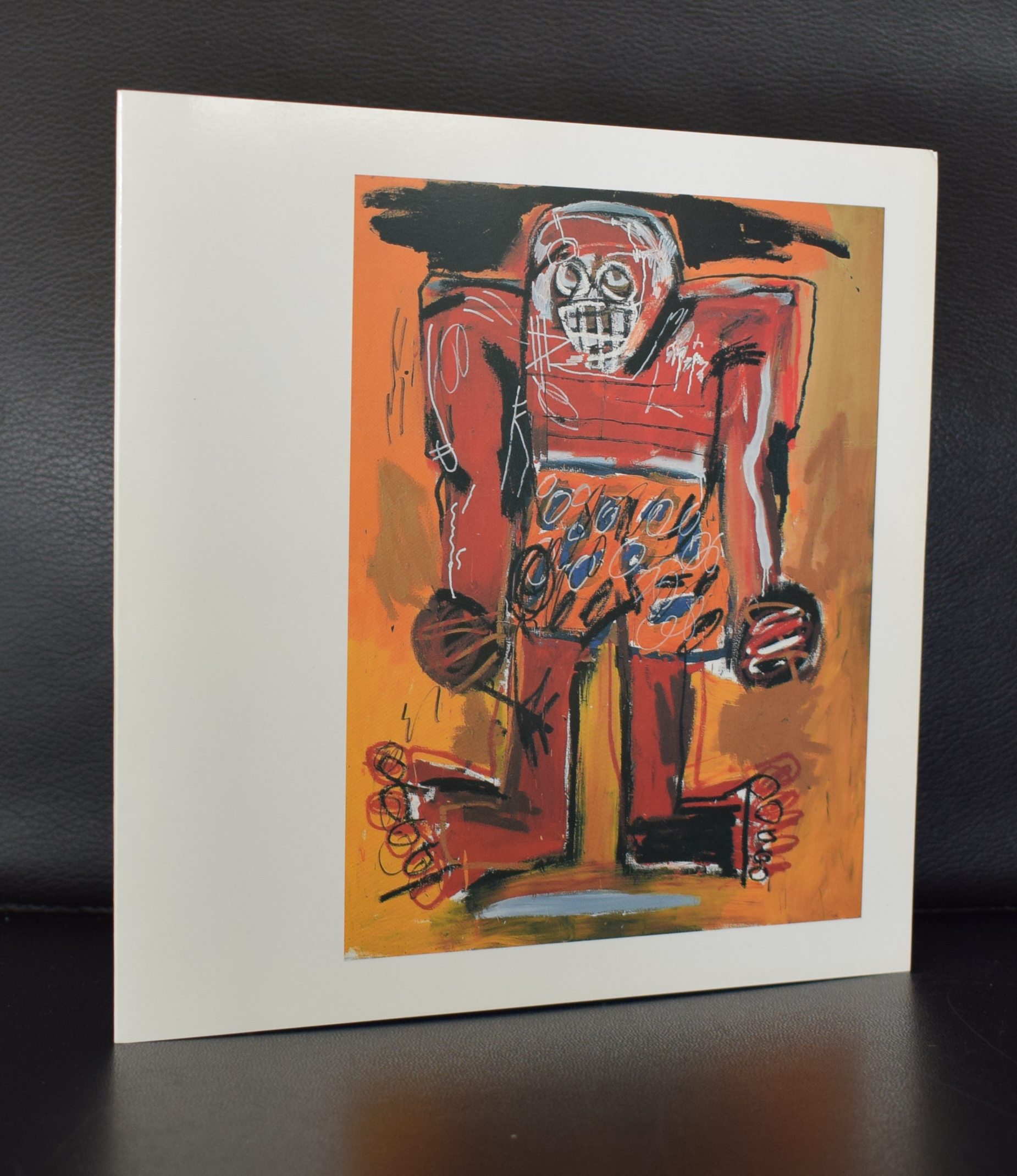
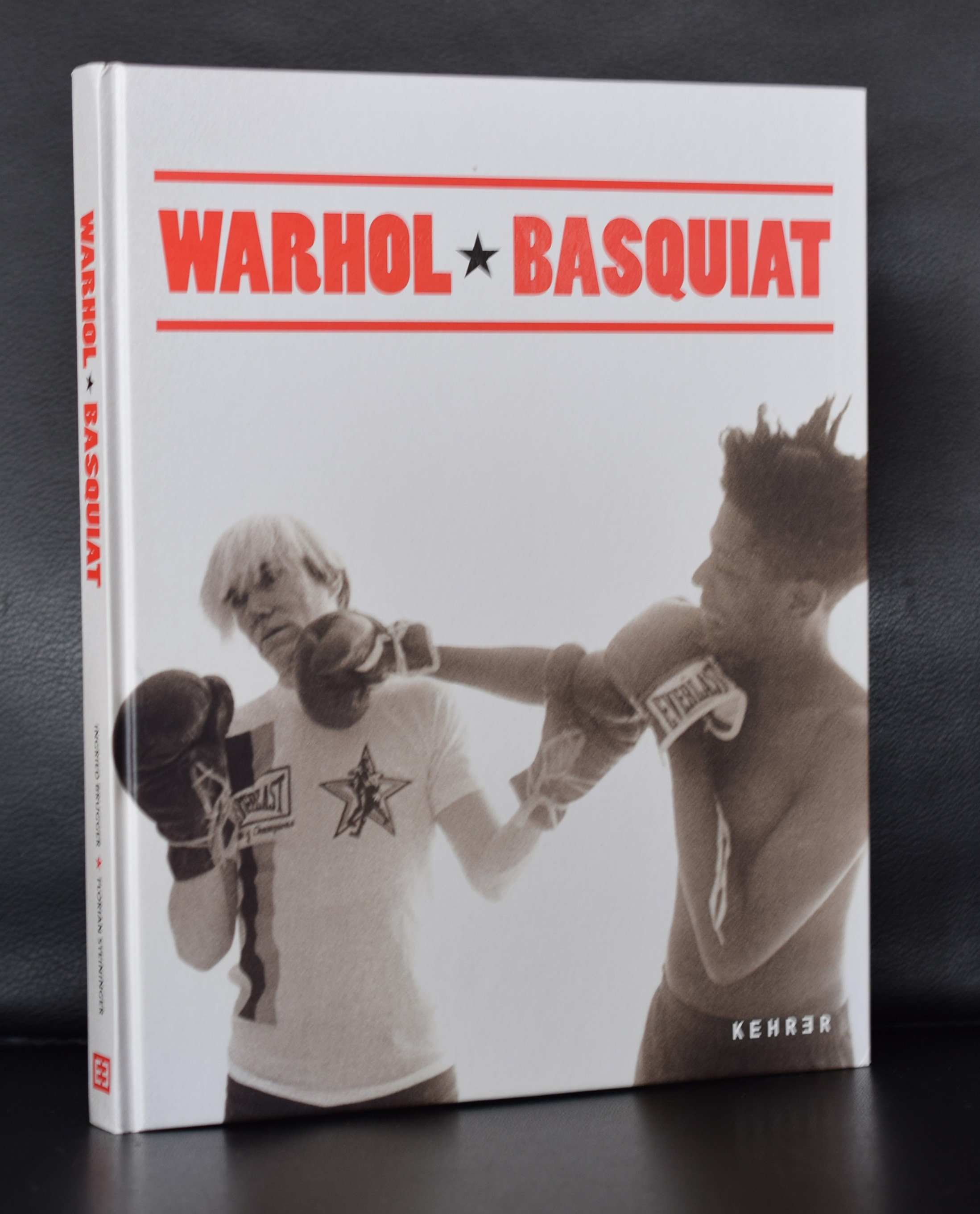
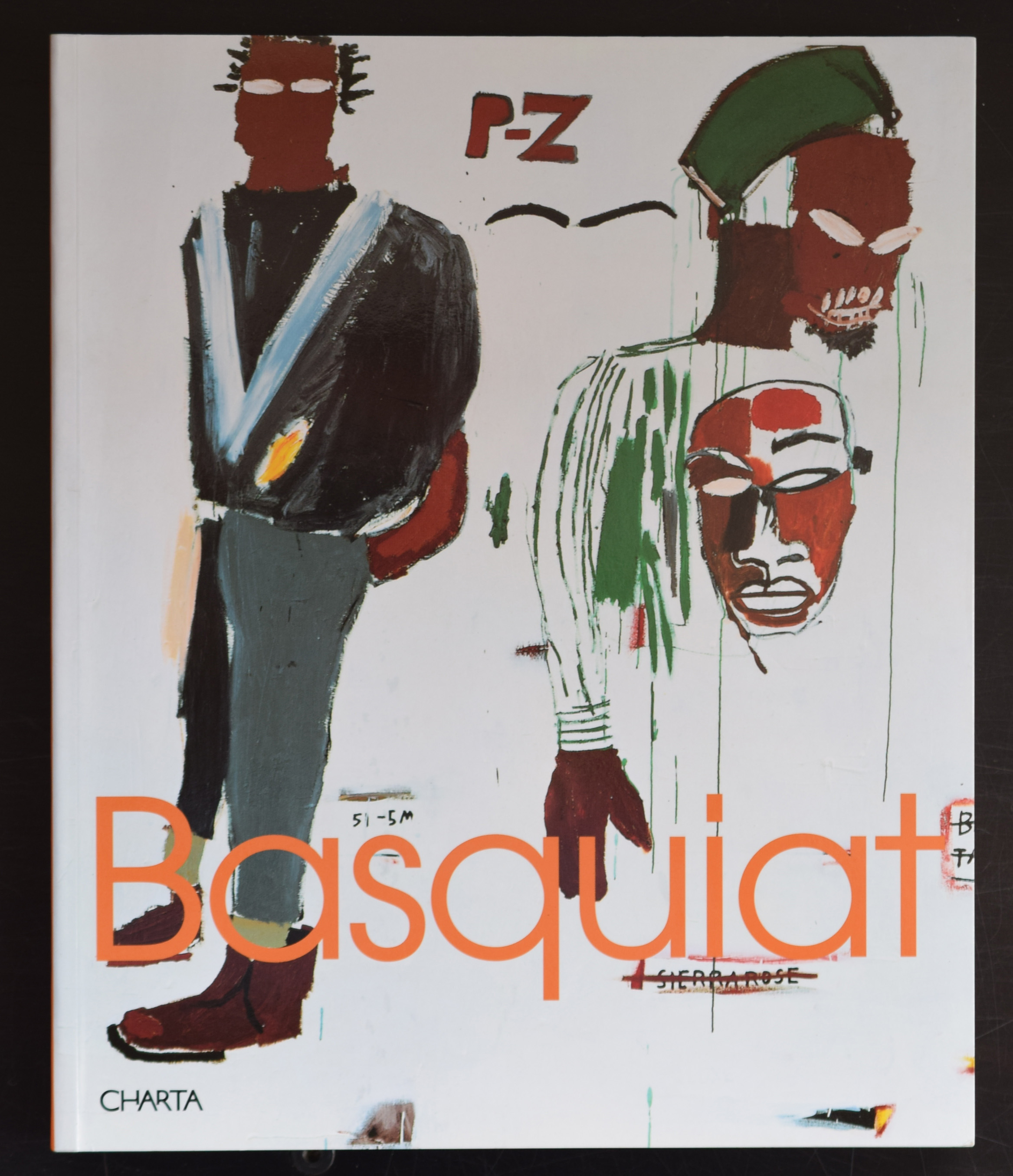
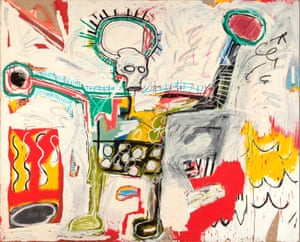
This blog is how i experience books and art and what i read about them and this is certainly an article i want to share with you. The guardian did an excellent article on Basquiat and his Fahion style/ A style which looks random , but was a well thought out way of dressing… Hooray for the Guardian. Here is the article and do not forget that www.ftn-books.com has some nice titles on Jean-Michel Basquiat.
There’s an image of Jean-Michel Basquiat on the cover of the New York Times magazine from 1985. The photo is by Lizzie Himmel; the headline New Art, New Money. The artist, wearing a dark Giorgio Armani suit, white shirt and tie, leans back in a chair, one bare foot on the floor, the other up on a chair. The combination of the suit and the bare feet is typical of the way Basquiat defined his own image; always with an unconventional bent.
I’ve obsessed over his style when standing in front of Hollywood Africans, a 1983 work from a series where the images relate to stereotypes of African Americans in the entertainment business. It is a banger of a painting and will form part of Basquiat: Boom for Real, a retrospective opening at the Barbican in London this month.
I have a longstanding interest in the way artists dress, from Picasso to Hockney, Georgia O’Keeffe to Robert Rauschenberg, and I think their wardrobes exert as powerful an influence on mainstream fashion as those of any rock or Hollywood stars. These artists carved out instantly recognisable uniforms: clothes that symbolise the same singular point of view as their greatest works, usually with the sense of complete ease that is the holy grail of true style.
FacebookTwitterPinterest
Jean-Michel Basquiat, Untitled 1982, Museum Boijmans Van Beuningen, Rotterdam. On show at the Barbican in London in 2017. Photograph: Jean-Michel Basquiat/Barbican
Basquiat’s wardrobe was distinctive, whether he was in mismatched blazer and trousers with striped shirt and clashing tie, or patterned shirt with a leather jacket pushed off his shoulders. He was perhaps most recognisable in his paint-splattered Armani suits. “I loved the fact that he chose to wear Armani. And loved even more that he painted in my suits,” Giorgio Armani says. “I design clothes to be worn, for people to live in, and he certainly did!”
In many ways, this bricolage approach to clothing is akin to the way he created his art. “His work was a mysterious combination of elements – text and colour, historical reference, abstraction and figurative techniques,” Armani says. “In his life, he also mashed up creative activities – he was a graffiti artist, a musician, an actor, a maker of great artworks. This eclecticism made him a mysterious and unconventional man. That mix made him stand out.”
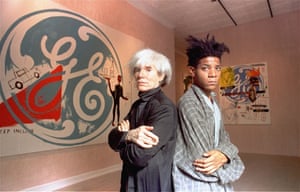
“He was an incredibly stylish artist,” says Barbican curator Eleanor Nairne. “He was very playful about the performative aspects of identity.” He was also aware of the “renewed fixation on celebrity” that coincided with the art boom of the 80s, particularly in New York. He famously appeared in Blondie’s Rapture video, dated Madonna and befriended Andy Warhol.
Andy Warhol and Jean-Michel Basquiat, September 1985. Photograph: Richard Drew/AP
Cathleen McGuigan, who wrote that 1985 New York Times feature, recounts Basquiat at the hip Manhattan hangout Mr Chow’s, drinking kir royal and chatting to Keith Haring while Warhol dined with Nick Rhodes of Duran Duran nearby. “He attracted the attention of Warhol and Bowie, so was endorsed by those who had already achieved that rare style-icon status,” Armani says. “And he had a very unique look – he had hair as distinctive as Warhol’s and wore suits in a way as stylish and relaxed as Bowie.”
Basquiat went on to model in a 1987 Comme des Garçons show wearing a pale blue suit, black buckle sandals, white shirt and white bow tie. Robert Johnston, style director at British GQ, describes Basquiat’s style as “a work of art in itself” and adds: “While meaning no disrespect to his talent, it is hard to imagine he would have taken New York so much by storm if he’d looked more like Francis Bacon.”
Basquiat’s influence on menswear is still felt today. While other icons have referenced his style – Kanye West sported a T-shirt bearing his portrait, Frank Ocean namechecked him in lyrics by Jay-Z, who dressed as him for a Halloween party – there is a more direct effect on fashion. There have been collaborations, via his estate, with the likes of Reebok and Supreme. There’s a photo of Basquiat wearing an Adidas T-shirt with a pinstripe suit which is a template for how the younger generation approach the idea of tailoring. At the S/S 18 shows in Milan, wonky ties with suiting at Marni made me jot down “Basquiat” in my notebook. And with the Barbican show his influence will spread. “The way Basquiat mixed classic tailoring with a downtown nonchalance fits the mood in menswear,” says Jason Hughes, fashion editor of Wallpaper*. “A refined suit worn with an unironed shirt, skewwhiff tie and beaten-up sneakers. The fact that he painted in those suits feels slightly anarchic and nonconformist. I want to wear a suit like that.”
This article appears in the autumn/winter 2017 edition of The Fashion, the Guardian and the Observer’s biannual fashion supplement
A lesser known name, but when i noticed an item at auction at one of the last auction viewings i visited recently , it struck me how timeless and impressive his abstract works are. Peter Geni only had one major exhibition a the Stedelijk Museum Amsterdam
in 1970, right after he had died, but the small catalogue by Wim Crouwel shows the same qualities as the portfolio i encountered for aution. Unfortunately the price was too high to acquire it, but the SM catalogue is still available at www.ftn-books.com
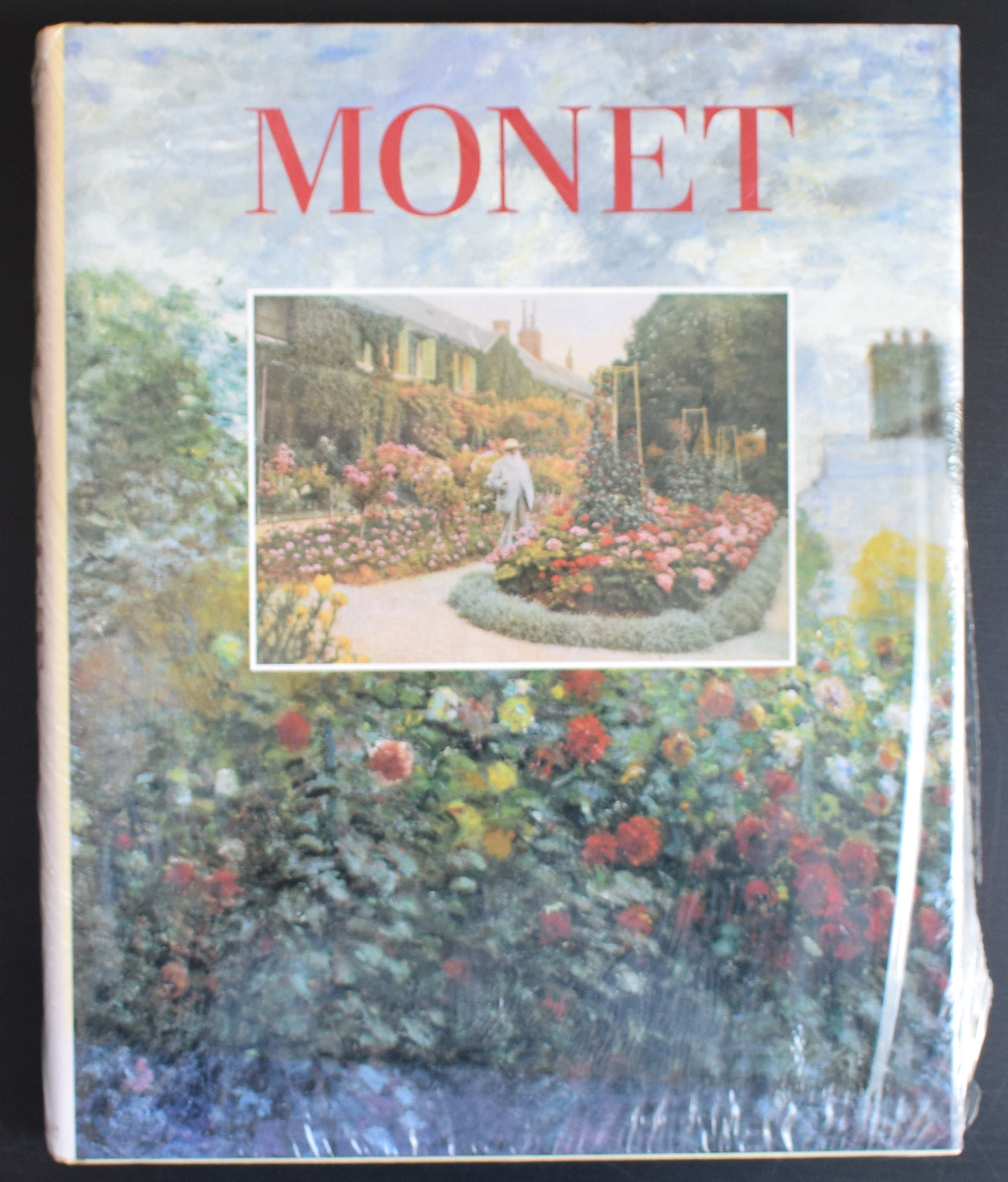
Last week i mentioned an early Monet painting in the collection of the Haags Gemeentemuseum, the QUAI DU LOUVRE, but beside this painting they have a large sized painting BLAUWE REGEN which is almost like an abstract painting. Study it up close and there is nothing realistic in the subject nor in brushstrokes. It is pure and abstract, the same as the large Giverny paintings on show in the Orangerie ? PAris and the one in the Beyeler collection. They impress with their size , but for me there is more….they belnd with their surroundings ( Beyeler)
and they show their enormous abstract strength when seen each one after each other in the Orangerie. The Gemeentemuseum Den Haag is planning a large overview of paintings from Monet’s Giverny period at the end of 2019, but my guess is the “Blauwe Regen” will be one of the largest one on show, because the others are hard to put on transport and have them insured in an affordable way. So whenever you visit Paris or Basel, pay a visit to the Beyeler or Orangerie and be amazed by these extremely large Monet “abstract” paintings.
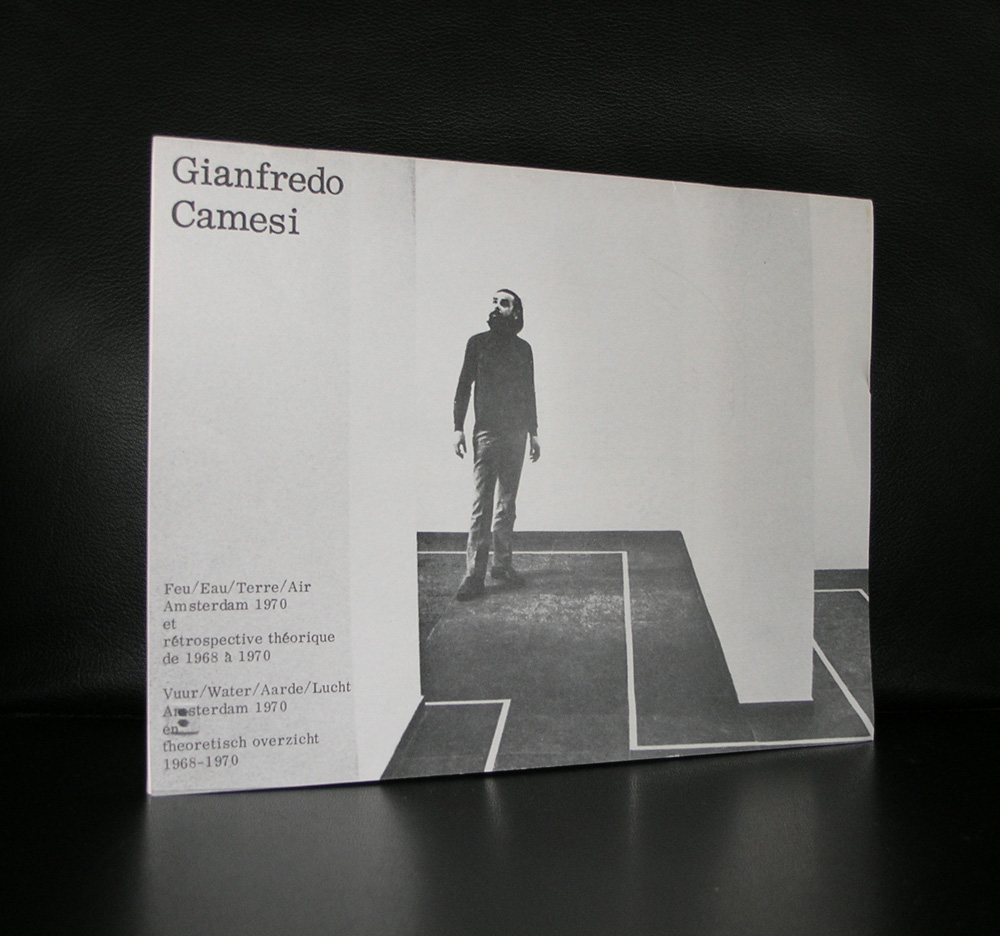
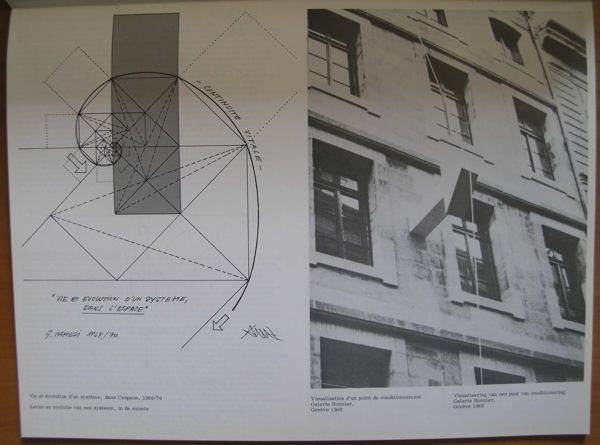
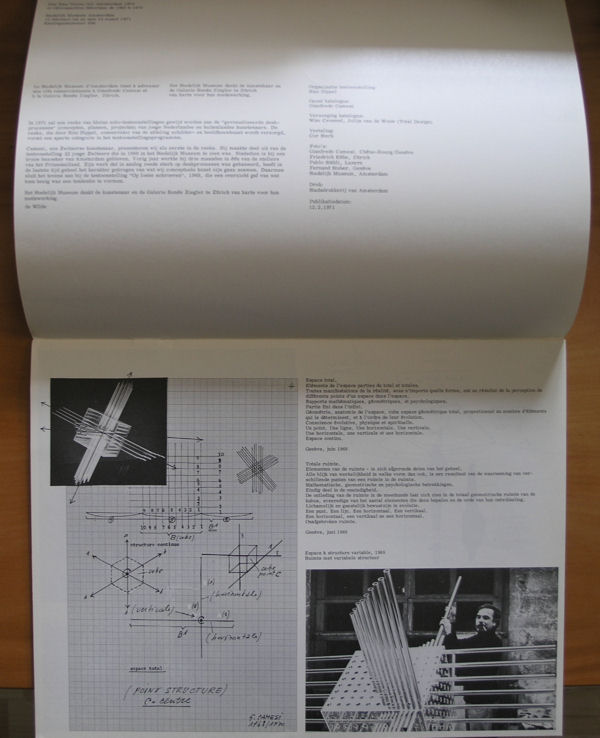
A Swiss born artist who had at the age of 30 a solo exhibition in 1970 in the Stedelijk Museum Amsterdam. Catalogue and poster were designed by Wim Crouwel.
Camesi painter/sculptor who operates as an avant garde artist pur sang deserved at that time a presentation in the Stedelijk Museum. His works intrigue and it is a pity that he has not become as famous as some of the others from his generation. Still the catalogue published with the exhibition in the Stedelijk Museum is one of the very best designed one from the early Seventies and the art by Camesi within it is still fresh and contemporary and of course available at www.ftn-books.com
Artist/ Author: Oliver Boberg
Title : Memorial
Publisher: Oliver Boberg
Measurements: Frame measures 51 x 42 cm. original C print is 35 x 25 cm.
Condition: mint
signed by Oliver Boberg in pen and numbered 14/20 from an edition of 20