Posted on Leave a comment

Dutch Graphic Roots – Cor Rosbeek

An important site on dutch graphics and dutch designers can be found over here:

https://www.dutchgraphicroots.nl

Here is the latest example of this site. This one is on Cor Rosbeek. One of the driving forces behind Rosbeek printers.

Cor Rosbeek

 

“Impossible doesn’t exist” and “I’m not selling print, I am selling trust.” Two sayings that characterize Cor Rosbeek who, together with his brother Jean, for long years ran Rosbeek printers in Nuth. The first maxim refers to the dedication shown by this printing house since 1963 to always deliver the best of the best, the highest of high quality print, and to be willing to listen closely to graphic designers. The Rosbeek’s capability to listen to and work with designers became legendary. The second saying indicates how supple and subtle they managed to perform their intermediary role between clients and designers. Rosbeek in Nuth, in the southern province of Limburg, were not just printers, they were actively participating partners in the print production process; they were important contributors to cultural developments.
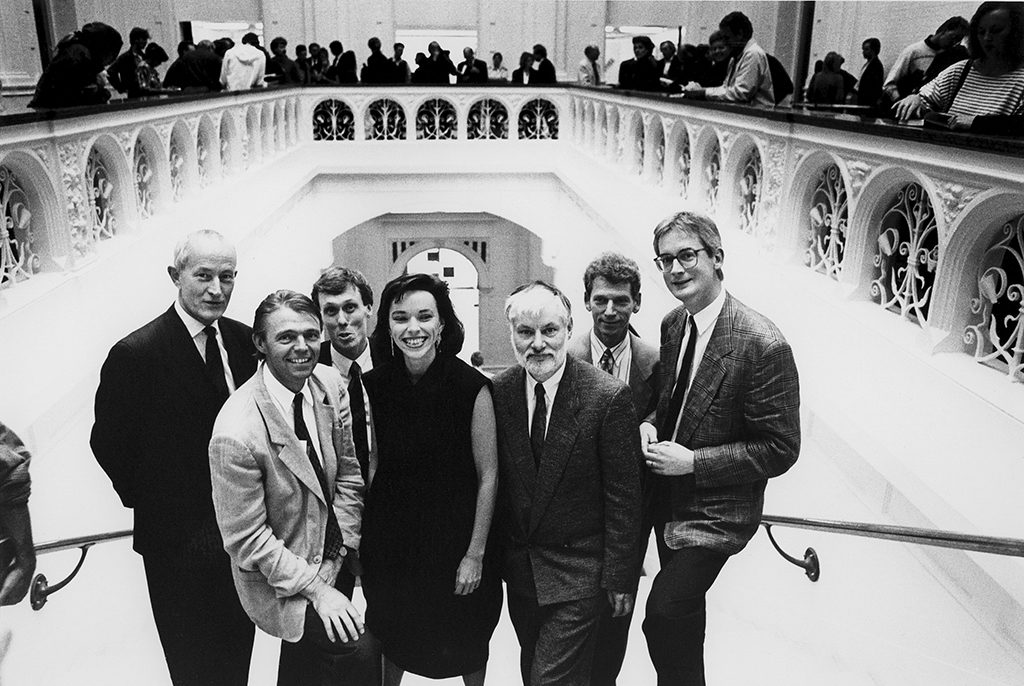
 

The jury of the Best Book Award 1990 posing on the stairs in Stedelijk Museum. Cor Rosbeek second from left

The young Cor Rosbeek never showed any ambition of becoming a printer like his father. He’d rather become a commercial representative and drive flashy cars. Art wasn’t his cup of tea either: “I didn’t have the urge to create.” But Cor at age sixteen had to cope with his father’s sudden demise. As the oldest Rosbeek son he had to jump in and continue the family business. Born in 1944, he had grown up in the family home above the printer’s shop where his father produced all sorts of commercial print for small industries and for private people living in the area of Hoensbroek. His father’s prewar dreams of becoming the chief of the in-house printing shop at Bata’s shoe factory were disturbed by WW II. The Czech-born Bata owners, of Jewish descent, escaped to England. But Cor Rosbeek the elder knew about printing and by hard work single-handedly managed to build up a small business of his own, with only his sons, Cor junior and Jean, and their younger sister helping out when it was busy. In his off time, father Rosbeek liked to make music. He could play no less than thirteen different musical instruments.

The best ever
Cor Rosbeek went to trade school. Bent over maps and atlases he fantasized about other worlds. On Saturdays he put on his fashionable shoes and went dancing: rock and roll. But he was ambitious. He wanted to surpass his father and move on to a better world, he had an open mind as well as an eye for the modern times, and he explored whatever cultural life there was in his remote corner of the Netherlands. It was only later that he fell in love with the printing profession. “From that moment on no one could stop me, I wanted to be the best.”
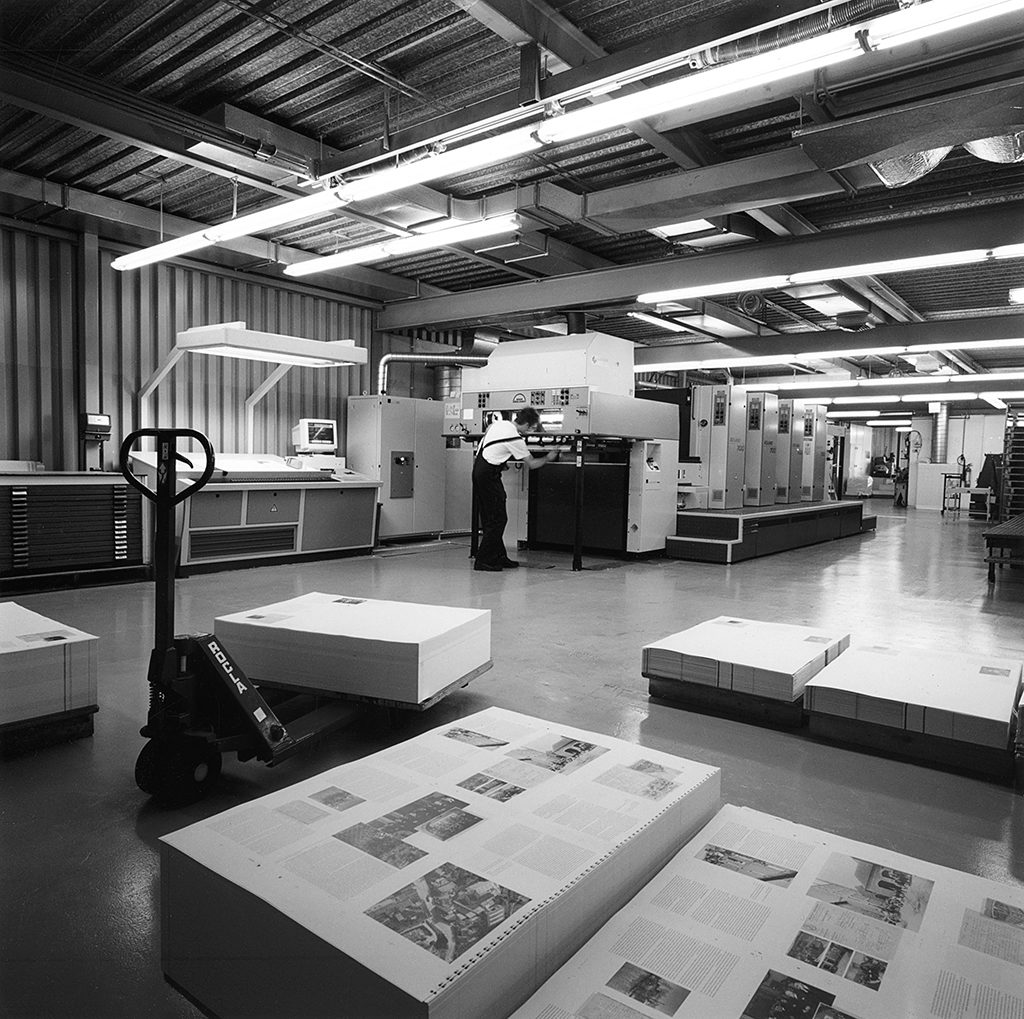
Interior at Rosbeek in Nuth

His first client, the paint producer Jo Eyck whose company became a part of the Sikkens group and their distributor for Limburg, had taken over his own father’s management position around the same time as Cor. Jo Eyck was fascinated by anything related to art and design and already collaborated with designers. He was a perfectionist and a demanding client. Cor Rosbeek admitted he learned much from Jo Eyck: “Everything you do, should be done well and with quality in mind. Jo always aimed for a position in the quality-conscious market of architects, project developers and their clients. I noticed this was a highly effective approach. In his Heerlen head office Jo Eyck organized exhibitions about the role of paint in art, presenting artists such as Richard Lohse, Ad Dekkers, and Peter Struycken. He collected contemporary art and bought Wijlre castle to turn it into a private museum. He had architect Wiel Arets build a glass pavilion for a part of his art collection, the Hedge House, open to the public.” A second influential contact was with interior architect Herman Zeekaf, who sold modern furniture in Heerlen. With Zeekaf, too, Cor Rosbeek developed close ties. Zeekaf designed the new building for the printing company as well as later extensions and renovations.

Goodwill publications
The production of high-quality print in collaboration with leading designers became Rosbeek’s goal. The brothers looked at printers such as Meijer in Wormerveer and Steendrukkerij De Jong & Co in Hilversum, where graphic designers produced daring print projects including the famed Christmas editions of Drukkersweekblad en Autolijn and the Kwadraat series published by De Jong & Co. In their own region, Rosbeek acquired assignments through designers like Baer Cornet and Geert Setola from clients such as furniture producer ’t Spectrum, Océ van der Grinten copiers, Stork machines, and Randstad (temp workers). Wim Crouwel was one of the first designers coming “all the way from the West” to collaborate with Rosbeek on work commissioned by fashion importers Kreymborg. Jan Bons brought his calendar designs for Van Ommeren shipping. Others followed, bringing with them a growing number of clients, including Art Unlimited and the Rijksmuseum. These clients came from all over the Netherlands.
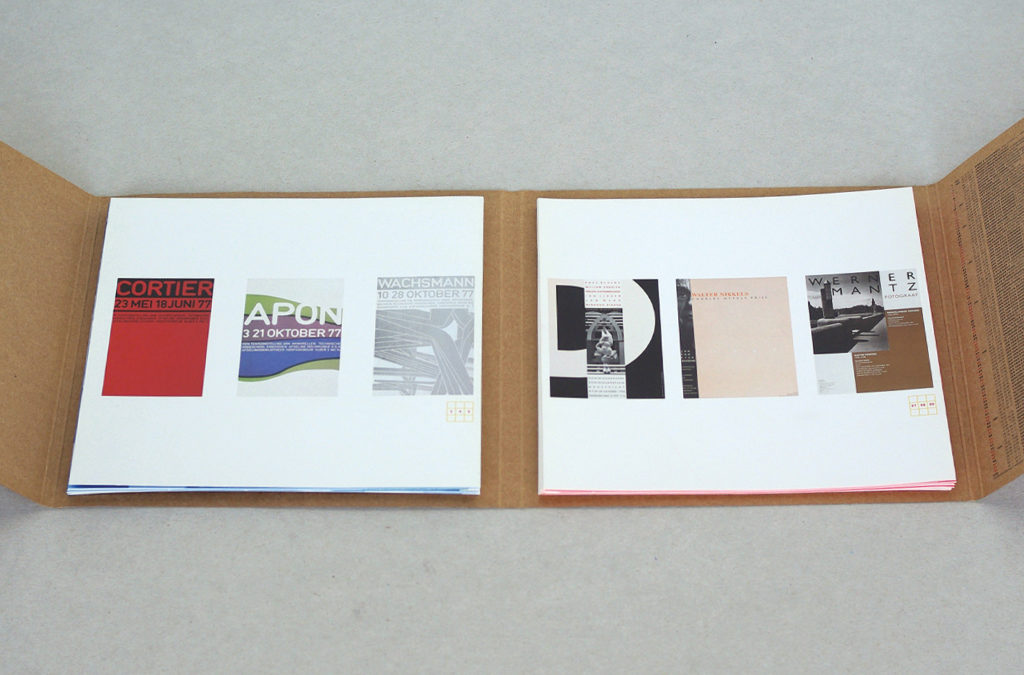
Many of these publications by Rosbeek are available at www.ftn-books.com

Posted on Leave a comment

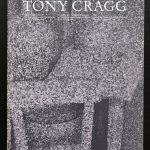
Two Tony Cragg additions

Schermafbeelding 2019-05-21 om 16.59.10

Recently i purchased two important Tony Cragg publications at auction. These publications are published only 2 years apart (1986 an 1988) from each other and the last is possibly the most important of both. It shows the Cragg works that were presented during the Biennale of Venezia event. the British Council presented a solo by Cragg and this publication is arguably one of the best on this artist.

Both publications are now available at www.ftn-books.com


Posted on Leave a comment

the brilliant “Jong Amerika Schildert” catalogue from 1958

The year is 1958, …the curator Willem Sandberg. The exhibition JONG AMERIKA SCHILDERT, organized by the Stedelijk Museum together with the Museum Of Modern Art,

This is arguably Sandberg his most important exhibition, because this was for the years to come the foundation under all Stedelijk Museum Exhibitions. The artists list now reads like an all time greatest list with many of them record breaking artists. Not only in auction results, but certainly with the total number of exhibition visitors. Just some of the now very famous names who were not that well known in those days. Pollock, Newman, Rothko, de Kooning and Kline are now among the most appreciated artists ever and all were in this one exhibition. Willem Sandberg wrote history with this exhibition and what makes the catalogue even more worth wile is not only the typical Sandberg design but the special art  by Pollock and Gottlieb which is used for the cover. This catalogue is available at www.ftn-books.com

amerika schildert cc

Posted on 1 Comment

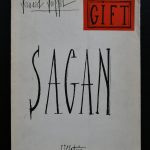
Bernard Buffet/ TOXIQUE and GIFT

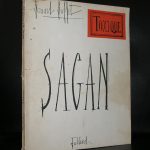
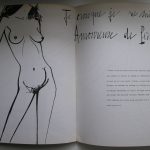
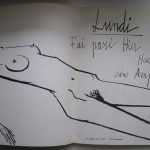
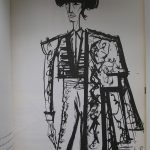
Just a short blog on the 2 editions i now have in my inventory. There is a time difference of 2 years between them, but both are equally important. The first is the beautiful and impressive Toxique from 1964. A bold and important publication since it is one of the first books that makes in text and art the addiction to palphium /morphine visible. The art is among the best i know and the book reads like a graphic novel. The best is that the german edition from 1966 leaves the pages intact and only includes in the text the translation of the original french text by Sagan. Both can be recommended, but the purist will ofcourse chose the original french edition from 1964.Both editions are available at www.ftn-books.com
Posted on Leave a comment

Jack B. Yeats (1871-1957)

Schermafbeelding 2019-04-25 om 17.03.55

Never heard of Yeats as a painter, until Rudi Fuchs curated an exhibition with his paintings at the Haags Gemeentemuseum and it was a nice surprise. His painting is spontane , a little childish and impressionistic at the same time and thus resulting in a painting what is typical for Yeats with a signature of its own. The exhibition was not that large and i remember that the sizes of the paintings were not that large too.

Schermafbeelding 2019-04-25 om 17.05.31

What i do remember was the excellent catalogue Gracia Lebbink designed with the exhibition. It was one of her first lareg catalogues she made for the Gemeentemuseum but it has proven to be a classic and available at www.ftn-books.com
yeats

Posted on Leave a comment

Felix Vallotton (1865-1925)

Schermafbeelding 2019-04-25 om 16.53.27

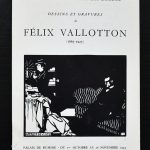
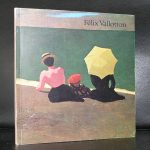
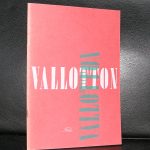
Felix Valotton is without a doubt one of those less familiar names in Modern Art, but still he is very important for the development of modern Art as we know it, because when you look at his works more closely you can discover the fundaments of abstraction.

Schermafbeelding 2019-04-25 om 16.58.08

In 1893, he became a member of Les Nabis, a semi-secret, semi-mystical group of young artists, mostly from the Academie Julian, which included Pierre Bonnard, Ker-Xavier Roussel, Maurice Denis, and Édouard Vuillard, with whom Vallotton was to form a lifelong friendship. While the Nabis shared certain common ideas and goals, their styles were quite different and personal. While he was a member of the Nabis, he kept his distance; his jocular title among the Nabis was “The Foreign Nabi”, [10] Vallotton’s paintings in this period reflected the style of his woodcuts, with flat areas of color, hard edges, and simplification of detail. His subjects included genre scenes, portraits and nudes. Examples of his Nabi style are the deliberately awkward Bathers on a Summer Evening (1892–93), now in the Kunsthaus Zürich, and the symbolist Moonlight(1895), in the Musée d’Orsay.

His paintings began to be noticed by the public and critics; Bathers on a Summer Evening, presented at the Salon des Indépendents, was met with harsh criticism and laughter.  But they also woodcuts also attracted considerable and growing attention and clients, and he became financially secure. Between 1893 and 1897, he received many commissions for illustrations from notable French newspapers and magazines, including La Revue Blanche, and from foreign art publications, including The Chap-Book of Chicago. He also made woodcuts for the covers of theater programs and book illustrations. One of his prominent patrons was Thadée Natanson, the publisher of the Revue Blanche, and his wife Misia, who commissioned many important decorative works from the Nabis. Through the Natansons Vallotton was introduced to the avant-garde elite of Paris, including Stéphane Mallarmé, Marcel Proust, Eric Satie, and Claude Debussy.

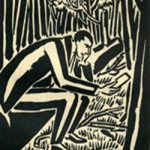
During the Nabi period, he also produced a remarkable series of woodcuts. His woodcut subjects included domestic scenes, bathing women, portrait heads, and several images of street crowds and demonstrations—notably, several scenes of police attacking anarchists. He usually depicted types rather than individuals, eschewed the expression of strong emotion, and “fuse[d] a graphic wit with an acerbic if not ironic humor”. Vallotton’s graphic art reached its highest development in Intimités (Intimacies), a series of ten interiors published in 1898 by the Revue Blanche, which deal with tension between men and women. Vallotton’s woodcuts were widely disseminated in periodicals and books in Europe as well as in the United States, and have been suggested as a significant influence on the graphic art of Edvard Munch, Aubrey Beardsley, and Ernst Ludwig Kirchner. In 1898, he produced one of his most important series of woodcuts,

By 1900, the Nabis had drifted apart. One source of the division was the Dreyfus affair, the case of a Jewish army officer falsely accused of aiding the Germans. The Nabis were divided, with Vallotton passionately defending Dreyfus. He produced a series of satirical woodcuts on the affair, including The age of the Newspaper,which were published on the first page of Le Cri de Paris on January 23, 1898, at the height of the affair.

Another major event during this period was his marriage to Gabrielle Rodrigues-Hénriques, a upper middle class member of the Paris artistic and social elite. The union also brought to his household three children from her previous marriage. After a brief honeymoon in Switzerland, they moved to a large apartment on near the Gare Saint-Lazare train station. He also established a solid relationship with the Bernheim family and their gallery, which presented a special exhibition devoted the Nabis, including ten of his works. The marriage brought him financial security, and he gradually abandoned woodcuts as his main source of income. Thereafter he devoted his attention almost entirely to painting. www. ftn-books.com has some titles on vallotton available.

Posted on Leave a comment

Will Ferwerda (1942-2019)

Schermafbeelding 2019-04-25 om 16.15.32

Just recently, onthe 12th of March Will ferwerda died at the age of 77. Known for his free expressionism and activist for his entire life he was one of the most colorful artists in the dutch art scene. He was locally a well known artist and many in Gorkum and Dordrecht had at some time met him.( A bit the same as Gerard Fieret in den Haag), but his art deserves so much better. It has some mysticism in it i can not explain, but when you look at he limited editions by Ferwerda ( available at www.ftn-books.com) , these images intrigue and show that Ferwerda was not an amateur , but a true and original artist.

Posted on Leave a comment

Outsider Art of atelier de Herenplaats

Schermafbeelding 2019-04-25 om 15.45.29

By chance i found a publication by atelier de Herenplaats. An artist studio for the mentally deficient and i was really surprised to find some great art within this publiucation. This Art Brut/Outsider Art is matured and must be considered as true art. The spontanious compositions delight and i have read on the site of de Herenplaats that many of their artist have had their ( international) presentations in galeries and museums.

de Herenplaats site can be found on this address: www.herenplaats.nl

and www.ftn-books.com has the Herenplaats publication now for sale in its shop.
visjes