Posted on 944 Comments

Atze Haytsma (1929)

Schermafbeelding 2020-07-08 om 16.27.49

Born in Amersfoort this little known photographer is still working.

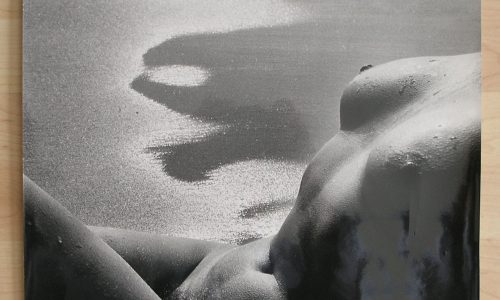
Haytsma has become known for his nude photography in which he shapes the body into almost abstract forms. Inspired by the greats of all nude photographers like Bill Brandt and Lucien Clergue, his nudes are almost always made in a studio setting.
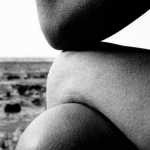
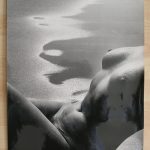
The difference is therefore the way light in the photograph is used . He can set up his studio lights in a way that is never possible when photographing outside. Personally i prefer the natural light of the outside photography, but that does not mean that i am not attracted to the photographs of Haytsma. His photographs still have a quality of their own, making these highly collectable items at a reasonable price. This is an artist to watch whenever an item appears on an online auction site. The ATZE book is available at www.ftn-books.com

Atze Haytsma (1929) was educated to be a sculptor. At fourteen years old he started his professional career as an assistant of Geert Marree, just before the Dutch famine of 1944. After that he studied at the Applied Art School and the State Academy of Expressive Arts. He also learned how to glaze and work with modelling clay in a pottery to finally produce the designs of sculptors such as Bill Couzijn, Carel Kneulman, Marie Andriesse and many others. Basically everything in his life revolves around shape. Where he used to work with stone, he now, because of his age, works only with wax. But it has always been about the shape of a woman’s body.

atze

Photographing women became an essential part of his life. It all began when he started to teach portrait and model moulding. At first he used nude models in the classes, but when the school could no longer afford to pay for the models, Atze started to photograph women and used the pictures as reference material for his students. They posed for him at his home, in the -presence of Atze’s wife, Mieke, who was a painter. First, they were students of the art academy he was teaching at, but by word of mouth the list grew longer through the years.

Around the age of sixty, Atze quit teaching. He then started to create small sculptures. He did this without a model; the female body was imprinted in his head in such a way, that he did not need a model. However, the longing to photograph women remained. Since then, Atze has been working in a pocket-sized attic, with construction lamps as lighting. He started out with two cameras, but soon needed others, because of the use of different lenses. By now he has eight of them, all Mamiya and Rolleiflex cameras, purchased for a small price at the end of the analogue era, when everyone switched to using digital cameras. Twin-lens reflex cameras for a 6 x 6 cm picture size on a 120 mm roll-film. Cameras that should be handled with caution, perfectly suitable for portrait and model photography because of their precision and handy size. Ideal for Atze, who has a soft, modest, almost shy personality. Using a Rolleiflex camera, you look down, into the waist-level finder, indirect, much more pleasant for the model. Instead of piercing, probing eyes she sees a head humbly bowed. The camera, placed on a tripod, is deliberately at about the same height as the top of the sofa bed. Atze does not for a moment want to give the models the feeling he is looking down on them.

The models are amateurs. Just women he met or who were referred to him. He will never ask someone himself, he does not have the courage. Maybe after a second posing session he could ask: ‘Will you come again?’. Sometimes he only speaks to them over the telephone and sees them for the first time when they walk through the door. The first time, they are a bit uneasy and nervous. Atze himself is relaxed, because he has been working with nude models his whole life. Atze always asks new models to come and see his photographs first so they can decide after that. If you feel that you are too fat or not pretty enough, he reassures them. A roll of fat or a skin crease can heavenly divide the body.

Posing for the first time the woman sits uncertainly on the corner of the sofa bed. ‘Just let yourself fall on the sofa,’ is Atze’s friendly advice. Followed by: ‘Beautiful, keep it like that’. That is how it starts and it doesn’t get more complicated then: ‘Can you turn around’, ‘Stretch a little more’ or ‘Can you crouch’. Photographs improve when a woman is aware of her body. He wants to give as few directions as possible, because it is all about interaction. A few words suffice.

He always photographs his women naked. Atze sees clothing as a kind of mask, so he wants his models to take it off. The absence of jewellery and other modern body embellishments make the images look like they could have been taken in the 1930ties.

Atze keeps his sculptures anonymous. Because a face has such a different expression than a body, he keeps the face out of the picture. Sometimes if a model lies in such a way that her eyes are prominent, he asks her to look at the lens and takes a portrait as a present for the model.

The pictures are a mirror image of Atze’s softness and admiration. The women show themselves unrestrainedly, bask in his gaze, let his eyes caress them. It is about surrender and relief. From Atze’s side, it is reverence for a woman’s body. And a kind of eagerness. If it is there, he wants to capture it.

For 25 years Atze has been capturing the tangible in moulding clay, the visible in photography and his thoughts in poetry. Three things that are inseparably linked.

Posted on Leave a comment

Aernout Mik (1962)

Schermafbeelding 2020-07-07 om 16.18.55

Once again a dutch artist. Aernout Mik…. Not that well known in the Netherlands but one look at his biography shows that his fame is truly international. Exhibitions and Video installations all over the world of which the exhibition at MOMA is perhaps his ultimate achievement until this date  (catalogue available at www.ftn-books.com). His video installations leave you with a sense of unease.

Look at this video in which Aernout Mik ao. explains the setting of his exhibition at the Stedelijk Museum Amsterdam

Mik is an artist who can not be explained. You have to look at his videos for yourself and wonder afterwards what the effect of the video has been. another exasmple is this SPEAKING IN TONGUES;
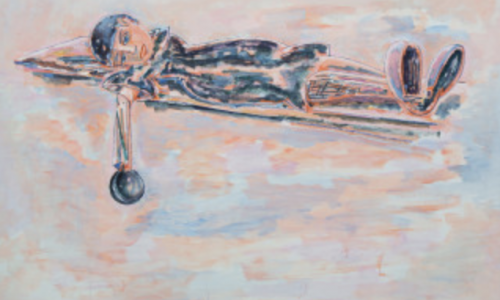
the MOMA Aernout Mik catalogue is available at www.ftn-books.com

aernout mik

Posted on 8 Comments

Guido Strazza (1922)

Schermafbeelding 2020-07-07 om 16.06.16

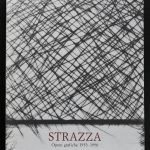
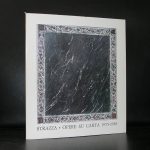
One of the grand old masters in Italian modern art is Guido Strazza. His works remind me of the ones Hans Harting made during the Sixties, but these are different….more spontaneous and they have a lighter touch. Perhaps this is because his graphic works has a kind of transparency which is rare. thin lines , scattered in a pattern. like a mikado game transformed into art.

Schermafbeelding 2020-07-07 om 16.10.25

This rare quality was recognized by Willem Sandberg who held an exhibition with Strazza in 1961 at the Stedelijk Museum ( catalogue available at www.ftn-books.com)/

OLYMPUS DIGITAL CAMERA

In the Seventies and early Eighties Strazza was almost forgotten, but lately his works are in fashion again. These are abstract works that tend to Minimalism and perhaps that is the reason why Strazza is becoming more popular by the year. The result several publications and some major exhibitions with his works.


Posted on Leave a comment

Amédée Cortier (1921-1976)

Schermafbeelding 2020-07-06 om 15.19.50

This blog on Cortier is long due. I love Cortier and because his publications are scarce I almost forgot about him, but now that I have found the most important Cortier publication on his abstract works it is time to devote a blog to Amédée Cortier.  The book is on his abstract works and even contains a chapter on Cortier written by one of all times best curators …Jan Hoet.

cortier ludion a

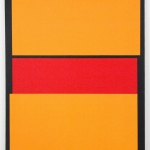
From 1936 to 1942, Amédée Cortier enjoys his training at the Royal Academy of Fine Arts in Ghent. On the one hand, his oeuvre consists of paintings that he makes in various media (acrylic, oil, gouache, aquarelle, India ink or bistre, among others) on panel, paper or cardboard. On the other hand, he makes pen drawings, reliefs and models. Around 1950, influenced by the exhibition Le Cercle Artistique (Ghent, 1949), he applies himself to a short-lived geometric-abstract experiment, but decides after this to return to embrace his figurative visual language. He begins with painting rural scenes (1940), still lives and portraits of women (1950), and evolves towards a stark, simplified figurative language in schematic compositions. André Lothe (1885 – 1962) exerts an important influence on him with his Traité de la figure (1950) and Traité du paysage (1939). Around 1964 Cortier begins to paint resolute abstract and from 1966 – 1967 he favours colour over the relations between the forms. The transition to acrylic paint is to be understood in the same context. This medium helps him to heighten the intensity of his colours. His stark works are witness to a sense of natural law, but also leave room for intuition. Ultimately Cortier changes over to monochrome, by which he creates mutually coherent ensembles in the form of diptychs and triptychs. With his reliefs (1968), he evolves from the traditional painting to painting as object. Beginning in the 1970’s his work is completely dominated by colour, built up around a stark composition and a unity between colour and form. He gains public recognition with these works.

Cortier sees his own oeuvre confirmed in the work by the artist Ellsworth Kelly (1923 – 2015). Under the impulse of Peter Struycken (1939) he meets Kelly in 1976. As a member of Het Antenneke, his fascination grows for the Golden Ratio, an important compositional rule in his oeuvre. His friendship with Yves De Smet (1946 – 2004) is of crucial importance for his artistic career. He is not only a like-minded artist friend, but is also an important promoter and organiser of exhibitions dedicated to Cortier, such as Horizonnen & horizontalen (Horizons & horizontals) (1976). Cortier becomes a member of the Ghent group organised by De Smet called Plus-Groep, a collective of Ghent constructivists that are seeking the unity between form and colour. Via Plus-Kern – Centre for Constructive Design, established by De Smet and others in 1969, Cortier is actively promoted. This occurs through the medium of publications such as Plus-Nieuws, though also through participation in international exhibitions. In 1973 he is internationally recognised with the Sikken Prize.

Posted on Leave a comment

George Hendrik Breitner (1857-1923)…continued

Schermafbeelding 2020-07-06 om 15.10.29

Over 3 years ago I wrote a short blog on Breitner in which i wrote about his models and his Japanese Kimono painting. This blog is on another aspect of his artist life.

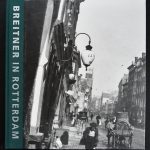
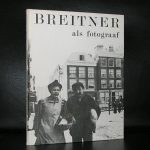
Breitner is known to have been one of the very first artists who used photography as a means for composing his paintings. The photographs he made were for him like sketches he made in the streets. These early days of photography everything was different…ni camera phones but large camera’s with sensitive plates, but the result was not only historically of importance but showed great artistry.

Schermafbeelding 2020-07-06 om 15.12.07

This quality is now recognized of one of the very important aspects of his artist life and many of his photographs are now in public collections being a part of the heritage of the complete artist George Hendrik Breitner was. He was one of the very first street photographers in the world.

www.ftn-books.com has some Breitner photography books available.


Posted on Leave a comment

Harke Kazemier and ATELIERLOG

Schermafbeelding 2020-06-30 om 16.13.58

Just a site this time and an absolute tip for people who are interested in artist and their creative process. Artist are all photographed in their studios, which gives a great inside where and how art is created. The list contains numerous names of great artists and over the years has grown into one of the great sites to find information on art and their artists. Harke Kazemier, an artists himself has composed and edited this list from 2005 onwards.

example: Jan Cremer in his studio, 2008

Schermafbeelding 2020-06-30 om 16.47.55

Here is the link which directs you to the blog he wrote on Piet Dirkx.  There are a few hundred names on the list and many you will recognize. Just wander around and be amazed by the many entries written on the artists and when you search for more information on the artists check with www.ftn-books.com for publications available

http://atelierlog.blogspot.com/search/label/Piet%20Dirkx%20%281953%29


Posted on 6 Comments

The Triton Foundation/collection

Schermafbeelding 2020-06-30 om 16.00.40

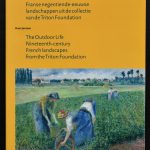
The Triton collection is considered to be one of the 2oo most prestigious private art collections in the world. The collection was build in a relatively short period of time but contains the most important names from the modern art world. The spectacular collection was collected by the couple Willem Cordia (1940-2011) and Marijke van der Laan. Cordia built his fortune with investing in the port of Rotterdam and oil.

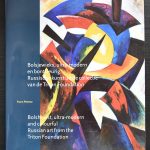
The collection was transferred into a Foundation and together with the foundation, the Gemeentemuseum named a room after the Foundation. the “Triton kabinet” and in this room the most important works of art were being presented. The result a series of art books dedicated to the artists and art of the Triton foundation ( available at www.ftn-books.com)

The collection contains 250 important works of art. Paintings, drawings and sculptures by the most famous of all artists a.o Vincent van Gogh, Odilon Redon, Paul Cézanne, Claude Monet, Pierre Bonnard, Édouard Vuillard, Amedeo Modigliani, Kees van Dongen, Raoul Dufy, Georges Braque, Pablo Picasso, Piet Mondriaan, Francis Picabia, Alberto Giacometti, Yves Klein, Lucio Fontana, Piero Manzoni, Günther Uecker, Willem de Kooning, Ellsworth Kelly, Frank Stella en Lucian Freud.

Posted on 1 Comment

Hugh Weiss (1927-2007)

Schermafbeelding 2020-03-09 om 16.38.07

The first time i encountered some actual painting by Hugh Weiss, was at the timne the Venduhuis held an auction with works from the estate of Hans Sonnenberg, the former owner of the Delta Gallery in Rotterdam. Sonnenberg had a very personal way of collecting and was not affraid to present young artists like Haring and Basquiat in the Eighties and Schjolte and van Geest in the Eighties/Nineties. In the Sixties he liked a different kind of art and beside some POP ART he presenetd there was this American born artist who he liked very much…..Hugh Weiss

Hugh Weiss was born in Philidelphia in 1925, but practically lived his entire working life in Paris /France. Here he has made a name for himself and from France  a contact with Sonnenberg was established, The result exhibitions at galerie Delta of which one catalogue is available at www.ftn-books.com. It is the 1965 catalogue

weiss delta

The works intrigue, but not so musch as that at timne of the auction i wanted to add one to my collection. I focussed instead on the Arie van Geest paintings and i was successful. Now that i look at them again in the catalogue i think it is a pity that i did not bid, but wh knows perhaps in the future there is another chance.

Schermafbeelding 2020-03-09 om 16.50.40

Posted on Leave a comment

Marijke van der Wijst (1940)

Schermafbeelding 2020-06-25 om 16.52.38

Marijke van der Wijst is a true force in the dutch design world and responsible for many of the great dutch interior designs of public cultural places. There is of course the interior of the Anne Frank huis and the Berlage wedding room,

Schermafbeelding 2020-06-25 om 17.02.50

but for me, van der Wijs most important project was her influence tof the way the Boymans van Beuningen Museum reshaped its presentations in the Eighties. More spacious, clean coll colours and almost transparent. This way of presenting the great collection of the Boymans van Beuningen was followed by many in the years after they had made the changes in resenting the collection. This is part of the great book on van der Wijst published by 010 Publishers and designed by the very best for this subject…Gracia Lebbink. A beautiful publication, timeless and filled with great van der Wijst designs. Available at www.ftn-books.com

wijst


Posted on 1 Comment

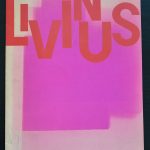
LIVINUS (van de Bundt) (1909-1979)

Schermafbeelding 2020-06-25 om 16.42.49

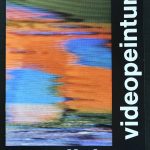
Experimental photo painting and one of the first video artists in the world , Livinus made a name for himself in the mid Seventies with this kind of art and the Haags Gemeentemuseum was one of the first to show this kind of art by a dutch artist in the Netherlands.

Schermafbeelding 2020-06-25 om 16.43.34

There is a reality that is “more real that what is visible”, in which thinking can only use the abstract formulas of physical science. In contemporary art this reality can be experienced with new methods. The light experiments of Van de Bundt have a special place in this; his light manipulations, (projections or so-called photo paintings) are non-material and provide a picture of a pure energetic world.

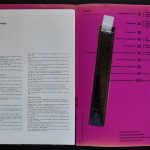
Since he received several prestigious art prizes of which the Sikkens price is the most renowned one. www.ftn-books.com has some nice LIVINUS publications available including one with some original film.