Posted on Leave a comment

Konrad Klapheck (1935)

Schermafbeelding 2018-09-03 om 15.12.57

It is still not clear to me if i should call the art by Konrad Klapheck the german equivalent of Pop Art or German realism. …Just tell me what you think yourself?

Fact is that his art is highly recognizable and emerged in an era where ordinary items like typewriters and teakettles were blown up, abstracted and enhanced and painted on canvas. The art of Konrad Klapheck could be described as a typical “east german” kind of art the use of green and brown are very present in his paintings, but where this comes from is not clear, because he was born , raised and even studied in Dusseldorf. But his use of these specific colors makes this not the happy kind of Pop Art like the Pop Art of the Americans or the French, but a restrained kind of Pop Art. His subsequent paintings, often large in scale, are precise and seemingly realistic depictions of technical equipment, machinery and everyday objects, but strangely alienated; they are “monumental, amusingly absurd and sexually suggestive”.

Klapheck’s subjects through the years have included (in order of introduction) typewriters, sewing machines, water taps and showers, telephones, irons, shoes, keys, saws, car tires, bicycle bells and clocks. Influenced by Duchamp, Man Ray, and Max Ernst, Klapheck’s “ironic treatment of everyday mechanics” prefigures Pop art in its magnification of the trivial. www.ftn-books.com has some Klapheck titles available

Posted on Leave a comment

Tineke Griffioen retires on 12/1/2018

tineke sepia

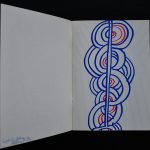
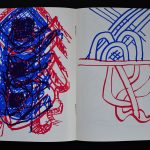
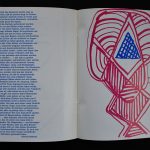
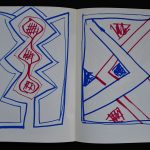
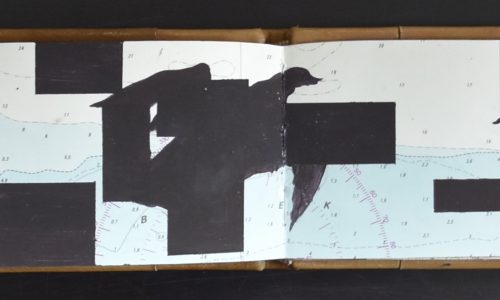
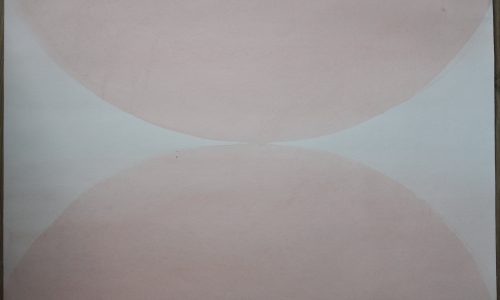
Finally, after 43 years of being one of the most loyal and dependent employees of the Gemeentemuseum  Den Haag, Tineke Griffioen decided to retire from her jobs at the museum. From Prentenkabinet to DTP she made not only a career within the museum, but was also very much involved into the well being of her colleagues. The museum will miss this very friendly and dependent employee who had an expertise in prints and drawings. The set depicted in this blog comes from a Siep van den Berg sketch book he made in France in 1990 and shows that the following pages from the book were not accidentally filled in, but that each drawing developed into a very nice Constructivist composition. This very set was presented to Tineke for being the colleague that she has always been to me….Thank you and have a great retirement!

tineke berg

PS. Other sets are available at www.ftn-books.com , Please inquire

Posted on Leave a comment

Giovanni Nicolai ( continued )

Schermafbeelding 2018-11-27 om 07.25.44

This is to announce that FTN Art will represent Giovanni Nicolai with his art work.

From now on a selection of his art will be available in the FTN Art section of these pages. Feel free to contact me if you want more information. The start will be  a series of affordable sketches at euro 150,–. Executed in different techniques with Crayon , pencil and paint on paper. If you desire information on his paintings please sent me a mail and i will propose you  a selection of paintings currently available.
Posted on Leave a comment

Luciano Fabro (1936-2007)

Schermafbeelding 2018-09-02 om 11.31.47

Luciano Fabro…an italian artist rooted in the ARTE POVERA and perhaps a little bit forgotten nowadays.

But Fabro stays very imortant for Modern Art, since his works are very much in line with other great artist from that era. Castellani and Manzoni were of great influence to him and in 1958, after he saw Lucio Fontana’s work at Venice Biennale, Fabro moved to Milan where he spent the rest of his life pursuing his artistic career.
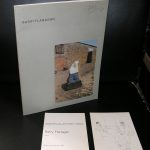
Fabro was involved in the Arte Povera group, which was interested in experimenting with industrial and natural materials, focusing on process, language and the body. Fabro’s best known works were sculptural reliefs of Italy made out of glass, steel, bronze, gold and even soft leather. The signature unorthodox, ‘poor’ materials in his works include steel tubes, cloth, newspapers, and wax; the artist, however, often used also traditional and expensive art materials such as gold, marble, and bronze. At the height of the ARTE POVERA group, the Boymans van Beuningen Museum organized and exhibition with the works by Luciano Fabro and after this exhibition other exhibitions followed in the Netherlands. The catalogue is available at www.ftn-books.com
Posted on Leave a comment

Felix Labisse (1905-1982)

Schermafbeelding 2018-08-31 om 17.08.22

Felix Labisse, is for me one of the great surrealist painters from last century and i have a life long admiration for the artist and his works.

It must have been around 1970 that i visited in the company of my parents Paris. I started to grow an interest in art and limited editions because i had a membership with ARTA . a small gallery with a subscription program to buy at membership prices graphic art. My entire collection at that moment well below 5 lithographs.

Paris it was and beside the scenic neighbourhoods , museums and tourist attractions we went to shop at “galerie Lafayette”. We took the escalator and on the top floor …there it was . a true ART gallery and the first piece on show was this lithograph in a signed edition.

Schermafbeelding 2018-08-31 om 17.07.31

I was so impressed with the lithograph that i borrowed the money with my father to buy it and since it has been in my collection. I still love the beauty of the typical Labisse female figures. It is not on the wall anymore, but is still very much appreciated as a wonderful piece of art that i cherish for being a Labisse and for being one of the first pieces of art that i ever bought.

www.ftn-books.com has some nice Labisse publications available

btw. The beautiful portrait of Labisse sitting is by Brassai


Posted on Leave a comment

Nicolas de Stael (1914-1955)

Schermafbeelding 2018-09-02 om 10.49.45

Another artists artist is Nicolas de Stael. You can find some of his works in french museum and possibly there are some works in the Netherlands in collections, but the main part of his paintings that are in public collections can be found in French museum, because in France de Stael is known.  Undeservedly de Stael has not become the great name in art he deserves to be. He should be known worldwide , because his abstract art is a highly personal voyage through the landscape of Modern Art. In his short life he experimented with lyrical geometric abstract forms , using less prominent colors than many of his contemporaries.

Every decade there is another large retrospective exhibition in which is tried to explain the importance of de Stael, but so far without success. Still it is neccessary that curators from all over the world present again and again this groundbreaking atist until the greater public becomes familiar with his kind of forms , shiftings and paintings and starts to appreciate this great artist. Preferably not in a way that in every household a reproduction is hung on the wall because it is fashionable to have a “DE STAEL’ on your wall, but in a way that a large public can grow accustomed  to and appreciate this great artist. to start….

www.ftn-books.com has some great titles available

Posted on Leave a comment

Bob Bonies (1937)

Schermafbeelding 2018-09-02 om 10.10.41

For me the only true “Hard edge” artist in the Netherlands is Bob Bonies, however Michiel Morel refers to the art of Bob Bonies as a rearrangement of FORMS AND COLORS.

I read his excellent article and it is unfortunate that it is only available in dutch, but for those who understand the language here is the link :

Bonies: Ordening van vorm en kleur (periode  1964 – 1968) (3)

As you can read in the article . Bonies stayed true to his art of rearranging , shifting and placing forms and colors in a new context and one of the earliest silkscreen that was published in a larger edition was the one he made for the Stedelijk Museum catalogue VORMEN VAN DE KLEUR

in which his contribution stands out together with the one Ellsworth Kelly made for the same publication. This Wim Crouwel designed publication is available at www.ftn-books.com

left Bonies and right Kelly

I have a lifetime admiration for Bob Bonies. He was one of the first artists i personally met at the Gemeentemuseum and a few years ago i bought a small collection of his publications from another bookdealer who had bought them from a Bonies collector and within one of the publications i found the birth card of his son Jiri. Even this card shows the quality of his works. The card is for sale too together with many other Bonies publications.


Posted on Leave a comment

The artists in the world ……

Schermafbeelding 2018-09-02 om 10.22.02

The artists in the world …a never ending art trip

https://www.artistintheworld.com

Above the site location which contains over 4000 photographs now of visited artist all over the world. All photographed in their studios with their back to the camera and link(s) to their internet pages. A fascinating story and one that i visited frequently because of the blogs i am writing. Many of these artist are known to me too. Some of them i visited myself in their studios, but many of them are represented in my inventory at www.ftn-books.com

Schermafbeelding 2018-09-02 om 10.23.08

Posted on Leave a comment

Walter Gramatte (1897-1927) a German expressionist rediscovered.

Schermafbeelding 2018-08-31 om 16.41.11

Totally original…that is what i think of Walter Gramatte. His style is as recognizable as some of his contemporaries. Schiele, Klimt and and Klee are recognized within a split second and Gramatte is one of these artist who’s works are recognized as soon as you encounter and see them.

Since two decades there has been a new a renewed appreciation for his works, but publications on Gramatte are still rarities. Nevertheless www.ftn-books.com has a few titles in its inventory.

Walter Gramatté was born in 1897 in Berlin and died in 1929 in Hamburg.

Gramatté had a very short (15 years) career but a very productive one – paintings, drawings and prints with subjects of figures, portraits, still life’s, landscapes and book illustrations.

He fought in the First World War and was disillusioned as a result.  Like many artists of his generation his works depicted the individual and existential states of being. (Gramatté book, Kirchner museum). He was married to the Russian composer Sonia Fridman-Gramatté.