Posted on Leave a comment

Minimal Art at the Haags Gemeentemuseum

minimal gm a


It was in the early Eighties that i learned of the Minimal Art collection and history of the Haags Gemeentemuseum.

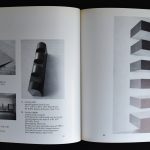
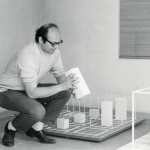
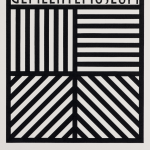
Crucial for the collection was the interest of almost all modern art curators in Minimal Art. Starting with Enno Develing who introduced the key artists of the Minimal Art scene for the first time in a large exhibition in 1968. Among them Donald Judd, Dan Flavin, Carl Andre and of course Sol LeWitt. Many of them would receive solo prentations in the years to follow, but this first time was a breakthrough for Minimal Art. The catalogue is arare book nowadays and i am lucky to have a copy for sale at www.ftn-books.com

After this first exhibition many exhibitions would follow. Enno Develing, Flip Bool, Rudi Fuchs and Franz Kaiser all took an interest in Minimal Art and because of this interest , exhibitions with LeWitt, Andre and Judd were organized in the decades after this first  1968 Minimal Art exhibition. I doubt that none was as important as this very first one, because after this first one Minimal Art was established as an art form, but another aspect that makes this first ( Develing ) exhibition important is that the relationship between the Gemeentemuseum and these artist was not only an artistic one.  The museum and its curators became friends with practically all Minimal Art artists, resulting in an ever growing collection of Minimal Art.

There is a nice link to a tribute to Sol LeWitt to be found over here:

http://www.gem-online.nl/files/media/gem/2016/sol_lewitt._a_tribute/ebook_sollewitt_web.pdf

Posted on Leave a comment

Oliver Boberg ( 1965 )

Schermafbeelding 2018-12-01 om 14.40.47

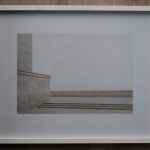
The first time i was confronted with the work by Oliver Boberg was when he had  a large Retrospective exhibition. This was in 2004 at the Fotomuseum and i was very much impressed. Specially the large scale photographs had a feel of desolation and now i have bought for FTN Art two of his greatest photographs at a much smaller scale but still these are originals and very well worth collecting. The book i had on Boberg was sold years and years ago, but this is even better for the true admirer. The photographs are both from a very small edition of 20, numbered and signed and in pristine condition. Framed in a quite expensive frame and come from a collector from the US.

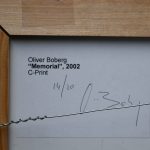
Memorial by Oliver Boberg , 2002,  edition 20, number 14/20, C-Print and signed by Boberg.

Frame measures 51 x 42 cm. C print is 35 x 25 cm. , condition is MINT

boberg memorial a


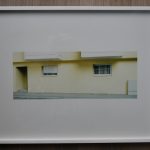
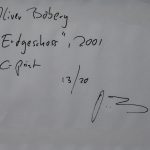
“Erdgeschoss” by Oliver Boberg , 2001, edition 20, number 13/20, C-Print and signed by Boberg.

Frame measures 51 x 42 cm. C print is 38 x 15 cm. , condition is MINT

boberg erdgeschoss a

Please visit the FTN art section on this page for more information

Oliver Boberg was born in Herten, Germany, in 1965. He studied art history at the University of Würzburg, Germany, from 1985–86, before transferring to the Art Academy Nürnberg to study painting from 1986–93. Since 1997 Boberg has garnered attention for his photographs of what appear to be bleak, uninhabited architectural sites but are in fact models constructed by the artist in his studio. The sense of neglect that haunts these scenes contradicts the painstaking meticulousness applied to their fabrication. In Boberg’s work from the late nineties, the elegant formalism of his compositions contrasts with the subject matter—color-drained stairwells, roof decks, and building facades painted to dissemble age and dilapidation. Works such as Park (1998) and Playground (2000) offer barren sites of disrepair despite their sunny titles. Boberg created his first films for the series Night Sites (2002–03). In these films, the artist utilizes familiar Hollywood devices—fluorescent blue lighting that typically permeates suspenseful night scenes and eerie settings like an abandoned alley or fog-coated forest—to promise a drama that never unfolds. In 2003, with his Building Shell series, Boberg returned to his characteristic photography of elaborate models, this time recreating multistory edifices in the midst of the construction process. In 2004 the artist began to work for the first time with black-and-white photography for his Pagesseries. In Pages and Walls (2007), Boberg revisited his photographic investigation of highly constructed, formalist sites of inattention. Inattention gives way to tragic neglect in his series Slums, begun in 2008, which focuses on the derelict makeshift dwellings composed of serrated tin and other urban debris. For this series, the artist juxtaposed his photographs with computer-generated drawings.

Solo exhibitions of Boberg’s work have been organized by the Museum of Contemporary Photography in Chicago (2001), Musée de l’Elysée in Lausanne (2002), Kunstverein Hannover (2003), and Duolun Museum of Modern Art in Shanghai (2005). His work has also been included in major group exhibitions such as Experiment at the San Francisco Museum of Modern Art (2000), Moving Pictures at the Solomon R. Guggenheim Museum in New York and the Guggenheim Museum Bilbao (2003), and Artist’s Choice: Herzog & De Meuron, Perception Restrained at the Museum of Modern Art in New York (2006). Boberg has been recognized with the Bayerischer Staatsförderpreis für junge Künstler, Fotografie (1997) and Förderpreis für bildende Kunst der Stadt Nürnberg (2005), among other awards. Boberg lives and works in Fürth, Germany.

 

Posted on Leave a comment

Tineke Griffioen retires on 12/1/2018

tineke sepia

Finally, after 43 years of being one of the most loyal and dependent employees of the Gemeentemuseum  Den Haag, Tineke Griffioen decided to retire from her jobs at the museum. From Prentenkabinet to DTP she made not only a career within the museum, but was also very much involved into the well being of her colleagues. The museum will miss this very friendly and dependent employee who had an expertise in prints and drawings. The set depicted in this blog comes from a Siep van den Berg sketch book he made in France in 1990 and shows that the following pages from the book were not accidentally filled in, but that each drawing developed into a very nice Constructivist composition. This very set was presented to Tineke for being the colleague that she has always been to me….Thank you and have a great retirement!

tineke berg

PS. Other sets are available at www.ftn-books.com , Please inquire

Posted on Leave a comment

Giovanni Nicolai ( continued )

Schermafbeelding 2018-11-27 om 07.25.44

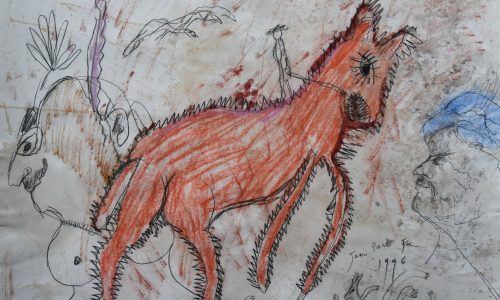
This is to announce that FTN Art will represent Giovanni Nicolai with his art work.

From now on a selection of his art will be available in the FTN Art section of these pages. Feel free to contact me if you want more information. The start will be  a series of affordable sketches at euro 150,–. Executed in different techniques with Crayon , pencil and paint on paper. If you desire information on his paintings please sent me a mail and i will propose you  a selection of paintings currently available.

Posted on Leave a comment

Bob Bonies (1937)

Schermafbeelding 2018-09-02 om 10.10.41

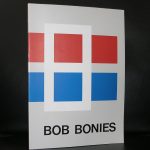
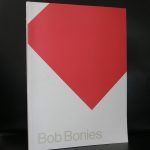
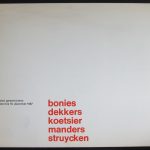
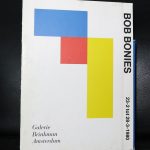
For me the only true “Hard edge” artist in the Netherlands is Bob Bonies, however Michiel Morel refers to the art of Bob Bonies as a rearrangement of FORMS AND COLORS.

I read his excellent article and it is unfortunate that it is only available in dutch, but for those who understand the language here is the link :

Bonies: Ordening van vorm en kleur (periode  1964 – 1968) (3)

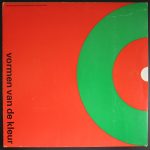
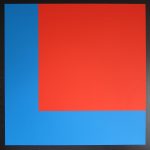
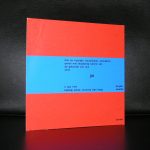
As you can read in the article . Bonies stayed true to his art of rearranging , shifting and placing forms and colors in a new context and one of the earliest silkscreen that was published in a larger edition was the one he made for the Stedelijk Museum catalogue VORMEN VAN DE KLEUR

in which his contribution stands out together with the one Ellsworth Kelly made for the same publication. This Wim Crouwel designed publication is available at www.ftn-books.com

left Bonies and right Kelly

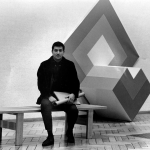
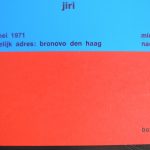
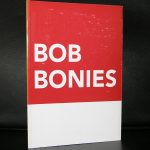
I have a lifetime admiration for Bob Bonies. He was one of the first artists i personally met at the Gemeentemuseum and a few years ago i bought a small collection of his publications from another bookdealer who had bought them from a Bonies collector and within one of the publications i found the birth card of his son Jiri. Even this card shows the quality of his works. The card is for sale too together with many other Bonies publications.


Posted on Leave a comment

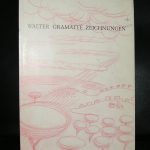
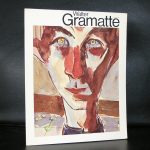
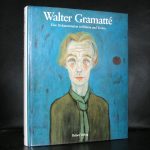
Walter Gramatte (1897-1927) a German expressionist rediscovered.

Schermafbeelding 2018-08-31 om 16.41.11

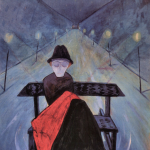
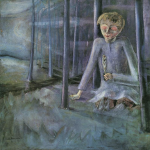
Totally original…that is what i think of Walter Gramatte. His style is as recognizable as some of his contemporaries. Schiele, Klimt and and Klee are recognized within a split second and Gramatte is one of these artist who’s works are recognized as soon as you encounter and see them.

Since two decades there has been a new a renewed appreciation for his works, but publications on Gramatte are still rarities. Nevertheless www.ftn-books.com has a few titles in its inventory.

Walter Gramatté was born in 1897 in Berlin and died in 1929 in Hamburg.

Gramatté had a very short (15 years) career but a very productive one – paintings, drawings and prints with subjects of figures, portraits, still life’s, landscapes and book illustrations.

He fought in the First World War and was disillusioned as a result.  Like many artists of his generation his works depicted the individual and existential states of being. (Gramatté book, Kirchner museum). He was married to the Russian composer Sonia Fridman-Gramatté.

Posted on Leave a comment

Another rare Constant Cobra title

Schermafbeelding 2018-08-23 om 15.59.04

Bibliotheque d’Alexandrie Paris # CONSTANT # 1959, NM+++/Mint–

This is how it is described in the headline of the object in my internet store at www.ftn-books.com

Schermafbeelding 2018-08-23 om 16.06.07

You will have a hard time in finding this title on the internet and if you find it, my guess it is it will be in less condition than the one i have on offer. This is an extremely rare title and an absolute ” must have” for all serious Constant (book) collectors. It is not that thick but its contents is highly important and one of the first special Constant publications that was published on Constant.

Posted on Leave a comment

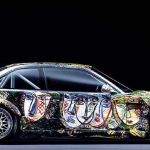
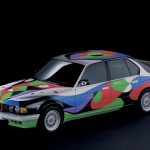
BMW (Jeff Koons) and art cars


Schermafbeelding 2018-08-19 om 09.06.18

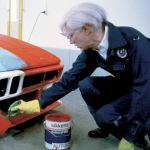
I love cars and really appreciate when a car has a beautiful design and a futuristic technique, but if there is one car make that i personally truly detest it is BMW. It not the cars that i think are detestable but more the drivers who drive a BMW. The cars have a fairly good designed exterior and a beautiful “top in class” interior, but the drivers are arguably the worst there ar on the road. In general they think they are invincible and superior to any other driver, drive to fast and are rude in traffic. That said … there is an aspect to BMW i like instead. The BMW company has a large art collection and because they value art, famous artists are invited to decorate their cars. Because the car itself represents the design of an era , the invited artist can enhance such a design. In the Netherlands a BMW was decorated by Herman Brood, but the factory BMW art program is from another level.

The best modern artists are invited to make the most spectacular designs. Among them….the late Andy Warhol and more recently Jeff Koons who worked on several of the latest BMW cars.

There are other car manufacturers that have a comparable program, but the quality of the BWW art program stands out from the rest. There is a nice book on cars and art available at www.ftn-books.com

OLYMPUS DIGITAL CAMERA

Posted on Leave a comment

Barbara Nanning (1957)..organic shapes in glass and ceramics.

Born in Den Haag, Barbara Nanning made herself an artist career in glass and ceramic objects. With one contant…. almost all her works look to be inspired by nature and organisms. Just take a look at this screenprint from Google and see for yourself what i mean. The objects look like corals, shells, plants and organs. These are heavily inspired by nature and the feeling i get from them differs. Some of them i wat to touch and caress and with others i feel unease. It is nice that these feelings are called on to you and it is a certwain quality of the art of Babara Nanning. The is one artist who gives me the same mixed feelings as Nanning does. Emil Schumacher has the same effect on me ( see the blog on Schumacher from a few years ago).

Schermafbeelding 2018-08-19 om 09.51.49

There is an excellent book on Nanning for sale at www.,ftn-books.com

Posted on Leave a comment

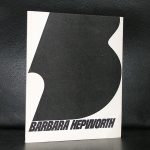
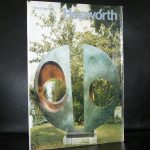
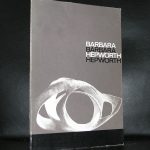
Barbara Hepworth (1903-1975)

Schermafbeelding 2018-08-19 om 09.33.24

I have always thought that the large sculpture outside the Congresbouw / World forum( by Oud) in Den Haag was a sculpture by Barbara Hepworth, but just a few years ago i discovered that i was mistaken and that the sculpture was by Pevsner.

My mistake and when you really look more closely there is a large difference between the art of these two artists. The Hepworth sculptures are much more related to the sculptures by her fellow student and contemporary artist Henry Moore and her later husband Ben Nicholson. There are quite a few sculptures of her in the Netherlands because in the sixties several exhibitions were held at which occasions her works were sold.  Some of the best Hepworth catalogues are available at www.ftn-books.com

The Tate gallery has an excellent introductory text on Hepworth which they published on the 2015 Hepworth exhibition. Here is part of tghis text, but you can find the complete introduction at

https://www.tate.org.uk/art/artists/dame-barbara-hepworth-1274/who-is-barbara-hepworth

Who is she? 

Barbara Hepworth was a British sculptor, who was born in Wakefield, Yorkshire in 1903. She was a leading figure in the international art scene throughout a career spanning five decades.

Who were her peers?

Hepworth studied at Leeds school of Art from 1920–1921 alongside fellow Yorkshire-born artist Henry Moore. Both students continued their studies in sculpture at the Royal College of Art in London. Both became leading practitioners of the avant-garde method of Direct Carving(working directly in to the chosen material) avoiding the more traditional process of making preparatory models and maquettes from which a craftsman would produce the finished work.

From 1924 Hepworth spent two years in Italy, and in 1925 married her first husband, the artist John Skeaping, in Florence; their marriage was to last until 1931. 

From 1932, she lived with the painter Ben Nicholson and, for a number of years, the two artists made work in close proximity to each other, developing a way of working that was almost like a collaboration. They spent periods of time travelling throughout Europe, and it was here that Hepworth met Georges Braque and Piet Mondrian, and visited the studios of PicassoConstantin Brancusi, and Jean Arp and Sophie Taueber-Arp. The experience was a hugely exciting one for Hepworth, for she not only found herself in the studios of some of Europe’s most influential artists, which helped her to approach her own career with renewed vigour and clarity, but also found there mutual respect. The School of Paris had a lasting effect on both Hepworth and Nicholson as they became key figures in an international network of abstract artists.