Posted on Leave a comment

Jean Messagier (1920-1999) continued

Schermafbeelding 2020-06-16 om 14.25.41

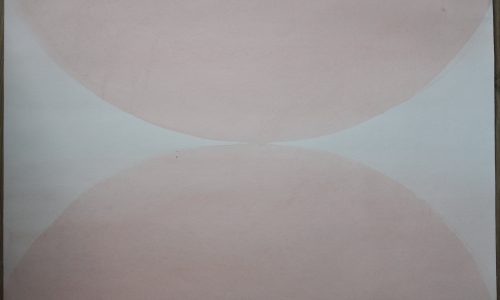
I always have been a great admirer of the abstract art of Jean Messagier. Recently i acquired a collection of gallery catalogues of the New Yrok based Lefebnre gallery . A renowned gallery that was active from 1960 – 1986 and run by John Lefebre. In the early years he chose original lithographs as cover for his publications and one of these is the very impressive lithograph by Jean Messagier. Spread over 3 page this is probably the best i have ever seen by this artist. I am biased, since i am the fan of his abstract art, but even for a normal art lover this work must be outstanding.

messagier lefebre b

messagier 1964 b

The Lefebre catalogue is now available at www.ftn-books.nl

messagier lefebre a

Posted on Leave a comment

KRH Sonderborg (1923-2008)

Schermafbeelding 2020-06-15 om 16.04.13

A Danish born artist where KRH stands for Kurt Rudolf Hoffmann and the Sonderborg stands for his birth town and he started to call himself KRH Sonderborg since 1951.

Sonderborg went to school in Hamburg, Germany and completed a merchant’s apprenticeship in 1939. He became a private student of the painter Ewald Becker-Carus in Hamburg in 1946. From 1947 to 1949 he studied painting, graphic art and textile design at the State Art School in Hamburg under Willem Grimm and Maria May.

Starting in 1953, he became a member of the group “Zen 49” and he went to Paris the same year where he learned engraving from Stanley William Hayter in the Atelier 17. Paris is also the place where he first encountered Tachism. In the years following the artist continued his travel and worked for some time in London, Cornwall, New York, Ascona, Rome and Paris again. While in New York, Sonderborg came into contact with Action Painting and Abstract Expressionism.

His own style is became more abstract, painting using swift, gestural strokes that reveal the painting process, with spontaneous colour application. Black and white contrasts are an important feature, later he added colours such as cadmium red.

K.R.H. Sonderborg exhibited in the 1958 Biennale in Venice. He was awarded the Prize for Graphic Art at the Biennale in Tokyo in 1960 as well as the Great International Prize for Drawing at the 1963 Biennale in Sao Paulo, Brazil.

From 1965 to 1990 Sonderborg held a post as professor of painting at the Stuttgart Art Academy. In 1969/70 he was a guest lecturer at the Minneapolis College of Art and Design, as well as at the Art Institute of Chicago in 1986.

the following Sonderborg publications are available at www.ftn-books.com

Posted on Leave a comment

Serge Poliakoff (1906-1969)

Schermafbeelding 2020-06-15 om 15.54.39

I love his art. It always reminds me of the best dutch abstract artists from the 60’s and i would not be surprised of Willem Hussem was influenced by Poliakoff’s art

Serge Poliakoff was born in Moscow in 1906, the thirteenth of fourteen children. (Some sources claim that he was born in 1900, which in fact fits in better with his later history – 1906 would have him leaving home and earning his living as a musician at the age of 12.) His father, a Kyrgyz, supplied the army with horses that he bred himself and also owned a racing stable. His mother was heavily involved with the church, and its religious icons fascinated him. He enrolled at the Moscow School of Painting, Sculpture and Architecture, but fled Russia in 1918. He arrived in Constantinople in 1920, living off the profits from his talent as a guitarist.

He went on to pass through Sofia, Belgrade, Vienna, and Berlin before settling in Paris in 1923, all the while continuing to play in Russian cabarets. In 1929 he enrolled at the Académie de la Grande Chaumière. His paintings remained purely academic until he discovered, during his stay in London from 1935 to 1937, the abstract art and luminous colours of the Egyptian sarcophagi. It was a little afterwards that he met Wassily Kandinsky, Sonia and Robert Delaunay, and Otto Freundlich.

With these influences, Poliakoff quickly came to be considered as one of the most powerful painters of his generation. In 1947, he was trained by Jean Deyrolle in Gordes (Vaucluse region in France) amongst peers such as Gérard Schneider, Giloli, Victor Vasarely, and Jean Dewasne. By the beginning of the 1950s, he was still staying at the Old Dovecote hotel near Saint-Germain-des-Prés, which was also home to Louis Nallard and Maria Menton, and continuing to earn a reliable income by playing the balalaika.. A contract enabled him to quickly gain better financial stability.

In 1962 a room was given over to his paintings by the Venice Biennial, and Poliakoff became a French citizen in the same year. His works are now displayed in a large number of museums in Europe and New York. Poliakoff also worked with ceramics at the Manufacture nationale de Sèvres. He influenced the paintings of Arman.

The following Poliakoff publications are available at www.ftn-books.com

Posted on Leave a comment

Erik Ortvad (1917-2008)

Schermafbeelding 2020-06-15 om 15.42.20

One of the founding cities of the COBRA movement is Copenhagen and one of the true Danish COBRA members was Erik Ortvad.

Ortvad was born on the 6th of June, 1917 in Copenhagen. He was a painter and a graphic artist, who was known to be an autodidact. He has been painting since 1935 from a very young age. In this period his paintings were influenced by the surrealistic and abstract style of Ejler Bille (1910-2004), Vilhelm Bjerke Petersen (1909-1957) and the artists group called Linien (The Line) (1934-1949). During 1941 and 1942 Ortvad was, just like many other Danish artists and contemporaries, in search of more spontaneity in the course of his creative process. He began to paint with a more spontaneous-abstract style, at which he would use small brushstrokes to purvey his canvases on numerous occasions with the colours grey, pink, yellow and blue.

Schermafbeelding 2020-06-15 om 15.47.24

Ortvad joined the Danish pre-war experimental artists association Høst (1942-1949) in 1945 as the youngest member. Through Høst he came in contact with members of CoBrA (1948-1951), an international post-war avant-garde movement that believed that art must originate from artistic freedom, fantasy and spontaneity. Ortvad’s artworks were shown in 1948 at the Van Lier gallery in Amsterdam. His artworks were also shown in 1949 and 1951 at the renowned CoBrA exhibitions in Amsterdam and Liège. Ortvad decided a year after the abolishing of CoBrA to put his paintworks aside and focus on his desire to draw cartoons. He did this under the pseudonym ‘Enrico’. After the year 1960 he directed his focus on his spontaneous painting style once again. In contrast with his earlier works, his later works are defined by a powerful characterization existing of fiercely, saturated colours, strong lines and visible brush strokes.

It took al very long time for me personally until I discovered Ortvad, but now that I have encountered his works I believe I like him better than most of his dutch fellow COBRA members. The below publication is available at www.ftn-books.com

cobra denmark


Posted on 56 Comments

Josef Albers silkscreens

A great inspiration for Sol LeWitt and considered by many as one of the greatest artists from the 20th Century. Josef Albers is the artist I am writing about this time. In an earlier blog I explained the importance for Minimal art of Josef Albers but this time the blog is devoted solely to the great original silkscreens I am exclusively offering on eBay. The series of 4 comes from a private collector and is from 1973. The silkscreens are executed on a double sheet of paper and are exquisite in the choice of colours. Albers is the true master of matching the best colours. The composition of HOMAGE TO THE SQUARE is always the same but the choice of colours and size make you look at a different work of art the moment you see it. These original silkscreens are 8.1 x 8.1 inch and now available at eBay’s  all international sites.


Posted on Leave a comment

A constructivist book collection

construct bbbLast week I acquired a small collection of Constructivist book titles which will be listed on eBay and www.ftn-books.com in the coming weeks. Here is the preview and of course if there are among these titles some you would like to purchase for your collection do not hesitate to write me at ftnbooksandart@gmail.com.

construct ccc

construct aaa

Posted on Leave a comment

Two “scarce” Stedelijk Museum additions

bloc parent b

bloc parent c

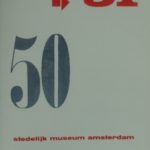
It has been a long time since i encountered the No. 183 catalogue ,published by the Stedelijk Museum in 1958. The publication is a leporello like publication which folds out and describes the contributions by three French artists. The design done by Willem Sandberg makes this one stand out and it is one of the most scarce publications by the Stedelijk Museum. The artists André Bloc, Claude Parent and Charlotte Perriand. an absolute must have for the admirers of these artists and a highly collectable item for all interested in the Stedelijk Museum publications. (now available at www.ftn-books.com)

The second one is even more scarce and it is one i never have encountered before in all these years that i sell Stedelijk Museum publications. Designed by Wim Crouwel it is only a 4 page publication. Specially made for the Werkgroep Plakat Praag / Politieke affiches uit Tsjechoslowakije ( ODPOVĒDNOST)/ 1965. This is another highly desirable item for Stedelijk Museum/Crouwel collectors.

Posted on Leave a comment

Jan Hendrix (1949)

Schermafbeelding 2020-02-20 om 16.23.43

Hendrix is a well known artist outside the Netherlands but is hardly known over here. Traveling all over the world he collects images and scenes which he later translates into paintings and drawings. Such a series is “Bitacora” which was exhibited in the Netherlands too.

Jan Hendrix was born in Maasbree, the Netherlands .He was born into a farm family that opposed his artistic aspirations. At sixteen, he routinely skipped classes except for art.[2] At seventeen, he entered the Den Bosch Royal Art Academy, but was expelled for rebelliousness. In 1968, he was invited by dutch/Japanese artist Shinkichi Tajiri to enter the Ateliers ’63 School in Haarlem, which was considered the most radical school at the time. Here he received a multidisciplinary education and at the same time worked at the Smeets press in the city of Weert. From 1971 to 1975, he worked on his masters at the Jan van Eyck Academie, where a professor encouraged him to focus on the graphic arts.

Schermafbeelding 2020-02-20 om 16.31.08

Between 1971 and 1976, he lived in France, Portugal, Norway, and Iceland, and has lived and worked in Mexico since 1978.He has visited Kenya (1990), Egypt (1991), China and Australia (1996), Turkey (1998), Ireland (1999), Spain and Yugoslavia (2001) .

Since 1978, he has remained in Mexico City, where he currently resides. He took a year sabbatical in 2010 to study the first Australian plants collected in 1770, which are at the Natural History Museum of London.

His works range from artist’s books, print editions, enamel installations, etched glass, and paintings, to architectural projects. Since the 2000s, he has held an average of three to four exhibitions each year. In the 1970s and early 1980s, he started with multiple exhibitions at galleries in the Netherlands such as Agora Studio in Maastricht and Printshop and Galerie Clement in Amsterdam then the Galería de Arte Mexicano in Mexico City after he took up residence.[3] He began exhibiting solo in 1975 and since has participated in both solo and group exhibitions in Mexico, Europe, the United States, Asia and Africa.

A number of these were major exhibitions which toured in multiple places. Bitacora consists of images from various countries. It was exhibited in the Wan Fung Gallery in Beijing, Zhu Qi-Zhan Museum in Shanghai, Erasmushuis, in Djakarta, UTS Gallery Sydney, Tropenmuseum, Amsterdam, Museum of Painting and Sculpture in Ankara and the Centro de la Imagen, Mexico City. Storyboard was exhibited in the Instituto Cultural Cabañas in Guadalajara, Museo Amparo, Puebla and Museo de Arte Contemporáneo de Monterrey. Botánica was exhibited at the Calcografía Nacional de España in Madrid, Espacio Cultural Metropolitano in Tampico, Museo de Arte in Querétaro, Centro Cultural Tijuana, Galería de Arte Mexicano in Mexico City.

He work can be found in numerous public and private collections in various parts of the world including, Instituto Nacional de Bellas Artes y Literatura, National Council for Culture and Arts of Mexico, Hiscox in London, Institution Ferial de Extremadura, Junta de Extremadura, the Bankinter Collection, the Baker & McKenzie Collection, the Caixanova Collection, the Museo de la Comunidad de Madrid, Rodriguez Acosta Foundation in Granada, Bibliothèque nationale de France, Bonnefanten Museum, Fundación Cultural Televisa, Institution de Artes Gráficas in Oaxaca, Museum Von Bommel and Tropenmuseum in Amsterdam, Museo Universitario de Ciencias y Arte of UNAM and Irish Museum of Modern Art .

Some of Jan Hendrix his publications are available through www.ftn-books.com

jan hendrix

Posted on 1 Comment

Jan Bor (1910-1994)

Schermafbeelding 2020-02-19 om 12.41.18

Recently i added a catalogue published by the Dordrechts Museum to my inventory. The catalogue published in 1995, caught my eye because of its design. Designed by Richard van den Dool it has become a beautiful publication on a painter who is hardly known. Taught and certainly influenced by Charley Toorop he left a small oeuvre which deserves to be better known. Among art lovers his name is known, but outside the “in Crowd” his name will rarely be mentioned. Here is an oppertunity to inform yourself on this lesser known painter from the last century. Book is available at www.ftn-books.com 

jan bor


Posted on Leave a comment

Yoshitoshi, two sides of the same medal

Schermafbeelding 2020-02-18 om 16.01.59

There are literally two sides of Yoshitoshi as an artist . There is the dreamlike artist with a poetic flute player and on the other side there is the violent artist who depicts horror scenes.

Schermafbeelding 2020-02-18 om 16.02.30

What is present in both these prints from the same artists is the beautiful technique of his prints. Mouvement, use of color and composition are all of the highest quality. I personally prefer Yoshitoshi’s art above all other Japanese print makers. Of course Utamaro has depicted the most beautiful women and Hokusai’s landscapes are beyond compare, but with Yoshitoshi his prints it is something special for me. There is mouvement and action in these prints and put these prints one after the other, a story emerges, just like a modern graphic novel. The RIJKSMUSEUM has published a great series on Japanese Prints and www.ftn-books.com has recently acquired the Volume V in the series totslly dedicated to Yoahitoshi and his fellow artists from that age… THE AGE OF YOSHITOSHI is an absolute must for his admirers.

yoshitoshi