Posted on Leave a comment

Jan Hendrix (1949)

Schermafbeelding 2020-04-05 om 12.28.23

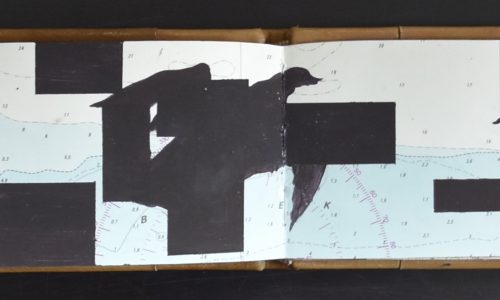
This is the other Jan Hendrix. A contemporary of Jan Hendriks, but one that works from outside the Netherlands too and has a studio in Mexico. This land and its culture has a direct influence on his works. Hendrix is inspired by nature and this shows in practically all his works. The reason for this second blog on a “HENDRIX/HENDRIKS” is the catalogue i recently acquired . It is a galeria de arte Mexicano publication from 1980 in which series of polaroids are combined into some great works of art…..the subject….nature of cours and because i myself like the MOLESKINE notebooks i included a nice video of Hendrix and his use of the Moleskine’s


hendriks x

Posted on Leave a comment

Billy Apple ( Barrie Bates – 1935 )

Schermafbeelding 2020-07-23 om 16.16.36

Billy Apple is considered to be a Pop Art artist, although he side stepped at some occasions his main works are related to the Pop Art movement. Coming from New Zealand but working and living in the US he made a career for himself knowing many of his great contemporaries personally.

Schermafbeelding 2020-07-23 om 16.27.42

Billy Apple (ONZM) is an artist whose work is associated with the New York and British schools of Pop Art in the 1960s and with the Conceptual Art movement in the 1970s. He collaborated with the likes of Andy Warhol and other pop artists. His work is part of the permanent collection of the Museum of New Zealand Te Papa Tongarewa (New Zealand), Auckland Art Gallery / Toi o Tamaki (New Zealand), the Christchurch Art Gallery / Te Puna o Waiwhetu (New Zealand), The University of Auckland (New Zealand) and the SMAK/Stedelijk Museum voor Actuele Kunst (Ghent, Belgium).

Barrie Bates was born in Auckland, New Zealand in 1935. He left secondary school with no qualifications and took a job as an assistant to a paint manufacturer in 1951. Bates attended evening classes at Elam School of Fine Arts, where he met Robert Ellis, a graduate of the Royal College of Art in London.

In 1959 he left New Zealand on a National Art Gallery scholarship. He studied at the Royal College of Art, London, from 1959 until 1962. During his time at the Royal College of Art, Bates met several other artists who went on to become a new generation of pop artists; including David Hockney, Derek Boshier Frank Bowling and Pauline Boty. He exhibited frequently during his time at the College in the Young Contemporaries and Young Commonwealth Artists exhibitions along with Frank Bowling, Jonathan Kingdon, Bill Culbert, Jan Bensemann and Jerry Pethick.

In 1962 Bates conceived Billy Apple: he bleached his hair and eyebrows with Lady Clairol Instant Creme Whip and changed his name to Billy Apple. Apple had his first solo show in 1963 – Apple Sees Red: Live Stills – in London at Victor Musgrave’s Gallery One.

Apple moved to New York in 1964: he progressed his artistic career and also found work in various advertising agencies.

A pivotal event was the 1964 exhibit “The American Supermarket”, a show held in Paul Bianchini’s Upper East Side gallery. The show was presented as a typical small supermarket environment, except that everything in it — the produce, canned goods, meat, posters on the wall, etc. — was created by six prominent pop artists of the time, including Billy Apple, Andy Warhol, Tom Wesselmann, Jasper Johns and others.

Apple was one of the artists who pioneered the use of neon in art works (Apples to Xerox and Neon Rainbows). Other exhibitions and series include Art for Sale, The Given as an Art Political Statement, Transactions, Golden Rectangle, The Art Circuit etc.

In 2008 Apple was the subject of a feature length documentary called “Being Billy Apple”.

www.ftn-books.com has acquired the important UNION JACK poster by Billy Apple he made for his 2009 Witte de With exhibition. Now available at www.ftn-books.com

union witte apple a

Posted on Leave a comment

El Kazovskij (1948-2008)

Schermafbeelding 2020-04-05 om 11.12.29

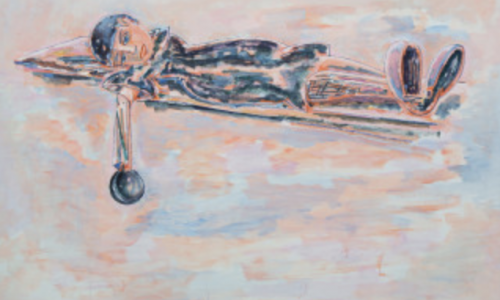
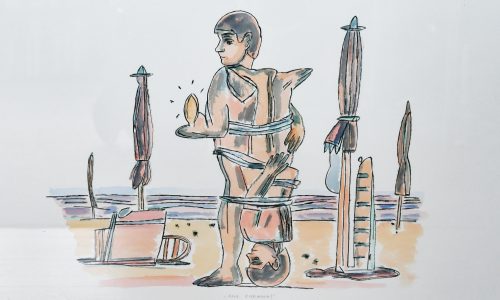
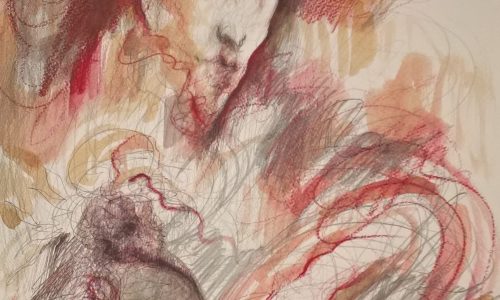
Born in Russia, but living most of her life in Hungary, El Kazovskije has hada special role in Hugarian art. The art of Hungary from the second half of last century is mostly known for constructivist art, but El kazovskije had a totally differen t approach to art . Designing costumes and making performances made him a much more complete artist than the artists from his generation.

El Kazovsky was born under the name of Elena Kazovskaya in Leningrad, Russia to Irina Putolova, an art historian, and Yefim Kazovsky, a physicist. He moved to Hungary in 1965, at the age of 15, and graduated in 1977 with a degree in painting from the Hungarian Academy of Fine Arts. El Kazovsky’s masters were György Kádár and Ignác Kokas.

El Kazovsky was open about being transgender – born biologically as a female and self-defining as an androphile man.

His art cannot be broken down into periods; all of his expressive paintings reveal the same mythological world that he created. Several recurring figures appear in many of his paintings, such as the long nosed dog or the ballet dancer figure. Besides paintings, his work includes stage designs, performances and installations.

www.ftn-books.com has a rare studio Galeria catalogue from 1979 on the artist available

kazovskije

Posted on Leave a comment

Jan Hendriks (1946)

Schermafbeelding 2020-04-05 om 11.23.09

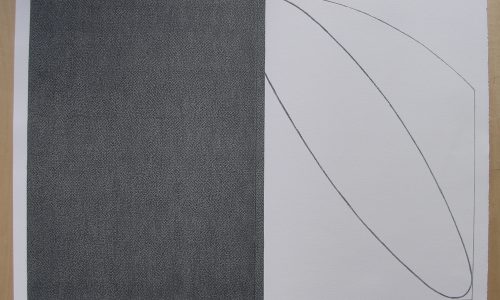
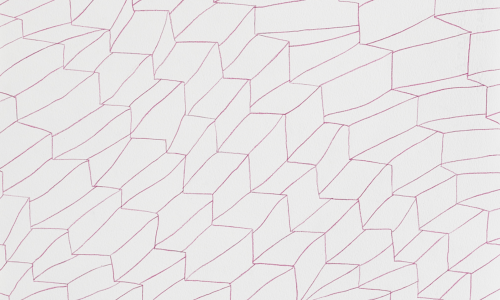
The first artists that i thought of when i first saw the works by Jan Hendriks was Klaus Staudt, but also in a distance you can experience some of the influences that Jan Schoonhoven had on art. Stil the works by Hendriks are not to be missed and must be valued on their own appearance and qualities. I like his works very much and noticed on a site when i did somne research on Hendriks that prices are still within reach of most people. The reason of writing this blog is that i recently acquired a small catalogue which shows a totally different aspect of his works.

Posted on Leave a comment

Ravelli pottery 1944-1977

Schermafbeelding 2020-03-17 om 15.14.39

There was a time you could find Ravelli pottery on Bric a Brac markets all over the Netherlands. Not any longer since these Ravelli items have becom highly collectable items with a loyal following of collectors. Started in 1944 and finishing in 1977 these Ravelli items were designed and made by Jaap Ravelli. Who worked all these years in his studio helped by some assistants.

All items were signed, so there can be no mistake about a Ravelli item. In 1989 J.M. de Koning took the initiative to make a first book on these collectibles and it was a great effort. Later other publications were published but tghis first book from 1989 set a standard for Ravelli publications. In it some history and many items from the studio. This book is now available at www.ftn-books.com

ravelli aardewerk

Posted on Leave a comment

One week ….Lefebre gallery….day 2

I just noticed that this was not posted on the 2nd of June so this is to make up for this omission. …

Last week I acquired a large collection of catalogues from the LEFEBRE GALLERY. The collection contains 63 different exhibition catalogues all fro the period that this famous gallery was open between 1960 and 1986. A great collection which I will share in the coming 7 days….today day 1

lefebre 7

from top to bottom /left to right:

Sonderborg, 1961

Emil Schumacher, 1968

Alain Lestié, 1973

André Naggar, 1975

Horst Egon Kalinowski, 1969

Klaus Fussmann, 1981

Klaus Fussmann, 1979

Klaus Fussmann, 1978

Klaus Fussmann, 1984

The series i have available at www.ftn-books.com contains 62 different titles. These publications will be listed in the upcoming 4 weeks. If there is a publication you would like to buy, please sent an email to ftnbooksandart@gmail.com and i will quote you your best preview price.

Posted on Leave a comment

Maddy Arkesteyn (1966-2012)

Schermafbeelding 2020-07-21 om 13.19.58

A promising career was ended much too soon because of a deadly disease which ended her life in 2012. But Maddy Arkesteyn has left us some impressive works in public collections and an excellent catalogue which was published by Centrum Beeldendende Kunst in 1994. This catalogue shows that Arkesteyn needed space for her works. These are not intimate little paintings but large installations in which she uses all materials that are nearby or at hand. Educated in Maastricht at the Academie Voor Beeldende Kunst and finishing her educations at the Ateliers ’63 in 1989-1991.

Schermafbeelding 2020-07-21 om 13.28.40

After de Boterhal an an exhibition in Ateliers Ville de Marseille. Only local exhibitions as theone in Dordrecht at Pictura.

Possibly the final interview she gave can be found at this address:

Interview July 2012

In this interview she tells what drives her to make the art she does.

www.ftn-books.com has the CBK title available.


Posted on Leave a comment

Ahmad Baldin (1954)

Schermafbeelding 2020-07-20 om 16.41.40

An example of an artist who makes decorative art. This is not the art I like, but I can imagine that some people are attracted to this kind of art. It is the same like Ton Schulten makes his art ( Ton Schulten Museum is in Ootmarsum).

Colourful and highly pleasing “abstractions of reality’ make these works accessible for many. And this accessibility is the problem for me. There is nothing to be discovered. Just some pleasing colours put together in a way the great expressionist did, does not make these paintings  great  art, but for those who admire Baudin, know that www.ftn-books.com has the Baldin book on his 25 years jubilee as an artist available.

baldin


Posted on Leave a comment

Henri-Edmond Cross (1856-1910)

Schermafbeelding 2020-07-16 om 17.00.05

Why I did not think of Cross before I do not know, but it is a fact that Cross is at least as import as Maximilien Luce (he painted the portrait above this blog) and Henri Le Sidaner. His name did not become the household name like the ones of Seurat and Signac became, but his works are not less important than the ones by these. Cross his works are more intimate and reflect nature mainly of the French South Coast.

Schermafbeelding 2020-07-16 om 17.12.22

Cross became in his time one of the artists who embraced neo-impressionism and the pointillist way of painting.

Cross’s paintings of the early- to mid-1890s are characteristically Pointillist, with closely and regularly positioned tiny dots of colour. Beginning around 1895, he gradually shifted his technique, instead of using broad, blocky brushstrokes and leaving small areas of exposed bare canvas between the strokes. The resulting surfaces resembled mosaics,and the paintings may be seen as precursors to Fauvism and Cubism In the Pointillist style, minute spots of paint were used to blend colours harmoniously.

What most people do not know is that Henri Matisse was a great admirer of Henri-Edmond Cross and that the influence of Cross can be discovered in the early paintings of Matisse. This alone makes Cross of importance in Art’s history.

www.ftn-books.com has a nice title on his sketches available

cross a


Posted on Leave a comment

Roger Raveel archive

Schermafbeelding 2020-10-21 om 10.39.20

Last month I aquired a small Roger Raveel archive, containing invitations, posters, small gallery booklets and a newspaper, from a Raveel collector who had sold his collection. Over 25 items were in the archive all in excellent condition and historically of importance. I have listed these items over the last 3 days on www.ftn-books.com and for those of you who are interested in Raveel there must be some interesting items among them. If any of you want to buy the complete archive do not hesitate to contact me at ftnbooksandart@gmail.com and i wil make you a special offer.