Posted on Leave a comment

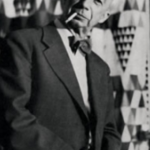
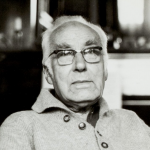
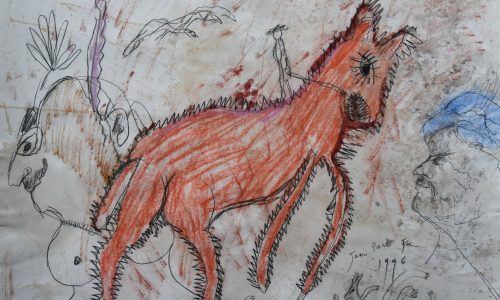
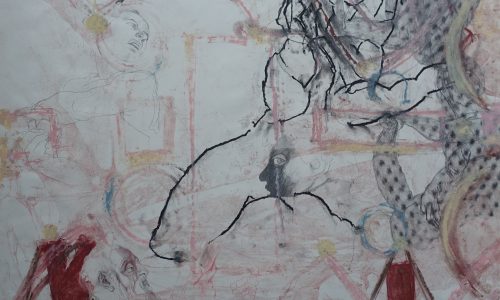
Peter Bömmels (1951)

Schermafbeelding 2020-01-03 om 15.13.43

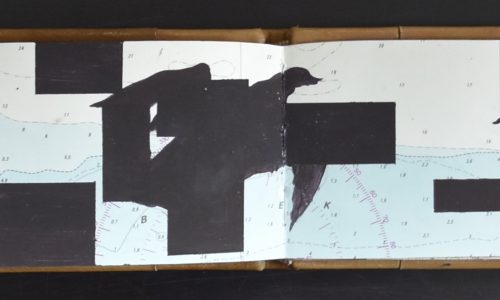
Hard to find any information on the german artist Peter Bommels, but this is what i found . An interesting interview with Bömmels by Hugo Hoppman:

Publication available at www.ftn-books.com

Peter, what’s the story behind the foundation of SPEX?

It began in 1979. Me and Gerald Hündgen (whom I knew from university where we studied “social sciences” together in the beginning of the 70s) were so fascinated by this new exuberant wave of punk and new wave music with all its experimental, self-referential facets and quirks that we decided to turn our enthusiasm into a form.

Encouraged from this musical dilettantism (german “dilletieren” = to feel happy about sth.) we wanted to create some sort of publishing platform for all the countless new bands that emerged in the rhineland at that time.

We wanted to make a magazine just to write about music, which was new land to us. Fanzines were an inspiration. But we never wanted to idolize certain bands, but were rather driven by the enthusiasm for unrestrained, fearless music, no matter in which form or style it manifested itself.

I assume that this exciting times reanimated the “heartthrobing story of confinement” of our early youth in the end of the 60s. Back then with 28-years, having just finished studies (and no idea which profession would satisfy oneself) this gave us the needed easing and purpose.

To earn a living with it was unthinkable. All friends, who were activated who were music enthusiasts and open enough. Wilfried Rütten (with whom I shared an apartment for a long time), my friend and musician Sigi Syniuga from Düsseldorf (where around 1979/80 was going on the most), Wolfgang Burat and Bernhard Schaub, who in return knew Wilfried. Gerald Hündgen brought his girlfriend Clara Drechsler along who — then 18 — was the youngest of our group. I met Christoph Pracht accidentally on a concert in Neuss. Later the fanzine makers Dirk Scheuring and Ralf Niemczik joined us as the young blood’s from the scene (we got to know each other in the “Blue Shell”). The famous Diedrichsen joined permanently after the first crisis in 1985.

How was the process designing a SPEX issue back in those days?

Obviously a lot was literally made by hand and there was a lot of improvisation. When we couldn’t get a photo I did a drawing. Christoph (Pracht) can tell you more on this topic. [→ Interview with Christoph]

And how did a typical workday look like?

Gerald (Hündgen) was the frontman and editor-in-chief. We had regular meetings with everyone involved. Christoph Pracht was responsible for the layout, which was often intensly discussed together in the beginning. There was always great debates about the cover. The first issues in 1980 we sold personally in the clubs and bars in Cologne and sometimes even had to put up with physical critique …

Are you looking back happily on the 80s?

For me personally the most exciting time of my life. I started simultaneously two projects: SPEX and my own art (together with the group “Mülheimer Freiheit” — W. Dahn, J. Dokoupil, H.P. Adamski, …). Everything began 1980. This was the foundation that influences my life to that day. The 80s opened up many careers that were driven by the atmosphere of a general unideologic joy for experimentation. It was the bloom of the “subjective draft”.

In the 80s Cologne apparently became the mecca of the contemporary art, design and music scene. How was the energy in the city? How was it really?

There were a lot of clubs and possibilities for musician and the first DJ-events (e.g. Soulful Shack in the Stadtgarten, Roseclub, Blue Shell, Whirlpool with, among others, Hans Nieswandt, partly in relation to the artists of Galerie Daniel Buchholz etc.) that sprung to life out of the environment of the SPEX and others.

Many galeries and artists moved to Cologne (I just mention a few representative; Galerie Hetzler mit Martin Kippenberger, Galerie Nagel, … there were galeries founded that have internationally famous today like e.g. Galerie Monika Sprüth, Galerie D. Buchholz, Galerie Jablonka, Galerie G. Capitain, …) and therefore an international art scene emerged here which was decomposed not till Berlin’s rise as capital and metropolis.

The atmosphere was sparkling. The volcano was dancing and we on top …

How was it like — also in regard to today — to publish your own magazine? The positive and the negative aspects? And how did you manage it financially?

The budget for SPEX was modest. Every founder brought 2000 Mark (≈ 1000 Euro) to the table. The fight for advertising clients was long hart. It helped us having “idealistic” friends in the music industry (partly former SPEX writers).

The absolute will of everybody involved to work hard was essential.
The first years were self-exploitation at its finest. Later moderate fees could be paid. We all believed in the cultural necessity of the magazine. Motivation was (is) everything.

How old have you been the SPEX was founded? And how did you came to do it? What did you do before that?

I was 28 years old and had studied social economy (“Staatsexamen”). From 1977 to 1980 I made the obligatory civil service (in a kindergarten) where I continued to work afterwards. From the beginnings of my studies (where I also met Gerald Hündgen and Wilfried Rütten) I aimed to participate on forms of “Gegenöffentlichkeit” (the local newspaper for example) all in regard to the big idol Alexander Kluge.

What are your favourite musicians and LP’s from back in the days?

Only rough and quickly: XTC with Nigel, surely Clash with London Calling and Let me stay or let me go respectively Rock the Kasbah, everything from the band Suicide (Alan Vega, Martin Rev), everything from Elvis Costello, DAF und Palais Schaumburg …

Thank you, Peter!

bommels

Posted on Leave a comment

Charly van Rest (1949)

Schermafbeelding 2020-01-03 om 15.03.37

Born in Indonesia ( Jakarta) he practically lived his entire life in the Netherlands/ Rotterdam. Perhaps this is the reason why his main exhibitions were also held in this city. van Rest had exhibitions at the Museum Boymans van Beuningen ( catalogue available at www.ftn-books.com ) and the Witte de With space.

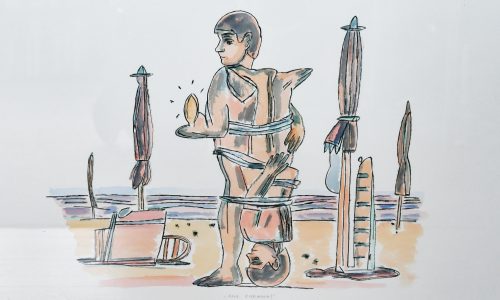
At first you have to grow accustomed to his art. The way he looks at reality is transformed into a personal kind of art. The source is almost always reality. Transformed, enhanced, enlarged, cut and thereafter transformed into his personal art.

van rest.jpg


Posted on 1 Comment

Niki Mama (1998)……RIP

niki mama avalex

This replica sculpture i bought when i was still working at the Gemeentemuseum Den Haag. Jan van Capellen of the  Museumshop had these sculptures made after and inspired by the Nana sculptures by Niki de Saint Phalle. He had hundreds of these made in all kinds of color schemes and decorations. The greatest part of them, small and midsized aprox. 12 inches in height on wooden bases….many were sold including dozens of these sculptures at the museumshop of the Gemeentemuseum Den Haag, one time….. when i tried to order more, i heard that a copyright lawsuit had stopped these from being produced, distributed and sold. That is when i stepped in and bought the remainder of these great decorative small statues and 1 bigger one, made of polyester and decorated in my favorite colors. It was with us for many many years….. in the garden ….looking like the real thing but knowing that it only was a replica. It witnessed Lucas growing older, the divorce with Sylvia and the coming of Linda and it was there to see that we were planning to move and found a new place near the Warffemius sculpture in Leidschendam. It even was nicely refurbished by Linda when i was away for a business trip, but after last years winter she showed her fragility. Paint came off, chips of polyester made her skin look rough and we knew that it was not long before we had to say goodbye to her. Yesterday, i put her gently in the back of my car and today we parted as good friends after 22 years.

niki duo thuis

The only “Niki Mama’s” we have left are 2 small indoor ones. The blue one was the first present i gave Linda and the black one stayed in our home, being the last of all the Mama’s i have sold.

Of course www.ftn-books.com has some great egnuine Niki de Saint Phalle publications available.

Posted on Leave a comment

Eugene Dodeigne (1923-2015)

Schermafbeelding 2020-01-02 om 16.41.32

Perhaps it is because later in his life he moved to France and people forgot about Eugene Dodeigne , but in the late Fifties and early Sixties he was one of the most promissing young sculptures in the Netherlands . Nowadays, when you search for Dodeigne you hardly will have a result. Some drawings are offered at Art Zaanstad and the occasional auction, but his strong point is his sculptures. Almost abstract with a hint of realism make these intriguing sculptures by an artist who deserves to be better known. In recent years there were exhibitions in the Dordrecht Museum and with Kunsthandel de Boer , but the best exhibition was held at the Boymans van Beuningen Museum in 1964 ( all these catalogues are available)

Some Dodeigne publications are available at www.ftn-books.com

Posted on Leave a comment

George Segal (1924-2000)

Schermafbeelding 2020-01-02 om 16.36.09

Because of a recent find of the 1972 Boymans van Beuningen catalogue (available at www.ftn-books.com) i was reminded that i never published anything on George Segal. Segal is present in some of the most important dutch collections but after some exhibitions in the Seventies his works were rarely on show in the Netherlands.

There is an excellent biography on Segal to be found on the Art Story of which i publish the text here:

George Segal was born in New York City on November 26, 1924 to Jewish immigrants from Poland. His father, who had come to America in 1922, would lose all his brothers at the hands of the Nazis. Segal’s parents ran a kosher butcher shop in the Bronx, working long hours, and dreamt of a more prosperous life for their son.

While attending public school, Segal developed a passion for art. His art teacher nurtured his love of drawing, giving him art supplies and encouraging him to explore the Metropolitan Museum of Art. Segal’s high science and math scores earned him admission to Stuyvesant, one of the city’s top public high schools. His parents, who had moved to New Jersey to run a chicken farm, hoped he would become a doctor or a scientist. Much to their dismay, Segal remained focused on art, living with his aunt in Brooklyn while finishing high school and spending weekends working on the chicken farm.

After graduating from high school in 1941, Segal sporadically attended a number of art schools. Due to the outbreak of World War II, his parents needed a hand on the chicken farm, which interrupted his course of study. Nonetheless, he continued to pursue his ambition to be an artist, taking courses when he could at New York’s Cooper Union, Rutgers University in New Jersey (where he attended night courses), and the Pratt Institute of Design in New York. In 1949 he finally graduated with a Bachelor of Arts in art education from New York University. He would later return to Rutgers University to pursue a Master of Fine Arts which he received in 1963.

Early Training

In 1946, Segal married Helen Steinberg, a girl who lived on a neighboring farm and who he first met in his teens. They bought land across the road from his father and continued in the family business of chicken farming. His pursuit of a career in art was due in part to her unwavering support, and when the threat of bankruptcy loomed in 1957, Segal used his art education degree to get a teaching job at a New Jersey high school. There, he taught art until he was able to support himself and his family solely on his income as an artist.

Throughout his early years of struggle, Segal never wavered from his pursuit of making art and showed an early interest in painting. He and his fellow New York artist friends couldn’t help but be influenced by the large-scale, color-filled paintings of the Abstract Expressionist movement that was sweeping through the New York art scene. Despite this, Segal and others in his circle were not inspired to create such works, choosing rather to create works depicting images from the real world. Many derived their inspiration from elements of popular culture and consumer images as seen in the world of advertisements, the media, and comic books; while Segal focused more on the human figure performing acts of daily life such as waiting at a station or talking on the telephone. During the 1950s Segal began to receive attention for his paintings and in 1956 he had his first solo show at the Hansa Gallery, an artist cooperative, in New York.

Mature Period

In 1961, while teaching an art class for adults, Segal discovered the substance that would become his primary medium. The husband of one of his students worked for Johnson & Johnson and asked Segal to test a new plaster bandage material and write a text about how the material could be used in art projects for children. Segal experimented with plaster, bandages, and water, manipulating and drying it into the shapes of various objects. To his excitement, Segal realized this included making casts of parts of his own body after letting the material set for only a few minutes. Inspired, Segal took the plaster casts of various parts of his body and recreated them into the form of a seated figure, incorporating objects including a table and chair to complete the work. The work, Man Sitting at a Table (1961), became the first of his plaster sculptures.

While Segal created these sculptures throughout the rest of his career, he continually experimented with different ways they could be made and refined. Moving from casts of his own body, he also used other people including his wife, friends, and eventually his daughter Rena as his models. Segal also explored the effect of adding color by painting the white plaster casts various colors and also painted some sculptures black, such as Woman Sitting on a Bed (1993) which allowed him to focus on the impact of light in a new way. Segal explored the effect of casting his sculptures in bronze and then painting the works white and also made works using only body fragments rather than depictions of the full human figure.

These plaster sculptures, which primarily depicted scenes from everyday life such as figures sitting at a diner and waiting in a station, helped to make Segal one of the leading artists of the Pop art movement. While often the subjects were engaged in some of the less exciting albeit often necessary functions of daily life, Segal also drew inspiration from popular culture. The beloved American pastime of going to the movies was referenced in his sculpture Cinema (1963) – a life-sized plaster cast figure in the act of changing a movie title on the cinema’s marquee. Hollywood factored again in his sculpture The Movie Poster (1967) which featured a plaster cast man staring at a black and white photograph of iconic film star Marilyn Monroe.

In addition to his sculptural works, Segal continued to work in a variety of other media including paint, pencil, pen and ink, and pastels. The works created included numerous themes such as close-up studies of body parts, still lifes, and portraits.

His ability to so vividly capture human figures made him a good choice to create outdoor public sculptures. This type of sculpture was becoming increasingly popular in the United States and Segal contributed works such as his sculpture The Restaurant (1976), which was placed at the Federal Office Building in Buffalo, New York. Also, he was offered the commission to create pieces commemorating important world events such as a memorial to the victims of the Holocaust and tributes to American leaders including United States President Franklin Delano Roosevelt.

Throughout his career, Segal saw exhibitions and retrospectives of his work travel through the United States and other parts of the world including an exhibition that began in Switzerland in 1971 and subsequently toured Europe; a traveling retrospective at the Walker Art Center in Minneapolis, Minnesota in 1978; a retrospective of his work in Japan in 1982; and a 1997 retrospective at the Montreal Museum of Fine Arts.

Late Period

Segal showed a renewed interest in photography later in his life. He used the photographs of people and city scenes in both New Jersey and New York as basis for some of his later sculptures and as the starting point for drawings. One of his final series, Nightscapes, began with photographs the artist took of the night lights on the US 1 highway. After returning to his studio, Segal enlarged a photograph onto plywood, painted the scene, and after cutting out holes in the plywood, placed real light bulbs where the lights were in the photograph, creating a three-dimensional recreation of his photographic captures of the highway at night. Segal remained active as an artist until his death on June 9, 2000 in South Brunswick, New Jersey.

Posted on Leave a comment

William Katavolos (1928)

Schermafbeelding 2019-12-31 om 13.17.24

Known for his furniture and his presence in the collection of Moma and his architectural tutorials it is almost forgotten that he made some very nicely designed books of which the one he made for the Kwadraat series in 1961 is one of the nicest ones. The cover is spectacular with a cut out pattern and behind it a pale yellow/gold colored title page. These books are wel worth collecting and can still be picked up at reasonable prices. but my guess is they will not be much longer available since the edition size was small and word spreads that these are the ones to focus on within the Kwadraat series.

Posted on Leave a comment

Leonardo Delfino ( 1928)

delfino photo

If an artist has not acquired the fame he deserves it is hard to make his name more known at the end of his career. This is why i support any initiative to help the artist. Leonardo Delfino is such an artist. He rose to sdome fame at the end of the Fifties amnd early Sixties ( this is the period i last discussed in an earlier blog) and had an important exhibition at galerie Delta in 1971 ( catalogue available at www.ftn-books.com), but after some dutch and french exhibitions it was quiet, with hardly any exhibitions outside Italy and France. Born in Torino he soon went to France to help his career further on, but is stayed relatively quiet with hardly any exhibitions being held. This doe not mean his work is not interesting. His scupltures are timeless abstract colums or pieces of raising /concrete. I thinh he uses the same procedure to create his sculptures as Mmark Boyle does. Using the original to cast a raisin copy from it.

look for Delfino on the internet and there is hardly any information, but there is a facebook site worth visiting at: https://www.facebook.com/Delfinoproject

Some early Delfino publications are available at www.ftn-books.com

Posted on Leave a comment

Siep van den Berg…… a painting

Schermafbeelding 2019-12-28 om 15.03.14

It has been years that i have been looking to buy a painting by Siep van den Berg…..and i finally succeeded. It was a few months ago that i first heard about a painting from 1990 which was coming up for auction. I went to the viewing days of the auction house and noticed that the painting was hung differently from the way it was depicted in both publications in which it was depicted.

siep schilderij e

One thing was a certainty, without a doubt it was a true Siep van den Berg painting and i started to make a written bid…..the outcome?…..i won the auction and now it is in my personal collection and it sits there together with a nice special book filled with 20 collage /drawings that Siep made for his wife Niesje.
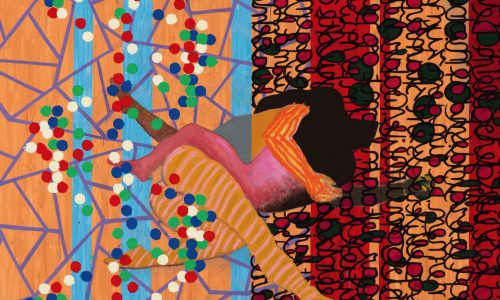
The painting now is mine but it is till not clear how it should be hung. According to the eyes on the back and the way it was presented at the auction house it should be a “portrait” painting. The two books i have on van den Berg, both mention the painting as being a landscape one….

siep-schilderij-a-3876215273-1577542154403.jpg

For other Siep van den Berg originals contact me at wvdelshout@ziggo.nl