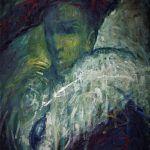
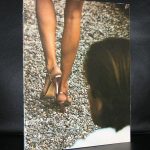
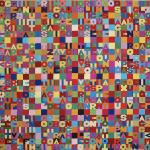
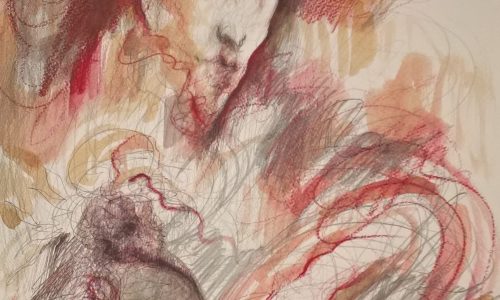
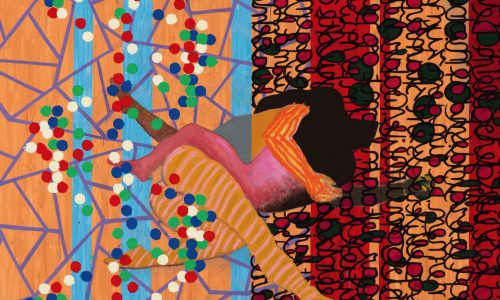
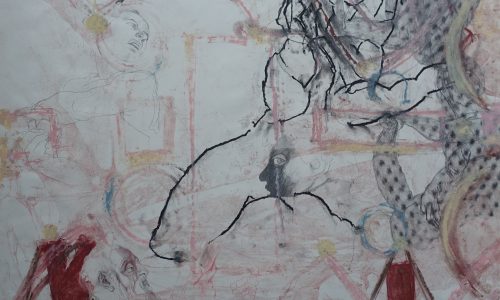
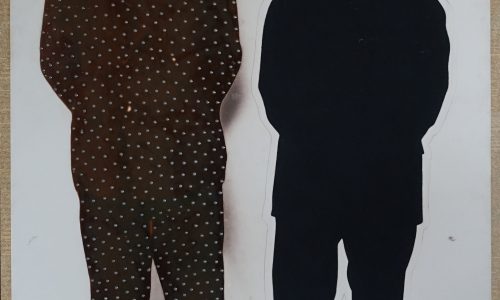
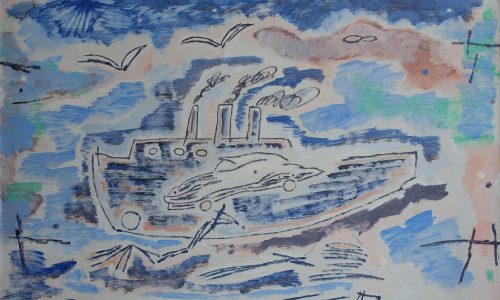
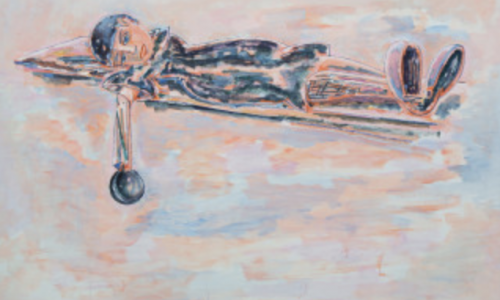
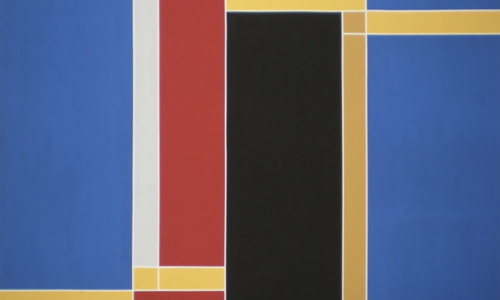
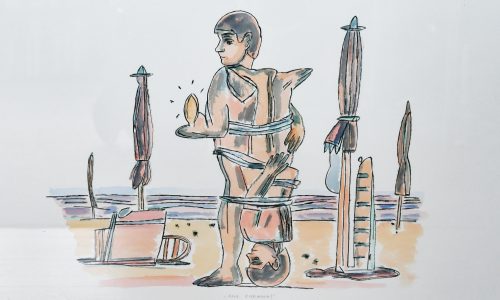
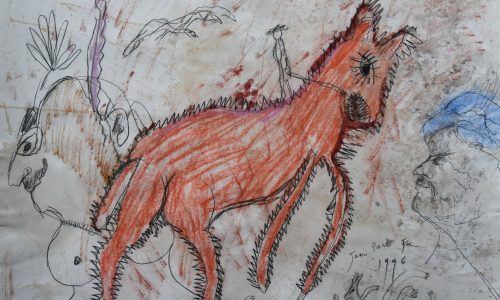
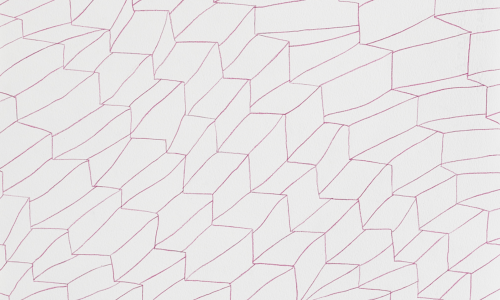
Just take a look and see that i added this beautiful hypnotizing Ossip to FTN collection about 2 months ago at www.ftn-blog.com. It comes from the the Vescom collection . A collection which was created over the last 3 decades and was sold at auction in Amsterdam. I was lucky to buy this “JONGEN” by Ossip together with 2 works by Joris Geurts ( in another blog later). This “Jongen” is one of the more “static” works . It has the same qualities as the works he presented in his exhibition at the Gemeentemuseum Den Haag . Most of the works i know of have moving parts but this late Nineties /early 2000 work was made when composition and image were the typical Ossip elements within a work of art. I know that there exists also a larger version of ” JONGEN” which is depicted in the Ossip monograph , but this version measures 112 x 89 cm. and is signed and dated Ossip, 23-11-2003 and now available at www.ftn.blog.com
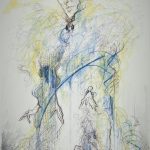
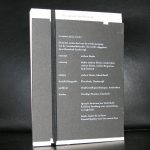
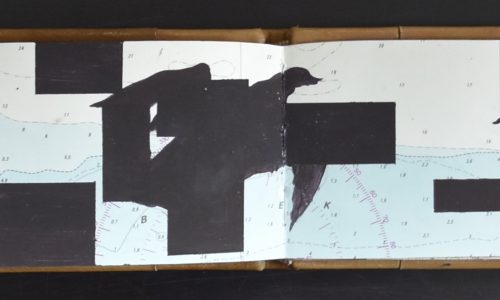
Last week i found at the local bookmarket a special artist book by Hendri van der Putten. The book was made for the exhibition of Hendri in the Apollohuis in 1988.The artist book consists of 16 pages of which 5 are silkscreened with lines across the pages and on the edges…. a very delicate yellow. an exquisite book which is now available at www.ftn-books.com
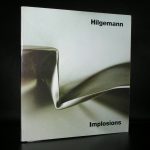
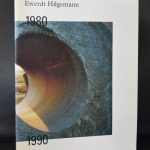
For me Hilgemann was one of the first Zero artists i learned to appreciate, but there is so much more to Hilgemann as an artist. Here is an excellent article i found on Hilgemann at the Borzo site / www.borzo.com
Borzo still sells his works and perhaps now is right the time for Hilgemann.
A child of about six in the war, Ewerdt Hilgemann searches through the rubble of the bombed ruins of his hometown Dortmund for shrapnel. He finds them interesting, exciting too, these sharp-edged metal splinters.
Forty years later, and now an artist, Hilgemann works in the marble quarries of Carrara (1975-1985). A truck transports a perfectly sawn one and a half metre cube of marble that he has carefully polished, to the top and then with a thunderous crash sends it toppling off the steep mountainside. And a marble sphere of a similar size, polished to a perfect sheen, has explosives inserted and is then blown up.
Both conceptual ‘performances’ are recorded on film. The artist creates perfect forms, which are then deformed using forces of nature: a sort of reverse creative process.
Thirty years later, in the summer of 2014, Hilgemann exhibits his Magnum Opus. In response to an invitation from the City of New York he places a series of implosion sculptures on Park Avenue. ‘Dancers’, ‘Triples, ’Flowers’ and ‘Cubes’, six metres high, gleaming in the sun, the deformed surfaces of these Titans of steel distort and reflect the overwhelming architecture of the buildings on each side of Park Avenue.
From his earliest days in a devastated Dortmund to the Park Avenue manifestation in New York, Hilgemann has been consistent in his fascination and his art. In his own words: “To deform a perfect shape without me hammering on it”.
From the start the cube and the square are his best-loved shapes. Hilgemann studies and comes to understand these solid forms. He learns it at the Saarbrucken Art Academy under his tutor Oskar Holweck. (In 1958 Holweck had joined the Zero movement, founded that year by Mack and Piene). Here the young art student Hilgemann learns to respect material and form in their most elementary states. Plasticity is achieved through the effect of light on the surface and the – mathematic – interventions performed thereon by the artist.
In 1970 Hilgemann and his wife Antoinette settle in Gorinchem and here a close friendship develops with Ad Dekkers, Marinus Boezem and herman de vries. In these days Gorinchem is apparently a hotbed for avant-garde art. Irritated – provoked even – by a conservative artistic climate in this small town on the River Merwede, these artists discover common ground for their minimalistic and conceptual ideas.
Their haven at the time is Riekje Swart’s legendary Amsterdam gallery. Hilgemann exhibits his white objects oriented according to mathematical studies here from 1966.
In 1973 the four artist friends – and their partners! – take the initiative for a much discussed and now legendary symposium, whereby the town wants to be a centre for “examining the position of the visual arts in our society”. Fifteen European artists stay together in Gorinchem for six weeks. These include now famous artists such as Kenneth Martin, Morellet, Panamarenko, Pohl, Prantl and Winiarski. Exceptional works of art, lectures and performances fill the town. For Hilgemann ‘Gorinchem’ is an extraordinarily significant period in which his art reaches full maturity and he also establishes his international orientation.
Hilgemann produces his first sculpture created through implosion in 1984 for the exhibition “Beelden aan de Linge” by collector Piet Cleveringa from the neighbouring town of Acquoy. He moves to Amsterdam the same year and from that moment on this visual language of imploded constructions will always typify the art of the ‘air-smith’ Ewerdt Hilgemann.
Just received a message from Giovanni Nicolai, that he will be exhibiting in Milano some of his most recent works together with some fellow artist in the ARTE NON FALSIFICATA exhibition at the SO gallery in Milan. The exhibition will be open until the 17th of November.
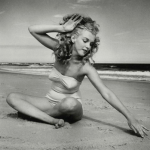
Dienes began work as a professional photographer for the Communist newspaper L’Humanité, and was employed by the Associated Press until 1936, when the Parisian couturier Captain Molyneux noted his work and urged him to become a fashion photographer.
In 1938 the editor of Esquire, Arnold Gingrich offered him work in New York City, and helped fund Dienes’ passage to the United States. Once in the United States Dienes worked for Vogue and Life magazines as well as Esquire.
When not working as a fashion photographer Dienes travelled the USA photographing Native American culture, including the Apache, Hopi, and Navajo reservations and their inhabitants. Dissatisfied with his life as a fashion photographer in New York, Dienes moved to California in 1944, where he began to specialize in nudes and landscapes.
As well as Monroe, Dienes also photographed such notable actors as Elizabeth Taylor, Marlon Brando, Henry Fonda, Shirley Temple, Ingrid Bergman, Ronald Reagan, Jane Russell, Anita Ekberg and Fred Astaire.
De Dienes married twice, and died of cancer on April 11, 1985, in Hollywood.
( the above text comes from Wikipedia)
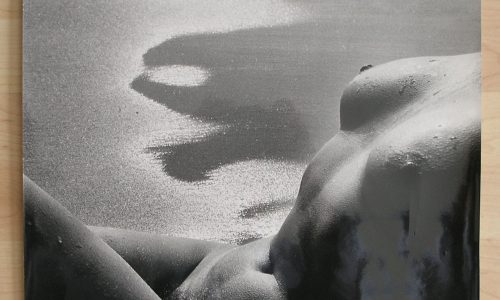
One of the lesser known nude photography publications in which de Dienes made several contributions is available at www.ftn-books.com
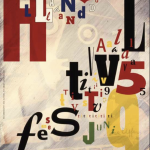
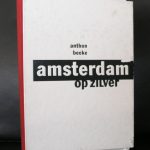
This morning i learned that one of the greatest of all dutch graphic designers, Anton Beeke, died in an Amsterdam hospital, yesterday on the 25th of September. Born in 1940 he soon became part of Fluxus and Provo and was one of the famous names in the AMSTERDAM art world in the sixties. He even became later a contributing partner of Total Design, the agency which was founded by Wim Crouwel ao. I mention this because where Total design was one of the first agencies to apply the computer in designing, Beeke stayed true to his own method, the typical way of composing an image with “camera, scissors and glue”.
His images are strong and stood out and drew immediate attention to the subject. One of his best known designs was the alphabet composed with nude woman.
It was a meant and searched for reaction on the New Alphabet by Crouwel. There are several Beeke publications available at www.ftn-books.com
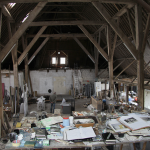
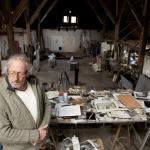
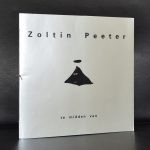
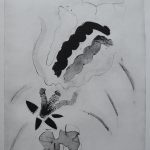
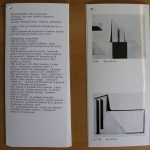
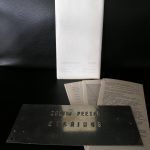
Born in Amsterdam but living for the most part of his life in Friesland near Hallum. His works reflect the presence of the rural country side nearby. Abstract forms tumbling in an empty space. Etchings with dark thin forms in an empty white space give me the feeling of ZERO art, but it certainly is not. They fascinate and deserve to be known much better. Peeter has had some exhibitions in the 70’s in prestigious museums like the Kroller Muller Museum. The first encounter with a small work by Zoltin Peeter was his multiple he made for his 1971 exhibition in the Lakenhal. The multiple is available at www.ftn-books.com and shows directly the directions he was taking with his works. decades later you can see where is ended for now. Abstract forms, sparce use of color and in many compositions a realistic form or subject appears. I love his work and his studio…..
His studio is something different. Housed in an old shed he creates his works in the vicinity of the Friesland landscape. I found some beautiful photo’s on Google and want to share these with you , because i find them very special and they give the best impression possible of the surroundings in which Zoltin Peeter creates.
Another artist who really died too young was Alighiero Boetti. One of those artists who you learn to appreciate over the years. At first glance you walk past his paintings, but when you encounter them more and more in museum s and sometimes in art galleries you learn to appreciate them and now i stop at every one of them i encounter. You are first struck by their graphic quality and later by the consistent high quality of these large canvasses and in many cases they are a source of inspiration for other artists:
left : Alighiero e Boeti . right : Kang-Ik Joong
and left Alighiero e Boetti and Right: Otto Egberts from Schaamstreken 4
At one time there was a nice Alighiero e Boetti catalogue available at the De Slegte . Without knowing that Franz Kaiser was the curator for this exhibition in Grenoble , i bought a stack of these catalogues of which a few copies still remain and are available at www.ftn-books.com
Here is a short biography i found on the internet Boetti which proves that he is important and deserves his place amonmg other great Italian artists
Alighiero Boetti was born in Turin, to Corrado Boetti, a lawyer, and Adelina Marchisio, a violinist. Boetti abandoned his studies at the business school of the University of Turin to work as an artist. Already in his early years, he had profound and wide-ranging theoretical interests and studied works on such diverse topics as philosophy, alchemy and esoterics. Among the preferred authors of his youth were the German writer Hermann Hesse and the Swiss-German painter and Bauhaus teacher Paul Klee. Boetti also had a continuing interest in mathematics and music.
At seventeen, Boetti discovered the works of the German painter Wols and the cut canvases of Argentine-Italian artist Lucio Fontana. Boetti’s own works of his late teen years, however, are oil paintings somewhat reminiscent of the Russian painter Nicolas de Staël. At age twenty, Boetti moved to Paris to study engraving. In 1962, while in France he met art critic and writer Annemarie Sauzeau, whom he was to marry in 1964 and with whom he had two children, Matteo (1967) and Agata (1972). Working in his hometown of Turin in the early 1960s amidst a close community of artists that included Luciano Fabro, Mario Merz, Giulio Paolini, and Michelangelo Pistoletto, among others, Boetti established himself as one of the leading artists of the Arte Povera movement. From 1974 to 1976, he travelled to Guatemala, Ethiopia, Sudan. Boetti was passionate about non-western cultures, particularly of central and southern Asia, and travelled to Afghanistan and Pakistan numerous times in the 1970s and 1980s, although Afghanistan became inaccessible to him following the Soviet invasion in 1979. In 1975, he went back to New York.
Active as an artist from the early 1960s to his premature death in 1994, Boetti developed a significant body of diverse works that were often both poetic and pleasing to the eye while at the same time steeped in his diverse theoretical interests and influenced by his extensive travels.
He died of a brain tumour in Rome in 1994 at the age of 53.
The First Hofkunst items i had in collection were the Pop Swatch series he made for Swatch. These watches were “specials” and sold among the groceries and vegetables in which these specials were presented and sold as ordinary groceries. The small edition of them made them highly collectable items and because of that and as soon as i had acquired them with much physical and financial effort, i sold them to another collector with a nice profit. It was at the height of the Swatch watches craze. A craze where simple plastic, but highly accurate and reliable watches fetched prices as much as 30 times their original value. In retrospect these watches were not worth this kind of money, but nowadays that prices have normalized and you might want to collect these specially designed watches. Alfred Hofkunst was one of the first that was invited to make a special for the newly introduced POP watches and came up with this series including a cucumber, bacon & egg and pepper watch.
Hofkunst himself is a well known Suisse artist who was friends with Jean Tinguely and Bernhard Luginbühl and can be considered as one of the most important Suisse artist from last century. Of all these 3 artists www.ftn-books.com has catalogues and posters available. Unfortunately Hofkunst died too early at the age of 62.
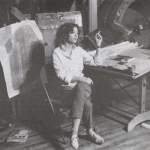
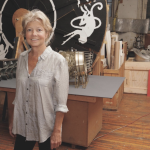
1983, Just 3 years after i started my career at the Gemeentemuseum Den Haag, the museum made an exhibition with Alice Aycock. Within the Schamhart buidling the complete floor was covered with large kinetic sculptures by Aycock and at that time i could not appreciate them at all. Now 35 year later i wished i had the same knowledge at that time that i have know, because recently i leafed through the catalogue and it struck met that these works were not only great in dimensions, but even after 35 years fascinating. Where Tinguely made his kinetic sculptures in the Sixties. Aycock made them in much more modern and industrialized/high tech versions in the Eighties and after. Alice Aycock has received international fame with her sculptures.
What remains to me is a wonderful catalogue ( available at www.ftn-books.com) and the memory of meeting a great artist and beautiful woman back in 1983.
To give an impression of her more recent works here is a video on her 2010 presentation:
Artist/ Author: Oliver Boberg
Title : Memorial
Publisher: Oliver Boberg
Measurements: Frame measures 51 x 42 cm. original C print is 35 x 25 cm.
Condition: mint
signed by Oliver Boberg in pen and numbered 14/20 from an edition of 20