It must have been some 20 years ago that i encountered at auction a beautiful and impressive painting of a night scene. At first i thought it to be a painting by Jan Sluyters, but when i read the description it appeared to be by Piet van der Hem. A painter of who i thought that he only made (ugly) portraits and illustrations. But this night scene was very very impressive. I forgot about van der Hem because i lost interest in all portraits by all painters. a few months ago i visited the bookmarket….and there it was again …a catalogue on van der Hem and on the cover the painting i had admired so much 2 decades earlier. I bought the catalogue and found out that the works by van der Hem can be divided into 2 parts. His early paintings in which his nightlife paintings show his best qualities and the later portraits which i do not like that much. Van der Hem is an excellent painter, but just focus on his early works which are tremendous and equal to Jan Sluyters or Isaac Israel ones.
the Piet van de Hem catalogue by Stichting Kunst aan de Dijk is available at www.ftn-books.com
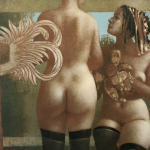
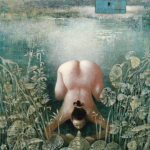
Wout Muller , a member of the group of New Realist painters will certainly grow in importance and appreciation in the next decades to come. His technique and detailing is the best possible and his compositions are timeless. In many cases the paintings and drawings contain some erotic elements, which make their appeal certain for all decades to come.
Of course there are other realist painters who use erotic elements to enhance their paintings. Melle, Aat Veldhoen and Hans Kanters are among them, but none of them knows exactly how to create a landscape that looks more than a “dream” and has the softness needed to be an outstanding painting and not an ensemble of erotic objects. Yes, from all these painters Wout Muller is my personal favorite. www.ftn-books.com has some wout Muller titles available.
Back to back …yesterday’s blog on Dennis Oppenheim…and this one on Meret Oppenheim.
There is absolutely no family relation between these two and Meret Oppenheim has proven her importance over the years. At least there is a generation gap of two generations between these 2 artists. She became friends with Arp, Breton, Duchamp and Man Ray. The last made an important and very well known photo series of her in Paris in which she figured.
At this time in Paris she was called and considered the MUSE of the surrealists. This series made her an instant success, but this success suffocated her too and she decided to return to Basel and start her own artist career.
She had her studio’s in Basel and Bern and for the last city she left after her death one third of collection to the Bern museum.
Perhaps her most well know work is LE DEJEUNER EN FOURRURE. A large work which was criticized by many, but what now has become one of the icons in Modern Art.
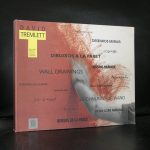
Last 10 days we spent in the beautiful Langhe e Roero area near Alba (Italy). There is not a great number of Modern Art to be found in the joining areas. There is of course Modern Art in Torino and Rivoli. But in and near Alba almost nothing. One exception. David Tremlett decorated a church at Coazzolo which is well worth visiting and Sol LeWitt decorated a chapel in the wine fields.
Both are well worth a vist but none is that spectacular it is worth a detour still when in the neighborhood visit them because this is one of the most enchanting regions in Italy and well worth visiting even if there is hardly any modern art to be found. For some Tremlett publications visit www.ftn-books.com
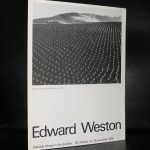
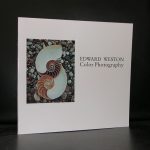
This text comes from a wonderful and beautiful site devoted to Edward Weston and his works. Weston is one of the most important photography artist from last century and this site ( edward-weston.com) is a deserved and “classic” tribute to this great photographer.
Edward Henry Weston was born March 24, 1886, in Highland Park, Illinois. He spent the majority of his childhood in Chicago where he attended Oakland Grammar School. He began photographing at the age of sixteen after receiving a Bull’s Eye #2 camera from his father. Weston’s first photographs captured the parks of Chicago and his aunt’s farm. In 1906, following the publication of his first photograph in Camera and Darkroom, Weston moved to California. After working briefly as a surveyor for San Pedro, Los Angeles and Salt Lake Railroad, he began working as an itinerant photographer. He peddled his wares door to door photographing children, pets and funerals. Realizing the need for formal training, in 1908 Weston returned east and attended the Illinois College of Photography in Effingham, Illinois. He completed the 12-month course in six months and returned to California. In Los Angeles, he was employed as a retoucher at the George Steckel Portrait Studio. In 1909, Weston moved on to the Louis A. Mojoiner Portrait Studio as a photographer and demonstrated outstanding abilities with lighting and posing.) Weston married his first wife, Flora Chandler in 1909. He had four children with Flora; Edward Chandler (1910), Theodore Brett (1911), Laurence Neil (1916) and Cole (1919). In 1911, Weston opened his own portrait studio in Tropico, California. This would be his base of operation for the next two decades. Weston became successful working in soft-focus, pictorial style; winning many salons and professional awards. Weston gained an international reputation for his high key portraits and modern dance studies. Articles about his work were published in magazines such as American Photography, Photo Era and Photo Miniature. Weston also authored many articles himself for many of these publications. In 1912, Weston met photographer Margrethe Mather in his Tropico studio. Mather becomes his studio assistant and most frequent model for the next decade. Mather had a very strong influence on Weston. He would later call her, “the first important woman in my life.” Weston began keeping journals in 1915 that came to be known as his “Daybooks.” They would chronicle his life and photographic development into the 1930’s.
In 1922 Weston visited the ARMCO Steel Plant in Middletown, Ohio. The photographs taken here marked a turning point in Weston’s career. During this period, Weston renounced his Pictorialism style with a new emphasis on abstract form and sharper resolution of detail. The industrial photographs were true straight images: unpretentious, and true to reality. Weston later wrote, “The camera should be used for a recording of life, for rendering the very substance and quintessence of the thing itself, whether it be polished steel or palpitating flesh.” Weston also traveled to New York City this same year, where he met Alfred Stieglitz, Paul Strand, Charles Sheeler and Georgia O’Keefe.
In 1923 Weston moved to Mexico City where he opened a photographic studio with his apprentice and lover Tina Modotti. Many important portraits and nudes were taken during his time in Mexico. It was also here that famous artists; Diego Rivera, David Siqueiros, and Jose Orozco hailed Weston as the master of 20th century art.
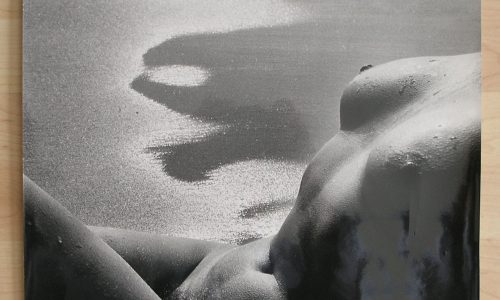
After moving back to California in 1926, Weston began his work for which he is most deservedly famous: natural forms, close-ups, nudes, and landscapes. Between 1927 and 1930, Weston made a series of monumental close-ups of seashells, peppers, and halved cabbages, bringing out the rich textures of their sculpture-like forms. Weston moved to Carmel, California in 1929 and shot the first of many photographs of rocks and trees at Point Lobos, California. Weston became one of the founding members of Group f/64 in 1932 with Ansel Adams, Willard Van Dyke, Imogen Cunningham and Sonya Noskowiak. The group chose this optical term because they habitually set their lenses to that aperture to secure maximum image sharpness of both foreground and distance. 1936 marked the start of Weston’s series of nudes and sand dunes in Oceano, California, which are often considered some of his finest work. Weston became the first photographer to receive a Guggenheim Fellowship for experimental work in 1936. Following the receipt of this fellowship Weston spent the next two years taking photographs in the West and Southwest United States with assistant and future wife Charis Wilson. Later, in 1941 using photographs of the East and South Weston provided illustrations for a new edition of Walt Whitman’s Leaves of Grass.
Weston began experiencing symptoms of Parkinson’s disease in 1946 and in 1948 shot his last photograph of Point Lobos. In 1946 the Museum of Modern Art, New York featured a major retrospective of 300 prints of Weston’s work. Over the next 10 years of progressively incapacitating illness, Weston supervised the printing of his prints by his sons, Brett and Cole. His 50th Anniversary Portfolio was published in 1952 with photographs printed by Brett. An even larger printing project took place between1952 and 1955. Brett printed what was known as the Project Prints. A series of 8 -10 prints from 832 negatives considered Edward’s lifetime best. The Smithsonian Institution held
the show, “The World of Edward Weston” in 1956 paying tribute to his remarkable accomplishments in American photography. Edward Weston died on January 1, 1958 at his home, Wildcat Hill, in Carmel, California. Weston’s ashes were scattered into the Pacific Ocean at Pebbly Beach at Point Lobos.
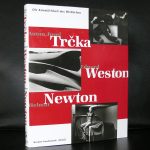
www.ftn-books.com has some titles with works by Weston available.
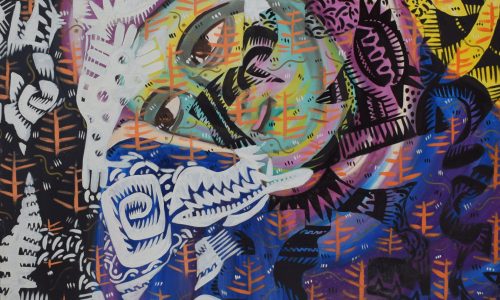
I first encountered the paintings by Ray Smith in 1992 at the Barbara Farber gallery, which catalogue is also available at www.ftn-books.com. These paintings are intense and “Rock and Roll”. Ray Smith could easily be seen as the child of Picasso and Frida Kahlo.
He is a contemporary American artist, best known for his segmented paintings and sculptures combining elements of Cubism, printmaking, art historical reference, and collage into postmodern compositions. Often relating to Surrealism in his unreal juxtapositions, Smith’s work is also characterized by a unique kind of magical realism. He frequently utilizes anthropomorphic animals in his work in a manner akin to Pablo Picasso’s Guernica, stating about the creatures in his work: “They are beasts, but they are directly attached to a blueprint of our own existence.” Born in 1959 in Brownsville, TX on family land that was part of Mexico before the Texas Annexation, Smith grew up in Central Mexico, and continued to retain a cultural and geographic tie to the country. After attending art schools in both the United and Mexico, Smith ultimately settled in Cuernavaca while continuing to travel regularly to New York. Smith’s work can be found among the collections and exhibition histories of the Whitney Museum of American Art in New York, the Centre Pompidou in Paris, and The Metropolitan Museum of Art in New York.
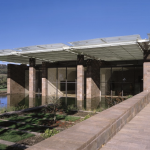
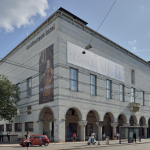
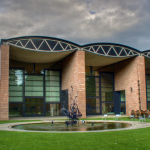
We always travel the Alsace in the second half of the year between September and December, visit the Christmas markets and pick up some wine at our preferred wineries. If ever we have some spare time and only if there is a nice exhibition, we go to Basel city. You do not need a special “vignet” if you do not travel beyond the Basel / Bale city limits. Certainly do not lunch or drink a coffee in Basel because prices are far too high, but instead visit one of the 3 famous museums within the Basel city limits. First there is the Beyeler Museum ( By Renzo Piano), which is beside the Gemeentemuseum my favorite museum of all time, second there is the Kunstmuseum and third but not least there is the Tinguely Museum ( by Mario Botta). All worth visiting. Entrance fee of all three museums is steep too, but when you save on your coffee and lunch these three museums are well worth visiting. www.ftn-books.com has publications from all 3 museums available.
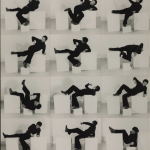
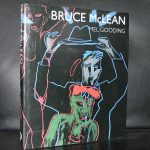
It took me decades to discover the art of Bruce McLean. A typical Sixties artist who started with performances and now ends his career with HUGE paintings. In between …… an abundance of works of which the large canvasses i appreciate most.
An original and personal style of painting . …the result…. recognizable paintings. I looked up the artist Bruce McLean and found that his paintings are still on the verge of affordable to wealthy private collectors and maybe now is the time to start looking and finding a beautiful McLean painting for your collection?
Bruce McLean is a Scottish sculptor, performance artist, filmmaker and painter. He studied at the Glasgow School of Art from 1961 to 1963, and from 1963 to 1966 at St. Martin’s School of Art, London, where he and others rebelled against what appeared to be the formalist academicism of his teachers, including Anthony Caro and Phillip King. In 1965 he abandoned conventional studio production in favour of impermanent sculptures using materials such as water, along with performances of a generally satirical nature directed against the art world. When in 1972 he was offered an exhibition at the Tate Gallery, he opted for a ‘retrospective’ he titled “King for a Day” which lasted only one day. From the mid 1970s, while continuing to mount occasional performances, McLean has turned increasingly to painting/sculpture and film work. In 1985, McLean won the John Moores Painting Prize. Since retiring from his professorship of painting at the Slade School of Art, he has taken on a large studio in west London where he has been making increasingly large paintings and sculptural film works.
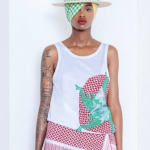
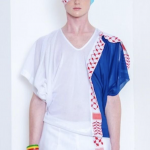
One of the dutch fashion designers i truly enjoyed working with was AZIZ (Bekkaoui). I met a few of the great fashion designers in my time at the Gemeentemuseum. Frank Govers i found authentic but not that sympathetic, the same with Frans Molenaar …at a distance a likable personality, but as soon as you had met he was not the friendliest one. Max Heymans….. a rude person that thought of himself to be the king among dutch fashion designers, but for me he never reinvented himself, but his importance was based on a very loyal clientele who thought his designs were ina class of their own. Mart Visser a found sympathetic and one of the last i worked with was AZIZ Bekkaoui. A Moroccan born fashion designer of who i personally think is one of the most original ones to have appeared on the dutch fashion scene in the last few decades. No gimmicks like Viktor & Rolf, but true and original fashion His fashion designs are inventive and highly original and…..he is certainly one of the friendliest designers i have met.
At the time of his Gemeentemuseum show he was hardly known, but the catalogue we made for the show was one of the most original ones at the time i was working at the Gemeentemuseum. Designed by Gracia Lebbink, we chose for a felt like white cover and the best printing possible…the result a highly collectable fashion exhibition catalogue which is still available at www.ftn-books.com
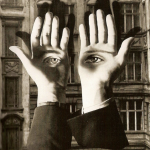
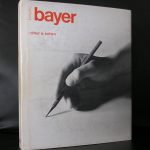
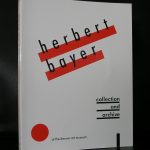
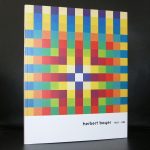
Herbert Bayer is forgotten by many, but he definitely is one of the most important designers/artists from last century. He studied at the Bauhaus and was at one time educated by Kandinsky and Klee.
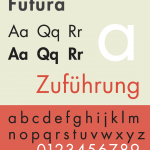
In the spirit of reductive minimalism, Bayer developed a crisp visual style and adopted use of all-lowercase, sans serif typefaces for most Bauhaus publications.[3] Bayer is one of several typographers of the period including Kurt Schwitters and Jan Tschichold who experimented with the creation of a simplified more phonetic-based alphabet. From 1925 to 1930 Bayer designed a geometric sans-serif Proposal for a Universal Typeface[1] that existed only as a design and was never actually cast into real type.[4] These designs are now issued in digital form as Bayer Universal.[2] The design also inspired ITC Bauhaus and Architype Bayer, which bears comparison with the stylistically related typeface Architype Schwitters.
Then his life changed drastically. In 1944 Bayer married Joella Syrara Haweis, the daughter of poet and Dada artist Mina Loy. The same year, he became a U.S. citizen. The result….Many lost interest in the works by Bayer, he did some typography and made some fonts, but gained again some importance in collecting over 30.000 works of art for the ARCO company. Still Herbert Bayer is recognized again as one of the more important artists from the Bauhaus era and this means his works start to grow in importance again.
Artist/ Author: Oliver Boberg
Title : Memorial
Publisher: Oliver Boberg
Measurements: Frame measures 51 x 42 cm. original C print is 35 x 25 cm.
Condition: mint
signed by Oliver Boberg in pen and numbered 14/20 from an edition of 20