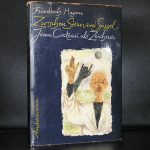
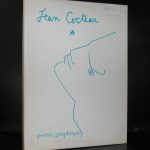
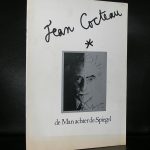
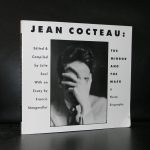
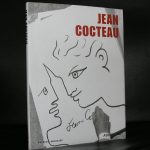
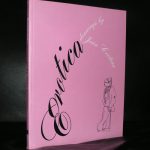
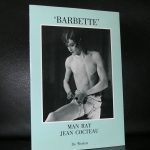
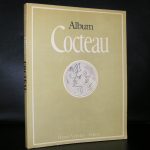
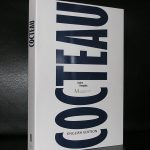
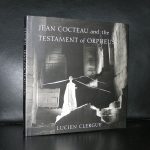
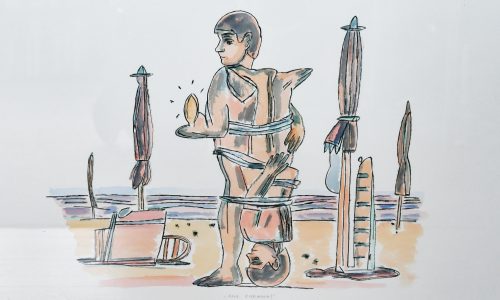
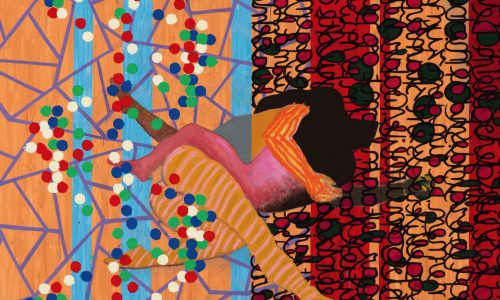
NO doubt in my mind. For me Jean Cocteau was a painter/photographer. Surely he was a multitalented artist, but in his drawings he shines. Personal, bold and typical Cocteau styled. These drawings are timeless and have at one time been published by Taschen in highly affordable, but beautiful executed publication.
But beside this great introduction to his ( erotic) drawings there are many other publications worth collecting on this artist. www.ftn-books.com has some of them available, but it is well worth to search for these small but excellent publications on book markets and at garage sales. Cocteau was a great and original artist.
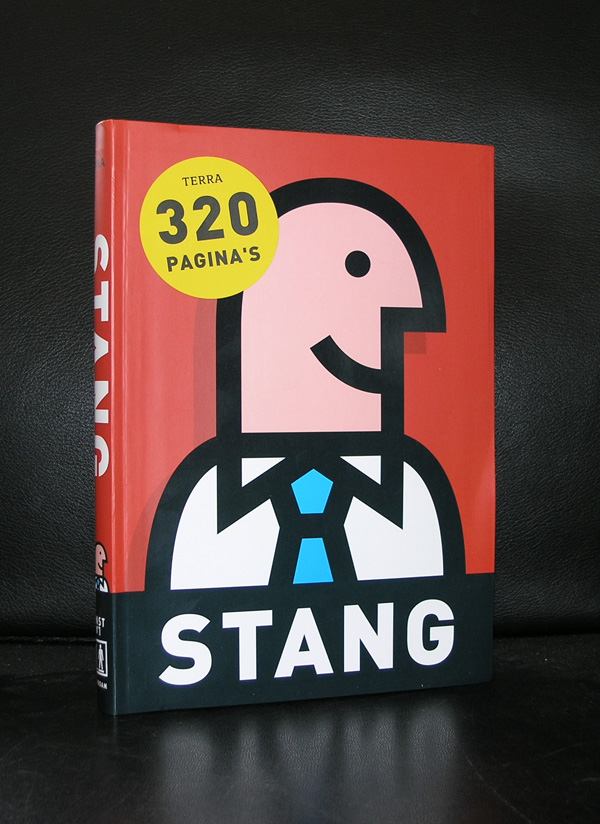
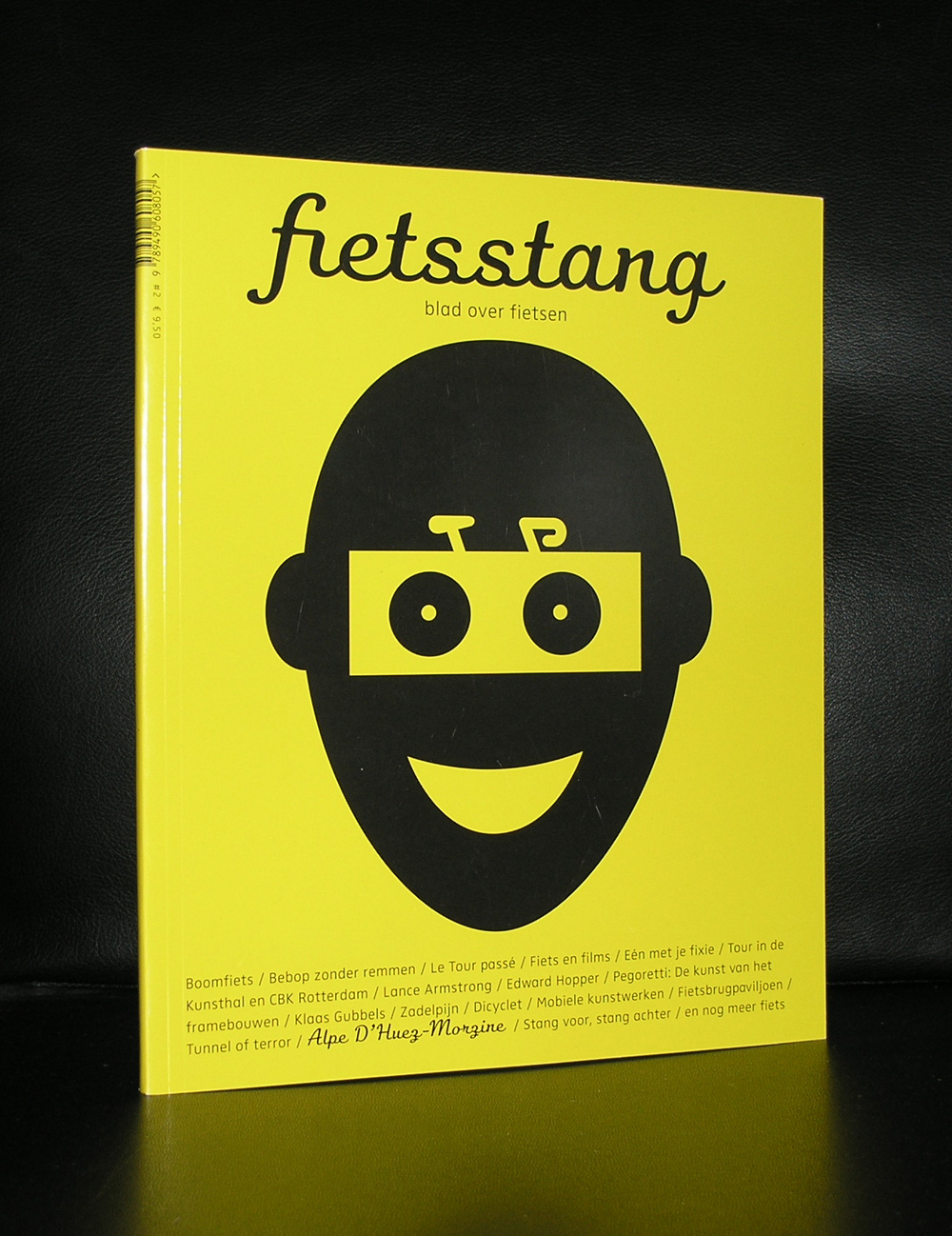
It was at the time Wim van Krimpen was the director for the Gemeentemuseum Den Haag that i met Stang Gubbels. Stang had worked with van Krimpen before on some projects he did with the KUNSTHAL/ Rotterdam. His style and designs are truly original , highly recognizable and together with the designs by Irma Boom and Gracia Lebbink, belons to the best dutch designs produced during the last 2 decades in the Netherlands.
Stang has an excellent internet site which can be reached at www.stang.nl and for those looking for his scarce publications…..www.ftn-boooks.com has two nice STANG titles available.
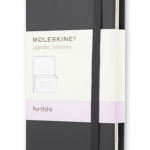
During the time i filled my Piet Dirkx daily in the last 2 years, i frequently looked into the publications that i have on and by Piet Dirkx and each time it struck me that these were all quite special. Covers out of the ordinary, special binding and one even one resembling the famous Moleskine notebooks that Piet uses for his notes and drawings nowadays.
Some of these are still available at www.ftn-books.com. Not all are listed… so inquire for the ones in store, but if not in the inventory of www.ftn-books.com keep looking and searching for them , they really are still out there to be picked up.
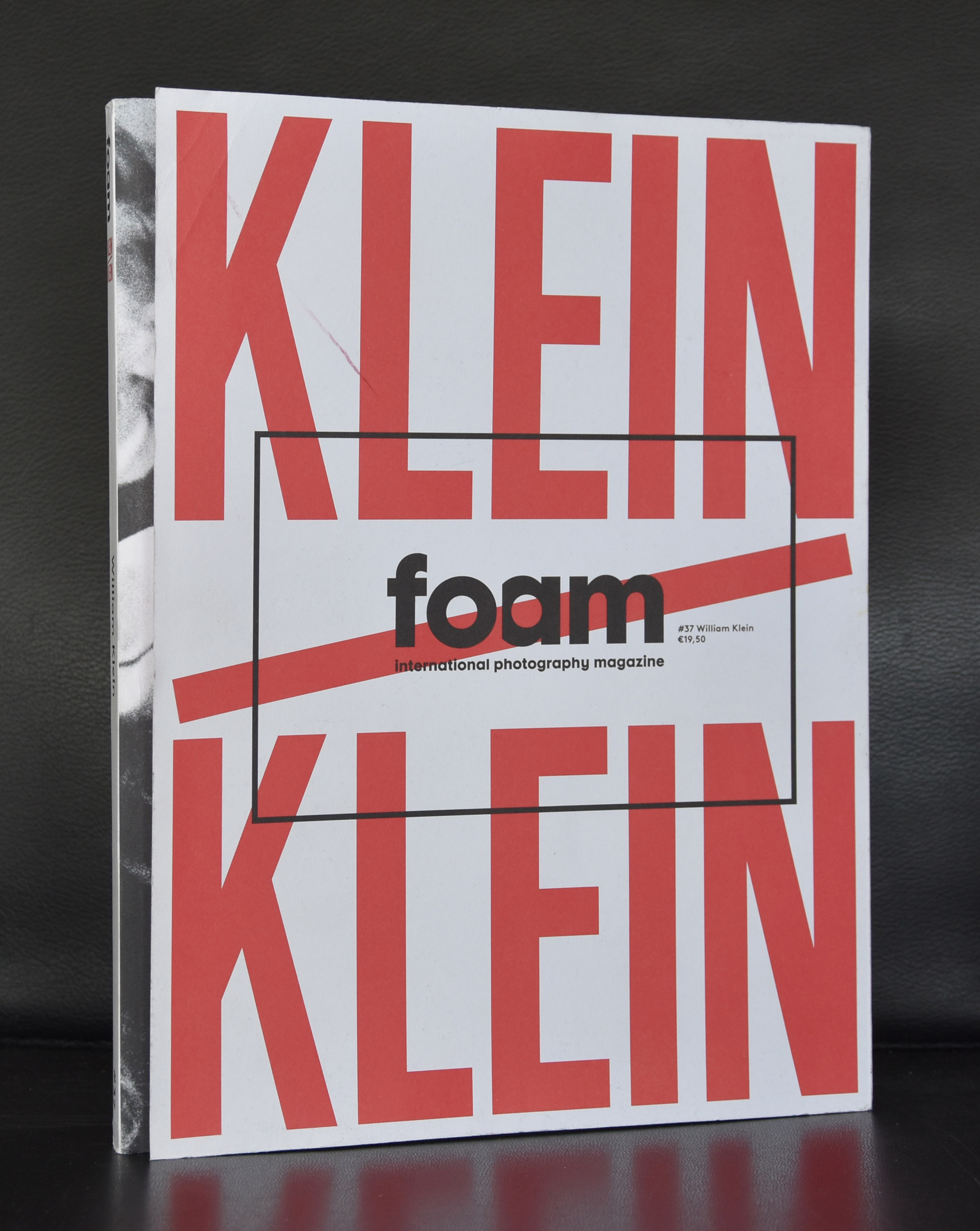
I found an excellent biography on Artnet on William Klein, but for me the importance of Klein is the fact that William Klein made a stunning catalogue together with Wim Crouwel for his 1967 exhibition in the Stedelijk Museum Amsterdam. The catalogue has some very bold typography and the use of the bright yellow in contrast with the black and white photograph in the back makes it for me a classic. Here is the Artnet bio.
William Klein is an American artist known for his unconventional style of abstract photography depicting city scenes. Although similar in subject matter to other street photographers such as Diane Arbus and Saul Leiter, as well as fashion photographers Irving Penn and Richard Avedon, Klein’s images break from established modes. “I came from the outside, the rules of photography didn’t interest me. There were things you could do with a camera that you couldn’t do with any other medium—grain, contrast, blur, cock-eyed framing, eliminating or exaggerating grey tones and so on,” he reflected. “I thought it would be good to show what’s possible, to say that this is as valid of a way of using the camera as conventional approaches.” Born on April 19, 1928 in New York, NY, Klein studied painting and worked briefly as Fernand Léger’s assistant in Paris, but never received formal training in photography. His fashion work has been featured prominently in Vogue magazine, and has also been the subject of several iconic photo books, including Life is Good and Good for You In New York (1957) and Tokyo (1964). In the 1980s, he turned to film projects and has produced many memorable documentary and feature films, such as Muhammed Ali, The Greatest (1969). Klein currently lives and works in Paris, France. His works are held in the collections of The Museum of Modern Art in New York, the National Gallery of Art in Washington, D.C., and the Art Institute of Chicago, among others.
There are more titles on or with contributions by William Klein available at www.ftn-books.com
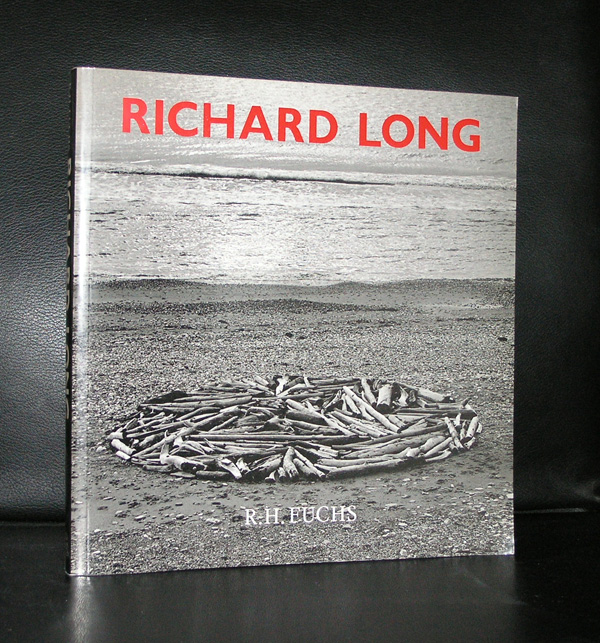
Hamish Fulton and Richard Long…. Two artist who i learned to appreciate in the time that Rudi Fuchs was director at the Gemeentemuseum. Long was nominated 4 times for the prestigious Turner price , but only won it once in 1989 for White Water Line.
Since i first saw works and publications i have seen Richard Long his works on many occasions and one of the most recent ones was at the Guggenheim Bilbao museum. Each time the lines, circles and labyrinths look random, but this is not true. The placement of the stones and paint is strict and makes it free whitin the object , but it has very strict boundaries making it perfectly shaped. The way each work is created is described and laid down in drawings i a way that each work can be re-cretaed at any other place than it was first was created. It is somewhat the saem as with the walldrawings by Sol LeWitt who uses the same method . The art work is the sketch/drawing and materials and can be re-created anywhere as long as you have the original drawing belonging to the work.
What makes Richard Long stand out from other contemporary artists is that many of his publications are also artist books which hold beside the works, photography and word “sculptures” by Long and www.ftn-books.com has some of these titles available.
Artist/ Author: Oliver Boberg
Title : Memorial
Publisher: Oliver Boberg
Measurements: Frame measures 51 x 42 cm. original C print is 35 x 25 cm.
Condition: mint
signed by Oliver Boberg in pen and numbered 14/20 from an edition of 20