Posted on Leave a comment

Martin Maloney (1938-2003)

Schermafbeelding 2019-06-05 om 14.50.54

I did not know anything about Maloney and stumbled upon an article by Elena Filipovic and it is a great introduction to this conceptual artist . I recently added the Bulletin 34, from 1971 to my inventory which is now for sale at www.ftn-books.com

The history of art is an ocean with many wrecks . Some floating on the surface, most almost inaccessible submerged on the seabed. As an art historian, you can surf the waves, and pick up the supernatant oeuvres, or you can go deep sea diving in the hope of discovering less known, less  obvious artists.
Today you must scrape the bottom to find literature mentioning the name Martin Maloney (1938 – 2003), and even then you will find only loose fragments and faint traces of an oeuvre .

However, this American artist once was amongst the founders of conceptual art. He had close contacts with the, now classical, conceptual artists and took part in a number of key exhibitions in the late sixties and early seventies.

During this period he was represented by the top galleries of the avant garde , such as Seth Siegelaub in New York, Konrad Fischer in Düsseldorf and Art & Project in Amsterdam. 
But the man did not refrain from criticizing the art establishment and his fellow artists , and even used criticism explicitly as the starting point for a number of postcard sized ” language pieces ” (”Designation Deposits” and ”Reject Deposits” , 1967-2001 ). This unruly and polemical art practice, coupled with his radical views and his particular temperament, isolated the artist more and more from the artistic context . 
By the time Martin Maloney, at the age of 65, died in Antwerp, he was materially impoverished and maintained only sporadic contacts with the art world .Maloney’s stubborn attitude obviously had other consequences too: because of his own (largely) chosen isolation, he cut himself off from the various channels that art history constructs: gallerists, collectors, critics ,curators ,conservators, art historians, fellow artists. Moreover, he himself destroyed much of his own work. All this results in his absence from the major, canonizing, publications since the seventies devoted to conceptual art .

By putting his radical critique in relation to the art world down on paper, Martin Maloney literally wrote himself out of art history.

After dropping out of university, in 1962, Maloney settled as an artist in New York. Initiall he had a special interest in the work of the postwar New York School painters like Ad Reinhardt , Barnett Newman , Mark Rothko and Jackson Pollock, but gradually shifted his attention away from the pictorial to the textual and non-material forms of art which from the mid- sixties began to emerge. He shared a studio with Lawrence Weiner and maintained relations with artists such as Carl Andre, Joseph Kosuth and Dan Graham.

In 1966, Maloney took part in the infamous ’25’ group exhibition, organized by the young art dealer Seth Siegelaub,who was to become the great promoter of conceptual art a few years later.

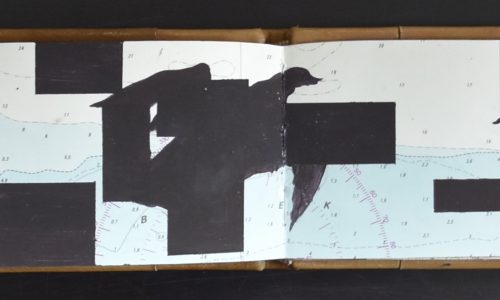
Maloney exhibited at Siegelaub several times and also had shows in several major European galleries. By this time, Maloney was  looking for alternatives to the traditional gallery exhibition. In many cases, his solo exhibitions would be accompanied with, or even take the form of an artist’s book. Examples are ‘Interguments’ (1969), ‘Fractionals’ (1970) ‘Reject Objects’ (1971) and ‘Five days and five nights’ (1970). The latter book was published in an edition of 500 copies in the framework of Maloney’s one man show at the MTL gallery in Brussels. Maloney locked himself for five days and five nights in the gallery to work on the resulting booklet of poetic statements. The conventional presentation of objects in a gallery made room for the direct communication of ideas in print .

For his next exhibition at London’s Lisson Gallery (1971), Maloney takes things even a step further. After distributing a poster designed by the artist, Maloney takes residence in the gallery and throughout the whole duration of the event goes into direct confrontation with his audience. The resulting insights and frustrations he wrote in white chalk on the black painted walls of the basement. After a short sojourn in London, Maloney moved to Amsterdam in 1973 and leaves behind the hardcore minimalist concept to include wood sculptures and painted text works. Four years later he returned to New York, to gradually retreat in the privacy of his studio, now serving as a laboratory for numerous installations and presentations.

 
From 1995 until his death he resided in Antwerp, where in 2000 he was invited by Flor Bex to realize a mural for the Museum of Contemporary Art (MUHKA). 

Maloney occupied a studio in a dilapidated building on the Jordaenskaai 13 .

What remained in the six rooms of Maloney’s Antwerp working and living environment were, in addition to a number of ”language pieces” and works on paper, the results of his latest artistic experiments: minimalist ‘floor pieces’ and corner stacks, composed of pieces of fallen ceiling plaster, wallpaper, fabric scraps, canvas and wooden beams from the solid oak doors in the building.

Like an architectural archivist Maloney recycled and ordered materials of the decaying building into geometric compositions. It is as if these material traces of a precise and time-consuming labor, the quiet, repetitive activity of the hands were a necessary remedy for the chronic anxiety of the mind .

Johan Pas , Ekeren , January 2004
pace Works”

“To live,” Walter Benjamin once famously wrote, “is to leave traces.” But one could almost say that the recently deceased artist Martin Maloney (1938-2003) lived to efface his. Largely forgotten and omitted from art history, the American artist is all but invisible in institutional collections of the conceptual art he participated in from an early stage.

Thus the title of Maloney’s first posthumous exposition, “Here to Stay”, captures all of the ambiguity of the artist’s oeuvre. The exhibition fills the vast decrepit spaces where the artist lived and worked in solitude for the last 8 years of his life while the Antwerp building was waiting to be demolished.

The works, like the space they occupy, are not there ‘to stay’ at all. Immanent destruction is a ghost that has haunted the building for years. And even though his arrival in this space was relatively recent, Maloney’s works made from the recycling of building detritus have evoked architecture and entropy since the late ‘60s.

He made floor-bound geometric ensembles, each composed of thousands of pieces of any one element: neat piles of fallen ceiling plaster, pyramids of broken bricks, layers of split timber from his studio’s oak doors, or thousands of identical maniacally cut squares of carpet. In his work, the ceiling sat on the floor and wall elements became precarious rubble in the corner. In short, boundaries were elided between architectural elements and sculpture, between object and installation.

These ensembles made infinitely mutable, fragile works—more often than not with nothing holding the components together. They could change form a hundred times… or simply be swept away. ‘Structure’, ‘edge’, ‘edged’, ‘angle’, ‘cut’, ‘split’, ‘split space’: these words line Maloney’s texts, canvases and painted brick-works. Even a sampling of his exhibition titles, “Up Against the Wall” (at Konrad Fischer, Dusseldorf 1971) or “White Walls are Animals” (at Micheline Szwajcer, Antwerp, 1980), give the sense that the constraints of architecture and space — particularly the exhibition space — were never far from Maloney’s thoughts.

For him, the gallery’s symbolic ‘white walls’ needed to be fought, resisted and shown for what they were. In 1971, he locked himself in the confines of the MTL gallery in Brussels for five days and nights. His solitary act and refusal to allow the gallery space its role in visual presentation was the ‘exhibition’, with only a published version of the texts he wrote during his stay in the gallery as material trace.

Martin Maloney’s contribution to David Lamelas’ Publication, Nigel Greenwood Gallery, London, 1970.

For his exhibition at the Lisson Gallery in London that same year, he painted the walls black and wrote lines of conversation and provocation on them during the gallery’s opening hours to incite the visitors who came to communicate with him. Little, if anything, is left of these meetings of the conceptual, the textual and the architectural, and one has the sense that this is somehow as Maloney wanted it.

Maloney was active as a conceptual artist in the ‘60s close to the likes of Lawrence Weiner, Carl Andre, Joseph Kosuth and Dan Graham. He made his material pile sculptures and conceptual projects alongside a vast body of intricately shaped canvases, highly structured language pieces, box sculptures, and painted statements on canvas.

Poster “Here To Stay”
 

To see some of what remains of this work on exhibit is to feel a ricochet of influences, references, and dialogues (with Weiner and Andre, of course, but also Frank Stella, Robert Smithson, Gordon Matta-Clark, Arte Povera…). Over time, however, he managed to alienate himself from his fellow artists, galleries, collectors, curators and art history alike. With the exhibition’s end, the works on show will travel to museum spaces that share little of the precariousness that make a building in ruin a fitting context for the artist’s complex, volatile work.

The form of the works and their dialogue with space will necessarily change, and Maloney would probably never have accepted such an exhibition at all. As he knew too well, white walls are animals indeed

Posted on Leave a comment

Ger van Elk (1941-2014) and the Art & Project Bulletins

Schermafbeelding 2019-06-04 om 16.33.34

Ger van Elk was one of the gallery artists from Art & Project and made 7 Bulletins for the gallery. ( all 7 are available at www.ftn-books.com)

over a period of 15 years he published within the series the following numbers Bulletin 19, 55, 65, 74, 100, 132 and 139

elk bulletin 19 b

Each different in its approach of the medium and all very much worth collecting. Her are some examples of the Bulletins.


Posted on Leave a comment

Luigi Ontani (1943)

Schermafbeelding 2019-03-25 om 11.08.35

Like Cindy Sherman, Ontani makes his own image subject in his his works and therefore it is not by coincidence that the Groninger Museum has made n exhibition with Ontani some 20 years ago. Ontani has a natural place in the colection of this Museum, Italian art and a focus on photography are two pillars that made the collection of the Groninger Museum well known all over the world.

After studying at the Academy of Fine Arts of Bologna Ontani began his artistic career in the 1970s when he became known for his tableau vivants: photographed and videotaped performances in which he presented himself in different ways: from Pinocchio to Dante, Saint Sebastian to Bacchus. These displays of “actionism” (different from Viennese Actionism, to which Hermann Nitsch is associated) verge on kitsch and raise personal narcissism to a higher level.

Throughout his long career Ontani has expressed his creativity and poetics through the use of many different techniques: from his “oggetti pleonastici” (1965–1969), made in plaster, to the “stanza delle similitudini,” made with objects cut in corrugated fiberboard. He has often anticipated the use of techniques subsequently adopted by other artists: his first Super 8 films were made between 1969 and 1972. With his work “Ange Infidele” (1968) Ontani begins to experiment with photography. From the beginning his photography has been characterized by some particular elements: the subject is always the artist himself, who uses his own body and face to personify historic, mythological, literary and popular themes; the chosen formats are usually miniature and gigantography, and each work is considered unique. From the late 1960s on are “Teofania” (1969), “San Sebastiano nel bosco di Calvenzano, d’apres Guido Reni” Tentazione,” “Meditazione, d’apres de la Tour,” “Bacchino” (1970), “Tell il Giovane,” “Raffaello,” “Dante,” ” Pinocchio” (1972), “Lapsus Lupus,” the diptych “EvAdamo” (1973), “Leda e il Cigno” (1974), “I grilli e i tappeti volanti” that will be followed by other “d’apres,” and the first Indian cycle “En route vers l’Inde, d’apres Pierre Lotti.” His first artistic photography has a historic importance because it anticipates a phenomenon that will be widespread and popular from the 1980s.

While working on his photographs Ontani began to make his first tableaux vivants. From 1969 to 1989 the artist made around 30 of these exhibitions, again foreshadowing the so-called interactive installations, which are based on the mixture of various technologies. With this same attitude he has created works in papier-mâché, glass, wood (he has made numerous masks, especially on Bali, with Pule wood) and, more rarely, in bronze, marble, and fabric. He has also made notorious works in ceramic, thanks to the cooperation with Bottega Gatti of Faenza, Venera Finocchiaro in Rome, and the Terraviva laboratory of Vietri: some of them are his “pineal” masks, the “Ermestetiche,” and the last great works such as “GaneshaMusa” and “NapoleonCentaurOntano.”

Ontani has not used all these different techniques as ends in themselves but as occasions to experiment new possibilities and formulate new variations of the themes and subjects that interest him the most: his own “transhistoric” travel through myth, the mask, the symbol and iconographic representation. He has exhibited his works in some of the most important museums and galleries of the world, from the Solomon R. Guggenheim Museum to the Pompidou Centre, the Museo Reina Sofía to the Frankfurter Kunstverein. He has also participated in several editions of the Venice, Sydney, and Lyon biennales. Recently he has had four important retrospectives at the MoMA (2001), the SMAK in Ghent (2003–2004), the MAMbo in Bologna (2008), and the Accademia di San Luca, also called the Accademia Nazionale di San Luca, in Rome (2017). The retrospective in Rome marks his receiving the Premio Presidente della Repubblica award in 2015.

Part from thnis blog comes from the WIKIPEDIA page on Ontani

www.ftn-books.com has the most important Ontani publication on stock.

Posted on Leave a comment

Jean Pierre Raynaud (1939)

Schermafbeelding 2019-06-03 om 14.05.18

Raynaud has had a long career in Modern Art and until recently he was the perfect artists artist. Known and appreciated by his colleagues, but outside the inner circle of artists hardly known. He has had a fairly successful exhibition at the Stedelijk Museum in 1968, which catalogue was designed by Wim Crouwel, but beside that exhibition it lasted over 30 years in the Netherlands before the DE PONT museum decided to have another  Raynaud exhibition in 1999.

IMG_20190530_144647

( both catalogues available at www.ftn-books.com).

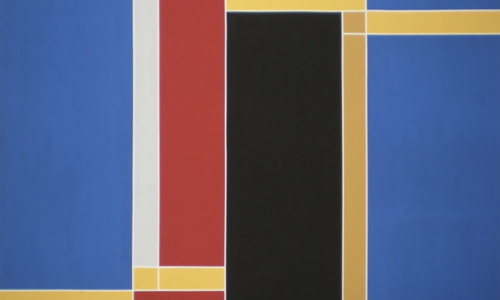
Of course Raynaud has had his exhibitions at galleries and museums, but the appreciation of collectors was not there. However in recent years his works have become more popular among collectors and since 2000 the appreciation of his works and prices start to rise. His works are characterized by the use of primary colors and in many a grid is used and part of the composition . There are several Raynaud publications available at www.ftn-books.com


Posted on Leave a comment

Jochem Hendricks (1959)

Schermafbeelding 2019-03-22 om 15.11.46

The Jochem Hendricks book that www.ftn-books.com has for sale is something special. Some reasons. First it feels and looks like an artist book, secondly it is in pristine condition and third….it contains the 33 raisor sharp LOGOS and WOLRD IMAGES Hendricks designed in 1985. The exhibition with these designs was held in 1992 in Frankfurt and curated by Jean-Christophe Ammann, making this an important exhibition. I personally did not visit this one , but seeing and leafing the book i wish i had.

OLYMPUS DIGITAL CAMERA

Posted on Leave a comment

Anish Kapoor (1954)

Schermafbeelding 2019-06-03 om 11.59.59

It was about 3 months ago that we visited DE PONT in Tilburg. Our friends from the US wanted to visit the Bauhaus Textile exhibition and Linda and I decided to make the visit to DE PONT. An important museum and it struck us both that their collection is of the greatest quality. This is quite an accomplishment for such a small museum. So the Pont is worth visiting and what strikes you immediately at the entrance is a bend mirror like sculpture that reflects the sky. It is majestic in its  appearance and of course the reflection is alway different so the sculpture present itself in a different way constantly.

[wpvideo DWIVniUJ]

A visit to remember since this is an excellent museum with ao. this Anish Kapoor, who is one of the most influential sculptors of his generation. Perhaps most famous for public sculptures that are both adventures in form and feats of engineering, Kapoor manoeuvres between vastly different scales, across numerous series of work. Immense PVC skins, stretched or deflated; concave or convex mirrors whose reflections attract and swallow the viewer; recesses carved in stone and pigmented so as to disappear: these voids and protrusions summon up deep-felt metaphysical polarities of presence and absence, concealment and revelation. Forms turn themselves inside out, womb-like, and materials are not painted but impregnated with colour, as if to negate the idea of an outer surface, inviting the viewer to the inner reaches of the imagination. Kapoor’s geometric forms from the early 1980s, for example, rise up from the floor and appear to be made of pure pigment, while the viscous, blood-red wax sculptures from the last ten years – kinetic and self-generating – ravage their own surfaces and explode the quiet of the gallery environment. There are resonances with mythologies of the ancient world – Indian, Egyptian, Greek and Roman – and with modern times. www.ftn-books.com has some nice Kapoor titles available

Posted on Leave a comment

Micha Klein (1964)

Schermafbeelding 2019-05-31 om 17.18.48

Micha Klein in s probably the first dutch Computer artist. He studied at the Rietveld academy and was there the firts to complete his studies as a video / computer artist. Using the dance scene as one of his first sources of inspiration he soon became known for his use of bright colors and the use of  “beautiful People” .

His art stands out since you can immediately see that his photographs or stills are worked over by computer. The result is an artificial kind of photograph which does not corresponds with reality. Together with Erwin Olaf and Ruud van Empel he forms a new generation of photographers who use the computer as an extra lense to make their photographs perfect. www.ftn-books.com has the Groninger Museum publication on Micha Klein available.

micha klein c


Posted on Leave a comment

Peter Lindbergh (1944-2019)

Schermafbeelding 2019-09-05 om 13.42.03

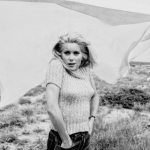
Yesterday i learned that the great Peter Lindbergh has died on the 3rd of September. Maybe he was not the greatest of his generation, because Helmut Newton, Guy Bourdin and Karl Lagerfeld became much more famous than Lindbergh ever would become, but among the Stern, Vogue and Vanity Fair readers he was known for his excellent, non polished photographs.

Schermafbeelding 2019-09-05 om 13.46.39

Setting a trend among photographers where the model had to be photographed as “natural” as possible. He will be remembered for these magnificent photographs which he took for 99% in black and white. www.ftn-books.com has some nice Lindbergh books in its inventory.

OLYMPUS DIGITAL CAMERA

Posted on Leave a comment

Alan Charlton ( continued )

Schermafbeelding 2019-05-31 om 16.44.21

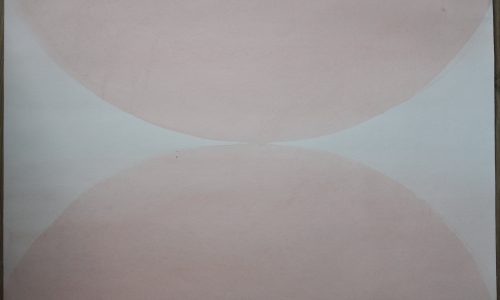
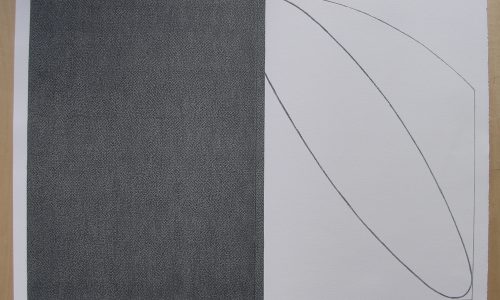
This was a great find … among the bulletins published by Art & Project in the Seventies were 2 by Alan Charlton bulletins and both had a special drawing inside. These drawings I want to share with you. The Bulletins are numbered 81 and 101 and were published in 1974 and 1977 and are available at www.ftn-books.com

charlton bulletin 81

charlton bulletin 81 b

charlton bulletin 101 a

charlton bulletin 101 b