Posted on Leave a comment

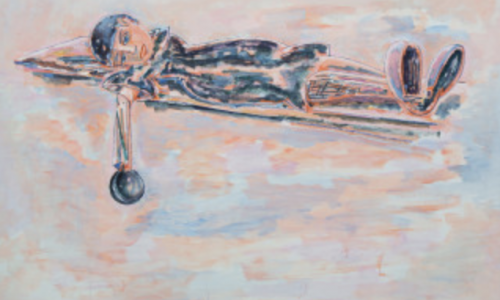
René Daniëls ( continued )

Schermafbeelding 2020-08-04 om 16.09.13

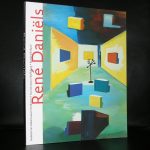
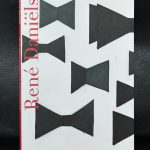
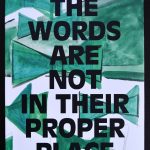
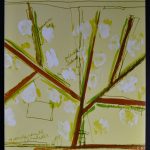
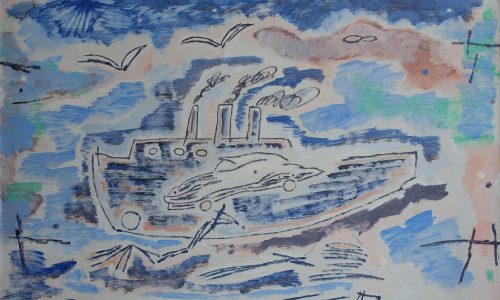
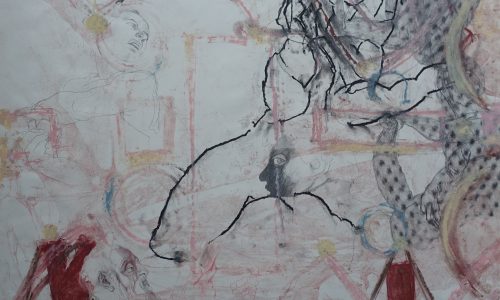
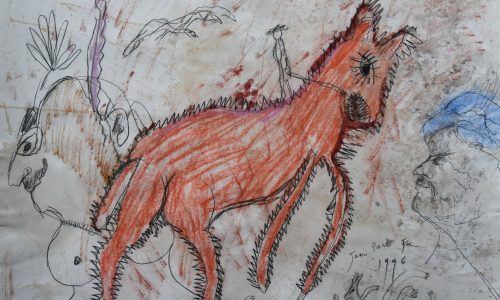
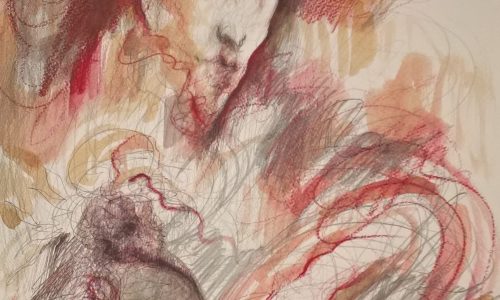
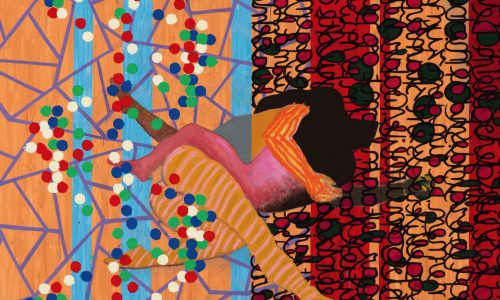
Over 3 years ago I published my first blog on René Daniëls, who I consider to be one of the great dutch artist from the last century. It took me some time but  I now have the most important publications on René Daniëls in my inventory. recently I have added Lentebloesem (1990) and The words are not in their proper place (2011). These together with the van Abbemuseum publications makes the best collection of René Daniëls. possible. All books are now available at www.ftn-books.com

Posted on Leave a comment

Fernando Sánchez Castillo (1970)

Schermafbeelding 2020-08-03 om 15.34.58

In his work Fernando Sánchez Castillo analyzes the relationship between art and (political) power. The artist presents us with a different view of, and interaction with, reality in his work. Sánchez Castillo often uses existing “traces” from the past as a starting point for his work and as material for his analysis and transformations. He does so—on the basis of strong social commitment—in a playful and humorous manner. Sánchez Castillo’s fascination with the history of his home country, with the civil war, the postwar era and the dictatorship, but also with today’s world, departs from a concern not only for the political and the revolutionary, but certainly for the social aspects of historical processes as well. Collective memory extends far beyond national boundaries and finds its way into the present. The artist plays with connotations that once sought images to match and, conversely, with images that now demand new connotations. The work of the Sánchez Castillo is an attempt to rewrite history, at least to make us aware of its complexity and traces, and also to show that history is a story that is constantly being constructed from the vantage point of power.

Fernando Sánchez Castillo was born in 1970 in Madrid (ES). He holds a degree in Fine Arts from the University of Complutense Madrid, and a MA degree from the Instituto de Estética Contemporánea, Universidad Autónoma, Madrid. He is a former member of the research group of ENSBA Paris. In 2005 and 2006 he was a resident at the Rijksakademie van Beeldende Kunsten in  Amsterdam (NL). Sánchez Castillo participated in the Research Team of the United Nations Geneva, PIMPA Memory, Politics and Art Practices. He had solo exhibitions at a.o. Shchusev State Museum of Architecture, Moscow (2019, RU); Kunstraum Innsbruck (2016, AT); Sala de Arte Público Siqueiros, Polanco (2016, MX); Stedelijk Museum ’s-Hertogenbosch (2016, NL); Centro de Arte Dos de Mayo CA2M, Madrid (2015, ES); OK Centrum Linz (2014, AT); Rabo Kunstzone, Utrecht (2013, NL); Kunstpavillon München (2013, DE); Kunstverein Braunschweig (2012, DE); Matadero Madrid (2012, ES); CAC Malaga (2011, ES). Group shows at a.o. Riga Biennial (2018, LT); National Center for Contemporary Arts. Moscow (2016, RU); Today Art Museum Beijing (2016, CN); Biennale Gherdëina (2016, IT); Centraal Museum Utrecht (2016, NL); Manifesta 11 Zürich (2016, CH); Albertinum Dresden (2015, DE); Palais de Tokyo (2015, FR); MOTA Tokyo (2014, JP); Goteborg Biennial (2013, SE); De Appel Amsterdam (2013, NL) and MAC Marseille (2013, FR). Works by Fernando Sánchez Castillo are part of international public and private collections.

the CAC Malaga exhibition catalogue is available at www.ftn-books.com

Posted on Leave a comment

Wyn Geleynse (1947)

Schermafbeelding 2020-04-10 om 12.03.04

What better way to introduce a video artist with a video i found on the internet. Just a short video of 3 minutes introduces this Rotterdam born artist, but living almost his entire life in Canada.


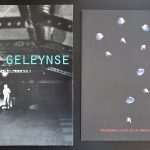
Wyn Geleynse is a multimedia artist living and working in London, Ontario. Born in Rotterdam, Netherlands in 1947, Geleynse moved to Canada as a child and was raised in London, Ontario. Since 1969, he has exhibited extensively both in Canada and Europe. Considered one of Canada’s pioneer film and video projection artists, Geleynse’s career spans a period of nearly 40 years. His work raises questions about self and identity, commenting on the human condition with a subtle blend of irony and humanity. Interested in the notion of film projection as a metaphor for projecting one’s thoughts and desires, Geleynse worked primarily with installation-based projections in the past. In 2009, he produced an outdoor DVD projection work titled “Wyn Geleynse: The Peel Projection” for the site that will become the Art Gallery of Peel in Brampton, Ontario.

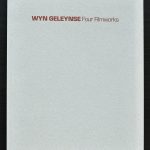
www.ftnbooks.com has 2 titles on Geleynse available:


Posted on Leave a comment

Plus-Kern and Amédée Cortier

Schermafbeelding 2020-11-13 om 10.15.53

In october 2020 i wrote a blog on Cortier, so i decided to devote a blog on one of the galeries that showed the works by Cortier in an early stage and this was of course galerie PLUS- KERN, Plus-Kern – Centrum voor Konstruktieve Vormgeving,  was founded by de Smet and Jenny Van Driessche in 1969 and was a regular venue for the works by Cortier and has proved to be after its closure and iconic and one of the most important galeries in Europe from the last century.  Cortier was the abstract constructivist who was perhaps the european equivalent of Ellsworth Kelly. Looking for more information on this iconic gallery i stumbled upon an excellent publiction on Amédéé Cortier and the galeries that presented him during his career ( ao. Plus-Kern and Ronny van de Velde).

Here is the link for the PDF publication: https://www.ronnyvandevelde.com/media/vandeveldeMedia/layout/pdf/cortier-catalogue-2018.pdf

https://www.ronnyvandevelde.com/media/vandeveldeMedia/layout/pdf/cortier-catalogue-2018.pdf

https://www.ronnyvandevelde.com/media/vandeveldeMedia/layout/pdf/cortier-catalogue-2018.pdf

This is not for a quick read, since the PDF is 241 pages filled with information on Amédéé Cortier and his influence on Belgian contructivist art, but important it is and only for the photographs of the works “in Situ” it is worth reading it.

For available publications on Plus-Kern and Cortier please search www.ftn-books.com


Posted on Leave a comment

TYPEX = Raymond Koot (1962)

Schermafbeelding 2020-07-31 om 15.10.52

Typex is known for his many illustrations he ahs made for dutch publications like VPRO gids, OOR, Zone 5300, Vrij Nederland, Intermediair, NRC, Volkskrant en De Filmkrant. But lately he received the Stroschapsprijs for his biography on Andy Warhol. Over 500 pages with Warhol history illustrated in the typical Typex style.

Schermafbeelding 2020-07-31 om 15.11.41

A few months ago he published in the Volkskrant, a double page illustration on the history and problems of the Heard vs Depp marriage. The illustration says all and is now for sale at www.ftn-books.com.

heard vd Depp

Posted on Leave a comment

Gerald van der Kaap (1959)

Schermafbeelding 2020-07-28 om 09.58.13

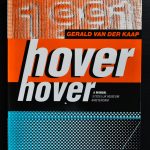
Of course I can tell you that since his breakthrough exhibition HOVER HOVER at the Stedelijk Museum ( catalogue available at www.ftn-books.com) the conceptual works by Gerald van der Kaap have been shown all over the world and that he received public acclaim for practically all his installations and projects. Everything he takes up turns into a work of art. Whether it is a book, museum catalogue, Video, record or print everything turns into something special. Best is to show you what I mean with presenting two links.

the first the Gerald van der Kaap site at : https://www.geraldvanderkaap.com/

and the second at the Hollandsche Meesters series which devoted one of his video to Gerald van der Kaap:


these 2 books are among others at this moment available:


Posted on 1 Comment

Chris Evans (1967)

Schermafbeelding 2020-07-27 om 16.21.30

This article on Chris Evans comes from FRIEZE. He is one of the younger artists to feature in this daily FTN blog.

Artistic processes that involve commissioning others to produce work have often been fraught with unease. From the confused parameters of collaborative authorship to the unforeseen conflicts of interest that frequently arise, it is often difficult to sidestep the undercurrents of exploitation that vex this field of practice. One might imagine that in order to work with or within the corporate sector, an artist might need a degree of brashness and swagger. We might assume that he or she is intent on agitating, exposing or critiquing institutional structures. But what if, as in the work of British artist Chris Evans, this could be a far more generous proposition than preconceptions might suggest? ‘Clerk of Mind’ – Evans’s first solo exhibition in Ireland – highlighted the artist’s role as facilitator and translator between seemingly incongruous specialist fields, including international political relations and high-end jewellery design.
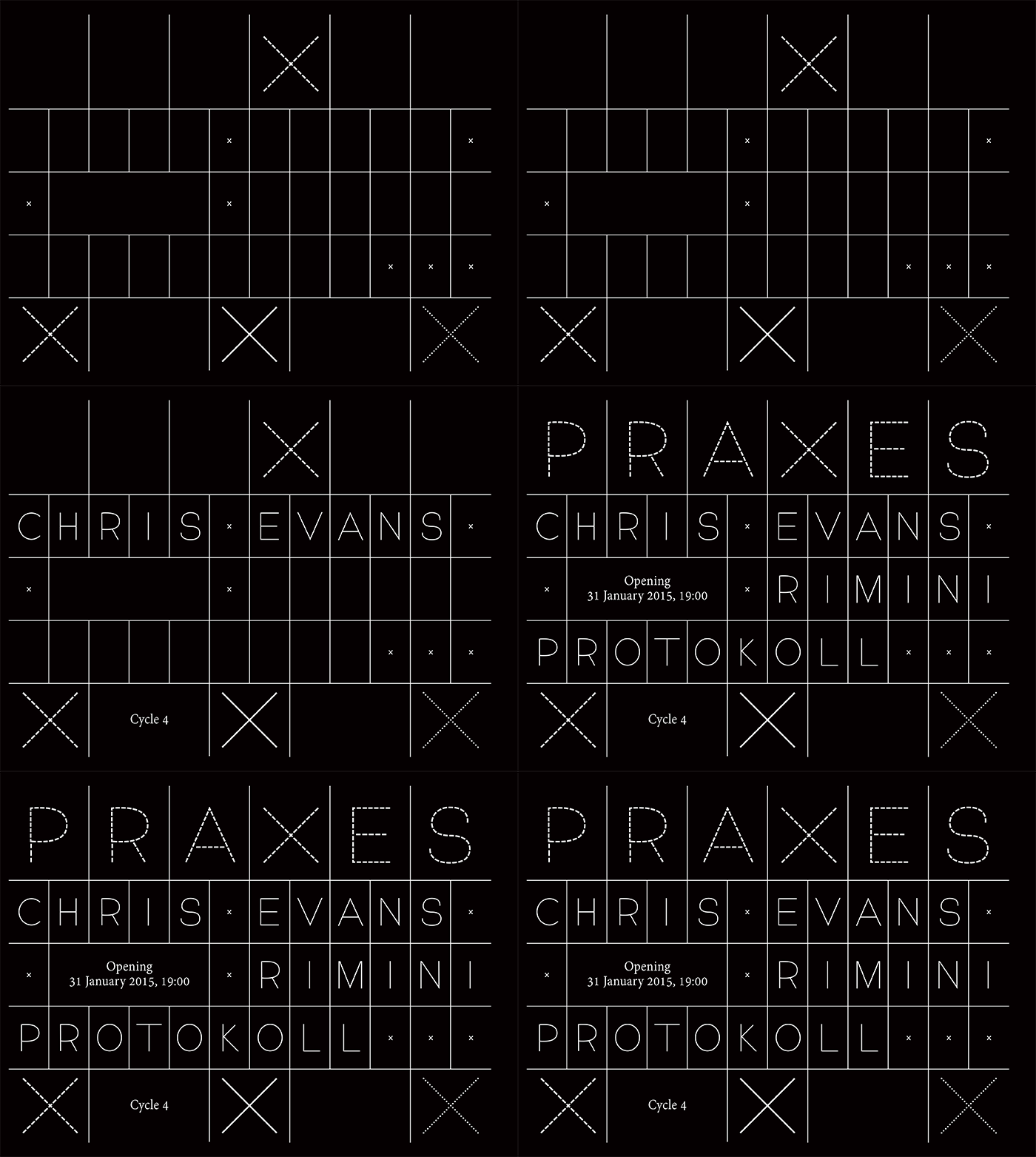
Praxes Center for Contemporary Art

Sensitively curated by Kate Strain, the show comprised the reconfiguration of three existing artworks never presented together before. Plans are currently underway for Project Arts Centre to commission new work by Evans in response to the Irish context. Probing the vehicle of co-authorship, CLODS, Diplomatic Letters (2012–ongoing) is a series of drawings of invasive plant species, sketched by invited members of the international diplomatic community, which were subsequently photographed by Evans, inverted and then printed as silver bromides. The tentative, almost courteous quality of the diplomats’ lines contrasted robustly with Evans’s cement and marble sculptural clods, and the slippery strips of PVC matting arranged across floor-level, custom-made platforms. Punctured with boreholes, the clods seemed to memorialize the negative space left behind when weeds are pulled from the ground. As co-authored works, these art objects are remnants of exchanges that remain partially hidden – an aesthetic in keeping with the wider curatorial approach at Project, which often presents the residual artefacts of earlier interventions in the gallery or elsewhere. In a similar vein, the textual remains of corporate negotiations featured in Evans’s concurrent exhibition ‘Untitled (Drippy Etiquette)’ at Piper Keys, London, which presented correspondence relating to the proposed rebranding of a dwindling socialist newspaper.

A Needle Walks into a Haystack (2014), named after the main exhibition at last year’s Liverpool Biennial, for which it was commissioned, comprises a vitrine housing a jemonite base and a dazzling, jewel-encrusted ring, crafted at Evans’s invitation, by high-end jewellers Boodles. The impish features of a golden ‘flowergirl’ are discernible amidst the ring’s glittering frondescence. Given that companies like Boodles might typically sponsor biennials or similar events, Evans proposed an alternative form of exchange, probing the space where art meets patronage. His design brief requested the creation of a piece of jewellery in response to the biennial’s press release – a rather excessive promotional statement including the key words ‘intimate’ and ‘domesticity’ – upon which the jewellers based their response, as explained in the literature accompanying ‘Clerk of Mind’. Mindful of their existing clientele and general perceptions of luxury brands, Boodles carefully scrutinized the terminology used to define the parameters of the commission. Treating the ring as an ‘artwork’ necessitated a contractual agreement outlining its shared ownership, the fact that it cannot be sold as a piece of jewellery and future transportation arrangements, to be implemented by Boodles’ own couriers.

As overseer of this kind of co-production, Evans acts as functionary (or ‘clerk’) – tracking the thoughts and intentions of his collaborators, while administering the practical arrangements and textual material which support the process. The artist has stated that he harbours no intention to critique particular groups, institutions or procedures; instead he hopes to forge relationships built on trust with figures whom he perceives to be especially misunderstood by the art world. Though the artworks are ultimately credited to Evans, the fact that he makes very visible the cooperative processes that lead to their production is an attempt to invalidate Romantic claims about the artist as ‘lone producer’ or ‘creative genius’. Conversely, Evans focuses on the capacity of artists to engage with a range of institutional, commercial and bureaucratic frameworks in a continuous process of reciprocal exchange. www.ftn-books.com has one Evans title available. The “Goofy Audit” is a future classic.

evans goofy a


Posted on Leave a comment

Theo Schepens (1961)

Schermafbeelding 2020-06-30 om 17.44.49

A key element in the works by Theo Schepens is “balance”. A physical balance but also a spiritual balance between man and women. The result sculptures of male and female figurines interacting with each other taking poses in which they try to find and hold their balance. It all starts with the smallest and extremely speedy sketches he makes and then uses these as a starting point for his sculptures.

These sculptures have a rare quality. These do not take any effort to understand the meaning of the artist and the world he has created with them is highly recognizable. since his figurines have not changed for over 30 years. The males and females in his sculptures still look the same as 30 years ago, but what has remained is the timeless quality of his sculptures. This is he kind of art that children will interact with when they see it for the first time and remember it because of the shiny quality and the highly understandable action they are in. Kissing on horses, on a wire and even love making . all these actions come along . Schepens has created a “shiny” world in aluminium to love.


Posted on Leave a comment

Lily van der Stokker (1954)

Schermafbeelding 2020-07-26 om 14.00.33

I copied this text partly from the site of the Stedelijk Museum. The “Stedelijk” had their first van der Stokker exhibition ever. The reason…. the works by van der Stokker are strongly rooted in the collection of the Stedelijk Museum with their great collection of Conceptual Art.

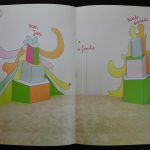
Van der Stokker’s visual language of flowers, looping lines, clouds and curlicues in bold, bright colors, raises questions about what we regard as typically feminine. Her work can be placed in the tradition of feminist art, which does not conform to prevailing standards of good taste. As such, she often exploits concepts that are ‘banned’ from contemporary art, such as the frivolous and decorative.
The exhibition Lily van der Stokker – Friendly Good is her most extensive presentation in a museum so far and most of the works have not been shown in the Netherlands before.

Schermafbeelding 2020-07-26 om 13.58.20

Often incorporating words and phrases, Van der Stokker’s work is firmly rooted in the tradition of conceptual art. Similar to her conceptual forbears (Joseph Kosuth, Lawrence Weiner, Robert Barry), Van der Stokker uses text to explore the essence of art, although as she does so, asks very different questions. Can artists show failures? Is it alright for art to be untrue? Or funny and sweet?

I am a beauty specialist. I have commissioned myself to research happiness and friendliness in my artwork, and with that I take a stand against irony and cynicism.


Lily van der Stokker (born Den Bosch, 1954, lives and works in Amsterdam and New York) ran a gallery in New York in the 1980s and staged one of her first exhibitions at Museum Fodor, Amsterdam (1991). In the 1990s she received international acclaim with shows at venues such as the Walker Art Center (Minneapolis), Centre Pompidou, (Paris), Villa Arson, (Nice). Her work has recently been the subject of important solos at Tate St. Ives (2010), New Museum in New York (2013) and the Hammer Museum in Los Angeles (2015). She has also completed several monumental public art projects such as the Celestial Teapot, Hoog Catharijne, Utrecht, (2013) and Pink Building during the World Expo in Hannover (2000). Lily van der Stokker exhibits at gallery Kaufmann Repetto in Milano, Air de Paris in Paris en gallery Van Gelder in Amsterdam.


Posted on 1 Comment

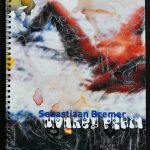
Sebastiaan Bremer (1970)

Schermafbeelding 2020-07-26 om 11.10.24

One of the sites I visited on Sebastiaan Bremer wrote that his art is a mash-up of styles and techniques and I can agree with that description.

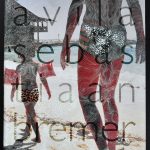
Sebastiaan Bremer, Living and working in New York, applies everything from paint and inks to physical etchings to his photographs, creating an utterly original art piece. Many of his photos are from his own past, personal mementoes that have become like a “distorted memory or a magical dream,” as Life Lounge describes.

Schermafbeelding 2020-07-26 om 11.22.10

Because he uses photographs and prints the size of his works is limited. The maximum size I encountered was 120 x 120 cm.  Just leaf through one of the two publications available at www.ftn-books.com and you will notice that many of hs works would be even more impressive if they were executed on a larger size.  On average they are 80 x 60 cm. Still, these are in many cases intimate and highly personal works where Bremer used his childhood and personal life as the first layer of his work of art.