Thomas Ruff’s photography suggests the possibilities of his chosen medium, as he might use digital manipulation for one subject and antiquated darkroom techniques for another. Ruff works in series, creating defined bodies of work whose subjects include empty domestic interiors, appropriated interplanetary images captured by NASA, abstractions of modernist architecture, three–dimensional computer–generated Pop imagery, and obscured pornography. Ruff’s portraiture series of the early 1980s (his first to receive critical acclaim) featured groupings of large three-quarter portraits like so many passport photos; their enlarged scale offered a startling level of legibility. Though these, like many of his photographic series, seem to beg a sociocultural interpretation, perhaps the most constant feature in Ruff’s career is his disavowal of such a reading. Instead Ruff focuses on aesthetics and process, building an eclectic oeuvre not defined by genre, method, or theme, but rather by stark imagery, relative conceptual seriality of subject, and the clever subversion of the printed image.
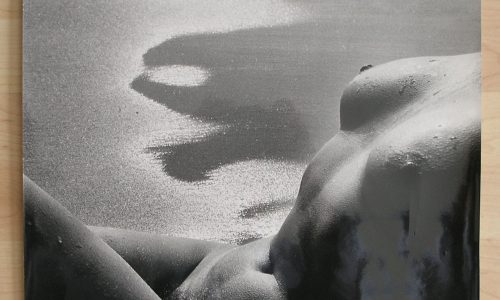
Not many books on Ruff available, but arguably the most important one i have in stock. It is the Nudes publication which was published with a text by Michel Houellebecq
Christoph Böllinger was born in 1939 and was largely inspired by the 1950s. The 1950s can be said to have been dominated by Abstract Expressionism, a form of painting that prioritised expressive brushstrokes and explored ideas about organic nature, spirituality and the sublime. Much of the focus was on the formal techniques of painting, and ideas of action painting were conflated with the political freedom of the United States society as opposed to the strictures nature of the Soviet bloc. Key artists of the Abstract Expressionist Generation included Jackson Pollock (who innovated his famed drip, splatter and pour painting techniques), Willem de Kooning, Mark Rothko, Frank Kline, Barnett Newman, Clyfford Still and Adolph Gottlieb. It was a male dominated environment, though necessary reassessment of this period has highlighted the contributions of female artists such as Lee Krasner, Joan Mitchell, and Louise Bourgeois, amongst others.
ftn-books has some scarce publications on this artist available at www.ftn-books.com
Jaap Schreurs (1913 – 1983) was born at The Hague, The Netherlands, as the son of the impressionist painter Jacobus Lambertus Keijzer and his common- law wife Nelly Schreurs. As a child, he often accompanied his father when he went into the country to paint the Dutch polder landscapes and allowed the child to have a go at it too. His parents always extended a warm welcome to all visitors. Because of their hospitality the family created around them a circle of all kinds of people; respectable and disreputable; rich and poor; ordinary and flamboyant; many of the familiar characters at The Hague. Certainly a stimulating environment for a talented child as Jaap Schreurs.
In his teens Jaap joined a peer group of boys who went to the polders for the day making paintings and drawings. Afterwards the boys’ efforts were seriously examined and commented on by Jaap’s father, as he encouraged them to continue.
After he had finished his studies, he installed himself as a professional painter, and led the usual life of the poor but hardworking artist. For financial reasons he could only afford models whom he found at the Salvation Army’s Centre for the homeless – meaning alcoholics, ex- prostitutes and cripples. This introduced him to the world of the social outcast and he pitied their fate. His fascination with outcasts and his impotent rage about the way society treated them were reflected not only in his early but also in his later paintings.
Although his parents themselves were rather hospitable, Jaap now gradually disengaged himself from the social and artistic life in The Hague, including the contemporary leading schools of painting. He had no intentions to work as a career painter or a trendy painter. He said: I don’t wish to conform to some school of painting, or to create art just according to some theory of art. Art that needs explaining may be acceptable for career hunters, but as for me: my paintings should do all the talking, not me!” The development of this concept in Jaap’s view of art is clearly reflected in his work, considering the chronology. While his early paintings evidently show the influence of much admired painters like Jan Sluyters, Charley Toorop, and Constant Permeke, rather quickly his work changes as he explores new ways, evolving with a growing independent style.
Then disaster struck in the form of an eye disease. Nowadays the disease probably could have been cured, but at that time it couldn’t. So Jaap lost the eyesight of one eye. No need to say that this had an enormous impact on his artistic career, as he now had to do without the ability to see depth – three-dimensional vision. His handicap left a strong mark on Jaap’s further search for his identity as a painter. Jaap could no longer rely on colours for creating depth in his paintings. He discovered, however, that he partly could overcome this mischief by balancing between light and dark. And so due to this rather unfortunate handicap Jaap Schreurs’s artistic career changed in yet a further different direction.
After a period of experimenting with highly stylized two-dimensional figures, lie settled for creating depth by emphasizing contrasts of light and dark. Also he chose to return to the themes of his earlier work: the mutilated, the outcast, the abandoned and rejected women. Now, however, he over accentuated their deformities and loaded them with a high emotional voltage. ‘This work also expresses the deep impression that war-time experiences in nazi-occupied Holland left him with: the deportations of the Jews, the strenuous experience of being in hiding, the famine and all of its concomitant scenes of survival of the fittest – at the cost of others. He saw how people came to destroy their own humanity, how the war exposed their inner motives and deformities, their debilities and disabilities. An insight too powerful to be ignored. Once he had gained a clear view of these dehumanizing mechanisms, he recognized it over and over again. World War Two had given him a clear demonstration of how scarcity and oppression could lead to dehumanization, how ultimate inhumanity victimized vulnerability. After the war the most cruel and manifest phenomena of inhumanity of course disappeared, but Jaap saw how the very same mechanisms were still operating below the surface, leaving post-war society again with the more ‘ordinary inhumanity’. ‘Ordinary’ inhumanity – but still the inner reality of destruction in disguise! Sometimes he almost cried it out “Can’t you see how we are all destroying ourselves and others?” At other times he wept with compassion, struggling with it all.
The paintings of this later period indeed don’t need any introduction; they speak quite eloquently for themselves, as he had wanted them to. And after all, contrary to earlier statements, he gave them a name: ‘psychological realism’. But even so the paintings don’t really need a name. They do indeed scream, they do warn, they do weep, with or without any particular label.
Painting this kind of work costs the artist dearly. Although he kept being a gentle and caring husband and father, he became rather more introvert and isolated himself increasingly from friends and colleagues. Jaap Schreurs painted continuously but, however, he never bothered to try and sell or exhibit some of his work. As for his isolation this did not include the eccentric or rejected people, they still had his attention and received hospitality in his home. They may have given him the support and motivation to continue his voluntary estrangement from what he felt to be the straitjacket of fashionable trends in contemporary art.
Through the years Jaap Schreurs was also working on another major theme. As mentioned before, most of his previous paintings were full of darkness and screamed accusations of human misbehavior at the spectator. But as for Jaap Schreurs, he also really desperately wanted to paint in lighter colours a brighter theme: human harmony, inner peace, life fulfillment. Jaap himself called this “painting the light”: in golden colours, an atmosphere of what he called “a fulfilled silence”. Towards the end of his life he was mainly preoccupied by that one goal, painting the light, as if to counterbalance his ‘darker’ work.
His last but one painting hints at just such a golden fulfilled silence: it shows a group of rather meditative people gathered around a golden bird that is held by a child. Although the silence in this painting is not yet fulfilled, there is clearly an anticipation of it in a mysterious atmosphere of waiting. The adult figures are rather introvert, they don’t look at each other nor at the golden bird, they gaze pensively in the distance. However they seem on the verge of awakening to the light that already touches their faces. The two children are looking outwards not inwards as are the adults, while one child looks up to the bird, the other faces the onlooker.
Indeed the last painting Jaap Schreurs worked on, never completely finished, reflects the atmosphere of fulfilled silence that he had been trying to create for such a long time. For months he had been struggling with this particular painting, adjusting it time and time again until one day he succeeded and was satisfied with his creation: the golden light he had been striving for, the fulfilled silence. He was very happy that day, full of hope and joy. Alas that joyful day was also the day of his sudden death from a heart attack. His very last words were “This is the turning point in my life! From now on I will be able to paint the light …”
After his death, Jaap Schreurs left behind a few hundred paintings, etchings, and drawings. They represent nearly his whole oeuvre, as he wasn’t interested in selling anything of his work. There is an amazing variety both in size and theme. Some, especially the very large ones, are shocking in their undisguised representation of human darkness and suffering, though even the most disturbing ones never condemn nor despise. All are permeated by a deep compassion and love, born out of his own sharing in the depths of human suffering.
The Thonet tubular steel furniture – an invention from the Bauhaus era Today, we take the form and aesthetics of tubular steel furniture for granted. They represent legendary milestones in design history. Art historians and materials scientists have been dealing with the details of the development of this design innovation for a long time. When were each of the particular designs created? How did the first tubular steel furniture designers influence each other? After the end of the First World War, society and politics in Germany were struck by a general crisis, which also shook the foundations of everyday aesthetic forms and provoked changes. In 1919, the first post-war year, not only was the Bauhaus in Weimar established but the National Assembly discussed the Weimar Constitution right next door in the theatre, and the Treaty of Versailles divided society. First influenced by expressionism and the Dutch De Stijl movement, several designers, architects and craftsmen started looking for new technologies and forms in the 1920s. For the first time in furniture making, they began experimenting with tubular steel as a material. The concurrence of several factors contributed to the fame and sustainable success of Thonet’s tubular steel furniture. There was the New Building design movement that developed with manifold tendencies, and the aesthetic-cultural educational institution Bauhaus, which repeatedly changed locations due to political changes and changes in its conceptual strategy resulting from its own development. The Bauhaus is a decisive point of reference, but it was not the birthplace of the new furniture. Thonet, already well-known for its diversified collection of bentwood furniture at the time and as an expanding company with international standing, offered itself as a natural partner for those designers who were striving towards typification in architecture and interior design. Thonet, after all, was a pioneer in the division of labour and the modular principle in furniture production. In addition to Michael Thonet, other pioneers of modernism including Josef Hoffmann, Adolf Loos and Bruno Paul had already designed bentwood furniture, and some of it was prefabricated in individual parts and could be disassembled.
( this text comes from the official Thonet siote)
ftn-books has acquired a small collection of commemorative Thonet publications which are now available at www.ftn-books.com
Ben d’Armagnac (Amsterdam, 1940 – 1978) studied painting at the Gerrit Rietveld Academy in Amsterdam from 1960 – 1963. In 1965 he moved briefly into the commune of Dutch artist Anton Heyboer in Landsmeer, who was an important influence on his early etchings. From 1967 on he worked together with Gerrit Dekker, e.g. on “Project for a bathroom, bedroom, kitchen, dining room, toilet and some non-specified spaces” at Galerie Mickery in 1969 in Amsterdam and abroad before shifting his focus to performance art in the early 1970s. He was one of the prominent Dutch artists to perform at De Appel (Amsterdam) in its early stages and a 1975 screening of his videotaped performances was among the events marking the centre’s transition to incorporating video. In the course of his career, d’Armagnac gained recognition in The Netherlands as well as abroad, exhibiting in the United States from the late 1970’s onwards. For d’Armagnac, video mainly served the purpose of documenting performances that themselves considered the primary work of art, although there are exceptions to this rule. Many of his pieces explore the process of art-making as a sort of torture or imprisonment for the artist. His performances frequently involve ‘abject’ experiences, especially in relation with bodily substances, such as blood and vomit, employed to explore psychoanalytic concepts of interiority and exteriority as well as issues of physical self-control.
an appropriate Ending: Ben d’Armagnac’s Last Performance
‘In a few moments the Theater aan de Rijn in Arnhem would be full of people who had come to attend the next session of the Behavior Workshop, a five-day event that included performances and talks by Joseph Beuys, Marina Abramovic and Ulay, Carolee Schneemann, and a series of related workshops, dialogues, and political debates (September 28 through October 3, 1978). Now, just before noon on Saturday, the room was empty except for Beuys, his friend the Dutch artist and writer Louwrien Wijers, and the ghost of Bernard (Ben) d’Armagnac.’
‘Two days before, on Thursday evening, d’Armagnac had fallen and hit his head on the side of his houseboat, been knocked unconscious, and had drowned in the water at the corner of the canals Herengracht and Brouwersgracht. A convex mirror, attached to the wall so that boat pilots can see oncoming vessels coming around the corner, today serves as a kind of makeshift memorial, marking the site of his death.’
‘Wijers recalled that Friday morning his wife Johanna noticed ‘many people looking over the railing of the bridge. She looked in the water, and Ben’s body was lying there, as if in a performance, you know, but this time he had drowned during the night, stepping on his… going into the boat he stepped on… and he just… he fell, you know, and then he came with his head on the iron side of the boat, fell into the water, probably unconscious, and later in the morning when they started to move the water, the body came up.’
‘Ben was supposed to come to Arnhem to the Behavior Workshop, where he was scheduled to do a performance, Wijers explained, but he couldn’t make up his mind. For weeks and weeks he said ‘I don’t know what to do in Arnhem… it has to do with death but I don’t know how to do it.’ And with a soft laugh at the irony of this, she continued: ‘So, he did his performance! In time! And it was about death! But it took his life. I think that is always a good thing, eh? There are a few artists who… die in their work… you could say.’
An important commemorative publication by the Stedelijk Museum which was published shortly after the death of Willem Sandberg by the Stedelijk Museum. It is a text he spoke on the occasion of the acceptance of his donation of his art collection to the Stedelijk Museum. THis Mei 1984 publication is now available at www.ftn-books.com.
A few years ago i wrote a blog on Orlik, but what i did not realise was that Orlik made one of the most iconic portraits ever. His Mahler portrait was used on many occasions. Posters, record sleeves , program booklets. But there is more to Orlik. Just leaf through the recently acquired boo i now have for sale at www.ftn-books.com ad you know why.
Mahler by Orlik
Emil Orlik was a painter, etcher and lithographer. He was born in Prague, which was at that time part of the Austro-Hungarian Empire, and lived and worked in Prague, Austria and Germany. Emil Orlik was the son of a tailor. He first studied art at the private art school of Heinrich Knirr, where one of his fellow pupils was Paul Klee.
From 1891, he studied at the Munich Academy under Wilhelm Lindenschmit. Later he learned engraving from Johann Leonhard Raab and proceeded to experiment with various printmaking processes.
After performing his military service in Prague, he returned to Munich, where he worked for the magazine Jugend. He spent most of 1898, travelling through Europe, visiting the Netherlands, Great Britain, Belgium, and Paris. During this time he became aware of Japanese art, and the impact it was having in Europe, and decided to visit Japan to learn woodcut techniques. He left for Asia in March 1900, stopping off in Hong Kong, before reaching Japan, where he stayed until February 1901.
Erik Wijntjes (born 1955) was born in Rotterdam and graduated in 1982 from the Rotterdam Academie van Beeldende Kunsten. After completing his studies, he worked in Finland and England, then returned to his hometown. Wijntjes works as a sculptor and mainly uses wood. His work can be simply divided into two sections; the paintings he made in Finland (1982) and Wales (1983/84) and the works that he later produced in his Rotterdam studio.
In his work, he uses a chain saw, a rather rough tool that leaves cutouts, yet his works often have very natural forms.
The Rotterdam Boymans van Beuningen Museum has quite a large collection of his works. Since 1982 he also lives and works partly in his studio in France.
Jean Ruiter (Amsterdam 1942) is mainly known for his monumental photoworks, that make a connection between important moments in art history and the present time. Jonathan Green, director of the UCR / California Museum of Photography put it this way: “Ruiter is more interested in borrowing classic images to offer ironic commentary on the present”. Jean Ruiter was a man of grand visions. Abroad, especially in the United States, he was better known and enjoyed a greater reputation than in the Netherlands. Jean died of lung cancer in 2005 on April 12.
A short biography on this increasingly more important photographer/artist from the Netherlands. www.ftn-books recently found a publication on the exhibition which was held together with Gertrude Blom in DE OUDE KERK, which is now for sale at www.ftn-books.com
A blog written as a souvenir to one of my earliest purchases in art. In the early Seventies i started collecting and was a frequent visitor of ARTA gallery in Den Haag. They has their own selection of artists of whom they published art in edition and among them was Diana Vandenberg. Being an artist of the gallery they held a small stock and i bought a very affordable early Fifties etching by Vandenberg with them. Intrigued by the print and being informed of the location of her studio. I found that she was living with artist JOHFRA nearby in Den Haag and in one of the rooms of their house she had a gallery with works that were for sale. I visited her and bought the smallest painting that i could afford. Why this story …… Two reasons. First of all i still admire her works and techniques and because of that i have some nice publications available at www.ftn-books, but secondly….. i sold both the Vandenberg originals to a Swiss collector. The blog is now some sort of farewell to 2 little Vandenberg works that i kept in collection for almost Fifty Years.
However the books on Vandenberg i have are still available.
Artist/ Author: Oliver Boberg
Title : Memorial
Publisher: Oliver Boberg
Measurements: Frame measures 51 x 42 cm. original C print is 35 x 25 cm.
Condition: mint
signed by Oliver Boberg in pen and numbered 14/20 from an edition of 20