The year is 1988 and Penck was exhibiting in Den Haag ands AMsterdam at the same time. We witnessed at the Gemeentemuseum Den Haag a fierce drum session at the opening of his exhibition and at the same time we could sell a beautiful box with original photographs taken at the opening of the gallery Aschenbach exhibition. Photographs by Scholtens and Schrijver. Now this scarce item which was published in an edition of only 20 copies by Stok & Hollanders has become for sale at www.ftn-books.com. A truly remarkable Penck collectors item and since this is probably the only time i can sell this i have documented the box so it can be shared with all Penck enthousiasts.
A few days ago i told you about our visit to the Fondation Beyeler. We came for the O’Keeffe exhibition , but we were even more surprised by the beauty of all the other rooms. I have seen hundreds of exhibitions during the last 50 years, but this was of such an outstanding quality that i rate this to the top 10 exhibitions i ever visited. Room after room was filled with the most beautiful works of art and contained the very best of artist like Giacometti, Balthus, Kelly, Richter, Monet, Agnes Martin, Newman, Bacon, Miro and the most impressive of them all. ….a room filled with Five(!) magical Rothko paintings. It was quiet in these rooms so we almost had these to ourselves. Most people stayed at the O’Keeffe rooms, but these rooms were of such a beauty, that together with the Basquiat exhibition at the same museum i will remember and cherish the memory of these beautiful works presented in a way that was and is extraordinary. The rooms were light, spacious and the works presented in so much “air” that the only thing you could see and experience was the sheer beauty of these works of art. I have made photographs, but the only way to experience this Passagen exhibition is visit the Fondation Beyeler at a quiet hour. This can not be recommended enough.
and of course www.ftn-books.com has books on all the artist you can see at this exhibition.
Henry Lee McFee was born in Saint Louis, Missouri, in 1886. McFee’s father was a ship designer and his mother was a cousin of the Pittsburgh industrialist Henry Lee Mason. McFee attended the Kemper Military Academy from 1902 until his graduation in 1905. McFee’s formal art training began at the School of Fine Arts in St. Louis, after which he took a job as a surveyor. He was able to quit this job at twenty-one when a large trust from Henry Lee Mason enabled him to paint full-time. McFee enrolled at the Stevenson Art School in Pittsburgh where he spent one year. He then spent two summers in Birge Harrrison’s landscape class at the Art Students League in Woodstock where he enjoyed the town so much he stayed through the winter. McFee learned of Cézanne through fellow Woodstocker Andrew Dasburg who traveled to Paris in the spring of 1909 and returned in 1910 to Woodstock strongly impressed by Cézanne. Working with Dasburg inspired McFee to begin experimenting with abstraction and color.
Interior of McFee studio
McFee participated in his first group exhibition at the MacDowell Club in New York in November 1913 with six modernist works, including an abstraction titled Exercise. His participation in the MacDowell exhibition put him in the public spotlight, and future invitations to show his work followed. In 1916 McFee exhibited six Cubist paintings which showed his interpretation of Cézanne and Picasso in an exhibition of American modernist art at Forum Gallery in New York. McFee exhibited in Paris at the Galerie Georges Petit in 1920 and then traveled through France in 1921. McFee returned to Woodstock focused on still lifes which he exhibited in a one-man exhibition at the Rehn Gallery in New York in 1927. Rehn Gallery went on to represent McFee for the rest of his career with further solo exhibitions in 1929, 1933, 1936, and 1950. During these years, institutions such as the Detroit Institute of the Arts, the Cleveland Museum of Art, the Metropolitan Museum of Art, the Saint Louis Museum of Art, and the Whitney Museum of American art acquired McFee’s paintings for their collections.
McFee traveled to Santa Fe in the winter of 1926 to see the landscape his good friend Andrew Dasburg painted each winter from 1920 to 1928. Studio Still Life: Pewter and Gold is a still life of Dasburg’s studio resulting from this trip. McFee returned to the area in 1940 when he received a Guggenheim Fellowship to work in the South and Southwest.
After living in Woodstock for two decades, McFee traveled south to Savannah in 1936 with the intention of opening his own art school. The project never came to fruition so he moved to San Antonio, Texas in 1937 to teach at the Museum School of Art at the Witte Museum, becoming its director in 1939. He went on to become a professor at the graduate school of Claremont College, California in 1942 where he lived until his death in 1953.
From 1961 until his death Viktor IV lived in a boathouse at the river Amstel in Amsterdam. His alterego is Bulgar. With this name he fabricated the famous clocks that run backwards. He lived Almost like a clochard but not secluded, because during his life he kept a very keen eye on the art scene around him. This resulted in one of the most fascinating oeuvres of any modern artist. Building his works from lost and found material washed ashore wooden panels he developed a sign language which was typical for Viktor IV, including a new way of looking at time with his BULGAR watches. Roughly his artistic life can be divided into 3 parts. The first being the making of his ICONS, the second his sign language the RUNES and thirdly the JOURNAL pages he drew almost daily.
The announcement for a Stedelijk Museum exhibition with his clocks is now available at www.ftn-books.com
Since i have sold one of the more importnat small editions by herman de Vries i think it is nice to share this one with all Herman de Vries admirers. It is the VLAKVOLUMEN edition by Amodulo from 1971. Here is the complete edition of this scarce de Vries item and for more herman de Vries publications please visit www.ftn-books.com
A long time wish was fullfilled lastweek when we visited the Alsace region and went to the Fondation Beyeler to visit the Georgia O’Keefe exhibition. It was far more than we hoped for (next blog shows why). A fantastic exhibition filled with work that is seldom seen in Europe in one place. The Beyeler itself is a feast to vist but this exhibition made it even more special.
Georgia O’Keeffe is one of the most significant artists of the 20th century, renowned for her contribution to modern art. Born on November 15, 1887, the second of seven children, Georgia Totto O’Keeffe grew up on a farm near Sun Prairie, Wisconsin. By the time she graduated from high school in 1905, O’Keeffe had determined to make her way as an artist. She studied at the Art Institute of Chicago and the Art Students League in New York, where she learned the techniques of traditional painting. The direction of her artistic practice shifted dramatically four years later when she studied the revolutionary ideas of Arthur Wesley Dow. Dow offered O’Keeffe an alternative to established ways of thinking about art. She experimented with abstraction for two years while she taught art in West Texas. Through a series of abstract charcoal drawings, she developed a personal language to better express her feelings and ideas.
O’Keeffe mailed some of these highly abstract drawings to a friend in New York City. Her friend showed them to Alfred Stieglitz, the art dealer and renowned photographer, who would eventually become O’Keeffe’s husband. He became the first to exhibit her work, in 1916.
By the mid-1920s, O’Keeffe was recognized as one of America’s most important and successful artists, known for her paintings of New York skyscrapers—an essentially American symbol of modernity—as well as her equally radical depictions of flowers.
In the summer of 1929, O’Keeffe made the first of many trips to northern New Mexico. The stark landscape and Native American and Hispanic cultures of the region inspired a new direction in O’Keeffe’s art. For the next two decades she spent most summers living and working in New Mexico. She made the state her permanent home in 1949, three years after Stieglitz’s death.
O’Keeffe’s New Mexico paintings coincided with a growing interest in regional scenes by American Modernists seeking a distinctive view of the nation. In the 1950s, O’Keeffe began to travel internationally. She painted and sketched works that evoke the spectacular places she visited, including the mountain peaks of Peru and Japan’s Mount Fuji. At the age of seventy-three, she took on a new subject: aerial views of clouds and sky. Suffering from macular degeneration and failing vision, O’Keeffe painted her last unassisted oil painting in 1972. However, O’Keeffe’s will to create did not diminish with her eyesight. In 1977, at age ninety, she observed, “I can see what I want to paint. The thing that makes you want to create is still there.”Late in life, and almost blind, she enlisted the help of several assistants to enable her to continue creating art. In these works, she drew on favorite motifs from memory and her vivid imagination.Georgia O’Keeffe died in Santa Fe on March 6, 1986, at the age of 98.
As an artist of national standing, Georgia O’Keeffe has been well known in America for many decades. More recently, her art has begun to attract similar attention and accolades abroad. The Georgia O’Keeffe Museum’s collections include nearly 150 paintings and hundreds of works on paper (pencil and charcoal drawings, as well as pastels and watercolors). The collections also include personal property, from rocks and bones to dresses and paintbrushes, and a significant archive of documents and photographs relating to the artist’s life and times.
A great visit and an absolute must see exhibition when you are near Mulhouse/Basel/Colmar
Becoming increasingly more important each year. With a number of worldwide exhibitions also growing by the year, makes this a female artist who is becoming by the top 10 of female artists who created the most important post war contemporary art.
So she is a key postwar artist, Vieira da Silva’s early career in Paris among the avant-garde of postwar abstractionist lead to a storied contribution to modern painting. In the late 1920s, Lisbon-born Vieira da Silva came to the city to pursue formal arts training where she became established within the European abstract expressionist movement, Art Informel – a period which rejected American Ab-Ex exceptionalism and took to Eastern philosophy to reconsider standards of perception in modern painting. In Paris, she worked and lived among Cubist painters such as Joaquín Torres-García and Italian Futurists, whose styles became influential to her later signature style of maze-like tiling and depth-field play. During the 1940s following the start of the war, the artist moved from Lisbon to Rio de Janeiro, until 1947 before her eventual return to Paris.
Also influenced by contemporaries such as Fernand Leger, with whom she studied in her adolescence, Vieira da Silva cultivated a unique style of abstraction that broke rules of formalist tradition. Her representations responded to the impact of WWII atrocity on surrounding locales. Surveying street views and urban labyrinth – her paintings envisioned disorientation in the metropolitan modern perspective – they came to display a more globally-oriented and fragmented vision— reacting to the war’s onset of transnational displacement.
It now has been some years since i last told you about my admiration for book illustrators and Elsa Beskow has proven to be one of the greatest of them all. Rcently i discovered a very nice Monograph on her life and work in Swedish and this i want to share with you since this is now available at www.ftn-books.com. This together with some of the nicest of her children books ever published.
The first time i saw the photographs by Irina Ionesco was the time she pre published a series of her daughter EVA in the french PHOTO magazine in the mid Seventies. SInce i always have been admiring her very personal style. Mostly black and white creating an almost “dark” atmosphere.
Eva
From circus girl to cabaret dancer to femme fatale before shooting to almost instant photographic notoriety in the 1970s, Ionesco is perhaps best known for erotic stills of her daughter Eva shot from age four to 11.
The why’s, wherefore’s and moral connotations of those pictures continue to stir debate across the blogosphere. “It was another time, another age,” says Ionesco, whose actress-daughter currently plans a movie on her mother, with Irina to be played by French star Isabelle Huppert.Ionesco’s theatrically gothic touch and sensual frames has made her a style icon for many designers. On show in Paris in June and July is a selection of fashion shots for houses such as Givenchy and publications such as Stiletto and Vogue Japan
Born in Paris to a violinist father and trapeze artist mother, Ionesco was abandoned at age four and shipped off to Romania to be brought up by her grandmother and circus family uncles.
She dreamt of being a dancer but with a tiny frame and supple body wound up a snake-lady contortionist, touring cabarets in Europe, Africa and the Middle East with two giant boas for seven years, from 15 to 22.
“I was a slave to the boas, in the end I’d had enough,” she says, recalling the fastidiousness of feeding the reptiles, keeping them warm and hauling them from hotel bath to hotel bath.
Then came a dance routine until a partner accidentally dropped her in a theatre pit in Damascus, Syria. Convalescing, she began to draw, then paint, but before moving to Paris to study art, spent time travelling with a very rich Iranian gambler, who showered her in couture clothes and jewels.
Photography came late — and haphazardly, like much of her life.
The old pre-digital-era Nikon F camera she still uses — along with tungsten lighting — dates back to Christmas of ’64, a gift from her partner of the time, avant-garde Belgian artist Corneille.
Self-taught, she took her first shots of friends and friends’ daughters using candles for lighting, setting 400 ASA film on 800 ASA, and emptying her cupboardfuls of cabaret costumes and fancy clothes to drape the models.
From obscurity she hit fame on her first show of 1970, featuring women in theatrical and often enticing poses draped in — sometimes very little — lace, beads and fake flowers and surrounded by fetishist bits and pieces.
“Irina Ionesco’s sexual world,” wrote French surrealist Andre Pieyre De Mandiargues at the time, “belongs to a space where there is no licence to touch. It is the world of dreams.”
www.ftn-books.com has some nice rarities available by Irina Ionesco.
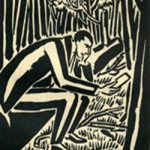
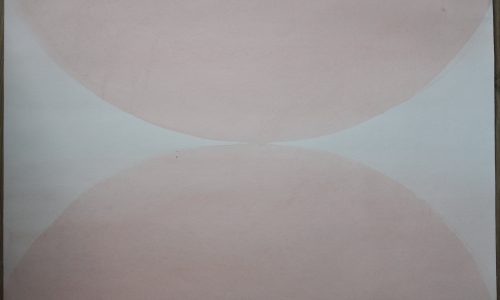
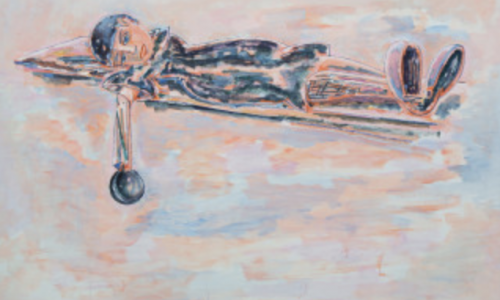
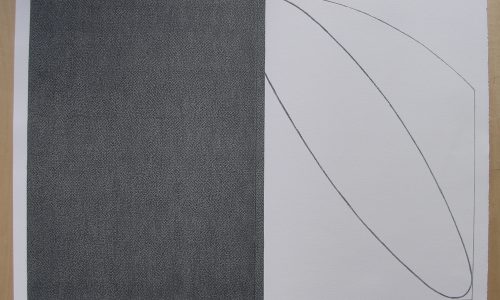
It took me almost 40 years to discover this. Because i listed the Gunter Tuzina tekeningen publication ( available at www.ftn-books.com) i took from my bookcase the DE KEUZE VAN DE KUNSTENAAR from 1984 f. …..Opened the book and found both my OK HOOFD by Maarten Ploeg and the Tekeningen publication Tuzina made for the Stedelijk Museum exhibition. Both artist presented their work at the same time at the Haags Gemeentemuseum and now i found both used the same form in the same year. Coincidence?…. i do not think so. It certainly must be admiration. Recently i (re) discovered the work by Maarten Ploeg and it will not be for long when i look again at the impressive OK HOOFD which has been stored for the last 20 years. All publications mentioned are available at www.ftn-books.com
Artist/ Author: Oliver Boberg
Title : Memorial
Publisher: Oliver Boberg
Measurements: Frame measures 51 x 42 cm. original C print is 35 x 25 cm.
Condition: mint
signed by Oliver Boberg in pen and numbered 14/20 from an edition of 20