Posted on Leave a comment

Furniture catalogues…. impressive and highly collectable

furniture cat a

Many of you have sometime in their lives took home a furniture catalogue. No, not the one from IKEA  or Habitat, but one from one of the more prestigious designers like Vitra, Herman Miller, Alessi, Foscarelli or Cassina. These are the ones that matter and because they have almost unlimited funds for promotion at their sisposal their catalogues belong to the very best. The best photographers, designers and printers are selected and with them they make beautiful timeless books/catalogues/editions for their products. Even better….because they are just promotional material many of these are lost or replaced making them scarce and highly collectable items. To start a collection ….just visit your local furnituer mall, selct the best store with the most prestigious furniture name and ask them for some product catalogues so you can do your choosing at home. My guess is you will leave the store with a bundle of catalogues and have started your own collection. Beside these free publications some of these companies have their own line of publications. One of them is Cassina who have produced several prestigious books on their products and designers over the decades. www.ftn-books.com has the ones on Le Corbusier and Mackintosh now for sale.

Posted on Leave a comment

William T. Wiley ( 1937 )

Schermafbeelding 2018-05-15 om 08.41.29

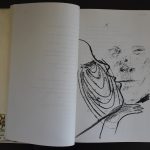
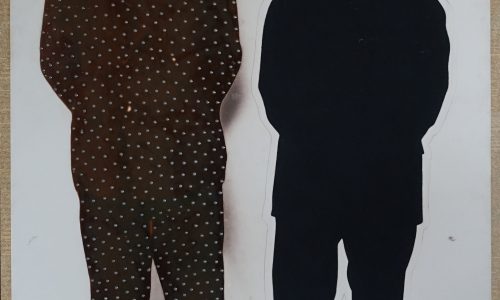
Two catalogues available at www.ftn-books.com and not many more that i know of, make William T. Wiley a rather obscure artist for me, but i realize that is the case only for me, because outside the Netherlands, specially in the US, his name is well known and growing with the year.

His art is typical for the West Coast of the US, but has also something of Jan Fabre and Gunter Brus in it. It has certainly much more humor and at the same time it is very typical for the art Wiley creates and not anything else.

Maybe the importance of Wiley is that he educated some of the great Contemporary artists like Bruce Nauman. Here is what Wikipedia says about it:

He was born in Bedford, Indiana. Raised in Indiana, Texas, and Richland, Washington, Wiley moved to San Francisco to study at the California School of Fine Arts where he earned his BFA in 1960 and his MFA two years later. In 1963, Wiley joined the faculty of the UC Davis art department with Bay Area Funk Movement artists Robert Arneson and Roy DeForest. During that time Wiley instructed students including Bruce Nauman, Deborah Butterfield, and Stephen Laub. According to Dan Graham, the literary, punning element of Nauman’s work came from Wiley. Wiley also acknowledges the effect Nauman had on his own work.

Posted on Leave a comment

Otto Hamer (1938)…The Killing of Desire

Schermafbeelding 2018-05-10 om 15.00.06

Never heard of the artist before, but what a great find this is. People following the blog know that concrete and constructivist artists are among my favorites. Last week i visited the bookmarket and found an intriguing title ” OTTO HAMER : Mijnheer I.KAA EN DE KUNST” leafing through the book i noticed immediately why his art fascinates me personally . The repetitions of form(s), the use of bright colors and the feel for composition “hit” me. The book itself was a surprise too. Beautiful lay-out, excellent print quality . Designed by Otto Hamer himself together with Aernout Tas this is a highly  accomplished book. To give an impression of Hamer’s work here is the Youtube video i found:

There is not much info to be found on the artist, but i found an article in dutch:

Otto Hamer

and some photo material of his studio and works. In the coming months i will try to find more information, but for the meantime you can start with the sites supplied.

OLYMPUS DIGITAL CAMERA

Posted on Leave a comment

Margriet Smulders (1955) … intrigues

Schermafbeelding 2018-05-10 om 14.11.15

I know the work of Margriet Smulders from the time she had her first exhibition at gallery Nouvelles Images in Den Haag and from this very start it intrigued me . I was not the kind of admirer of her work who wanted to buy a work for my collection, but still i admired her craftsmanship and excellent feel for composition. She mainly depicts and arranges flowers , which gives a very classic feel almost like you are looking at a 17th century painting, however these are not paintings but highly detailed photographs using glass and mirror surfaces to arrange the flowers which gives the perfect reflection.

Schermafbeelding 2018-05-10 om 14.19.36

She has developed this technique into perfection and now has made herself a name outside the Netherlands too. Her compositions are printed on extremely large sizes. Making them at first glans from a distance completely abstract, but study them in detail and they reveal the objects that form together the composition. They still intrigue every time i encounter them. Galleries, Art fairs …no exception, they are recognizable and executed with great knowledge of material and composition, but for me they are too artificial and that is why i’m holding back and will not one to my colection. But this is personal and i can really understand why others want these colorful works by Margriet Smulders. For more information visit her website at www.margrietsmulders.nl and www.ftn-books.com for some publications on her works.

smulders

Posted on Leave a comment

Aart Klein (1909-2001) …typically dutch?

Schermafbeelding 2018-05-09 om 12.13.22

No definitely not!….Klein is of the most important dutch photographers from the last century and recorded daily life in the Netherlands , but that does not mean that his photographs are typically dutch. Their subject is in many cases dutch, but their appeal is more international than one would imagine. I have sold Klein publications all over the world , including some to Japan. Aart Klein is for me one of the greats from the last century . His black and white photography has a graphic quality, which is rarely seen among his contemporaries.

Schermafbeelding 2018-05-09 om 12.11.02

The Stedelijk Museum devoted a special exhibition to his photographs, but beside this special show he contributed to many other exhibitions with his quality photographs. Aart Klein publications are available at www.ftn-books.com

Posted on Leave a comment

Shunga …the Japanese erotic print


Schermafbeelding 2018-05-08 om 17.30.08

While studying the Bubb Kuyper catalogue it struck me that the genitals of both male and female are depicted far too large and are highly exaggerated. This made me wonder…is this wishful thinking of the japanese men in general or is it to draw attention to the print and the action within. I found an excellent article on Shunga…. The art of the erotic japanese prints by the British Museum and they have a clear point of view:

The genitals of both sexes are so exaggerated in shunga that it leaves literally nothing to the imagination. A wall text quotes Tachibana no Narisue, an artist in 1254: “The Old Masters… depict the size of ‘the thing’ far too large… If it were depicted the actual size there would be nothing of interest. For that reason don’t we say that art is fantasy?”.

Despite a similar preoccupation with the humorous side of sex, shunga has a far greater artistic pedigree than seaside postcards. Whereas Thomas Rowlandson is unusual in the British artistic tradition for producing erotic prints, shunga prints were an expected part of Japanese artists’ portfolios.

Schermafbeelding 2018-05-08 om 17.30.55

Once viewers get past the shock of seeing such explicit scenes, other details begin to emerge – particularly the beautifully rendered robes worn (or, more accurately, half-worn) by the couples. Full nudity appears to be rare, and the gorgeous colours and designs of traditional Japanese costume frame the prints with sensuous folds.

Early versions were hand painted on scrolls, some of which are highly exquisite and expensive. Twelve Erotic Scenes in Edo (circa 1790), by Hosoda Eishi, is particularly beautiful, with gold leaf and gilding used liberally as decoration on both sides of the scroll. 

By 1765, the perfection of full colour woodblock printing methods in Edo made shunga available for the masses, and it was during this period that the conventions of the genre became more firmly established. It was also during this period that the samurai elite began to censor shunga – but for its political, not erotic content. 

Shunga presented a threat to Japan’s strict social hierarchies by depicting sexual congress between different social groups; some books may even have revealed secret court gossip. However, the authorities did not strictly enforce the ban, meaning that shunga flourished under the radar.

It might be easy to dismiss Shunga as a sensationalist exhibition, but the work displayed reveals a fascinating insight into a private world. It’s one both familiar and strange to us.

Sexual life is revealed as loving, passionate, comforting, rough, illicit – even violent at times. Despite existing in a fantasy world, shunga artists manage to reveal a great deal about our common humanity.

www.ftn-books.com has a book on the modern Shunga experience available.

OLYMPUS DIGITAL CAMERA


Posted on Leave a comment

de Angst … Juni 1983

de angst a

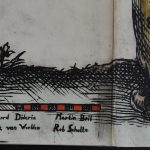
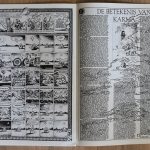
If ever there was an obscure magazine in the Netherlands it was de Angst. Only a few volumes were published and the one depicted in this blog is one of them. It is from June 1983, was published in an edition size of only 100 copies. Printed/stencilled contents, hand bound signed in the plate by the authors Edzard Diderik, Martin Bril, Dirk van Weelden and Rob Scholte, who also made the original etching which was used as cover.

de angst b

The etchinh was colored by hand and the design was later used for one of his editions and a painting with the same name. In the magazine contributions a.o. by members of the ( Amsterdam) punk/avant garde scene which were finding their way into the multiple disciplines of Contemporary Art. There are contributions by Scholte, Maarten Ploeg and Peter Klashorst, who all made a serious art career. This rare magazine is now available at www.ftn-books.com

Posted on Leave a comment

Robert Olaf Stoof (1945-1999)…and Real Free Press.

Schermafbeelding 2018-05-07 om 12.32.06

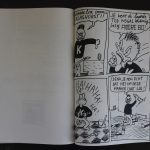
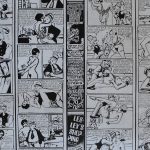
Why this blog on a publisher? It is just plain simple…. Stoof is one of the most influential European publishers who paved the way for the alternative comic scene of which for instance , Joost Swarte, was one.

Robert Olaf Stoop was born in Amsterdam and grew up with his grandmother in Indonesia. He grew up to be a full-blooded anarchist, putting provocational pamphlets in the newspapers of non-suspecting travellers when he was working at the AKO in Schiphol Airport. He made posters for Provo magazine, and got involved with comics during the 1960s. In 1966, he self-published his comic ‘De Lotgevallen van Roza’, which can be considered the first European underground comic.

stoop real e

He founded publishing house The Real Free Press in Amsterdam, “the lost connection for solid facts” which imported American underground comics and reprinted the work of long-forgotten geniuses such as George Herriman, Winsor McCay, Gustave Verbeck and George McManus. Stoop also published magazine De Real Free Press Illustratie, which featured many old and new comic artists, and ran from 1968 until 1974.

Olaf Stoop was one of the first to recognize the talent of Joost Swarte, and published his work in several forms, such as ‘De Papalagi’, which became famous world-wide, and Swarte’s first comic, ‘Modern Art’ (1980).

Stoop can be considered the founder of the Dutch alternative comics scene. An intriguing personality, he lived his whole life as an anarchist and a free mind. He died of a heart attack at the age of 52.

www.ftn-books.com has found of the Real Free Press papers with works by a.o Robert Crumb and has them for sale .

Posted on Leave a comment

Haus Konstruktiv – Zurich- Suisse

Museum Haus Konstruktiv – the Foundation for Constructive and Concrete Art

Schermafbeelding 2018-05-01 om 17.00.05

It was 2 months ago that i visited the museum HAUS KONSTRUKTIV. At first a little disappointed but the Graevenitz exhibition made the visit worthwhile . Personally i think it is importnat that such a small part of the modern art scene has an excellent platform in which special exhibitions can be held.

The Haus Konstruktiv is located in one of the most distinctive icons of Zurich’s industrial architecture, providing a space for concrete art.

The museum is dedicated to the exploration of concrete, constructive and conceptual art. The Museum Haus Konstruktiv focuses on making it part of a living dialog with international trends in contemporary art.

Over the five floors of the former Selnau electricity sub-station, visitors discover works of art in the context of their historical background through temporary exhibitions and collection presentations.  Also on permanent display are treasures from the museum’s own collection, the legendary “Rockefeller Dining Room” by the Swiss artist Fritz Glarner. Beside the special exhibitions the Haus Konstruktiv has an excellent exhibition program of which some publications are available at www.ftn-books.com

OLYMPUS DIGITAL CAMERA

( to be continued )


Posted on Leave a comment

“Negerkunst uit Centraal Afrika”

taal museum

Yesterday morning there was an article in the Volkskrant about the way art in museums by colored people and minorities must be described . The reason why the dutch museums are also looking for a desirable idiom is that also in dutch history there is a part of their history which is very doubtful. The catalogue which is in the title is the example which was given in the article ( available at www.ftn-books.com ). The exhibition was in those days, (which is very recent history) announced by the journalists and museum as “primitive art by natives inspired by western civilization a way of announcement as if we in Western Europe were civilized and others not.” A complete wrong way of describing the art from these artists. On the positive side…Sandberg was the one who thought these artists deserved a museum platform in the Stedelijk Museum as early as 1957. which was the place for these artists where they could, for the first time, present and show their art , side by side with Malevich and Mondrian. I can really understand why some words and expressions can not be used any longer, however …where a museum decides to remove an object from an exhibited collection and with this action denying some of the history from a country, should not be done…. in my opinion a better way would be to keep it within the collection and add an explanation why the museum thinks different nowadays about an object . This way explaining and not judging. Let the public judge for itself if the object is still beautiful or not.

negerkunst