Posted on Leave a comment

Edward Sheriff Curtis (1868-1952)

Schermafbeelding 2020-05-14 om 14.06.17

I did not realize that Curtis is almost a contemporary photographer. When you look at his photographs you get an impression that these were made in the earliest days of photography, but studying his works you discover that many were made well after 1930.

His most important contribution is however, the series he made around 1915 on the history of the North American Indian people. He photographed the Indian peoples in a way that his works were not only important as a photography document but also they reflected the way the Indian peoples in North America, lived, dressed and were present in US society.

In 1906, J. P. Morgan provided Curtis with $75,000 to produce a series on Native Americans This work was to be in 20 volumes with 1,500 photographs. Morgan’s funds were to be disbursed over five years and were earmarked to support only fieldwork for the books, not for writing, editing, or production of the volumes. Curtis received no salary for the project, which was to last more than 20 years. Under the terms of the arrangement, Morgan was to receive 25 sets and 500 original prints as repayment.

Once Curtis had secured funding for the project, he was able to hire several employees to help him. For writing and for recording Native American languages, he hired a former journalist, William E. Myers. For general assistance with logistics and fieldwork, he hired Bill Phillips, a graduate of the University of Washington. Perhaps the most important hire for the success of the project was Frederick Webb Hodge, an anthropologist employed by the Smithsonian Institution, who had researched Native American peoples of the southwestern United States.[ Hodge was hired to edit the entire series.

Eventually 222 complete sets were published. Curtis’s goal was not just to photograph but also to document as much of Native American traditional life as possible before that way of life disappeared. He wrote in the introduction to his first volume in 1907, “The information that is to be gathered … respecting the mode of life of one of the great races of mankind, must be collected at once or the opportunity will be lost.” Curtis made over 10,000 wax cylinder recordings of Native American language and music. He took over 40,000 photographic images of members of over 80 tribes. He recorded tribal lore and history, and he described traditional foods, housing, garments, recreation, ceremonies, and funeral customs. He wrote biographical sketches of tribal leaders. His material, in most cases, is the only written recorded history, although there is still a rich oral tradition that preserves history.[His work was exhibited at the Rencontres d’Arles festival in France in 1973.

The book by Curtis on the North American Indians is available at www.ftn-books.com

curtis legacy

Posted on 1 Comment

Christopher Knowles (1959)

Schermafbeelding 2020-05-13 om 15.06.41

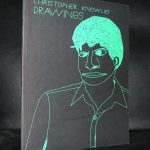
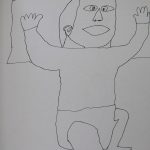
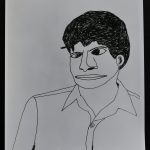
Christopher Knowles (born 1959) is an American poet and painter. He was born in New York City on May 4, 1959, and has received a diagnosis of possible brain damage. He is often referred to as autistic. In 1976, his poetry was used by Robert Wilson for the avant-garde minimalist Philip Glass opera, Einstein on the Beach. Wilson describes his discovery of the then 13-year-old Knowles in the extended notes to the Tomato Records release of Einstein on the Beach

In early 1973 a man … gave me an audio tape … I was fascinated. The tape was entitled “Emily Likes the TV”. On it a young man’s voice spoke continuously creating repetitions and variations on phrases about Emily watching the TV. I began to realize that the words flowed to a patterned rhythm whose logic was self-supporting. It was a piece coded much like music. Like a cantata or fugue it worked with conjugations of thoughts repeated in variations…

The first time I heard about Knowles was when the Boymans van Beuningen museum presented an exhibition on the artists and the BEBERT publishers published one of the best books from the Eighties on this hardly known artist.

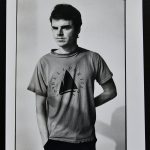
For this occasion Jannes Linders, a Rotterdam photographer made the press material. Knowles name did not grow , but the book and his great art remain and are available at www.ftn-books.com and so are the press ( original)  photographs .

knowles foto c

Posted on Leave a comment

Josef Felix Müller (1955)

Schermafbeelding 2020-05-13 om 14.35.34

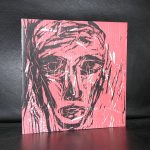
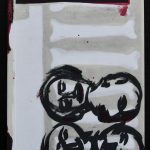
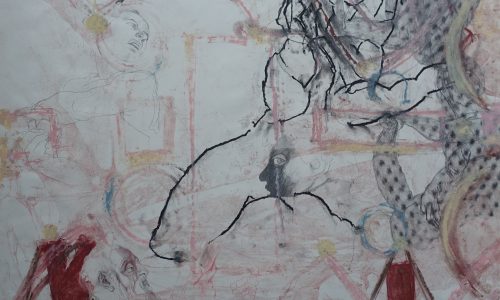
A typical Swiss artist who is rooted in the German and Swiss sculpture and graphic arts scenes. Looking at his graphic art you can go back decades and decades and see what kind of art he must have seen in his youth. These influences are evident and are translated into a kind of personal art I like very much.

Schermafbeelding 2020-05-13 om 14.46.26

Bold, rough and poetic all combined at the same time. An interesting interview with Josef Felix Müller can be found with this link:

https://www.jfmueller.ch/cms/images/Interviews/mueller_butter-milk-soap_1990.pdf

Of course www.ftn-books.com has some nice Josef Felix Müller publications available

Posted on Leave a comment

Henk van Vessem (1939)

Schermafbeelding 2020-01-21 om 15.56.10

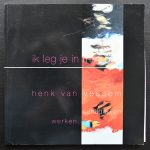
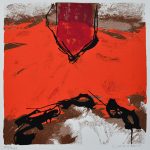
For me van Vessem is a typical dutch abstract painter. Bright colors and a kind of abstraction that is common among dutch painters and perhaps the way these paintings feel familiar makes me less of a fan. It is a kind of art which is much appreciated by those who seek a decoration on the wall and decide for a brightly colored abstract painting. Perhaps this is a too negative approach to his painting, but since this is a personal blog  i am allowed to express my opinion on an artist and his works. I read somewhere that there are works by van Vessem to be found in the collection of the Royal House of Orange, but this does not automatically mean that one have to admire his art.

Still www.ftn-books.com has a nice publication available which included an original lithograph and i can understand why others like the colorful paintings by van Vessem.


Posted on Leave a comment

Ossip ( 1952 )….continued

Schermafbeelding 2020-05-03 om 13.16.25

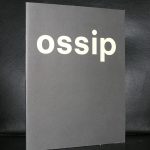
Readers of this blog know of my admiration for Ossip. It started when i first saw one of his small figures at the Artoteek and wanted to own it for my collection. Far too expensive it was, but when i left the Gemeentemuseum and started FTN books. The museum and my colleagues presented me with the same sculpture i had seen at the Artoteek. It sparked the interest in Ossip and his art and since i have visited numerous times his studio and made frequent purchases.

ossip prive

Ossip name was becoming more and more familiar among collectors and it meant that prices for his works were on the rise.

But in a period of over 15 years i have bought frequently and managed to collect some very nice works through galleries and auctions. It is time to contact him once again and see for myself what kind of works he is making this time, because every time i visit his studio he amazes me with the progress and inventions he makes with his figures and mobiles. Some very nice Ossip publications are available at www.ftn-books.com

Posted on Leave a comment

Riki Mijling (1954)

Schermafbeelding 2020-01-17 om 12.20.39

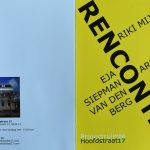
Two reasons for writring a blog on Riki Mijling. First reason is i admire her works since i first saw them at the ART AMSTERDAM fair in 2005(?). I . am fond of Concrete and minimal art and in her art i find a twist that fascinates me. Yesterday at the local bookmarket i bought a small artist book by Riki Mijling. Published ia a very small signed and numbered edition of only 20 copies. The reason i noticed it was a ribbed card board cover which was etched by the artist rM ’00. So her innitals and signatue are appearing twice in this very limited edition which is now for sale at www.ftn-books.com

Here follows the biography which can be found on the Riki Mijling site:

Dutch sculptor Riki Mijling (1954, Nijmegen, the Netherlands) works in a rich tradition of non-objective, post-minimalist sculpture. The twentieth century art genealogy shows a forceful line of abstract-geometry, with pioneers such as Kasimir Malevitjs, Vladimir Tatlin, Piet Mondrian and Theo van Doesburg. 

Developments in art since the mid-1960s show how artists expanded on this legacy, on both sides of the Atlantic Ocean. In the United States artists like Carl Andre, Donald Judd and Robert Morris burst onto the scene, causing a landslide with their minimalist approaches, a radical simplification of forms and dissolving ‘meaning’ in the traditional sense. 

And in the Netherlands too, artists sought for new forms of expressiveness, for a formal and linguistic reduction, no-longer connected to representation and story-telling.  With her sculpture––and her works on paper too––Mijling expands on this rich tradition of essentialism, developing a characteristic and unique visual language. 

Mijling pairs a reductionist approach with a warm, ‘charged’ character of her sculptures in waxed steel, Cor-Ten steel, glass and stone. It distinguishes Mijling from so many contemporaries and admired forerunners, and raises the question whether the concept of ‘minimalism’ is, in Mijling’s case, still applicable.

​The non-referential, archetypical forms of Riki Mijling’s sculptures lead back to basic elements, to universal significance of timeless forms. Unmistakably ‘Mijling’ is a quest for an ideal line, for pure form and a new experience of space, of the balance between matter and non-matter. 

Posted on Leave a comment

Ignasi Sumoy (1953)

Schermafbeelding 2020-04-28 om 11.42.29


We are the same age and in all these years of collecting I had never heard of Ignasi Sumoy, an artist born in Barcelona, but beside Spain and the Netherlands hardly known in the rest of Europe, It is because I acquired the “Galerie de la TOUR” catalogue ( available at www.ftn-books.com) /Groningen(1989), that I now know Sumoy and his works. Leafing through the book i noticed elements from Ethnic art, Basquiat and the dutch painter Lucassen combined into a personal painting “language”.

Schermafbeelding 2020-04-28 om 11.44.41

I like these kinds of paintings with realistic and symbolic elements composed in an abstract setting. here is the article I found on the Sumoy site which explains more on this artist:

IGNASI SUMOY BOLUFER (Barcelona, 1953)

Ignasi Sumoy’s painting is, paradoxically, in the desert. It is a dessert that can be turned into a likely metaphor as an implicit reference to all the progressive shifts -at times geometric- that many of the visuals arts have been going throughout in the last few years: a stage empty in origin like the desert in which under controversial but more or less homogeneous appearances there lies concealed the changing outline of the dunes. Not only do the sand-hills move, covering large distances because of their specific weight, they take on their own corporality and dimensions, non-transferable, subtly recognizable and subject at times to sudden change both in direction and composition, weight and mass. So the shift and well-nigh solid individuality of the dunes enable us to speak of some of the essences of the artist’s work. But Ignasi Sumoy’s painting, on the contrary, takes its point of departure from this kind of metaphorical recurrence of the idea of the dune, arid and almost prosaic, to participate immediately in its complete geographical opposite, in its opposition of ideal behaviour: life in and of the city, always understood from the particular viewpoint of one who seeks to locate it as an entity midway between apocalyptic-futurist and a re-creation deriving from the experiences of life and aesthetics of the past, a point in time where this Futurist aspiration occurred, together with other reminiscences of Primitivism still close in time and, even more, in the segment of space.

Schermafbeelding 2020-04-28 om 11.45.31

Formally, this is one of the points of departure of his work. Without abrupt breaks, the connection between the various stages of his work has been maintained intact -and completely traceable- during the course of recent years: where formerly there existed a primitive, rather schematized being, without any clearly defined environment, urban, metropolitan man now lives. Unlike the universal prototype established by Musil, he is endowed with attributes that are not only specifically human, they serve to identify him, and even more, he identifies himself through them, thereby constructing a peculiar life-from in a peculiar kind of city locales somewhere between the ideal and the throw-away, formed by beings that mimic the physical elements of their environment so well that it finally takes them over, and in so doing becomes them themselves, assuming all the risks but also all their virtues, and hovering thus between outright apologetic qualities and the most violently critical allusions, maintaining a specific space, a private no-man’s-land where the action unfolds and where the most immediate and evident narrative events of his painting take place.

There is a kind of split suggested by the overall theory of his work that relates as much to the hypothetical apology-refusal already mentioned as to the fact that the characters take one another voice, that is, the recourse to the other and the double so strongly personified here, as though it were some terrifying Bernhardian voice imitator. This basically constitutes one of the founding elements the artist likes to play with, out of which he can build a new aesthetic space and, why not?, a new living space, made up of a personal symbology charred with unique systems and references. Out of reinterpretations, Ignasi Sumoy ends up creating a new, self-contained building, inside which the elements that live there and those that slip in from the world of meaning outside, function according to their own laws. In the realm of idiolect, the slight degree of referentiality matters little, nor what side the scale of referentiality tilts, whether towards resemblance or something real. So the problems of illusion are equally unimportant there too.

In an odd kind of pensée du dehors, Ignasi Sumoy’s painting includes an active and always strange theory that begins with inclusion and ends with rejection, working through a considerable process of selection and refinement both formal and conceptual in nature. In a process not so much of mimicry as ingestion and consumption, anything that resides outside of man ends up assimilated inside, participating in what we could call his natural conditions, becoming one more part of his anthropomorphic definitions to which it is added and which it modifies to a greater or less extent. The use of metasigns and the written language -of the word, in short- has the effect of intensifying the characteristics of reflection: What more human, therefore, than the possibility of voice in the form of articulate speech? And what more civilized than recourse to written cries? So then, his titles become external words and elements equally derived from outside; not simple denominating devices, they frequently coincide, having already been quickly and violently digested. Also, having recourse to verbal/written language allows parallels to be set up between the textual unfolding occurring in the pictures and a kind of iconographical unfolding, formal in the repertoire, that servers to distribute the leading roles. But they are always the same characters, the same characters, the same doubles, treated alike and referring of similar questions.

The building are bodies; spirals, bodies too. Triangles are heads, the gears mouths, tracks are feet, and forks, the sexual organs. But this is not the man-machine, as Kraftwerk sang; rather, we are confronted with the same process that schematizes thought and action. Nor is it a clumsy or puerile criticism of the general dehumanization or advanced industrialization that depersonalizes and homogenizes humans and objects. That would be too immediate. It may be a search for Utopia, not as a liberation, unattainable because so strongly desired, but as future, a kind of private S.F. that invites us to speculate on this present, however subjective.

sumoy

Posted on Leave a comment

Hergé (1907-1983)

Schermafbeelding 2020-04-27 om 10.39.40

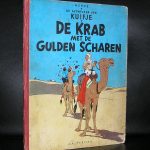
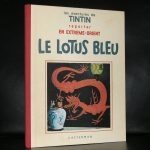
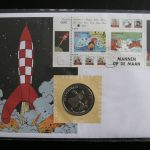
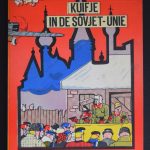
Hergé is Georges Prsoper Remi and deserves a well earned place among the greatest of artists from the last century. His Kuifje/Tintin albums have been translated in over 40 languages and have sold hundreds of millions all over the world. It is still a true delight to read once in a while these great adventure stories and after reading these i realize that the amount of detail which is drawn on every page of the story is tremendous,

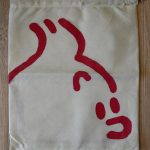
making these not only great stories but also travel journals in which everyday life from a certain decade in an exotic country was depicted. Since i admire Hergé very much and i think together with Franquin and Swarte this is the best comic art can present i have collected a number of albums and Hergé collectibles of which some are available at www.ftn-books.com. The latest addition is an official bag by ther Moulinsart Museum.

Posted on Leave a comment

Paul Klee (1879-1940)

Schermafbeelding 2020-04-27 om 10.18.21

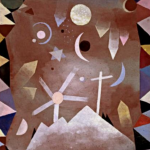
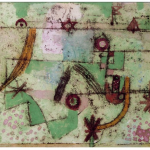
“Über Bergeshohen” and “Im Bach’schen Still” are the 2 Paul Klee works that the Gemeentemuseum Den Haag ( Kunstmuseum Den Haag) has in its collection. I remember these works well since I have seen these without their protective glass frame when they were photographed.

These works made a great impression on me and grew my interest in Paul Klee. This was about 35 years ago and since i have bought and sold many Paul Klee publications, but besides the Gemeentemuseum publications there is one which is my absolute favourite….it is the PAUL KLEE 1879-1940 book which was published on the occasion of the Solomon R. Guggenheim Museum exhibition in New York in 1967. Great cover and a tremendous exhibition which has so many great Paul Klee works in it. Unfortunately the 2 from the Gemeentemuseum, but the rest belongs to the very best by Paul Klee and it is highly unlikely that there will ever be a greater and better Klee exhibition.
klee guggenheim


This and other Klee publications are available at www.ftn-books.com

Posted on Leave a comment

Brian Maguire (1951)

Schermafbeelding 2020-04-24 om 12.09.13

This is an artist I really like since his painting is not only fast and contemporary, but he makes political statements with his painting that are important. This is possibly also the reason why his paintings are not found within the large museum collections. Only some daring museums that are not afraid to take a stand will add his works to their collection. But these works are important since, in. a an artistic way,  they confront you with the world around us that is easily and possibly conveniently forgotten.
Since the very beginning of his career in the 1970s, Brian Maguire has approached painting as an act of solidarity. He operates a truly engaged practice, compelled by the raw realities of humanity’s violence against itself, and the potential for justice.

Maguire’s preoccupations draw him to the margins of the art world—alternative space, prisons, women’s shelters, and psychiatric institutions—making shows in traditional gallery and museum spaces something of a rarity. Maguire’s most recent paintings directly confront issues of migration, displacement and human dignity in the face of the current global unrest. They are some of his most nuanced and ambitious to date, which he has crafted with larger brushes and thinned-down acrylic on canvas. He works slowly, using photographic sources, searching for that point where illustration ceases and art begins. This growing contrast between the seductive painterly aesthetic and the subject matter only adds to the potential impact of these formidable canvases.In 2018 Maguire released his newest publication that displays a substantial new artist monograph surveying his career to date. Maguire has shown extensively in Europe and the US, also participating in shows in Korea, China and Japan.

Recent solo exhibitions include: War Changes It’s Address, United Nations Headquarters, New York, USA, (2020); Scenes of Absence, Rubin Center, Texas University, TX, USA, (2019); Escenarios de ausencia, Art Museum Ciudad Juárez, Mexico, (2019); War Changes Its Address: The Aleppo Paintings, Irish Museum of Modern Art, Dublin, (2018); Concerned, Royal Hibernian Academy, Dublin (2018) and the European Parliament, Brussels (2012). Recent group exhibitions include: Naked Truth, Crawford Art Gallery, Cork, (2018); Demise, Cleveland University Art Gallery, Cleveland, OH, USA, (2018); The sea is the limit, York Art Gallery, York, UK, (2016); Conversations, the Irish Museum of Modern Art, Dublin (2014) and Ni Una Mas, Leonard Pearlstein Gallery, Drexel University, Philadelphia, USA, (2010).

Maguire’s work is represented in the collections of Irish Museum of Modern Art; Dublin City Gallery The Hugh Lane; Museum of Fine Art Houston, Texas; Gemeentemuseum, Den Haag, The Netherlands; Alvar Alto Museum, Finland.

www.ftn-books.com has one Maguire title available

maguire