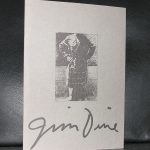
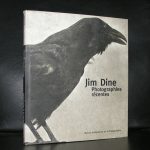
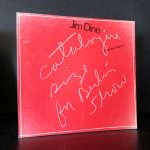
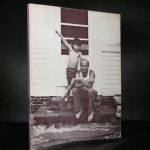
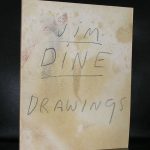
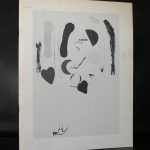
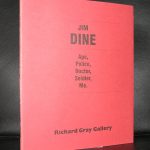
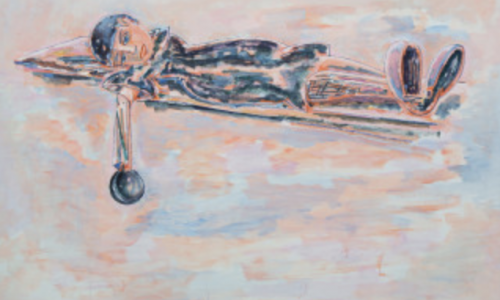
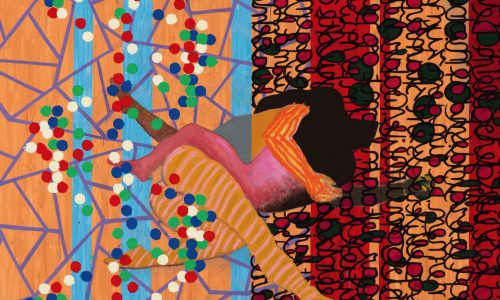
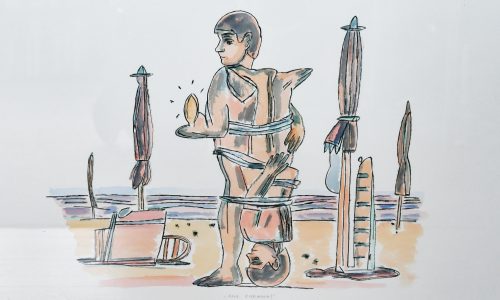
He is for certain one of the greatest Pop Art artists if ever there was one. One from the first generation of Pop Art artists who rose to fame in the early 60’s and who even had some great exhibitions in the years to follow at the Stedelijk Museum and the Boymans van Beuningen museum in the Netherlands in the 60’s and 70’s. Both museum have since some great paintings in their collections , (left Stedelijk / right Boymans van Beuningen)
but the Stedelijk Museum stands out for me , because beside multiple art works in their collection they published one of the first simple orange/red catalogues designed by Wim Crouwel. This one devoted specially to the drawings of Jim Dine and available at www.ftn-books.com and this is Wim Crouwel classic
But of course there are other Jim DIne titles also available at www.ftn-books.com
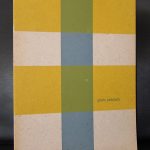
Another rather obscure artist for us in the Netherlands was Gisela Andersch. An artsits presented by Willem Sandberg with a special exhibition in the Stedelijk Museum in 1961.
The catalogue for the exhibition was in one word….”SPECTACULAR”. It was not a catalogue but more a piece of art. The art being the cover and within the stapled pages with the exhibition works. Cover was silkscreened upon the typical raw carton like paper Willem Sandberg was so fond of. Many people did not recognize the quality of this catalogue. But now that more and more collectors all over the world of Typography and catalogue design are appreciating the Stedelijk Museum catalogues, its importance is growing. This one is not collected for the artist, but for the combination of Sandberg excellent design together with the Andersch original art.
www.ftn-boooks.com has this Gisela Andersch catalogue available together with the van Abbemuseum one.
Why a blog on Monticelli? Two simple reasons. Monticelli was one of the great inspiration sources for the Impressionists and specially Vincent van Gogh was a great admirer and because of this connection two of the large museums in the Netherlands held exhibitions in the Fifties and Sixties. The Boymans van Beuningen was one of them and held a retrospective exhibition in 1959 of which the catalogue is available at www.ftn-books.com
It is this appreciation of Monticelli’s art and the connection with van Gogh that some of the museums over here have Monticelli’s in their collections. I know that Kroller Muller, Gemeentemuseum, Boymans and the Stedelijk all have Monticelli’s in their collections. Personally i think it is time again for a re appreciation of this great painter who’s works are timeless and in so many cases a source of inspiration for the Impressionists. I started this blog on Monticelli because today i bought a poster for the 1959 Boymans exhibitions. It is in excellent B- condition and i consider this to be one of the best Benno Wissing made for the Boymans museum during the Fifties.
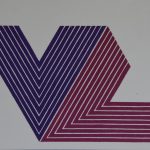
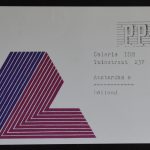
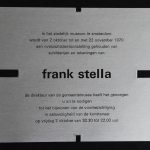
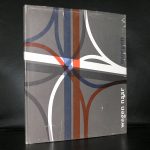
Frank Stella became a celebrity in the early Seventies in Europe , where exhibitions were being organized all over Europe. Among them, his exhibitions in Zurich and Amsterdam where on both occasion were his V series exhibited. The difference?…. in Zurich these works were for sale and in Amsterdam they only were on show, but what makes thgis exhibition fro me more special is that with the exhibition a wonderful Wim Crouwel designed catalogue was published .
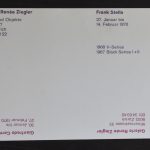
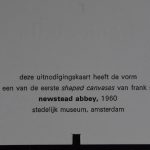
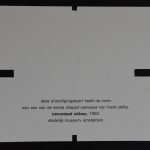
The catalogue was published with a relief cover and this made it a true artist book as for an invitation…. they decide to use the shape of the 1960 Newstead Abbey painting to make the event even more special. In contrast the Zurich exhibition at the galerie Renee Ziegler had only an invitation with a special silkscreened V series pattern on the card ( but this is also very beautiful;-) 1970 was an important year for Frank Stella and www.ftn-books.com is lucky to have all three discussed items now in its inventory.
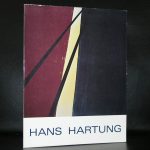
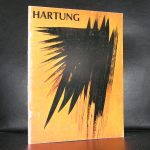
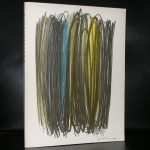
One of the exhibitions i thought to be one of the very best during the time i was working at the Gemeentemuseum Den Haag, was one curated by Franz Kaiser on the abstract artist Hans Hartung . Just one word describes the exhibition….impressive.
It showed that the art Hartung created was not just random, but a well thought over creation of abstract art in which a small sketch was turned into a large painting.
Here is the text on the exhibition:
Hans Hartung (b. Dresden, 1904) was regarded as one of the founding fathers of French Lyric Abstractionism, the European counterpart of American Abstract Expressionism: a term in which the word Expressionism refers to an extremely physical and spontaneous manner of painting. The members of the movement wanted, as it were, to work out their emotions on the canvas without any form of symbolism.
Hartung’s paintings displayed a plain ground covered with rough and apparently spontaneous brushwork, with all the paint spatters and brush marks that go with that way of painting. After his death, therefore, people were astounded when the study of unfinished pictures revealed that his paintings had not in fact been created in a wild and spontaneous way, but by carefully filling in predetermined outlines based in every detail, right down to the smallest flecks of paint, on sketches prepared in advance. This exhibition, which the Gemeentemuseum is holding to mark the hundredth anniversary of Hartung’s birth, reveals an artist who would better be described as a conceptual artist, were it not for the fact that conceptual art did not exist as a movement when he produced his works. In this first Dutch retrospective of Hans Hartung’s work, early drawings are presented next to the equivalent paintings, and early versions alongside later versions. The similarities in terms of motif are astonishing.
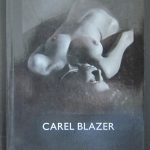
A great dutch photographer who is known for his Fifties and Sixties photography , but also for his active part in the resistance during WWII.
Some interesting periods during the life of Blazer made him a true international photographer.
After been educated at the Kunstgewerbeschule in Zurich, he soon after travelled Spain to photograph the Civil war. After that period he travelled Italy and visited Rome to photograph this city which photographs were published in a book by Contact. Later there were travels to Asia and Sicily. On both occasions series of photographs were taken and published.
Willem Sandberg took an interest in these photographs and presented a selection at an exhibition at the Stedelijk Museum which catalogue is available at www.ftnbooks.com
There are many titles which have these breathtaking Blazer photographs in them, so beside the ones that i have in my shop please locate 50’s and 60’s books at bookmarkets and look into the colofon to discover if photographs by Blazer are included.
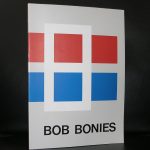
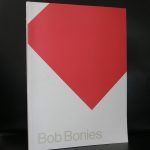
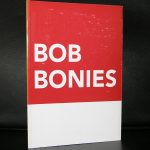
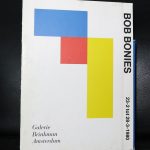
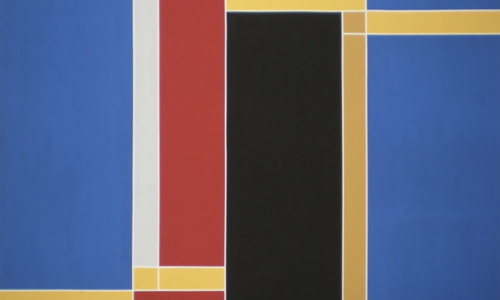
For me the only true “Hard edge” artist in the Netherlands is Bob Bonies, however Michiel Morel refers to the art of Bob Bonies as a rearrangement of FORMS AND COLORS.
I read his excellent article and it is unfortunate that it is only available in dutch, but for those who understand the language here is the link :
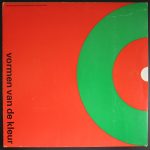
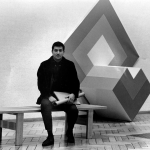
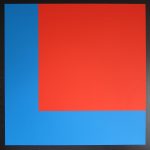
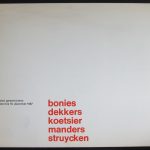
As you can read in the article . Bonies stayed true to his art of rearranging , shifting and placing forms and colors in a new context and one of the earliest silkscreen that was published in a larger edition was the one he made for the Stedelijk Museum catalogue VORMEN VAN DE KLEUR
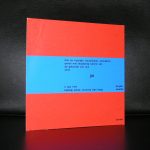
in which his contribution stands out together with the one Ellsworth Kelly made for the same publication. This Wim Crouwel designed publication is available at www.ftn-books.com
left Bonies and right Kelly
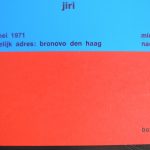
I have a lifetime admiration for Bob Bonies. He was one of the first artists i personally met at the Gemeentemuseum and a few years ago i bought a small collection of his publications from another bookdealer who had bought them from a Bonies collector and within one of the publications i found the birth card of his son Jiri. Even this card shows the quality of his works. The card is for sale too together with many other Bonies publications.
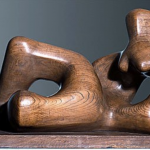
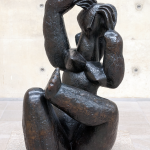
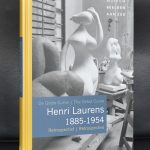
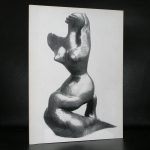
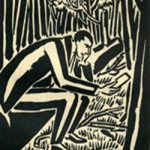
A long time i thought Laurens was not that important for Modern Art, but since i have seen his exhibition at the Museum Beelden aan Zee ( catalogue available at www.ftn-books.com), I changed my ideas about his work. At first i thought him to be heavily inspired by Picasso, but in this show i discovered he really has a personal approach to art and a “signature” of his own.
left Picasso and right Laurens
He was a French sculptor best known for his Cubist collages, sculptures of nudes, and busts. The curving forms and simplified features of his oeuvre are reminiscent of ancient greek sculptures, though he also drew influence from his friendships with contemporary artists Georges Braque, Amedeo Modigiliani, Juan Gris, and Pablo Picasso. Born on February 18, 1885 in Paris, France, Laurens first worked as a stonemason before taking drawings classes and developing a strong interest in the works of Auguste Rodin. From 1914–1915 and extending until after the First World War, Laurens experimented with still lives and various new media, using wood and iron and eventually graduating to terracotta and bronze. He then went on to participate in the Venice Biennales of 1948 and 1950, and had a retrospective at the Musée National d’Art Moderne in Paris in 1951.
Two totally different painters with a complete different background. Both rose to fame in the Interbellum and booth were very much inspired by music and the rhythm of it.
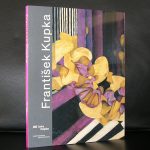
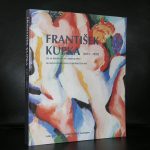
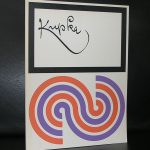
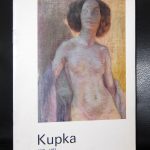
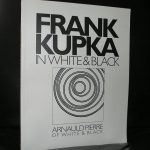
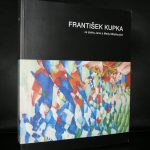
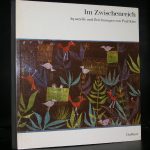
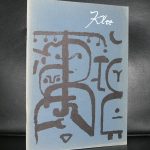
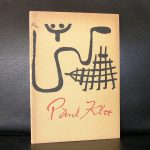
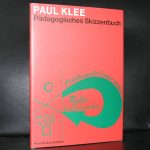
In a time that exhibitions were developed around a theme. btw. the Spiritual in Art was such an exhibition, one of the most iconic exhibitions of the Eighties was presented in Germany. its name VOM KLANG DER BILDER. An exhibition in which the relation between music , sounds and rhythm and the influence they had on paintings was tried to be explained. It is for certain that music has been of influence to artists and both Klee and Kupka were the artist who made paintings in relation to music . Kupka is perhaps the artist who has been influenced by Music the most, but certainly Paul Klee has become known for his music inspired paintings and drawings.
Klee perceived a clear visual connection to the structural articulations found in music. Focusing on polyphony and counterpoint, Klee produced his watercolor Fugue in Red in 1921.
This early attempt to achieve a synthesis between music and art exposes a number of floating forms, either figurative or as abstract derivations. Overlapping shapes float over a two-dimensional surface, with the temporal aspect graphically represented by a gradual shift in color. Moving from the dark background to maximum transparency, the visualized counterpoint combines in a cosmic harmony that reaches towards a new sense of spirituality. Although essentially structural in approach, this painting embodies Klee’s believe in “harmony, autonomy, and universality in humankind.” As a musician and a painter, Klee essentially created a harmonious arrangement that echoes a universal order. www.ftn-books.com has on both artists several publications available.
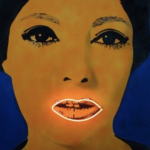
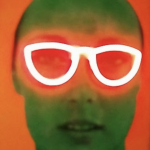
Martial Raysse, 82 years of age and still going strong, but his works have definitely changed. They have become Mythological inspired and stand far from the Pop Art he made in the sixties when his works and art became known together with other beginning artists.
In October 1960 he founded together with Yves Klein, Arman, Spoerri, Tinguely and Villegle de artist group NOUVEAUX REALISTES . They tried to approach reality in a new and avant garde way and were seen as the french equivalent of the Pop Art mouvement. Martial Raysse worked like Warhol with silkscreens contrasting colors and added Neon to his paintings, making them instantly recognizable and appealing.
Another aspect of his art was that his paintings were not flat, but had in many cases a 3D addition. A rope, box or the mentioned neon gives the painting literally several layers. His 60’s adn early Seventies are among the best Pop Art paintings produced and fetch extremely high prices at auction. recently one of his paintings fetched a staggering 4 Million.
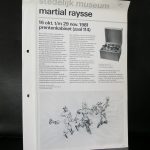
At a more affordable level the excellent Stedelijk Museum catalogue designed by Wim Crouwel is available at www.ftn-books.com . It has a special Raysse designed cover and even the use of colors ( out and inside ) is typical Raysse. Available at www.ftn-books.com
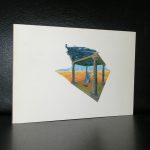
Artist/ Author: Oliver Boberg
Title : Memorial
Publisher: Oliver Boberg
Measurements: Frame measures 51 x 42 cm. original C print is 35 x 25 cm.
Condition: mint
signed by Oliver Boberg in pen and numbered 14/20 from an edition of 20