Piet Dirkx cigarbox 658
Piet Dirkx cigarbox 658

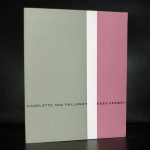
One of the more classic sculptors in the Netherlands. She is probably the most well known sculptor from the last century. Possibly the reason is, that it is believed that she gave lessons to the young Princess Beatrix , who is a gifted amateur sculptor herself and has always admired van Pallandt.
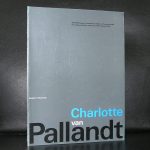
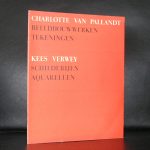
For me van Pallandt stands for one of the very best catalogues the Stedelijk Museum has ever published and Eja Siepman van den Berg, who was the first to win the Charlotte van Pallandt prize for sculpture. van Pallandt is a classic sculptor and a great technician, but besides her fantastic technique, i always get the same feeling when i see her sculptures. I am a little bored. Great for a first look , but when studied for a longer time i loose interest where as the sculptures by Eja Siepman van den Berg grow on you and with every possible angle and lighting the sculpture shows itself differently and fascinates. Better judge for yourself…..On the left a van Pallandt portrait , on the right ” stapje” . by Eja Siepman van den Berg.
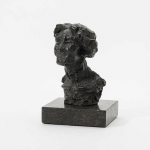
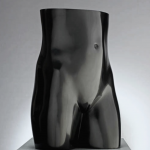
One exception… the statue by van Pallandt of the former Queen Wilhelmina…almost abstract in its approach, but the outline and posture are certainly that of Wilhelmina. See it from a distance and it is an abstract blur, come closer and it is Queen Wilhelmina determined to lead a small country.

www.ftn-books.com has some publications on van Pallandt available including the mentioned Stedelijk Museum catalogue.

Piet Dirkx cigarbox 657

The last day in this cycle of blogs on Forgotten artists. The 5th blog is devoted to Larry Bell. I was in doubt if he really is forgotten, but concluded that at least in Europe he is forgotten. Where he had an initial important exhibition in the Stedelijk Museum in 1968, for which Wim Crouwel designed the catalogue his name never showed up again in the Netherlands for participating in an exhibition ……but on the other side of the ocean it was different and his fame rose in the US from the early Seventies until now. The cubes he has made are magical and are a long time element in his oeuvre. This is what he says on his site on his Cubes.

Larry Bell became interested in glass in the early 1960s. As a medium, it had three properties that interested: it could transmit, absorb and reflect light, and with specific treatment, it could do all three at the same time. He found the cube to be an ideal form with which to investigate the phenomena of light on surface. The first cubes were made using household mirrors from which he would scratch away parts of the reflective material. Later he discovered a plating process that would make the glass reflective on both sides. With the early cubes, he incorporated geometric imagery, including the ellipse, adding visual complexity and depth to the simple forms. Eventually he eliminated the imagery. With a technology that deposited exquisitely thin films of various metallic and non-metallic substances to the glass. The resulting visual spectrum of colors is in fact light reflected in different wavelengths off the surface of the glass. Bell has continued to revisit the cubes throughout his career.
To end : there is a discount code on every purchase of 10% for the readers of this blog.
use: forgotten10 and you will receive the discount on your order/ valid until the 30th of June 2018

Piet Dirkx cigarbox 656

Sometimes you know a book exists, never seen it, but from stories heard and publications read there is only one conclusion…it must be out there…somewhere.
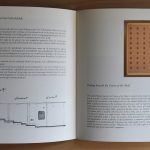
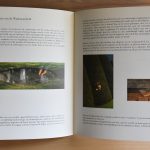
Cervo Pendulum by Pieter Laurens Mol is such a publication. I learned the book was printed by Rosbeek. At the times i visited this printer in the late Nineties i had never seen a copy. All the times i visited book fairs, markets etc….no copy found. But now finally after over 24 years i have a copy at www.ftn-books.com available.

This book is rare, that is for certain, but it is also important. It is one of those little artists books which is worth collecting. Printed by Rosbeek and published on the occasion of the opening of the new medical faculty building of the University of Utrecht. Edition is said to be 250 copies only and of these few will have survived. Text is in dutch and in english, which makes this important book accessible to english collectors too. An absolute “must have” for the Pieter Laurens Mol collector and it is not very likely that it will show up again in the coming years.

Piet Dirkx cigarbox 655
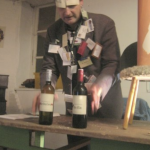
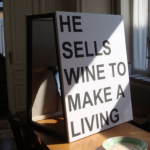
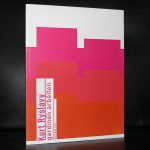
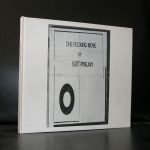
For the 3rd blog on (almost) forgotten artists, here is a blog on Kurt Ryslavy. Born in Graz Austria, Ryslavy has made some great works, but realized that art could not support him financially by itself. So he had to rethink his installations and make a more practical and financially more sound approach to his art. He wanted to make a living from his art and combined this into importing Austrian wines and combining them with critical texts and making installations out of them in museums and galleries.

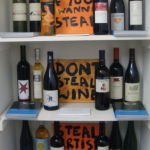
This resulted in some highly peculiar works of art, but as an importer of Austrian Wines in Belgium he now is financially independent and can make his art the way he likes. The MAK in Vienna devoted some years ago an exhibition to him.
In this project, selected objects from the MAK collection are to be arranged by Kurt Ryslavy. He will do so as collector, as a wine dealer and as an artist, thus giving rise to a complex sort of intentionality and, what’s more, making space for a wine bar which once served as an installation in an exhibition by Harald Szeemann. Since art itself has become nothing more than a market, it will also suffer the market’s fate. By exorcizing and/or banalizing mystifi cation, Ryslavy prevents the capitalist control of societal creativity—a control which purpose is, of course, to mystify. The value of Ryslavy’s art lies not in its aesthetic standards of quality, but rather in its complex refl ection on the division of labor, subjectivity and immaterial work. (Peter Weibel) It is conceivable that the artist, who refers to himself as a “Sunday painter,” will mount a performance with the participation of winemakers.
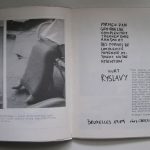
www.ftn-books.com has 2 titles on Ryslavy available.

Piet Dirkx cigarbox 654

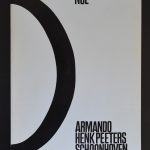
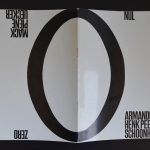
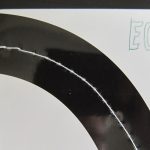
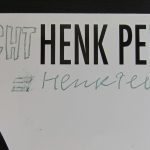
Yes, it took a period of over 50 years for Peeters to become the household name in Zero art as he is now. Shortly before his death in 2013 there was a retrospective exhibition at the Gemeentemuseum Den Haag. At that occasion the famous Nul/Zero catalogue from 1963 was published as a facsimile. The original catlogue is an extremely hard find these days and when you encounte a copy. The condition in most of the cases is not what you had hoped for. At one time www.ftn-books.com had the the original, the facsimile and the multiple signed Peeters edition available, but that was a long time ago. All sold out at record prices, but now i am lucky to have bought the best copy i have ever owned. The condition is MINT_ and it is now available at www.ftn-books.com.
Here are the images of the originalNul/Zero book now available condition is MINT-
and these are my pictures from the multiple by Peeters published on the occasion of his Retrospektive:
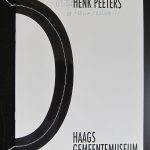
For those interested in Peeters history read here the text the Gemeentemuseum published at the occasion of the Henk Peeters Retrospective:
10 September 2011 till 12 February 2012
‘The world is going to change radically.’ Henk Peeters (b. The Hague, 1925) said so more than once. The statement was an expression of his deep desire for a Communist society. It was not to be, but Peeters remained an idealist. Together with Armando and Jan Schoonhoven, he founded the Nul group – the Dutch arm of the international ZERO movement (including artists like Piero Manzoni en Lucio Fontana), with which he maintained close contacts. Their art was all about eliminating the artist’s personal style and elevating everyday life to art through the use of ordinary materials. Peeters used cotton wool, feather and hair in his artworks and even ‘drew’ and ‘painted’ with smoke and fire. This autumn, the Gemeentemuseum’s Willem Cordia Room welcomes the first ever one-man show of Henk Peeters’ work from the 1960s. A major installation involving bags of water will be recreated especially for the occasion. It was originally on show at the successful international ZERO-0-NUL exhibition held at the Gemeentemuseum in 1964.
Peeters was a spider in the web of the international ZERO movement of the 1960s and it was thanks to his efforts that the big Zero/Nul exhibition was held in the Netherlands (partly at the Gemeentemuseum in the The Hague, the city where the Nul group enjoyed its heyday). He disseminated and published Nul and ZERO manifestos and even today is an important source of information for researchers and writers concerned with the history of ZERO and Nul.
Peeters elevates everyday life to art; he believes in the synthesis between the two and wants to make art accessible to everyone. This was also the ideal of the Nul movement; Armando used ordinary gloss paint and Schoonhoven cheap extra-thick wall paint as part of the effort to undermine the elevated status of the artwork. Peeters also used materials that needed no personal handling; he used cotton wool, feathers, hair, smoke and fire to create works that may not exhibit the personality of the artist in the handling of their materials, but are nevertheless capable of conveying great sensitivity through their texture and relief.
A deep-rooted democratic principle underlies Peeters’ art, choice of materials and personal philosophy. The socialist ideals inculcated in him during his childhood are a major motivation for all his activities – of which there have been many. In addition to being an artist, Peeters has also been at various times a museum education officer, an art school teacher, a typographer, a creative arts therapist, a curator, an organizer, an activist, a television-maker and an advisor to public institutions.
The exhibition is realized in close cooperation with the ZERO foundation, Düsseldorf.
To mark the occasion of the forthcoming exhibition, the catalogue of the Haags Gemeentemuseum’s 1964 exhibition Zero (Mack/Piene/Uecker) – Nul (Schoonhoven/Armando/Henk Peeters) is to be republished as multiple.