Posted on Leave a comment

Gerard Unger (1942-2018)

Schermafbeelding 2021-02-01 om 14.54.43

Longtime overdue…this short piece on Gerard Unger does not do justice to the importance of Unger for dutch graphic design.

Unger was a Dutch graphic and type designer. He studied at the Gerrit Rietveld Academie in Amsterdam from 1963–67. A pioneer of digital type and an eyewitness to the important technological shifts of the past five decades, prolific writer and researcher. Unger has taught at the Gerrit Rietveld Academie for over 30 years, and since 1994, he is a visiting professor at the University of Reading at the Department of Typography and Graphic Communication. From 2006 to 2012, he has been lecturer in typography at the Department of Fine Arts of the University of Leiden.


The following text comes from EYEmagazine

Gerard Unger was a quietly ambitious typeface designer whose fonts have achieved a popularity and ubiquity that few superstar designers can equal. Born in The Netherlands in 1942, he has been involved in digital type design since 1974: for print (Dr-Ing Rudolf Hell GmbH, now Linotype Library); for office use (OcZ Nederland, Venlo); and for the screen (Philips Data Systems). Unger studied at the Gerrit Rietveld Academy in Amsterdam from 1963-67 and he has taught there for more than 30 years. Since 1994 he has been a visiting professor of typography and graphic communication at the University of Reading in the UK.

The many typefaces he has designed include Hollander (1983), Flora (1984), Swift (1984-86), Swift 2.0 (1996), Amerigo (1986), Oranda (1986), Argo (1991), Gulliver (1993), Paradox (1998), Coranto (1999) and Vesta (2001), a new sans serif. Many of these are used internationally in newspapers and magazines: for example Coranto for The Scotsman and the Brazilian newspaper Valor, launched in 2000; Gulliver for USA Today and Stuttgarter Zeitung. Swift (see Eye no. 3 vol. 1) has acquired the status of a late twentieth-century classic.

He has also designed several typefaces for signage, including the one used for the Amsterdam Underground and in 1996, in conjunction with the Leiden-based company n|p|k industrial design, a new face for Dutch road signs, commissioned by the Dutch tourist organisation ANWB. He made a personal contribution to the tradition of public lettering in Rome when he was commissioned to developing an orientation and information system for the City of Rome’s Jubilee year 2000. He headed a team of six designers, working again in conjunction with n|p|k. Part of this project was a new type family, Capitolium (1998), to be used in seven languages and in different technologies, including public touch screens.

Unger also designs corporate identities, magazines, newspapers and books, writes regularly about graphic design and typography and lectures abroad. He claims he is proud to remain an ‘old-fashioned designer, satisfying clients, solving problems,’ continuing a Dutch tradition of text face design for reading. ‘Over the past decade,’ he says, ‘while many designers were producing post-structuralist, post-industrial, Deconstructivist designs and … more interested in how things look than in what they have to say, I remained interested in content first.’

Posted on Leave a comment

Robert Mapplethorpe… an assignment

Schermafbeelding 2021-01-29 om 15.42.46

Before Robert Mapplethorpe became worldfamous for his photographs he made a living as a portrait photographer and in 1986 he brought in an assigment for  a book which is now sought after because of his brilliant photography. The book? ….. 50 NEW YORK ARTISTS … edited and written by Richard Marshall and all portrait photography done by Robert Mapplethorpe. Among the artists depiceted some famous names like Isamu Noguchi, Kenny Scharff, Donald Judd, Roy Lichtenstein, Keith Haring, Eric Fischl and many many more. It reads like a WHO IS WHO from the art scene in New York in the mid Eighties. A great collectable book and now available at www.ftn-books.com

mapplethorpe artists a

mapplethorpe artists c

mapplethorpe artists b

Posted on Leave a comment

the ZERO FOUNDATION

Schermafbeelding 2021-01-28 om 16.56.34

Looking for more infor on ZERO/NUL i stumbled upon this nice site . Site is in German and English and one can open and enlarge some very nice ZERO publications. For some real authentic ZERO publications please find what is available at www.ftn-books.com, but for those only wanting a short “fix” this is perfect.

http://zerofoundation.de/en/

Posted on Leave a comment

Pierre Poiret ….King of Fashion

Schermafbeelding 2020-09-28 om 14.34.00

The following text was originally published in the New York Times.
Poiret’s achievement is not as visible today as that of Coco Chanel, who built on some of his ideas and discarded others. His fashion house closed in 1929, and he spent his remaining years impoverished. But Poiret was for a while a revolutionary in revolutionary times and also a canny impresario. His radically streamlined, unstructured, often stridently colored clothes freed women from corsets while evoking exotic, non-Western cultures and a fierce disregard for social convention.

He introduced these corset-free garments in 1906, the year before Picasso committed his decidedly uninhibited (and unstaid) “Demoiselles d’Avignon” to canvas. But with his love of the exotic, his brilliant use of color and pattern, and his penchant for simplified, almost rudimentary form, Poiret most resembles Matisse.

Poiret functioned as a kind of one-man cultural scene. He collected art, gave lavish costume parties and made astute use of the press while laying the groundwork for fashion design as a modern art and a modern business. His clients included Sarah Bernhardt, Nancy Cunard, Isadora Duncan, Colette and Helena Rubinstein. Man Ray photographed Peggy Guggenheim in a Poiret gown and turban. Edward Steichen’s first fashion photographs were taken of models in Poiret’s atelier.

He was the first designer to understand the value of designing for well-known actresses both onstage and off. He was also the first to create his own line of perfume, named Rosine, for his eldest daughter, and the first to open an interior design store, Atelier Martine, named for his second daughter but inspired by the Weiner Werkstätte. His innovations included the chemise, harem pants and pantaloons and the popular lampshade skirt. When he visited the United States in 1913, he found himself called the king of fashion and discovered the underside of modern fashion success: His lampshade skirt was being copied far and wide.
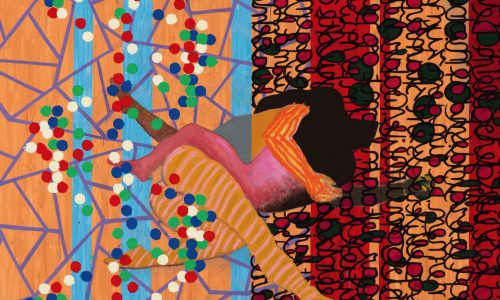
Organized by Harold Koda and Andrew Bolton, who are curator in charge and curator of the Met’s Costume Institute, “Poiret: King of Fashion” conveys quite a bit of his complex genius and his contradictory relationship with modernity. It displays 50 garments on mannequins (by Beyond Design) whose ovoid faces and cryptic features evoke Brancusi and Modigliani. The silk backdrops, which are the work of Jean-Hugues de Chatillon, a French set designer who served as the exhibition’s creative consultant, accent the show’s spaciousness with indelibly Parisian vistas of leafy parks, chic theaters and luxurious drawing rooms. All told you may have the sensation of drifting through a series of extraordinarily beautiful fashion illustrations, an art that Poiret cultivated to his advantage.


Poiret’s liberation of the female body was in part inspired by the gamine build and independent spirit of his wife and muse, Denise, whom he married in 1905. In other ways it was born of necessity. Although he was initiated into the couturier business between 1898 and 1903, working as a designer for Jacques Doucet and then the House of Worth, Poiret never trained in the exacting crafts of couture tailoring or dressmaking.

His design ideas began with the flat, rectangle of the fabric itself, as did the Japanese kimonos and North African caftans he admired. They then evolved through draping, not tailoring, into garments with a minimum of seams that pretty much hung from the shoulders.

Poiret drew from a broad range of sources. Early in the show there is a trio of nightgowns, based on the Classical Greek gown known as the chiton, that are precursors to the 1950s negligee and the early 21st-century socialite party dress. To one side of these are two white high-waisted dresses that hark back to the severe yet demure gowns of post-Revolution France, displayed with an Atelier Martine chair that has bubbly hand-painted fabric.

Nearby is evidence of Poiret’s attraction to a more ornate form of non-Western dress: a gauzy harem outfit studded with enormous beads of turquoise celluloid that Denise might have worn to their most famous fete, “The Thousand and Second Night” costume party on June 24, 1911.

But turn around and you will see a stark simplicity that may take you aback: a gown that resembles nothing so much as a 1960s abstract painting. Wrapped gracefully around a mannequin, it has no sleeves or collar to speak of, just four broad, alternating bands of stylishly darkened red and blue.

Poiret’s best clothes were abstract in a very real sense, with a kind of self-evident structure that is a precursor of Minimalism, as well as of clothing designs as different as those of Rei Kawakubo, Hussein Chalayan and Andrea Zittel. His basic form was a cylinder, with or without sleeves attached. It appeared in his work as early as 1905 in his Révérend Coat embellished with Chinese roundels. The first garment in the show, it is worn over a white, lacy, high-necked, pinch-waisted Edwardian gown, like those Poiret designed at the beginning of his career. The sartorial conflict accents the shock of the newness of his sense of form, structure and color.

His best known and most audacious designs are a series of full-length columnar opera coats that begin in 1911 and culminate in the 1919 Paris Evening Coat, merely a swath of uncut fabric with a single seam. In a wonderful bit of exhibition magic this Möbius-like feat is demonstrated in a brief digital animation projected on a scrim that then turns transparent, revealing the actual coat behind it.

But even without digital aids you can see how his garments are built, step by step. A day coat began as a black satin jacket based on a Chinese robe. To this he added four strips of cream-colored wool jacquard striped horizontally with thin lines of brown for two cuffs, a simple folded-over collar and a slightly gathered skirt that reaches almost to the floor.

The contrast of fabrics joined in this single form is elegantly harsh, like a combination of Hudson Bay blanket and black tie. A similar contrast is drawn more closely in a jumperlike dress made of gold-lamé twill.

Poiret followed modernity only so far. By the mid 1920s Chanel was designing convenient, understated clothes for women enjoying an increased sense of physical and social freedom in the wake of World War I. But Poiret ignored the shorter skirts and trimmer lines and continued enveloping women in luxurious garments that began to look cumbersome.

the following books on Poiret are available at www.ftn-books.com

Posted on Leave a comment

Lei Molin (1927-1990)

Schermafbeelding 2020-09-28 om 13.36.49

Lei Molin followed in his very own way “the road to abstraction”.

Making black and white landscapes in the early years of his career, painting portraits to make a living, he moved in the mid Sixties to Amsterdam where he made a connection with Pieter Defesche, Jef Diederen en Ger Latster, they were called the ” Amsterdamse Limburgers”, because they all moved from Limburg to Amsterdam. In Amsterdam he was influenced by Cobra and Minimalism, resulting in a style of his own losing the bright colors and presenting his works in a sober black an white. In the early Eighties color returned into his works and the us e of plastic foils made his paintings stand out from the ones of his colleagues.

Schermafbeelding 2020-09-28 om 13.37.33

After Amsterdam he movend to Ijmuiden, where he became a member of the Ijmuider kring and got inspired by the harbors of Ijmuiden.

In 1986 he told the interrviewer for a nespaper that he considered his latest works to be the ones of his 40 year career. I have known i could make it, but now i finally i am confident enough to make it. It will not become better, also not worse…this is the result of a lifelong career.

Thr above titles are available at www.ftn-books.com


Posted on Leave a comment

Raymond Pettibon and THE BLASTING CONCEPT.

Schermafbeelding 2021-01-15 om 16.32.28

This album cover was done by Raymond Pettibon and the album contains punk and post punk. A true sampler which shows the best artist from the SST label. None is importnt for me personally, but what i do like is that the over art is done by Raymond Pettibon. For those interested in the contents of the album read this.

pettibon blasting a

pettibon blasting b

When punk had its second boom in the early `80s, the emerging art form of the compilation album was given birth and has remained with the genre to today. The east coast beat its chest with the faster-than-light Flex Your Head comp released by Dischord, while the west coast celebrated its fierceness with the mostly Californian Let Them Eat Jellybeans! out on Alternative Tentacles. Boston responded with the soundtrack to circle pits, This Is Boston, Not L.A.. Unfortunately, with these three pillars casting their influence on almost the entire punk and indie scene, some label-specific comps tend to get overlooked. This is a shame as SST’s The Blasting Concept (Vol. 1), released in 1983, features a great selection of early-to-mid-SST jams which feature the label at its most lean and angriest.

The album opens with a selection of early Minutemen tunes. This handful of tracks shows that while many labels were heading in a generic three-chord, minute-thirty direction, SST was signing artists that were unique and completely inimitable. In usual Minutemen style, the trio rips through tunes which are more sketches than full-fledged opuses, jumping and skittering around chords and across song structures with more ideas in two minutes than many bands have in an entire album. In contrast to the Minutemen, Black Flag dominates the flip side with a song headed by each of the three pre-Rollins singers. While the Watt/Boon/Hurley combination delighted in its delicate intricacies, the Greg Ginn-headed Black Flag explodes with skillful rage, wasting not a millisecond of time.

Complimenting Black Flag are Saccharine Trust and Stains, two other bands on the early LA punk scene. While time hasn’t been as kind to these two groups as Black Flag, the two singles included in the comp show that while Black Flag, the Germs and a few others might have been the most dangerous, the west coast had plenty of other groups who could not only hold their weight, but also were capable of adding a little bit of east coast flavor to the west coast sound.

While SST started out as a punk label, it would later incorporate other non-commercial music including heavy metal and even free-form jazz. Chuck Dukowski’s Wurm, featured in its second incarnation on this comp, shows SST recording, Sabbath-influenced metal that allowed The Duke to show off his bass mastery/savagery. While Wurm wore its influences in the open, Overkill would be one of the first groups to head in the newly emerging thrash direction. While later on the group became much more well-known in metalhead circles, on The Blasting Concept the band carefully balances the challenging weights of punk and metal, making one hell of a fist pounder.

Although post-punk began to develop almost as soon as punk itself developed, most of these late `80s heros began as straight-up punk outfits. Luckily for us, the comp features early versions of Hüsker Dü and the Meat Puppets. Both bands are caught amidst their transitions, when unusual song structure and thick riffs dominated their sound.

Creative arguments and financial difficulties would plague SST in its later years. These troubles make this document all that much more valuable. There once was a time when SST was a dysfunctional yet happy family united not by a common sound but by a common aesthetic. The 14 cuts on this platter feature SST at its prime when it made a bold statement wrapped in a provocative cover by the awesome Raymond Pettibon. Of course, it’s a waste of time to live in the past, but every once in a while it’s nice to remember a time when all our heroes were pals (even though they kinda hated each other then, too). text by John gentile, 2007

Posted on Leave a comment

Lothar Baumgarten (1944-2018)

Schermafbeelding 2021-01-27 om 13.14.35

Lothar Baumgarten is one of those artists who’s fame never was never worldwide, but who rightfully deserves to be known and admired by many more. In recent years a new reveived interest grows in his works. Baumgarten, a conceptual artist< has had his exhibitions in the Netherlands at the Stedelijk Museum and Museum de PONT, but these have been some years ago, but lately i see a raised in interest and the works that appear at acution are sold at fair but rising prices. A good work from an edition is sttill to be acquired far below euro 250,–

Baumgarten is an artist to follow, and if you admire his works, like i do, focus on the editions. These are still to be bought at low prices.

www.ftn-books.combaumgarten bulletin has some nice Baumgarten publications available.


Posted on Leave a comment

Chris de Bueger (1948)

Schermafbeelding 2021-01-21 om 16.31.41

Try to find information and a portrait of Chris de Bueger and you will have a difficult time ahead. Because of a publication i bought some years ago ( piece of oil painting on the cover) i started to search fo the artist. No portraits , no text, just some abstract paintings and  apiec of canvas ( painting) on the cover of the blue book.

There is only way to find the maker of this book and paintings and that is study the pages and photographs. Paintings are nice abstract paintings and certainly worth viewing and possibly even collecting. and yes…..on one of the photographs there was the signature of the maker. First i read de Buger, but thanks to Google i found that it had te be Chris de Bueger and now the book is availabe at www.ftn-book.com.

Posted on Leave a comment

Chris Ware (1967)

Schermafbeelding 2021-01-21 om 16.13.22

Last week i have withdrawn all my Chris Ware items ( except for a Beau Hunks cd) from www.ftn-books.com.

beau hunks ware b

Not because of any controversial text or offending drawing , but because i had  so many beautiful publications collected over the years that it was time to start my own Chris Ware collection(again). My first encounter with Ware his drawings was at the galerie Lambiek in Amsterdam . At that occasion Ware was presented together with Henk Kuijpers. Of course no funds to buy, but from that moment i admired and started collecting Ware his publications. Some 15 years ago i decided to sell all, but now i have changed my mind and will start collecting again. Chris Ware is truly one of the greatest of them all.


Posted on Leave a comment

Keith Haring, Bulletin contribution, 1990

Schermafbeelding 2021-01-21 om 14.22.19

1986….Keith Haring had his retropective at the Stedelijk Museum and made the VELUM for the entrance at that time. Since, there has been a friendship between Wim Beeren and Keith Haring. The 1990 Bulletin published by the STEDELIJK MUSEUM, had a small contribution on the memorial held at the MAZZO discotheque in Amsterdam. With the article a note written by Keith Haring addressed to Wim (beeren) was published for the first time. Here is the letter.

haring brief

The Bulletin frm 1990 is now availabe at www.ftn-books.com