Posted on 1 Comment

Frank Gerritz (1964)

Frank Gerritz

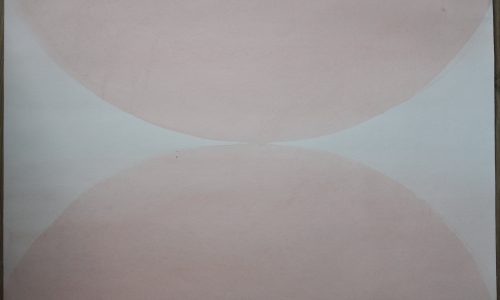
A compass is a navigation device whose needle moves constantly and yet always points in the same direction. Frank Gerritz (* 1964 in Hamburg) is also in permanent motion and at the same time goes his way very directly and purposefully. This is how on the site of galerie MIchael Haas, Gerritz is introduced…..

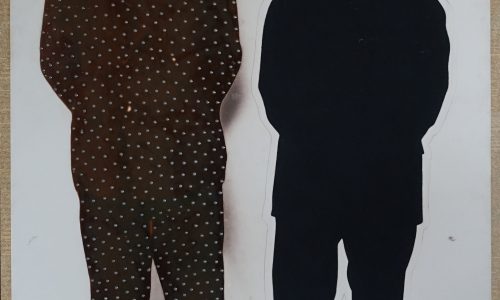
An important parameter of his works are human body dimensions, which run through his entire work in various proportions. At the same time, these are also found in references between the different groups of works. This shows in how many directions Gerritz is thinking at the same time to find out the possibilities of design.

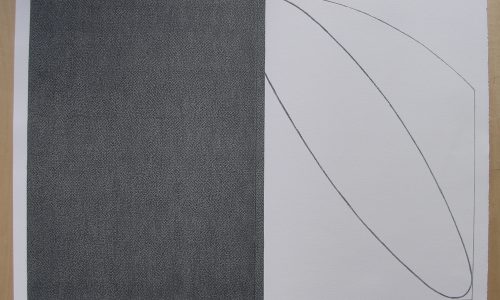
The process of creation of his works is decisive in this respect. His wall and floor sculptures are created in intensive and elaborate processes. Exemplary are his works in which he draws for months, with very soft pencils on MDF boards and thereby compresses the surfaces to such an extent that they begin to reflect and become projection surfaces – of light, color and space. Under comparatively extreme working conditions, he creates iron sculptures, which he produces with a team of assistants in an iron foundry in Kaiserslautern. Gerritz attaches great importance to the precise craftsmanship and execution of his works. This is particularly visible in his aluminum works. With black paintstick (oil wax crayon) he draws in many layers – line after line on anodized aluminum plates.

Not only the mental, but also the physical involvement of Frank Gerritz is extremely intense and cannot be seen at first glance. Only when exploring his thought system and his way of working do these wonderful works of art reveal themselves. His works captivate with a clarity that draws the viewer under their spell.

Frank Gerritz has gained international attention in his decades of determined practice, and his works can be seen not only in German museums, such as the Falckenberg Collection in the Deichtorhallen in Hamburg or, more recently, in the Museum Wiesbaden. Works by him are also represented, for example, in the National Gallery of Art in Washington, in the Menil Collection in Houston or the Collezione Panza di Biumo in Italy.

www.ftn-books.com has one Gerritz publication available.

Posted on 3 Comments

George Condo (1957)

George Condo

George Condo is an American artist who was born in Concord, New Hampshire in 1957. He studied Art History and Music Theory at the University of Massachusetts in Lowell. He settled in New York city in the late 1970’s, where he became a recognized figure within the East Village art scene, even spending a brief time working in Andy Warhol’s Factory. He moved to Paris, France in 1985 and lived there for a decade. George Condo currently lives and works in New York city.

George Condo has occupied a central position in the landscape of American painting for nearly forty years. His unique and imaginative visual language pays tribute to a vast array of art-historical traditions and genres, drawing together elements of Old Master portraiture with allusions to contemporary American culture. He is best known for his distinctive, deformed and sometimes demonic paintings that combine figuration and abstraction, madness and beauty. Condo coined the term ‘Artificial Realism’, to describe his approach or, in other words, ‘the realistic representation of that which is artificial’. His work is populated largely by dramatically stylized, almost cartoonish, characters with exaggerated, often grotesque features such as protruding over or under bites, ghoulish expressions, or is fractured nearly beyond recognition. 

www. ftn-books.com has some publications on Condo available

Posted on 3 Comments

Charles Brittin (1928-2011)

Charles Brittin

The Beat generation and the civil rights movement documented in incomparable photographs

Throughout the fifties, Los Angeles-based Charles Brittin (*1928) was the unofficial house photographer for the beatniks who coalesced around the artist Wallace Berman. Brittin had settled in Venice Beach in 1951, and his tiny shack on the beach became a hangout for the creative circle around Berman, which included actor Dean Stockwell, artist John Altoon, curator Walter Hopps, and poet David Meltzer, among many others. Brittin’s photographs of this time and place evoke a period of tremendous upheaval and creativity in America, when avant-garde culture was largely underground and its protagonists were almost completely shut out of mainstream culture. In the early sixties, the focus of Brittin’s life shifted dramatically when he became involved in the antiwar movement, and by the end of the decade he was devoting most of his time to the Black Panther Party. These two very different social revolutions are at the heart of Charles Brittin: West & South. The book is now available at www.ftn-books.com

Posted on 3 Comments

Jennifer Bartlett (1941)

Jennifer Bartlett

For the past five decades, Bartlett, who is based in Amagansett, New York, has been engineering a kind of art-making that has brought together the aesthetics of modernist abstraction and the emphasis on rules-based systems of Minimalism and Conceptualism. As exemplified by her 1975–76 piece Rhapsody, an installation first shown at Paula Cooper Gallery that features symbols and images unfolding across a grid of 987 plates, Bartlett is known for paintings, prints, drawings, and sculptures that test the boundaries between original handmade gestures and those prescribed by systems.

Her work was recently the subject of a survey that opened first at the Pennsylvania Academy of Fine Art in Philadelphia in 2013 and later traveled to the Parrish Art Museum in Water Mill, New York. Earlier this year, Locks Gallery hosted an exhibition of Bartlett’s prints and paintings featuring houses

www.ftn-books.com has currently one title on Bartlett available.

Posted on 3 Comments

Hermann Nitsch (1938-2022)

Hermann NItsch

With the title ‘ THERE WILL BE BLOOD ” i have written over 5 yerars ago a blog on Hermann Nitsch. Nitsch and Brus, brothers in arms, i still admire these artists, but now i just learned that Hermann Nitsch is dead. Arguably the most important of all Aktionism artists. He truly was original in his approach to art and will be missed. The best way to honor this great artist is to post the video below. ( please note that some of the images are too bloody for the faint hearted)

www.ftn-book.com has some important NItsch publications available.

Posted on 2 Comments

Chuck Close (1940-2021)

Chuck Close

Close began with the photograph as a point of departure. He then chose, as he often remarked, to consistently “alter the variables” in the way he transposed his photographic sources, in the process creating a remarkable pictorial language that continued to become richer and to expand through the decades.

By 1967 Close had completed graduate work at Yale University, moved to New York City, and abandoned the abstract work of his school years to begin painting from photographs. “I decided to just use whatever happened in the photograph,” he remarked in a 2003 interview. “By limiting myself to black paint on white canvas, I would have to make decisions early and live with them.” At the same time, he sought to eliminate any brushes or tools with which he was comfortable working: “I was constructing a series of self-imposed limitations that would guarantee that I could no longer make what I had been making and push me somewhere else.”

Setting these parameters led Close to paint his first self-portrait in 1967; Big Self-Portrait (1967–1968) (seen at the top of this post) was acquired by the Walker Art Center by then-director Martin Friedman directly from Close’s studio. It would be the artist’s first sale to a museum, and inaugurated a decades-long relationship between Close and the Walker that included many more acquisitions as well as two comprehensive solo exhibitions. “The day that I photographed myself … there wasn’t anyone to look through the viewfinder, so I focused on the wall. … I didn’t realize that I was going to get so much out of focus. Then I realized the minute I started to make the painting that it was far more interesting because there was a range of focus. The tip of the nose blurred and the ears and everything else went out of focus, so I began to engineer that.”

Big Self-Portrait was a watershed image for Close. It defined his basic working method, which he continued to use in various permutations throughout his career. Using a technique employed by both Renaissance painters and 20th-century billboard artists, he overlaid a grid on his source photograph and, over the course of four months, transposed his subject square by square to the new 9-by-7-foot canvas. The artist’s rumpled, mug-shotlike visage looms from the canvas, cigarette dangling from his lips. The finished painting is as iconic as it is arresting.

He went on to paint a related group of eight black-and-white “heads,” as he referred to them, which included portraits of fellow artists Nancy Graves, Richard Serra, and Frank Stella as well as composer Philip Glass. In the years that followed, Close reintroduced color into his work and began to fully explore his formula in unique works on paper and prints. He also embraced Polaroid photography as another means of building an image.

www.ftn-boooks.com has some nice Chuck Close publications available.

Posted on 5 Comments

Jan Beutener (1932)

Jan Beutener

Not so many years ago Beutener seemed to be forgotten, but in the last few years a raised interest in his works can be found. With large retrospective exhibitions at the More museum and the KUNSTHAL it looks like his name is finally established. Practically all the large dutch museum have works by Beutener in their collections . Work that can be seen as a cross between realism and abstraction. Nice to see that Beutener is still feeling young enough to comment on his exhibition at the MORE museum some 2 years ago.

www.ftn-books.com has some nice classic Jan Beutener publications

Posted on 3 Comments

Ansuya Blom (1956)

Ansuya Blom

I really thought i already had written a blog on Ansuya Blom, who i consider to be one of the greatest dutch artists to emerge in the last 50 years. I followed her work closely and when i finally had a chance to acquire an important work for our collection i did not hesitate. It is dark, filled with a veins structure and a central figure in the middle. Around the composition a halo of bandage clamps. Title…. Fata Morgana II ( a sister work is in the collection of the Stedelijk Museum Amsterdam). I love this work and for me it represents the best of art in the late 80’s.

Here is an excerpt form the Jury report from the Heineken award committee:

Her work does not clamour for attention, nor does Ansuya Blom herself. She chooses to stay in the background and lets her work subtly penetrate. For more than forty years Blom has been steadily working on an oeuvre that explores the boundaries of the inner world of experience. In films, drawings, paintings, installations and texts, she always manages to get under the skin and portrays humankind’s struggle with itself and the environment in an engaging and poetic way.

Blom’s work radiates a great social and societal commitment. With her interest in psychoana­lysis and psychiatry, her work offers a space for the voices of those who are often not heard: the marginalised or forgotten people. The artist asks critical questions about the position of the individual, collective and society. At a time when much debate is polarised, her work is characterised by subtlety. Blom offers a look into the human soul, in all its fragile vulnerability, and does so authentically and autonomously.

www.ftn-books.com has some nice Ansuya Blom publications available.

Posted on 2 Comments

The Cindy Sherman effect….

THE CINDY SHERMAN EFFECT

Cindy Sherman

In spring 2020 the Bank Austria Kunstforum Wien was presenting the exhibition The Cindy Sherman Effect. Identity and Transformation in Contemporary Art.

It addresses one of the key issues in art: the preoccupation with themes of identity, its construction, forms of transformation and fiction are hot topics in the face of a world that is in constant flux through increasing globalisation. At the same time, new technologies such as the Internet, gene manipulation and cloning give cause for us to consider the concept of identity in terms of subject generation and definition.

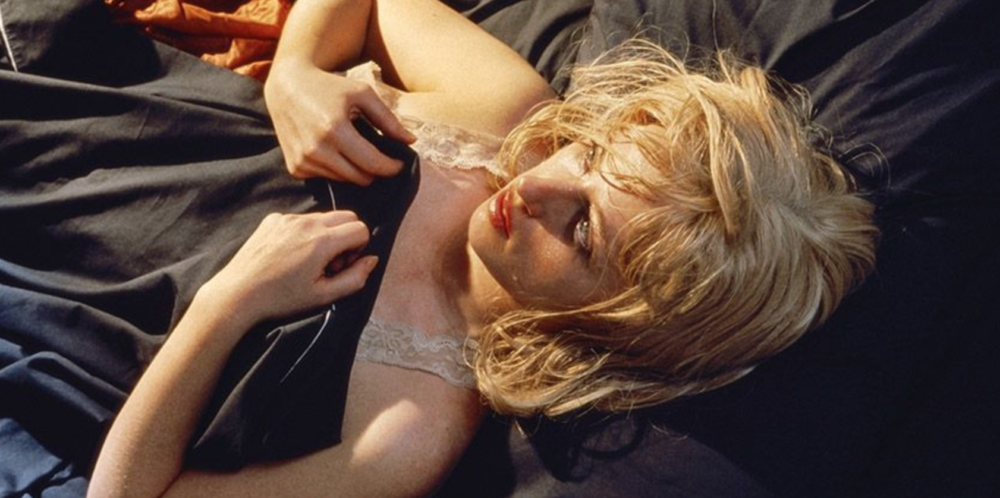
Cindy Sherman, Untitled #93, 1981 © Courtesy of the artist and Metro Pictures, New York 

Cindy Sherman’s work is counted among the classics of performance photography and artistic role play; starting out from this base, the exhibition will cast light on these relevant questions pertaining to the theme of Identity. Sherman’s photographic works – developed out of 1970s performance art and her specific interest in ever-changing identities – has never ceased to be a formative stylistic influence down to the immediate present.

The discussion surrounding post-structuralism not least paved the way to a reorganisation of authorship, which was trod later by many artists of postmodernism – prepared first and foremost by Andy Warhol with his Factory as a collective production site. With her first important series, the Untitled Film Stills(1977-1980), Cindy Sherman, icon of 1980s art production, demonstrated the rupture early on between authentic self-imaging and -performance by confronting the observer with the paradox of a strategy of denial.

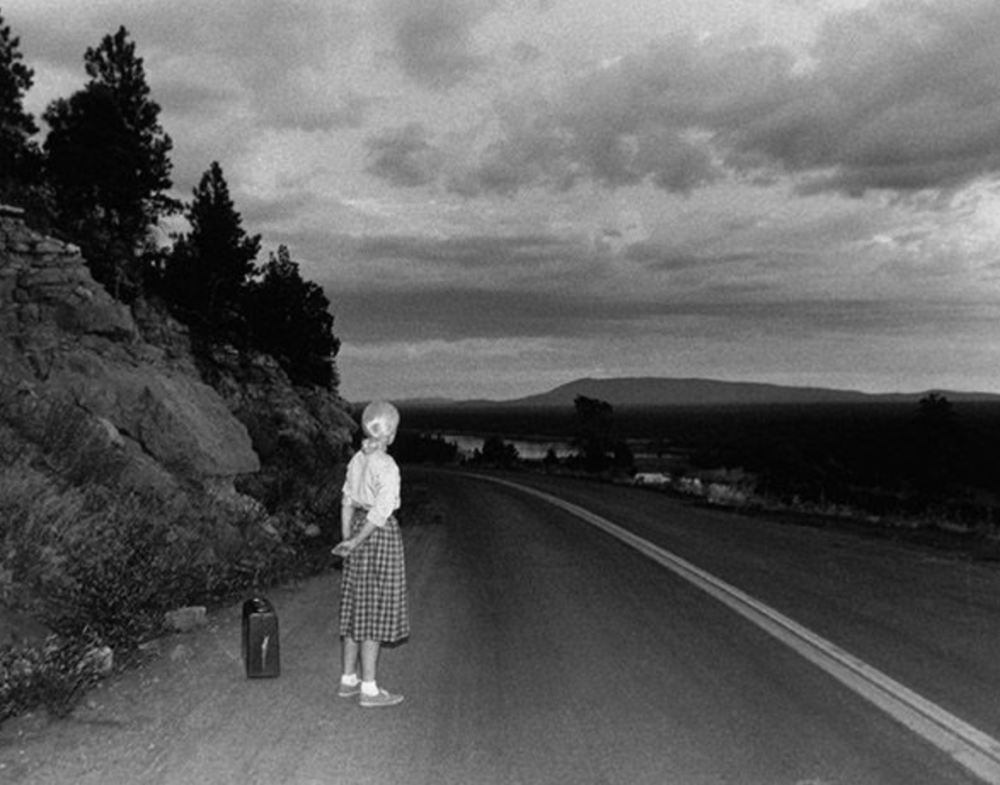
Cindy Sherman, Untitled Film Still #48, 1979 © Courtesy of the artist and Metro Pictures, New York

The camera is used as a mirror or stage for performances of the self – or of a representative or surrogate of the self – in order to examine and deconstruct the imaged interpretation of both social and sexual identity. In Sherman’s legacy, this artistic approach was followed by many artists; to name only a few: Candice Breitz, Sophie Calle, Elke Krystufek, Zoe Leonard, Sarah Lucas, Zanele Muholi, Pipilotti Rist, Markus Schinwald, Lorna Simpson, Wu Tsang, Gavin Turk, Ryan Trecartin, Gillian Wearing et al.

Sherman also inspired succeeding generations to explore the thematic field of Identity and Transformation in manifold media, but without principally modifying formerly developed artistic procedures themselves.

The exhibition in the Bank Austria Kunstforum Wien will juxtapose works by Cindy Sherman with those of contemporary artists in order to focus on such themes as deconstruction of the portrait, cultural, gender-specific and sexual stereotypes, also the construction and fiction of identity.

the catalogie is now availabel at www.ftn-books.com

Posted on 2 Comments

Hans Op de Beeck (1969)

Hans Op de Beeck

The first time i saw and met Op de Beeck was during the preparations of his GEM presentation in The Hague. Ever since i am impressed with his large installations. Thnis is not art for at home, but when place in a museum they overwhelm you i a way almost nothing else does.

Hans Op de Beeck produces large installations, sculptures, films, drawings, paintings, photographs and texts. His work is a reflection on our complex society and the universal questions of meaning and mortality that resonate within it. He regards man as a being who stages the world around him in a tragi-comic way. Above all, Op de Beeck is keen to stimulate the viewers’ senses, and invite them to really experience the image. He seeks to create a form of visual fiction that delivers a moment of wonder and silence.

Over the past twenty years Op de Beeck realised numerous monumental ‘sensorial’ installations, in which he evoked what he describes as ‘visual fictions’: tactile deserted spaces as an empty set for the viewer to walk through or sit down in, sculpted havens for introspection. In many of his films though, in contrast with those depopulated spaces, he prominently depicts anonymous characters.

Hans Op de Beeck was born in Turnhout in 1969. He lives and works in Brussels, Belgium. Op de Beeck has shown his work extensively in solo and group exhibitions around the world.

He had substantial institutional solo shows at the GEM Museum of Contemporary Art, The Hague, NL (2004); MUHKA Museum of Contemporary Art, Antwerp, BE (2006); Centraal Museum, Utrecht, NL (2007); Towada Art Center, Towada, JP (2008); Smithsonian’s Hirshhorn Museum and Sculpture Garden, Washington, US (2010); Kunstmuseum Thun, CH (2011); Centro de Arte Caja de Burgos, Burgos, ES (2011); Butler Gallery, Kilkenny, IE (2012); Kunstverein Hanover, DE (2012); Tampa Museum of Art, Tampa, US (2013); Harn Museum of Art, Gainesville, FL, US (2013); FRAC Paca, Marseille, FR (2013); MIT List Visual Arts Center, Cambridge, US (2014); MOCA, Cleveland, US (2014); Sammlung Goetz, Munich, DE (2014); Screen Space, Melbourne, AU (2015); Château de Chimay, Chimay, BE (2015); Espace 104, Paris, FR (2016); Kunstmuseum Wolfsburg, Wolfsburg, DE (2017); Fondazione Pino Pascali, Polignano a Mare, IT (2017); Kunstraum Dornbirn, DE (2017); Museum Morsbroich, Leverkusen, DE (2017); Galleria Continua, Boissy-le-Châtel, FR (2018); Scheepvaartmuseum, Amsterdam, NL (2018); Kunsthalle Krems, Krems an der Donau, AT (2019); …

Op de Beeck participated in numerous group shows at institutions such as The Reina Sofia, Madrid, ES; Scottsdale Museum of Contemporary Art, Arizona, US; ZKM, Karlsruhe, DE; MACRO, Rome, IT; Whitechapel Art Gallery, London, GB; PS1, New York, US; Musée National d’Art Moderne, Centre Pompidou, Paris, FR; Wallraf- Richartz Museum, Köln, DE; Hangar Bicocca, Milano, IT; Hara Museum of Contemporary Art, Tokyo, JP; 21C Museum, Louisville, Kentucky, US; The Drawing Center, New York, NY, US; Kunsthalle Wien, Vienna, AT; Shanghai Art Museum, Shanghai, CN; MAMBA, Buenos Aires, AR; Haus der Kunst, Munich, DE; Museod’Arte Moderna di Bologna, Bologna, IT; Kunstmuseum Bonn, Bonn, DE; Den Frie Center of Contemporary Art, Copenhagen, DK; Royal Museum of Fine Arts, Brussels, BE; Frankfurter Kunstverein, Frankfurt am Main, DE; Museum Kunstpalast Düsseldorf, DE; …

His work was invited for the Venice Biennale, Venice, IT; the Shanghai Biennale, Shanghai, CN; the Aichi Triennale, Aichi, JP; the Singapore Biennale, Singapore, SG; Art Summer University, Tate Modern, London, GB; the Kochi-Muziris Biennale, IN; Art Basel Miami Beach, US; Art Basel Unlimited, Basel, CH; Setouchi Triennale, Bruges Triennale, BE, and many other art events.

www.ftn-books.com has the THE CLIFF publication now available.