Piet Dirkx cigarbox 724
Piet Dirkx cigarbox 724

The year 1976. The exhibition …Robert Jacobsen at gallery Asbaek. This catalogue i found some weeks ago and knew instantly that this was one of the most important Jacobsen catalogues. Only a few color illustration, the rest black and white, but all the works powerfull and form his most important periods. The portrait shows a happy and confident artist who knows that his works are important.


The catalogue itself has . Plain cartonboard cover with the initials of Robert Jacobsen printed upon. A weak black paper spine completes this simple but effective and highly important little book which is now for sale at www.ftn-books.com together with some other Jacobsen publications.

Piet Dirkx cigarbox 723

Sometimes you can not place it immediately, but because i value some publishers more than others, my eye was caught by a book titled Chapalingas by Steidl publishers. Because i know they have an excellent portfolio of publications and produce the best possible (quality) books i started to leaf through it. The photographer was Rosalind Solomon. Years ago i had read that she photographed the youth in Belfast and at a time went back to one of the concentration camps, but i had forgotten her name….until yesterday i encountered the Steidl publication “Chapalingas” by her and was blown away by her photographs.
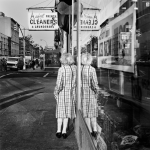
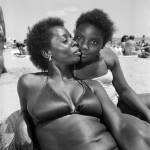
here follows a short biography on Solomon.
Rosalind Fox Solomon (b. 1930), an American artist based in New York City, is celebrated for her portraits and for her connection to human suffering, ritual, survival, and struggle. Fox Solomon’s work flows back and forth between the personal and the universal. Her talent lies in her capacity to interpret and photograph both the social elements of the places she travels to, and the obsessions and anxieties that travel with her. Her primary medium has been photography. In the 1980s, she also produced the installations, Adios and Catacombs. Since the 1990s, she has continued making images. Additionally, she has performed her own texts and poetry on video. Bruce Silverstein exhibited her audiovisual installation, Scintillation, in her 2016 solo show Got to Go, which also featured 30 prints of varied sizes, hung in erratic salon style. For the past 45 years, Fox Solomon has created challenging bodies of work, shown in nearly 30 solo exhibitions and 100 group exhibitions, and in the collections of over 50 museums worldwide.
Born in Highland Park, Illinois, Fox Solomon graduated from Goucher College. She married, moved to Chattanooga, Tennessee, and raised two children. She began photographing in 1968, continuing to live and work in the South until she moved in 1977 to Washington, D.C. Solomon studied privately with Lisette Model during visits to New York City.
In the 1970’s, Fox Solomon began her work with dolls and manikins, portraits and ritual. She made her first portraits of the ill during a yearlong project in a Chattanooga hospital. In Guatemala, she photographed shamans as well as secular and religious ritual. She also worked on a series of southern portraits, which include President Jimmy Carter and William Eggleston. From 1977–79, Fox Solomon continued photographing artists and politicians, among them Louise Nevelson, Eva Le Gallienne, William Christenberry, and Tony Smith. Her project, Outside the White House, was completed during two years in Washington, D. C., when her husband was Administrator of the General Services Administration.
John Szarkowski included her work in the 1978 exhibition Mirrors and Windows at the Museum of Modern Art, and exhibited examples from her Dolls and Manikins series in the show Photography for Collectors. Szarkowski also selected 50 of Fox Solomon’s prints for MoMA’s permanent collection. Her pictures have appeared over the years in group exhibitions at MoMA: American Children, American Politicians, Pictures by Women: A History of Modern Photography and The Original Copy: Sculpture in Photography 1839 to Today. In 1986, MoMA mounted a solo exhibition of Fox Solomon’s work, Rosalind Solomon, Ritual. Most recently, MoMA included her work in the anthology Photography at MoMA: 1960—Now, and curator Peter Eleey devoted a room to a selection of her work at MoMA PS1 in the Greater New York 2015 exhibition.
In the 1980’s, she photographed in Ancash, a region in the Peruvian Andes. The remnants of a catastrophic earthquake became a metaphor for the upheaval she was experiencing in her own life. A Guggenheim Fellowship supported this work, which was recognized as an historic document of a forgotten area when it was exhibited at el Museo de Arte de Lima in 1996. She continued her work in the area, over the next 20 years. During the 1980’s, Solomon also spent six months in India, as a Fellow of the American Institute of Indian Studies. In Kolkata, she photographed sculptures of mother goddess figures that radiate female power. She also photographed Prime Minister Indira Gandhi, the Dalai Lama, Ganesh Pyne, and Satyajit Ray.
Along the Road, made in 1985, is one of several single-edition handmade books by Fox Solomon. It includes photographs, drawings, texts and a Tibetan Buddhist woman’s apron.
In 1987, hundreds of young men and women dying with AIDS were demonized by society; often ostracized even by their own families. Fox Solomon felt affinity with them. Her own son was living with a progressive kidney disease. She began making portraits of individuals with AIDS, hoping that her pictures might help to remove the stigma attached to those with HIV who were sick and dying.
Tom Sokolowski, director of New York University’s Grey Gallery of Art, heard about her project. He had seen her pictures at MoMA, and asked her whether she could complete the work and make prints for an exhibition to open in May 1988. Ten months later, sixty-five of the resulting pictures were mounted for the exhibit, Portraits in the Time of AIDS at the Grey Gallery. Twenty-six of the original large-scale prints were shown again in 2013 at Bruce Silverstein gallery in New York City, and again in the Salon d’Honneur of the Grand Palais at Paris Photo in 2015.
As ethnic violence increased throughout the world, Fox Solomon went to Poland to revisit the Holocaust and photograph the people she encountered. She photographed Belfast children of The Troubles; the wounded of Belgrade, Hanoi and Phnom Penh; and the oppressed and the privileged of South Africa. For respite and contrast, she photographed New Orleans Mardi Gras. In 2006, Steidl published her book, Polish Shadow.
The book CHAPALINGAS is now available at www.ftn-books.com


Piet Dirkx cigarbox 722

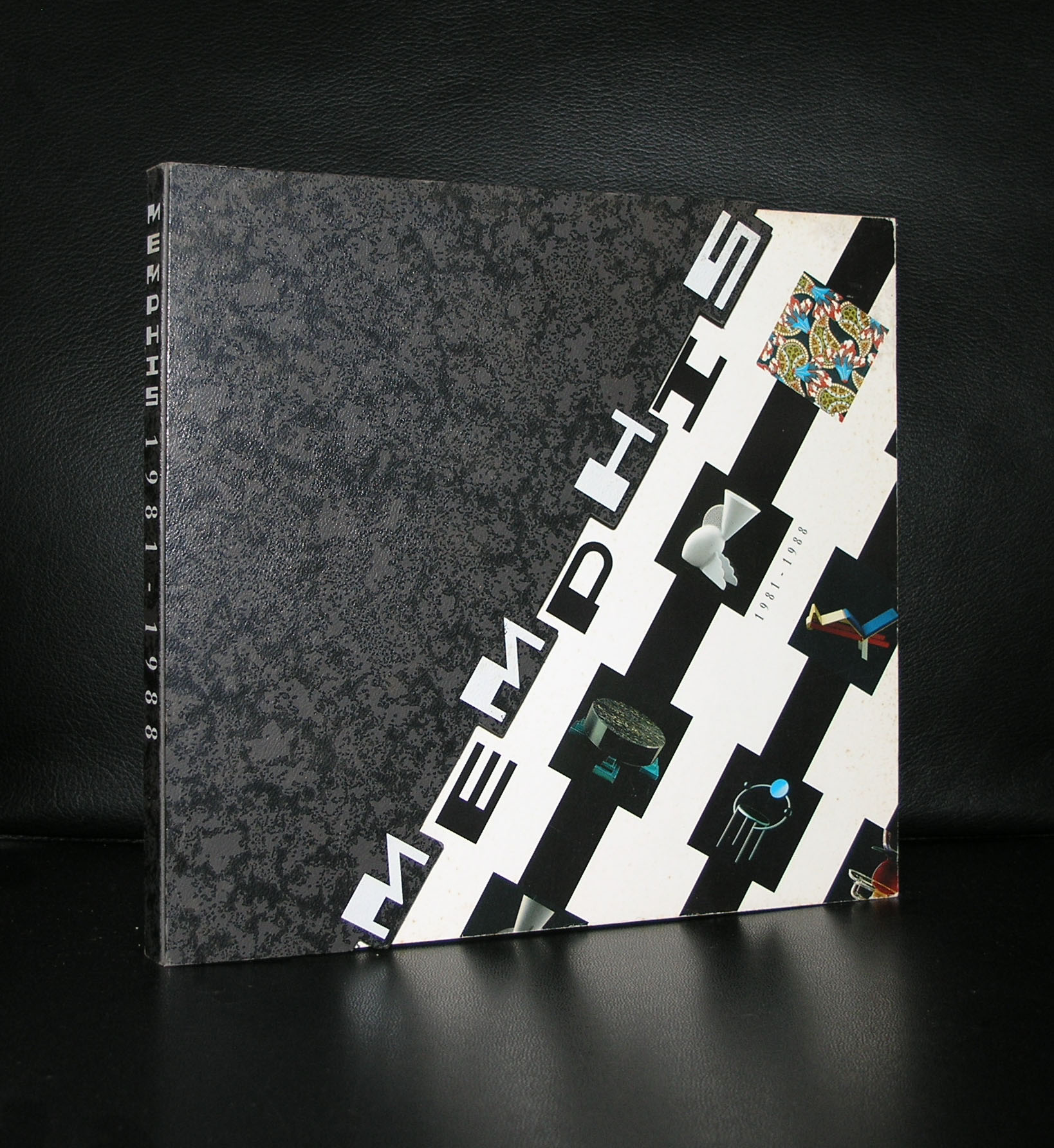
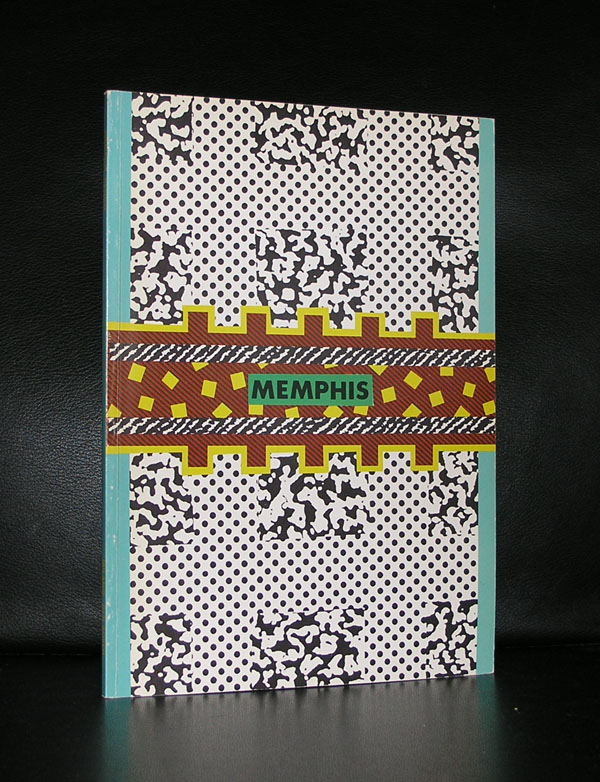
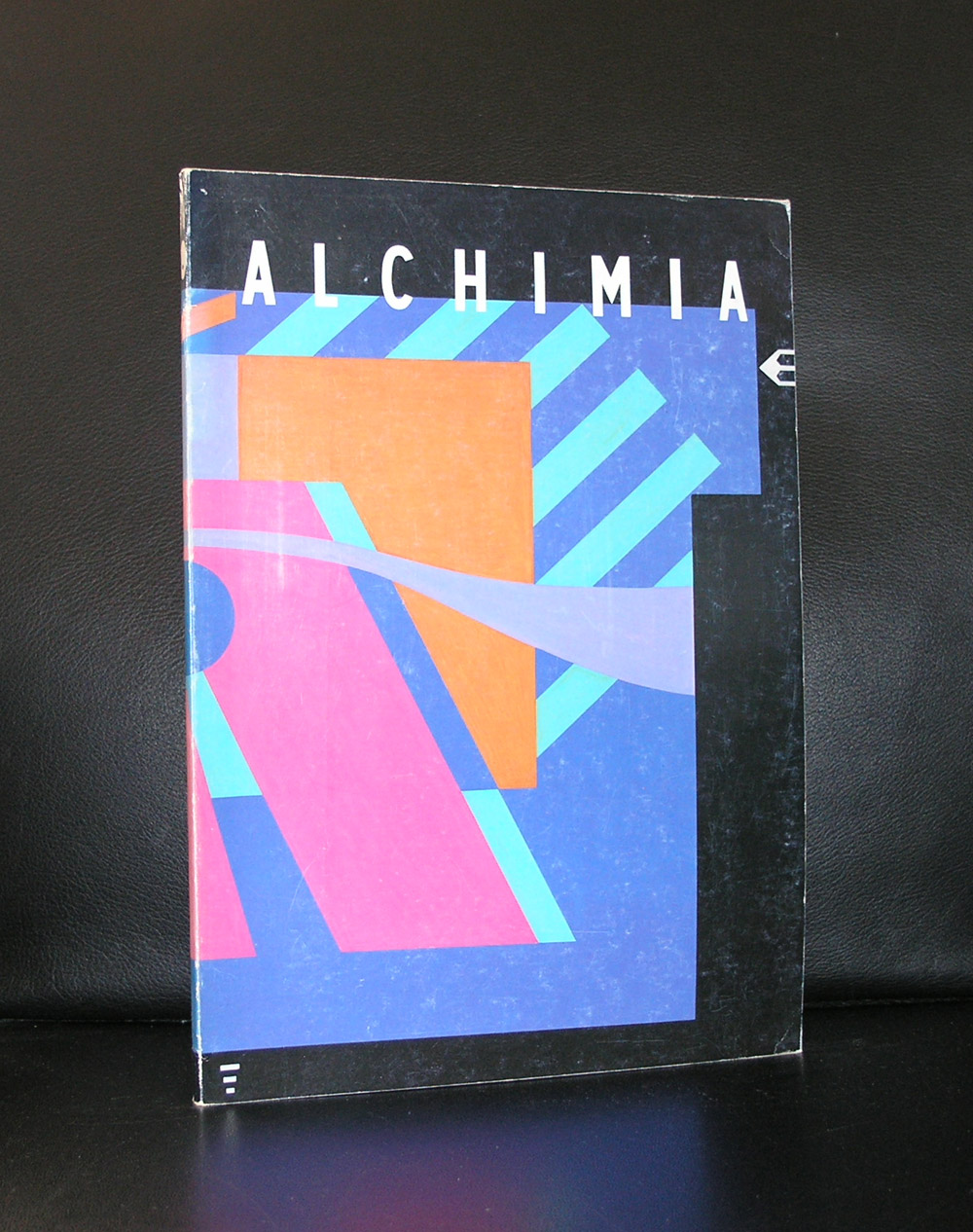
This is a blog on Memphis as a design and art form. Memphis was born in 1982 in Italy in Milano and founded by ao Ettore Sottsass. They designed Postmodern furniture, fabrics, ceramics, glass, and metal objects from 1981 to 1988. and were of great influence to many designers started their careers in those days. The design ideas by Memphis spread all over the world and culminated possibly in one building ….the Groninger Museum. Memphis designs are known for us dutch by one gallery shop in Den Haag who presented all these artists and had many specials an limited editions from the Memphis group. The COPI shop in the Prinsenstraat / Den Haag does not exist any longer but ask any dutch collector interested in Memphis, they know the name for sure. Because of the blog i finally know the origin of the name and found it on Wikipedia and want to share this information with you:
On December 11, 1980, Ettore Sottsass organized a meeting with designers, and in 1981 formed a design collaborative named Memphis. The name was taken after the Bob Dylan song “Stuck Inside of Mobile with the Memphis Blues Again” which had been played repeatedly throughout the evening’s meeting. They drew inspiration from such movements as Art Deco and Pop Art, including styles such as the 1950s Kitsch and futuristic themes. available at www.ftn-books.com are the following Memphis publications.

Piet Dirkx cigarbox 721

I had never hear before of this Korean born artist, but since we have a Korean painting by Jungwook Kim in our collection i have become interested in Korean Modern Art. Last week i encountered this publication on our local bookmarket and immediately my interest was raised . Intriguing portraits of blurred persons create a fairy tale like atmosphere. I find this photographs of high quality and if i triggered your interest pleasde visit his site at: www.kyungwoochun.de

Born in Korea, now based in Germany, Kyungwoo Chun is known for his softly controlled treatment of his subjects. Much of Chun’s photographic work is deeply figural and plays with the standards of traditional portraiture. Since his first solo show in 1994, Chun has exhibited heavily in his home country, as well as across Europe and beyond. Chun also works in performance and video. Much of his highly interactive performance work engages directly with public space and site-specificity, and uses the viewers as crucial elements in the work, whether they are writing text, folding paper airplanes, or simply touching it. In Versus (2011), Chun installed a curving, minimalist bench in the heart of Times Square, then filled the structure with two facing rows of people. For the run of the piece, opposing participants gently leaned on one another, in a partial-hug of an embrace. Video functions in several ways for Chun. At times, the moving camera does the same as stills, blurring figural forms into abstracted color and shapes. At others, the videos serve as essential documentation of performances that are only activated by an audience of participants who drive the work. Chun’s work has been exhibited at institutions such as the Museum of Photography in Seoul, the Center for Contemporary Art in Aarhus, the Kunstverein Ruhr in Essen, and the Museum of Fine Art Houston.
www.ftn-books.com has one book on this artist available


Piet Dirkx cigarbox 720
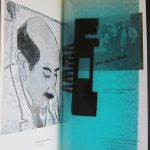
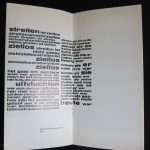
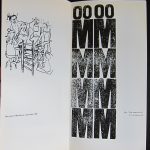
Some combinations are hard to beat and this one is surely a classic. Wim Crouwel was not yet promoted to the position of designer of the catalogues of the Stedelijk Museum Amsterdam and had just left the van Abbemuseum with his designs. In the in between period he did some free lance works and one of these was the catalogue he designed for the H.N.Werkman exhibition of 1964 in the Groninger Museum and this catalogue became the standard for all his future designs. He chose a slim sized catalogue, but within the book he used some of the papers which he had used in the van Abbemuseum catalogues and would use again for the Stedelijk Museum catalogues. Making it simple but still complex.
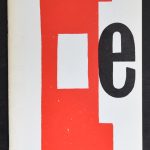
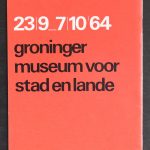
On the cover a bold and typical Werkman print which emphasized the graphic quality of the catalogue. The back…. a typical red with clear black and white lettering. This is in my opinion one of the very best graphic designs ever made in the Netherlands and i am proud to still have a copy for sale of this beautiful and splendid Wim Crouwel catalogue.
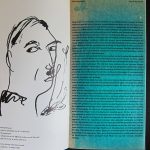

For this catalogue please visit www.ftn-books.com