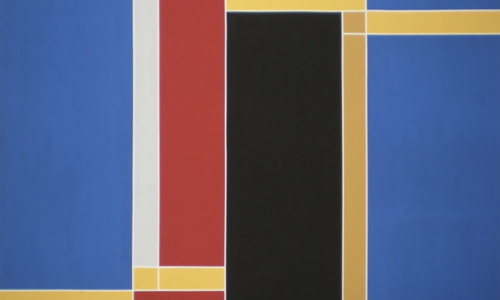
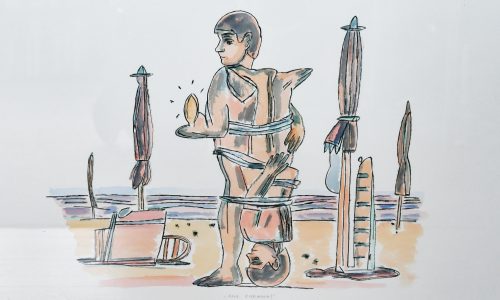
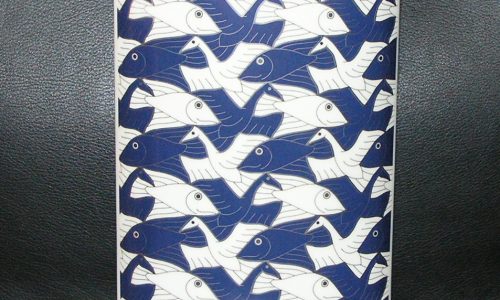
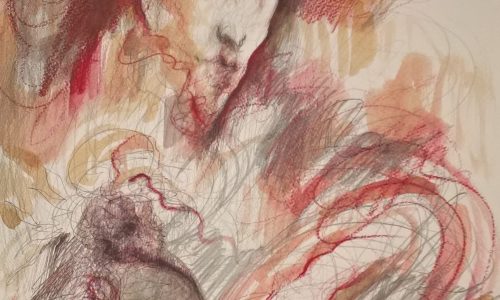
Piet Dirkx cigarbox 764
Piet Dirkx cigarbox 764

The First Hofkunst items i had in collection were the Pop Swatch series he made for Swatch. These watches were “specials” and sold among the groceries and vegetables in which these specials were presented and sold as ordinary groceries. The small edition of them made them highly collectable items and because of that and as soon as i had acquired them with much physical and financial effort, i sold them to another collector with a nice profit. It was at the height of the Swatch watches craze. A craze where simple plastic, but highly accurate and reliable watches fetched prices as much as 30 times their original value. In retrospect these watches were not worth this kind of money, but nowadays that prices have normalized and you might want to collect these specially designed watches. Alfred Hofkunst was one of the first that was invited to make a special for the newly introduced POP watches and came up with this series including a cucumber, bacon & egg and pepper watch.

Hofkunst himself is a well known Suisse artist who was friends with Jean Tinguely and Bernhard Luginbühl and can be considered as one of the most important Suisse artist from last century. Of all these 3 artists www.ftn-books.com has catalogues and posters available. Unfortunately Hofkunst died too early at the age of 62.

Piet Dirkx cigarbox 763
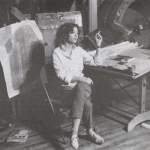
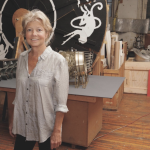
1983, Just 3 years after i started my career at the Gemeentemuseum Den Haag, the museum made an exhibition with Alice Aycock. Within the Schamhart buidling the complete floor was covered with large kinetic sculptures by Aycock and at that time i could not appreciate them at all. Now 35 year later i wished i had the same knowledge at that time that i have know, because recently i leafed through the catalogue and it struck met that these works were not only great in dimensions, but even after 35 years fascinating. Where Tinguely made his kinetic sculptures in the Sixties. Aycock made them in much more modern and industrialized/high tech versions in the Eighties and after. Alice Aycock has received international fame with her sculptures.

What remains to me is a wonderful catalogue ( available at www.ftn-books.com) and the memory of meeting a great artist and beautiful woman back in 1983.
To give an impression of her more recent works here is a video on her 2010 presentation:

Piet Dirkx cigarbox 762

A combination of illustration and serious art is the art by Ana Juan. I stumbled upon her works some 20 years ago when within the same series as

Joost Swarte’s Articulado was published, a beautiful book by Ana Juan was published.

The book also with a thin wood cover impressed me so much that from that date on i followed her progression in art.
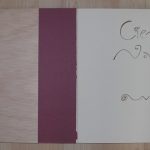
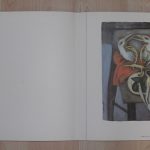
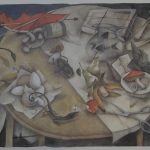
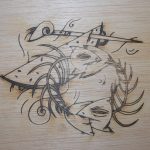
A second copy of the book is now available at www.ftn-books.com and you can see for yourself why i was so impressed , because the internet site at :
http://anajuan.net/ana-juan-mainmenu/
is well worth visiting. Here is the information Wikipedia has on her
After graduating in fine arts from Universidad Politécnica in Valencia (1982), she moved to Madrid at the height of the movida madrileña and in the early 1980s she collaborated with magazines such as La Luna and Madriz (where “for the first seven months of the magazine’s life, [she] was the only regular female artist” and for which “she authored seventeen comic book works” and illustrated many scripts for other artists).
In 1991 she temporarily moved to Paris and exhibited in Geneva and New York; in 1994 she received a fellowship by the Japanese publishing house Kodansha and lived in Japan for three months.
Back in Madrid, in 1995 she started contributing to The New Yorker, for which she has designed more than 20 covers over the years,[3] among which “Solidarité”, after the Charlie Hébdo shooting in Paris.
In 1998 and 1999 she was awarded the Gold Medal (category: Illustration) by the Society of Newspaper Design and on September 24, 2010 she was awarded the “Premio Nacional de Ilustración” by the Spanish Ministry of Culture.
She currently creates her own books (texts and illustrations), exhibits her work all over the world (Spain, Mexico, Japan, Italy…) and contributes to many Spanish and international magazines. She has also illustrated many Isabel Allende’s book covers for Plaza e Janés (Penguin Random House), among which Retrato en Sepia, Eva Luna, El cuaderno de Maya, Of Love and Shadows, and is one of the very few artists who was allowed by the author himself to illustrate a book by Stephen King, namely The Man in the Black Suit (El hombre del traje negro, Nórdica Libros, 2017).

I consider Alberto Vargas ( born in Peru) as the most original and technically accomplished pin-up artist ever. Of course, France has known some great pin-up artist like Aslan was one of them, The US brought us Elvgren and the more modern Olivia de Barardinis, but for me personally Alberto Vargas is the very best. His style is recognizable, his models are exquisite and his art has always a personal note.

He started making Pin Up drawings in the early 20’s and kept producing new Pin-Ups until his early Eighties. Many of them appeared in Playboy magazine and the 60’s Playboy magazines contained each month a new Vargas drawing. The magazines edition rose to an enormous 7 million each month but now has fallen to 800.000.
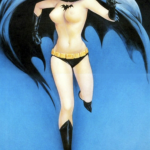
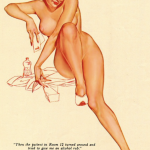
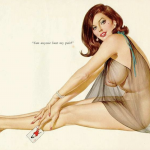
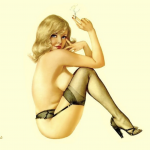
7 million readers ( viewers) each month meant his name as a gifted (pin-up) artist spread rapidly and original drawings fetched high prices at auction. Prices have fallen a little since these GOLDEN VARGAS DAYS, but a good drawing still fetches usd. 20K+
Artistically Vargas is for sure not the most important and ground breaking artist, but his drawings have a great appeal and are technically brilliant pieces of art.
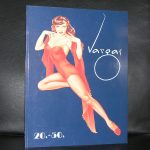
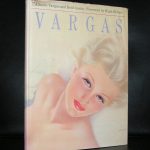
www.ftn-books.com has some Vargas titles available

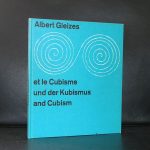
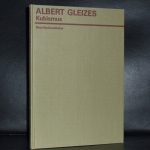
A misunderstanding from my part is that i always thought Gleizes to be a Suisse artist, but he isn’t, he is French and that places his works among other French Cubist artist to compare. So not Hodler was the greatest influence on his works, it is that what i thought to be true, but far more other contemporaries from the French art scene like Metzinger, Delaunay and Le Fauconier, who were his sparring partners in art. Self proclaimed founder of Cubism his works are among the best cubist works i know of and these art works build a bridge into the art of the Bauhaus that was more than interested in the ideas by Gleizes. Gleizes has not become the great name in art you should have expected, but became a “niche” artist, who received some special exhibitions in the Netherlands in the last few decades. Not the grand scale exhibitions you would expect with such an important artist. Maybe the future will bring the recognition Gleizes deserves but for the meantime you have only some nice exhibition catalogues which are available at www.ftn-books.com
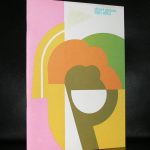
Yesterday i wrote about Fons Haagmans and that he reminded me of Richard Artschwager…..why?…. i stil do not know, because when your really compare and study both, there are so many differences to be discovered, but at a glance i still say… they belong to the same family.
For me Fons Haagmans stands for two things. His catalogues published belong to the best dutch art catalogues published over the last 25 years and he is a typical artist of the south. Born and still living in Limburg, in the south of the Netherlands, he had his most important exhibitions at the Bonnefanten museum ( Maastricht) which catalogues are available at www.ftn-books.com
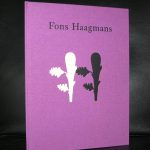
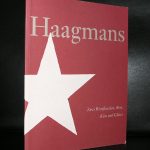
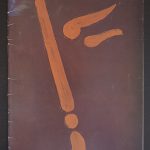
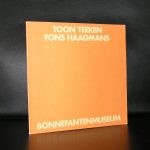
His art is something special and his works ( beside they are related to Artschwager ;-)) are strongly graphical and have a signature of their own.
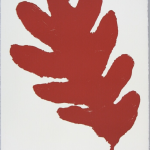
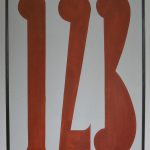
nature, Letters/ fonts and numbers are a constant source of inspiration and worked out into joyful , intriguing works of art.
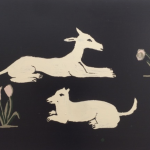
While studying some pictures of Haagmans i noticed some similarities with other artists:
left Fons Haagmans and on the right Samuel Jessurun de Mesquita (1928):
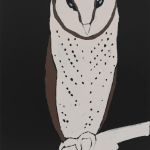
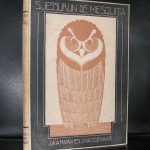
and left Fons Haagmans and on the right Julie de Graag( ca. 1915)

The art world will probably not know about Jan Sobecki and his Tribeca Restaurant in Heeze, but the culinary world does certainly know Jan Sobecki. After starting his career at Chapeau and Boreas restaurants, he finally has a place of his own for 2 years now in Heeze. The former restaurant of Nico Boreas was turned into the TRIBECA restaurant run by Jan Sobecki and his wife Claudia. Why a blog on this restaurant and not a blog on art like always. Two reasons. The first is to commemorate that the day before yesterday it was Linda’s birthday and we visited Tribeca restaurant for lunch to celebrate and secondly, although there is no art in the TRIBECA restaurant on the walls, to show that there is a strong connection and influence of all kinds of art on the plates that Tribeca serves. The first thing we noticed were the similarities between the sculpture LA MUSE ENDORMIE by Brancusi and the little plate with butter which was served.
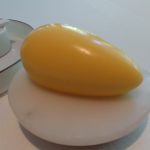
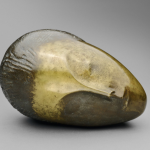
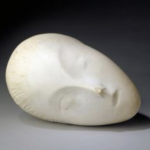
I had the very strong impression that this great chef is inspired by art. Not the taste of course ( which is by the way exquisite), but the plates look all like small pieces of art and go way beyond the regular way in making up a plate. another example is the “amuse” of mackerel which reminded me of a very small painting by Fiona Rae which is available at www.ftn-books.com.
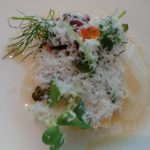
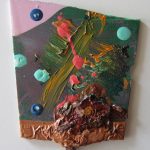
I only know of one other chef in the Netherlands who still draws his inspiration from art and that is Jannis Brevet from the Inter Scaldes restaurant who matches his courses with the paintings he has hanging on the wall.
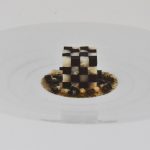
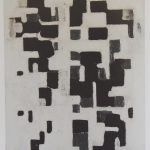
Of both, Sobecki is my favorite. Not just because i think the service at the table was far better and relaxed than at Inter Scaldes, but because he focusses on his beautiful and very impressive tasting menus and wine pairing in a way that i am convinced that in the long run he proves to be the better chef…..go there, admire and enjoy Sobecki’s art on a plate and the “art” of Jan Sobecki will convince you that there is certainly (culinary) ART in his Tribeca restaurant.