Piet Dirkx cigarbox 799
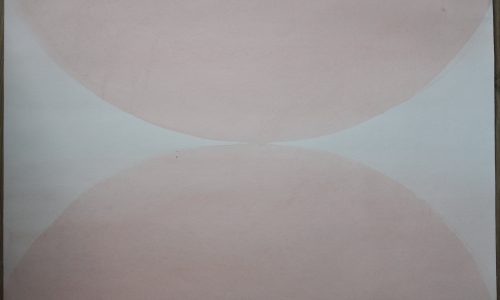
Piet Dirkx cigarbox 799

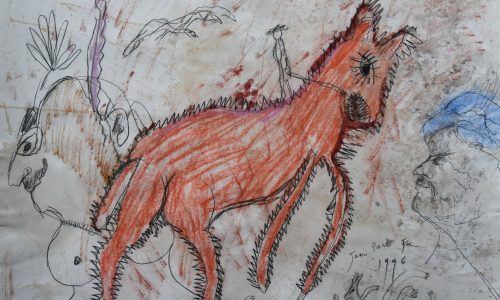
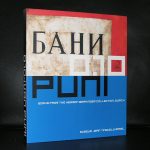
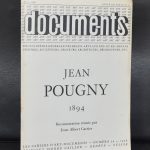
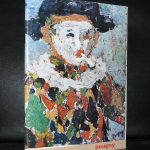
I had never known this before, but now that i searched for Ivan Puni i found out that Jean Pougny and Puni are one and the same person. I knew that he stayed for most of his life in France and was succesful in France and that must have been the reason that Puni became Pougny. the catalogue i have in my inventory is one of the best ones Willem Sandberg designed in the Fifties . It is a typical Sandberg designed catalogue and one of the first with tipped in color plates.
Puni received his formal training in Paris in 1910-11 at the Académie Julien and other schools, where he painted in a derivative fauvistestyle. Upon his return to Russia in 1912, he met, and exhibited with, members of the St Petersburg avant-garde, including Kazimir Malevich and Vladimir Tatlin. He made a second trip to Paris in 1914, returning to St. Petersburg in 1915. At this point, he began painting in a Cubist style reminiscent of Juan Gris. In 1915, Puni, (Aleksandra Ekster, Liubov Popova, Ivan Kliun, Ksenia Boguslavskaya, Olga Rozanova, Nadezhda Udaltsova, Nina Genke and others) formed Supremus, a group of artists dedicated to the promulgation of Suprematism, the abstract art movement founded by Malevich. Malevich and Puni co-authored the Suprematist Manifesto, published in 1916, which proclaimed a new, abstract art for a new historical era. Puni also organized the exhibitions Tramway 5 and 0.10, both held in St Petersburg in 1915, in which Malevich, Tatlin, Popova and others participated, and to which Puni contributed constructions and paintings. In 1915-1916 Puni, together with other Suprematist artists, worked at Verbovka Village Folk Centre. In 1919, he taught at the Vitebsk Art School under Marc Chagall.
Puni and his wife, Kseniya Boguslavskaya, emigrated from Russia in 1919, first to Finland, then in 1920 to Berlin, where the first exhibition consisting entirely of his work was held at the Galerie der Sturm. While in Berlin, Puni also designed costumes and sets for theatrical productions. Puni and Boguslavskaya relocated to Paris in 1924, where his style changed once again to a variant of Impressionism. In France, he signed his work Jean Pougny in an effort to distance his new art practice from his previous one in Russia. In 1946, Puni/Pougny became a French citizen. He died in Paris in 1956.
www.ftn-books.com has Puni/Pougny titles available.


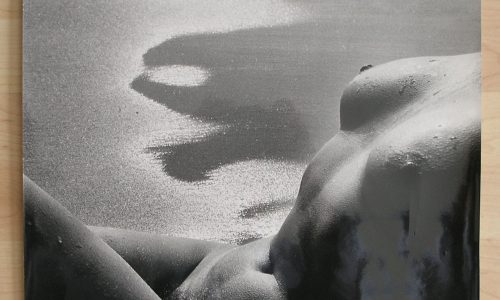
Piet Dirkx cigarbox 798

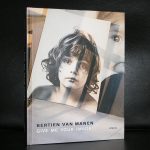
Just a little piece of technical information i picked up from an interview with Bertien van Manen who’s works are known, appreciated and collected worldwide. Even the MOMA in New York has a nice selection of her photographs from the early 90’s.
Mrs. van Manen informed her interviewer that she uses the most simple AUTOMATIC camera’s available. Speed, size and ease of use are a key ingredients to take a successful photograph.
This is nice to know, since for us ….simple amateur photographers it is now with all excellent phone camera’s available as easy to take photographs as it is for professional photographers. All you need is a keen eye for the right subject and composition. Bertien van Manen showed us the way and it is now up to us to create our own portfolio’s with ex excellent photographs. www.ftn-books.com has titles by van Men available.

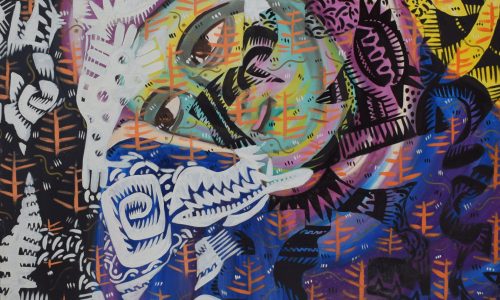
Piet Dirkx cigarbox 797
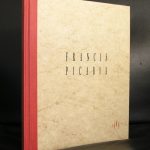
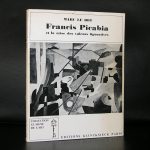
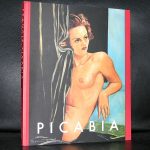
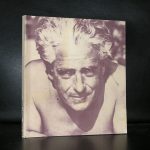
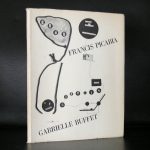
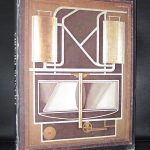
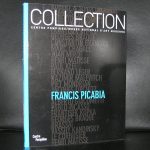
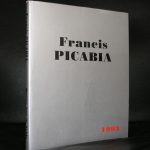
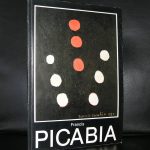
It took a long time for me to finally appreciate the works by Picabia. Once known as “Papa Dada,” Francis Picabia was one of the principle figures of the Dadamovement both in Paris and New York. A friend and associate of Marcel Duchamp, he became known for a rich variety of work ranging from strange, comic-erotic images of machine parts to text-based paintings that foreshadow aspects of Conceptual art. Even after Dada had been supplanted by other styles, the French painter and writer went on to explore a diverse and almost incoherent mix of styles. He shifted easily between abstraction and figuration at a time when artists clung steadfastly to one approach, and his gleeful disregard for the conventions of modern art encouraged some remarkable innovations even later in his career, from the layered Transparency series of the 1920s to the kitsch, erotic nudes of the early 1940s. Picabia remains revered by contemporary painters as one of the century’s most intriguing and inscrutable artists.
on the excellent site THE ART STORY i found this text on the ideas of Picabia



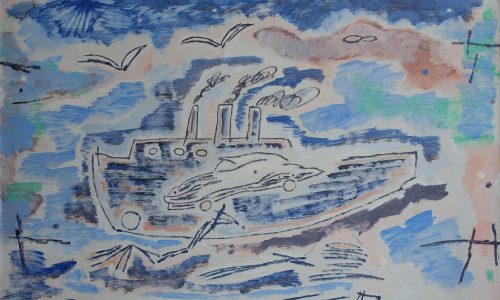
Piet Dirkx cigarbox 796

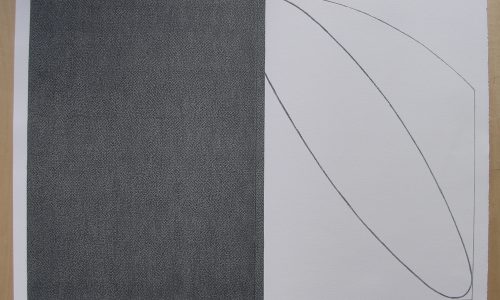
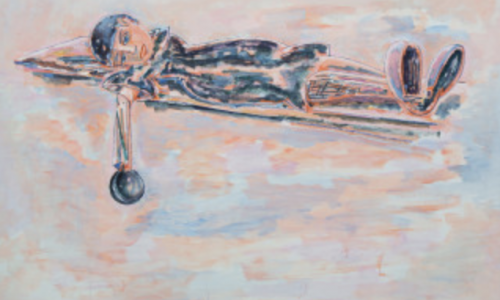
It took me decades to discover the art of Bruce McLean. A typical Sixties artist who started with performances and now ends his career with HUGE paintings. In between …… an abundance of works of which the large canvasses i appreciate most.
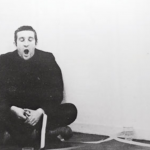
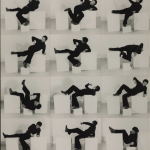
An original and personal style of painting . …the result…. recognizable paintings. I looked up the artist Bruce McLean and found that his paintings are still on the verge of affordable to wealthy private collectors and maybe now is the time to start looking and finding a beautiful McLean painting for your collection?

www.ftn-books.com has a few bruce McLean publications available
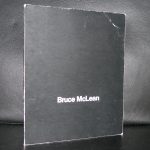
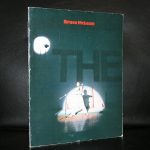
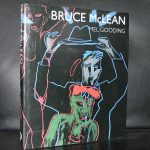
Bruce McLean is a Scottish sculptor, performance artist, filmmaker and painter. He studied at the Glasgow School of Art from 1961 to 1963, and from 1963 to 1966 at St. Martin’s School of Art, London, where he and others rebelled against what appeared to be the formalist academicism of his teachers, including Anthony Caro and Phillip King. In 1965 he abandoned conventional studio production in favour of impermanent sculptures using materials such as water, along with performances of a generally satirical nature directed against the art world. When in 1972 he was offered an exhibition at the Tate Gallery, he opted for a ‘retrospective’ he titled “King for a Day” which lasted only one day. From the mid 1970s, while continuing to mount occasional performances, McLean has turned increasingly to painting/sculpture and film work. In 1985, McLean won the John Moores Painting Prize. Since retiring from his professorship of painting at the Slade School of Art, he has taken on a large studio in west London where he has been making increasingly large paintings and sculptural film works.

Piet Dirkx cigarbox 795

One of the dutch fashion designers i truly enjoyed working with was AZIZ (Bekkaoui). I met a few of the great fashion designers in my time at the Gemeentemuseum. Frank Govers i found authentic but not that sympathetic, the same with Frans Molenaar …at a distance a likable personality, but as soon as you had met he was not the friendliest one. Max Heymans….. a rude person that thought of himself to be the king among dutch fashion designers, but for me he never reinvented himself, but his importance was based on a very loyal clientele who thought his designs were ina class of their own. Mart Visser a found sympathetic and one of the last i worked with was AZIZ Bekkaoui. A Moroccan born fashion designer of who i personally think is one of the most original ones to have appeared on the dutch fashion scene in the last few decades. No gimmicks like Viktor & Rolf, but true and original fashion His fashion designs are inventive and highly original and…..he is certainly one of the friendliest designers i have met.
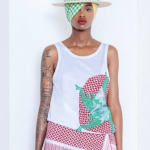
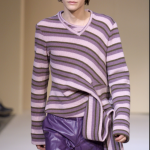
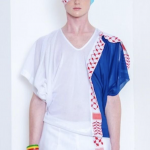
At the time of his Gemeentemuseum show he was hardly known, but the catalogue we made for the show was one of the most original ones at the time i was working at the Gemeentemuseum. Designed by Gracia Lebbink, we chose for a felt like white cover and the best printing possible…the result a highly collectable fashion exhibition catalogue which is still available at www.ftn-books.com