Posted on Leave a comment

David Hockney and van Gogh

Schermafbeelding 2019-03-01 om 14.37.50

There is so much publicity on this event in the Netherlands that i feel obliged to spent a blog on this subject. The exhibition is on view until the 26th of May.

David Hockney is the most expensive living and Vincent van Gogh held the record for many years until his records were passed by Klimt and Matisse, but should an important van Gogh painting come to the market again, i am sure it will fetch a new record price for a painting. Of course this has nothing to do with the artistic values of both these artists and it looks like Hockney is heavily inspired by the van Gogh classics. This is not a bad case, but should you expect to see the magnificent Sixties paintings in this show, than you will be disappointed because the theme of this exhibition is van Gogh and the way David Hockney looks in his own way to the van Gogh subjects.

Schermafbeelding 2019-03-01 om 14.36.38

Good paintings, but certainly not great paintings….although…their size is sometimes a little bit too much.

Hockney – Van Gogh

Two Painters, One Love

Nature is in constant motion. David Hockney and Vincent van Gogh both succeeded in capturing this dynamism. How did they do this?

READ THE STORY

Two painters, one love: Nature. David Hockney (1937) may live more than a century later than Vincent van Gogh (1853-1890), however their vision of landscape is often similar. But what exactly does this nature mean to them? And how did Van Gogh’s landscapes inspire Hockney?

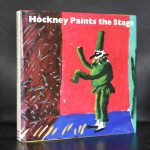
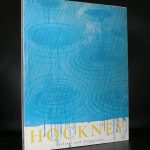
www.ftn-books.com has a nice selection of Hockney titles available


Posted on 1 Comment

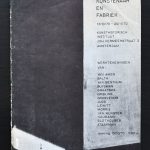
Kunstenaar en Fabriek / Judd & LeWitt

Schermafbeelding 2019-01-24 om 14.51.53.png

In 1970 only 2 years after the first exhibition with Minimal Art at the Haags Gemeentemuseum ( Curated by Enno Develing) , there was an initiative by 3 aspiring admirers who wanted to present their choice of Contemporary Art with a focus on Minimal Art. Organized by the Kunsthistorisch Instituut in 1970  a location was found with the Nebato Fabriek in Bergeijk. The Nebato metal construction company executed some of the works by LeWitt and Judd and in the meantime the artists stayed nearby with Martin and Mia Visser. The Visser’s collected during 3 decades one of the most famous of dutch  Modern Art collections and  focussed in those early years on Minimal Art . From the early beginning of 1966 they started collecting LeWitt and Judd. Building this way a world famous collection of Minimal Art. It all comes together in this exhibition at the Nebato factory in 1970. Participating artists were: van Amen, Balth, van benthumn, Graatsma, Gribling, Grosvenor, Judd, LeWit, Morris, van Munster, Naumann, Slothouber and Staakman. This catalogue is rare and one of the most important Minimal Art collectibles there is. publication is available at www.ftn-books.com

There is a nice article to be found on the internet in which the relation between Visser the collector and the (minimal )artists is explained.

Friday Food For Thought: Martin Visser – collector, designer, free spirit


Posted on Leave a comment

Formula 1 and Art

Schermafbeelding 2019-03-01 om 14.07.58

Another two weeks and the 2019 Formula 1 season will start with the Australian Grand Prix in Melbourne on the 17th of March.

Schermafbeelding 2019-03-01 om 14.04.46

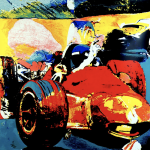
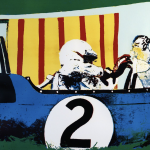
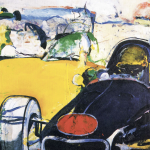
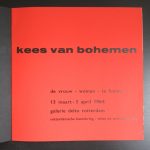
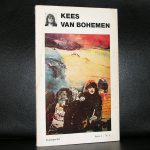
I have a lifetime fascination with Formula 1 and from my 17th until this day i am following the complete Formula 1 season. Qualifying and the Race itself i am present and dollow the live transmission. It is rare, but sometimes both items  i admire , Art and racing, are combined into sculpture or paintings. One of the artists that comes to mind is Kees van BOhemen who made a series on Racing and racing drivers in the late Sixties.

Furthermore there are of course the car manufactureres themselves who commission artist to develop and paint their cars into special editions. But Kees van BOhemen stands out for me since his use of paint and subjects leans towards total abstractiuon and it is only a small step to make a “racing” painting into an abstract painting. www.ftn-books.com has a nice selection of Kees van Boehemen catalogues available.


Posted on Leave a comment

Remy Zaugg (1943-2005)

Schermafbeelding 2019-01-22 om 16.15.36

Remy Zaugg was a Swiss painter, primarily known as a conceptual artist. He played an important role as both a critic and observer of contemporary culture, especially with regards to the perception of space and architecture.

This is how the biography of Zaugg on Widewalls starts, but there is of course much more to be told about Zaugg. Zaugg will be one of the great Swiss artists and because of the interest the dutch curators had and still have in Swiss artists ( there are many swiss artists in dutch public collections ) these artists are presented frequently in the Netherlands. Look at the history of the Gemeentemuseum ( Hodler, Gerstner, Lohse ) Stedelijk Museum ( Tinguely, Raetz and Lohse ) and the van Abbemuseum ( Lohse and Zaugg).

They all have a history with Swiss artists. The last one , the van Abbemuseum had a special exhibition on Remy Zaugg. and with this one of the first typically “RUDI FUCHS” catalogues was published. Hardly any illustrations, but functional text in a functional sober design…personally i love these catalogues and some of them are available at www.ftn-books.com. I will highlight two of them in this blog. Both are rare and typically for the van ~Abbemuseum books published in the eighties. The catalogues by Zaugg and Ian Wilson are well worth collecting.


Posted on Leave a comment

Pjeroo Roobjee (1945)

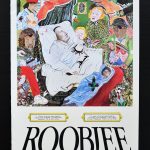
Another forgotten artist who had his moments at the begiining of his career is Pjeero Roobjee. In the early Seventies he had his first exhibitions and until the beginning of the Eighties his work was presented frequently at renowned galleries. Just after his presentation for Belgium at the Venice Biennale in 1980 , his name almost disappeared from the exhibition calendars and only some of his literature was published .

But see….he is still working and with the same approach to painting he created his works even after 1980

and

https://www.facebook.com/canvastv/videos/846750912195311/

It is a pity since his approach to painting was of a child like perspective, but with inserting very mature elements, he created fairy tales for adults on canvas. His works were sold through Lens fine art and d’Theeboom, which catalogues are available at www.ftn-books.com

Posted on Leave a comment

Haags Gemeentemuseum..Nederlandse Beeldhouwkunst, 1951.

nederlandse beeldhouwkunst

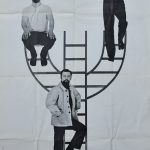
An exhibition from 1951, an important exhibition of which i noticed that many of the sculptures are now part of the permanent collection, but what makes this publication even more special is that it is a very large publication for those days. It contains 62 pages and…… a plan for the exhibition. I had never seen the publication before but the plan makes it even more special. It shows the importance of the exhibition and the scale must have been enormous for those days. It was so large that it needed a plan not to get lost. This plan is what i want to share with you, because it is very special. The publication is for sale at www.ftn-books.com or you can exchange this for the Erwin Olaf publication…Erwin Olaf – I am. A historic publication for a future collectible photobook.

(please note that the Gemeentemuseum was open in the evening too)

nederlandse beeldhouwkunst a

nederlandse beeldhouwkunst c

Posted on Leave a comment

Rennweg by Rudi Fuchs (1985)

Schermafbeelding 2019-01-22 om 15.31.57

Rudi Fuchs (1984)

When i first learned that Rudi Fuchs would become the new director of the Haags Gemeentemuseum, i started following his career back and noticed some impressive exhibitions which were held at the Castello di Rivoli near Torino a modern art museum of which he was artistic director between 1984 and 1990.

Schermafbeelding 2019-01-22 om 15.42.47

The artists that he presented at that location were soon to become household names in the years he was director and head curator of the Haags Gemeentemuseum. The “Rennweg” book with art by Nitsch, Brus, Pichler , Attersee and Rainer was one of the first from the Castello di Rivoli that was available at the bookshop of the Haags Gemeentemuseum and now the circle is completed since i recently bought a” lot” at auction…all from the former library of Rudi Fuchs and within these…the RENNWEG catalogue which is now available at www.ftn-books.com

rennweg

Posted on Leave a comment

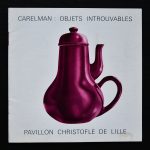
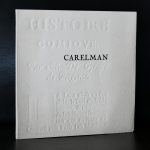
Jacques CARELMAN (1929-2012)

Schermafbeelding 2019-01-22 om 15.17.51.png

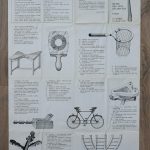
Take a little from Marcel Duchamp and mix this with a snuff of Panamarenko….the result CARELMAN

An artist i did never had heard of until a year ago when i bought a small collection of art books and posters and Carelman was present in this collection. Some early Sixties and Seventies publications where in it too and also an early french exhibition poster ( all available at www.ftn-books.com).

It struck me that his name has not become more famous since his art is orgina and authentic and was known well before the name of Panamarenko rose to fame in the late Seventies. (useful) Objects which are rebuild into another object , making them strange and not suitable for anything else than being a rebuild object. a Parody on the Manufrance catalogue from the sixties

Carelman is best known for this Catalog of fantastic things (Catalogue d’objets introuvables) It even has been translated into 19 languages, so Carelmans objdects are well known all ver the world , still his name is almost forgotten by all.

Posted on 1 Comment

Stolen paintings from Mutual Art magazine

Recently MUTUAL ART Magazine published an article on stolen paintings. Here it is:

The year 2010 looks to be crucial because a Vermeer, Rembrandt and PIcasso were stolen from the same collection. Catalogues of all the mentioned artists are availabel at www.ftn-books.com

How 6 of the World’s Most Valuable Paintings Disappeared

MutualArt

JANUARY 17, 2019

After a painting believed to be a rediscovered Michelangelo was stolen from a Belgian church just days before it was due to be authenticated, we take a look at some of the most significant artworks whose whereabouts are still a mystery.

INTERPOL

@INTERPOL_HQ

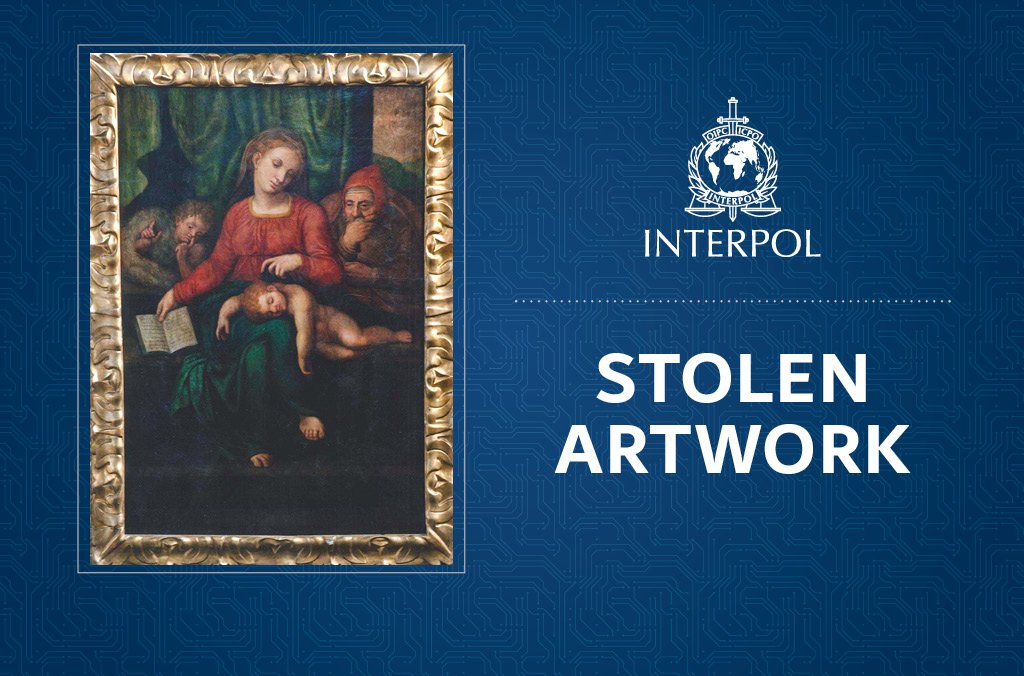
ALERT: A valuable painting attributed to or Venusti, one of his students, has been stolen from the Church of St Ludgerus in Zele, . https://www.interpol.int/en/News-and-media/News/2019/N2019-001 

69 people are talking about this

Interpol took to twitter to announce the theft

A painting believed to be a newly discovered Michelangelo was last week stolen from the church of St Ludgerus in Zele, Belgium. The 16th century depiction of the holy family was just days away from undergoing authentication to decide whether or not it was the work of the Renaissance master.

The church pastor called in experts after he noticed similarities between the painting’s composition and some extant sketches. There was much excitement at the possibility that this was Michelangelo’s lost Madonna del Silenzio.

But the painting now has the dubious honor of being numbered among the world’s lost or stolen masterpieces. It’s an illustrious list full of big names and hundreds-of-millions of dollars in estimated value. Here are a few choice examples of paintings which have gone AWOL, and the stories behind their disappearance.

La Mesa Herida (1940), Frida Kahlo
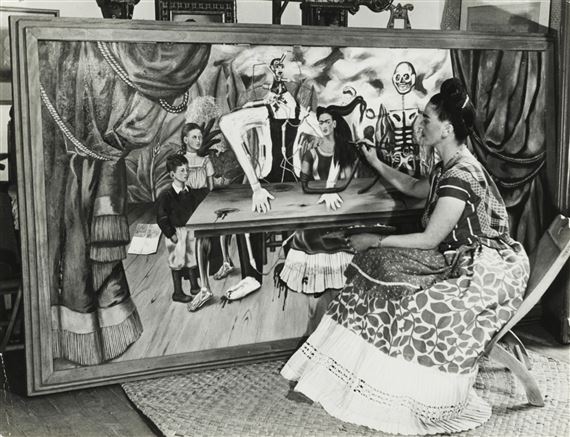
Kahlo with her painting, La Mesa Herida (1940), photographed by Bernard Silberstein. Courtesy Edward B. Silberstein.

Despite being the largest and heaviest of Kahlo’s paintings (it’s painted on wood panel rather than canvas), La Mesa Herida (The Wounded Table) was stolen after a blockbuster exhibition of work by Mexican artists in Warsaw in 1955, and hasn’t been seen since.

The piece went missing somewhere between Poland and Moscow as the popular exhibition made its way towards Russia as part of its global tour. Diego Rivera, the mural painter and Kahlo’s former husband, had specially requested that this painting be included to represent Kahlo’s work in the year of her death (1954).

In May of 2018, new archival evidence prompted investigator Raúl Cano Monroy to renew efforts to find the painting, now valued at around $20 million. He estimates he will find it in around five years, but for now it remains lost.
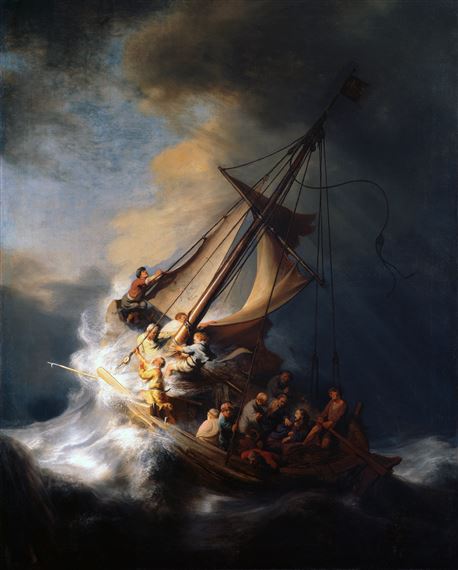
Storm on the Sea of Galilee (1633), Rembrandt van Rijn


One of the most significant works stolen in the infamous Isabella Stewart Gardner Museum heist was this extraordinary Rembrandt depicting Christ calming a storm over the sea of Galilee. It’s the only seascape that the Dutch master ever painted.

On the 18th of May 1990, in the early morning, two men disguised as police officers responding to a call were admitted to the Isabella Stewart Gardner Museum, Boston. They tied up the guards who had allowed them to enter, and set about stealing around $500 million worth of paintings and artefacts. It’s not just the biggest art heist in history, it’s the single biggest theft of private property ever. Even the efforts of the FBI have not led to a single arrest in the 28 years since.

The Concert (1664), Johannes Vermeer
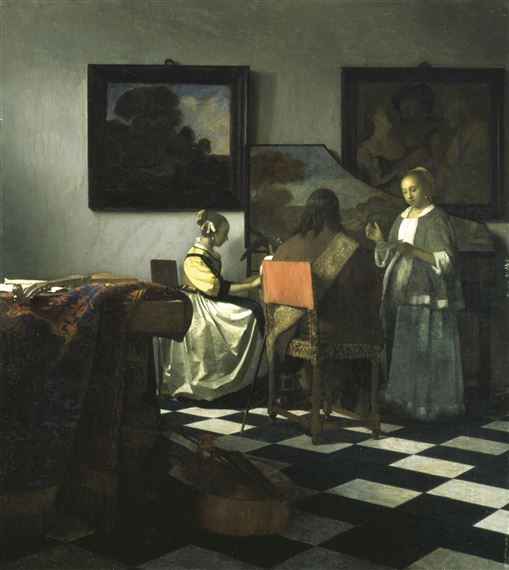
 

For an artist like Vermeer, whose enormous reputation relies on a curiously small number of extant paintings (only 34 are known, including The Concert), a missing work is a big deal. This painting was another which was stolen by the Isabella Stewart Gardner thieves.

As in the case of The Storm Over Galilee, an empty frame has been left in place of The Concert on the museum’s walls, a poignant reminder of its absence.

View of Auvers-sur-Oise (undated), Cézanne


As the fireworks over Oxford began on the evening of December 31st 1999, heralding in the new Millennium, a lone thief climbed up construction-scaffolding surrounding one of the University’s libraries. They proceeded to hop across to the rooftop of the Ashmolean, the world’s oldest museum, break through a skylight, and abseil into the building.

They set off a smoke-bomb, obscuring the CCTV cameras and initiating a callout to the fire-department, meaning security guards had to wait for the emergency response. By the time the fire brigade arrived, the thief had swiped Cézanne’s View of Auvers-sur-Oise, climbed back up through the skylight, and disappeared over the rooftops and down into the crowds of New Year’s revellers.

To this day, the whereabouts of the painting (valued at $10 million), and the identity of the thief, remain a mystery.

Poppy Flowers (1887), Vincent van Gogh


This complex, tenebrous still-life was painted by Van Gogh only three years before his death by suicide. As such, it’s an incredibly valuable piece of art history, as well as being eye-wateringly expensive. The most recent estimate sets its worth at around $50 million.

It was first stolen from the Mohamed Mahmoud Khalil Museum in Cairo in 1977, and was recovered by authorities a decade later, during its centenary year. It was taken from the same museum again in 2010, and has never been recovered.

Officials detained two suspects at Cairo International Airport a few hours after the painting went missing for the second time, but these arrests turned out to be red herrings and the real thief or thieves vanished with the piece.

Le Pigeon aux Petits Pois (1911), Pablo Picasso


In 2010, the biggest heist since the Isabella Stewart Gardner Museum theft took place at the Musée de l’Art Moderne de la Ville de Paris. Among the $100 million worth of art stolen was this painting, The Pigeon With Green Beans, by Picasso.

According to the thief himself, the painting ended up in a trash bin when he panicked after a police phone-call. Apparently, the container was emptied by waste collection services before the painting was discovered. There’s some doubt around this account, so although it’s considered lost or destroyed the true fate of this piece remains obscure.