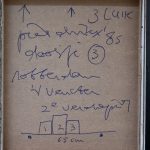
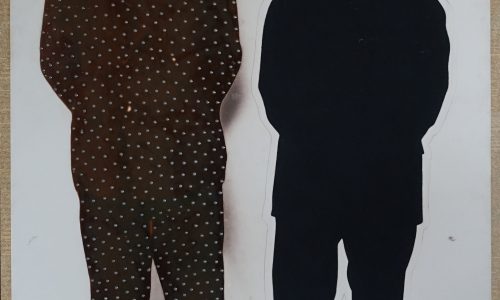
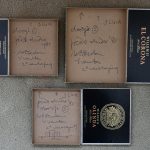
Here is a lesser known part of the art by Piet Dirkx. Every item that was on show is documented on the object itself by Piet Dirkx. Here is an example of the first object i ever bought at galerie ‘t Venster. These 3 cigarboxes are numbered and described how they must be placed on the lath.
Jan Gregoor (1914-1982)

Jan Gregoor, became “famous” in the Netherlands for his crayon works, but for me it is not his art that makes the artist attractive. It is typical for the decades he lived and worked in, but what struck me most about Gregoor was the EXCELLENT exhibition poster that was made by the van Abbemuseum for an exhibition on the artist and designed by Cornet. It has the simplicity of the greatest of 60’s designs and for me personally i think this is absolutely one of the most splendid of all van Abbemuseum posters ( available at www.ftn-books.com).


I just told that i am not that fond of Gregoor, but still he has made some excellent prints., which are worthwile to search for.

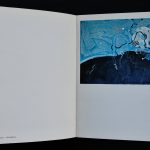
Hamish Fulton- 10 Views of Brockmans Mount

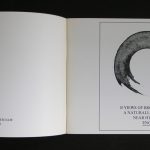
The full length title of this Hamish Fulton artist book is
10 Views of Brockmans Mount A Naturally Formed Hill near Hythe Kent ENGELAND.
The rare artist book was published in 1973 by the Stdelijk Museum with publication number 542, to accompany the Hamish Fulton exhibition which was held from the 24th of March until the 6th of May.

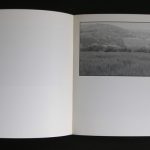
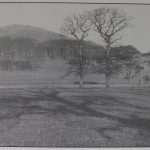
Why a blog on this small and excellent publication by Hamish Fulton?….. there is just a simple reason for it. This small gem of a publication is one of the rarest of all Stedelijk Museum publications. I learned that originally only 500 copies were made of which were some 100 handed out during the opening of this exhibtion and that a few years later most of the remaining copies ( some 300 ) were destroyed because no one was interested in these books. So this sweet little book filled with black and white photographs by Hamish Fulton has become one of the hardest to find publications by the Stedelijk Museum and FTN books has been on the look out for these books for over a decade now and has collected in these years only 3 copies of this book. The book is available at www.ftn-books.com and for those who order one of the 2 available copies a discount code can be used which gives a nice discount of 10% on the Fulton artist book. Just use
HFulton10 for a 10% discount
Jean-Gabriel Domergue (1889-1962)

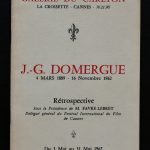
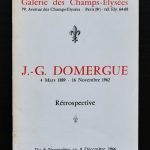
France has had its share of society painters and i f ever there was one who came after the flood of great names who build a career in making portraits of wealthy women, it must have been Domergue. He started his career in 1911 after he had finished his art studies at the École nationale supérieure des Beaux-Arts. Onwards he specialized in makeing portraits of Parisian women. Some people even say that this is how the French Pin Up was invented. His technique is something between impressionism and the style of Matisse.

His portraits are highly recognizable and the artistic appreciation and also the value of his works are starting to grow. This making him an artist for the future. The importance of Domergue is not only his figure studies , but also the works he has done as a fashion designer. The clothes he designed for Paul Poiret are considered as true classics. www.ftn-books.com has some nice vintage 60’s cataloges of the artist available.
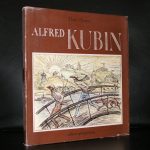
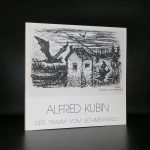
Alfred Kubin (1877-1955)

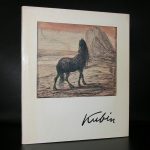
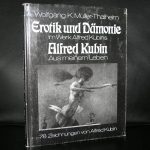
Alfred Kubin was a Bohemian printmaker and illustrator who became an important figure of both the Symbolist and Expressionist movements. His inventive black-and-white drawings often featured fantastical or morbid elements, and depicted supernatural creatures and sexual violence. Born on April 10, 1877 in Leitmeritz, Bohemia (now the Czech Republic), Kubin had an emotionally unstable childhood, attempting suicide and suffering a nervous breakdown before the age of 20. Upon moving to Munich in 1899, he was introduced to the works of Francisco de Goya and Max Klinger, the latter having a particularly profound impact on Kubin. He began producing nightmarish ink-and-wash drawings, and briefly became affiliated with the Russian artist émigré group, the Der Blaue Reiter, which included Wassily Kandinsky and Marianne Werefkin. Kubin was perhaps best known for illustrating the German editions of books by Edgar Allan Poe and Fyodor Dostoevsky. During rise of Nazism in Germany, his work was considered degenerate; he retreated into solitude and lived in a castle in Zwickledt, Upper Austria. He was awarded the City of Vienna Prize for Visual Arts in 1950, and died at his home on August 20, 1959.
www.ftn-books.com has Kubin titles available
Vitra…das Original

There is a very close realtionship between the heirs of Charles Eames an the heirs of VITRA company. This relation has developed and resulted in one of the most well known and respected furniture companies in Europe. VITRA stands for truly original designs, classic furniture and the best quality money can buy. This philosophy comes back in every printed outing the VITRA company does. Their publications are truely innovative and designed by he best graphic designers in the business. I have seen many books and commercial publications, but the one below is one of the best i have ever seen. Its size, print quality and design are all outstanding. It is a leporello kind of fold out but stapled within there are 3 separate books. making this 4 publications in one package. Photography, paper design and layout…..all AAA. Short stories on Eames, Jongerius and Morrison included, what else do you want in a small publication. This is highly collectable and now available at www.ftn-books.com


Albert Flocon (1909-1994)

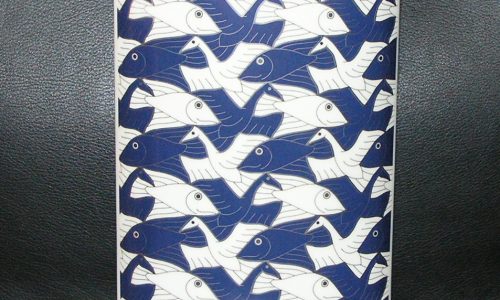
If i must compare Flocon with dutch artist it must be Maurits Cornelis Escher. Where Escher has its roots in geometry and math, Flocon is inspired by architecture and science He even studied at the Bauhaus under Josef Albers. Still Flocon has never become a household name in art.
In March 1965 they finally met.
Escher met the French artist and professor Albert Flocon, lecturer at the prestigious Ecole des Beaux Arts in Paris. Flocon mainly created copper engravings and, like Escher, he was fascinated by the mystery of the perspective. Especially the curvilinear perspective, a form that Escher has also used several times (think of Hand with reflecting sphere, Balcony, Three Spheres II, Drop (Dewdrop) and Self Portrait in Spherical Mirror). Together with his colleague André Barre, in 1967 he published a book about this special perspective: La Perspective curviligne de l’espace visuel à l’image construite. In 1987 it was published in the US under the title Curvilinear Perspective: From Visual Space to the Constructed Image.The meeting proved to be of great importance to Escher; Flocon ensured that his prints became known in Paris. The professor personally mediated on the sale of prints and an organized Escher exhibition in Paris. In October 1965 Flocon published a ten-page article about Escher in the important monthly Jardin des Arts: A la frontiere de l’art graphique et desiques: Maurits-Cornelis Escher. In it he combined biographical information with analyzes of the prints and quotations from a conversation with Escher. The article gives a good description of Escher’s place in the art world. Previous Dutch art critics never came much further than pointing out that Escher’s work was (too) cerebral. Flocon gave a positive turn to this.
there are not many publications on Flocon, but ftn-books.com has one together with may Escher publications.

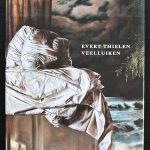
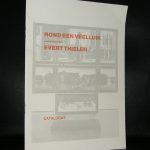
Evert Thielen (1954)

He is called the master of the multi pannelled painting and i do not doubt it, because his technique is phenomenal. I have followed the career of Thielen from the very first moment i first saw a painting of his he presented to my old school. They had, if i remember well, their 75th anniversary and he had made a painting of the school facade. It looked like the real thing. great perspective, nice colors, but to me it looked very much like a clone of the best facade Carel Willink could do with textures and colors. But from that moment on his career took off with exhibition in the Netherlands and abroad. In the process he developped a style of his own and was one of the few in the Netherlands that could paint a truly large canvas. In many cases devided over multiple panels. This is not my kind of art i would like to have in my collection, but one must admire his paintings for their realistic qualities they undoubtedly have.
www.ftn-books.com has some nice Thielen titles available
Arranz Bravo and Rafael Bartolozzi stand for italian Pop Art.

Every country in the world was at some time during the Sixties and Seventies influenced by the american Masters of Pop Art. In the Netherlands there were Woody van Amen and Tajiri. In France there were Monory and Raysse. Germany has Dieter Hesserer and Italy they had Arranz Barvo and Rafael Bartolozzi. They worked together and made some great paintings at that time, but now….many of these artists are almost forgotten. This does not mean that their works are of no importance, but at the moment these are not “In VOGUE”. It is a litlle like it was some 30 year ago. Zero/Nul and Kinetic were thought of no importance, but now….every collector in the world wants its share of the ZERO art and not much is available at reasonable prices anymore. I predict that it will be the same with…. first POP ART from outside the US and later after the art market has devided all good Pop Art…. it will be time for Minimal Art. These are my tips for the future if you want to build a collection that gathers value over the years to come. www.ftn-books.com has some great books on Pop art and Minimal Art available but also the Bravo/Bartolozzi catalogue including the invitation they made for one of their first exhibitions at IL FAUNO in Torino.

L wig Mies van der Rohe (1886-1969)qΩ“Ω~ |’| §

When i think about Ludwig Mies van der Rohe, three of his designs i remember instantly. The first …a chair by Mies van der Rohe, One i always wanted to own and when i finally had one i did not think it was comfortable enough so i sold it. The chair… a Barcelona chair.

The one he designed for the Barcelona Pavillion. It was designed for the World exhibition from 1929 and after the exhibition it was demolished, but a group of spanish architects recognized its importance and had it rebuild in the Eighties from last century. I finally had a chance to see it for myself when i visited Barcelona for the first time around 2005. We walked over there since it is only a 10 minutes walk from the Fundacio Joan Miro.
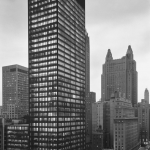
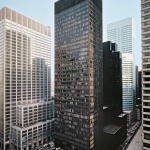
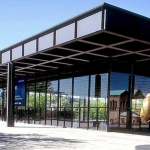
The last one is the Seagram building which is one of the skyscrapers i admired when i first visited New York together with my father. A building i remembered well and of which i recognized style elements when i visited the Neue Nationalgalerie in Berlin some 30 years later. Ludwig Mies van der Rohe is a force in design and has made his mark on many of last centuries greatest designs. Some of his classic publications are availabel at www.ftn-books.com
œcv
¿≥