Posted on Leave a comment

Otmar Alt ( 1940 )

Schermafbeelding 2019-11-26 om 15.07.55

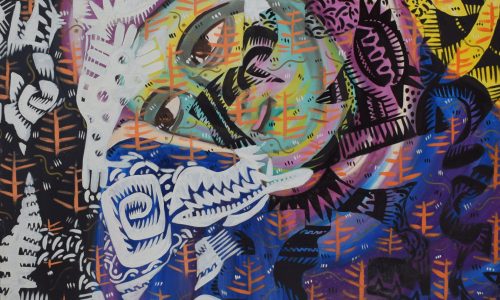
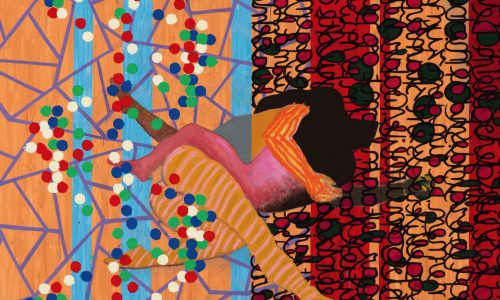
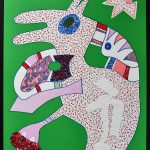
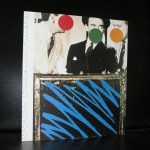
Otmar Alt has become over the years a famous German artist. The reason is that his art is accessibel and in his piantings and prints he depicts a fantasy world which is abstract and populated with figurative creatures. His roots can be found in the colorful world oof Pop Art painting, but over the years he developed a recognizable style of his own. You can not help but admire the commercial quality of his art. A bit the dsame as Corneille in the Netherlands developed his art into a highly commercial form of art. Helped by big companies his art was distributed among many admirers in high editions ( ABN bank ao). In the case of Otmar Alt you can see that his art was distributed among many , because on several occasion he included some nice “signed in print” prints within the books that were published. Onme of these books including the print is now available at www.ftn-books.com.
otmar alt b

Posted on Leave a comment

John Davies (1946)

Schermafbeelding 2019-11-25 om 16.55.18

“I call myself a haunted house… we all have ghosts and histories.” – John Davies

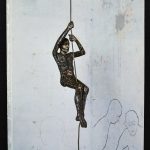
Davies’ interest in the human presence set him apart from many of his contemporaries in British sculpture at the beginning of his career. Of his early figures, often cast from life and clothed, Davies has said, ‘I wanted to make a figure, not like a piece of sculpture, more like a person…. I wanted my sculpture to be more like life in the street’.

His more recent works are modelled in clay, before being cast in polychrome polyester and fibreglass, or bronze. Davies arranges these figures in carefully choreographed relationships. Animals and inanimate objects such as houses also appear in works whose thematic concerns are always with human experience.

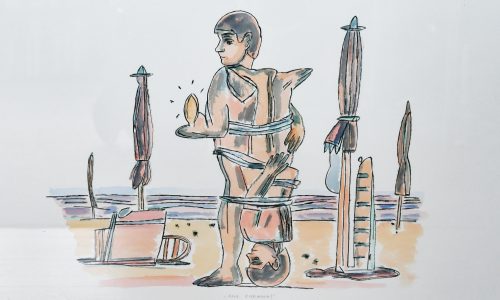
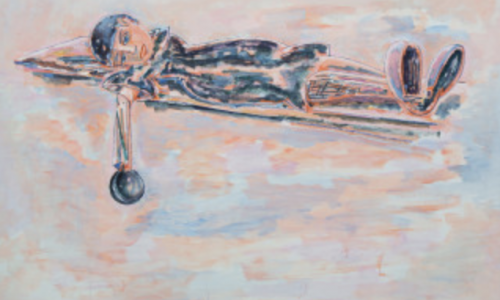
Of The Deerson Series, shown for the first time in this exhibition, John has said: ‘This series of scarecrow-like figures, with their moons, are a kind of self-portrait. I never intended to make these images, having other ideas to the fore, when I had a car crash in 2010. My life always leaks into my work, so inevitably and reluctantly these images emerged. They are works processing my long recovery. Now to me they seem to have a life of their own, independent of my story. Mad dancing ‘scarecrows’ coming to life, a protest against fate and physical frailty, like the figures in the Watersons’ song, ‘The Scarecrow’.’

Drawing, often in series, has always been an important aspect of John Davies’ practice, and the sculpture and drawings are equally important to him. The drawings in this installation demonstrate how the two practices influence each other.

The above text was found in Fuse magazine

www.ftn-books.com has some John Davies catalogues available

Posted on Leave a comment

Claire Bretecher ( 1940-2020 )

Schermafbeelding 2020-02-12 om 09.25.55I have always had an admiration for Claire Bretecher, One of the greats in Seventies French comic art. 2 days ago she died leaving one of the greatest comic series on “women emancipation”.
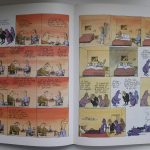
Claire Bretécher (born April 17, 1940) is a French cartoonist, known particularly for her portrayals of women and gender issues. Her creations include Les Frustrés, and the unimpressed teenager Agrippine.

She was born in Nantes, and got her first break as an illustrator when she was asked to provide the artwork for Le Facteur Rhésus by René Goscinny for L’Os à Moelle in 1963. She went on to work for several popular magazines, and in 1969 invented the character “Cellulite”. In 1972 she joined Gotlib and Mandryka in founding the comics magazine L’Écho des savanes.

Throughout the 1970s and 1980s, she published successful collections, such as The Destiny of Monique (1982). In 2001, her series Agrippine was adapted into a 26 episode TV series by Canal+.

Bibliography

  • Les états d’âme de Cellulite (1972, Dargaud)
  • Salades de saison (1973, Dargaud)
  • Les frustrés (5 albums, 1975–80, Bretecher)
  • Le cordon infernal (1976, Bretecher)
  • Les angoisses de Cellulite (1977, Dargaud)
  • Baratine et Molgaga (1977, Glénat)
  • La vie passionnée de Thérèse Avila (1980, Bretecher)
  • Le destin de Monique (1983, Bretecher)
  • Les Mères (1982, Bretecher)
  • Docteur ventouse, bobologue (2 albums 1985-86, Bretecher/Hyphen)
  • Agrippine (8 albums 1988–2004, Bretecher/Hyphen


www.ftn-books.com has one title by Bretecher at this moment available:

Posted on Leave a comment

John Balderssari’s pencil

A few month ago i found this great short movie on John Baldessari.

The epic life of a world-class artist, jammed into six minutes.
Narrated by Tom Waits.
Commissioned by LACMA for their first annual “Art + Film Gala” honoring John Baldessari and Clint Eastwood.

directed by Henry Joost & Ariel Schulman (supermarche.nyc)
edited by Max Joseph (maxjoseph.com/)
written by Gabriel Nussbaum (bankstreetfilms.com)
cinematography by Magdalena Gorka (magdalenagorka.com/)
& Henry Joost
produced by Mandy Yaeger & Erin Wright


www.ftn-books.com has some nice John Baldessari books for sale


Posted on Leave a comment

Nicolaas Wijnberg as a poster artist

Schermafbeelding 2019-11-12 om 16.16.37

At one time Pieter Brattinga, who knew every good poster artist in the Netherlands , was asked who were the best poster designers. His answer, Crouwel, Sandberg, Treumann and Bons, but the very best was Nicolaas Wijnberg. Because his father was the director of the famous Steendrukkerij de Jong he had seen their works for some decades  being printed on the presses of his father company.  Because he had seen them all, his opinion is important and when you look at the posters by Wijnberg you can see why these were liked so much. His posters are not the ones with the beautiful clean lay-out. Nor the ones which stand out because of the use of color. No……. the Wijnberg posters are special because each of them tells a small story. This is not the poster who draws your attention for an event. The Wijnberg posters reaches out to you with a part of the performance or event. This makes you curious and therefore you will remember it.

The book on the Nicolaas WIJNBERG posters is available at www.ftn-books.com

wijnberg affiches

Posted on Leave a comment

Babs Haenen (1948)

Schermafbeelding 2019-11-12 om 15.10.29.png

If you are looking for the most complicated ceramic art , then Babs Haenen her objects will be in the top three.

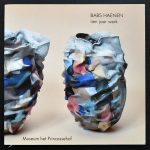
The first time i encountered work by Babs Haenen was when the Haags Gemeentemuseum has bought two vases for its collection. What struck me was that these vases had very delicate colors and were looking not like the ordinary ceramics from the collection. They looked like sculptured vases . Her method of building a vase is simple. Porcelain clay is coloured with pigments and afterwards rolled out into thin sheets. The choice of porcelain clay is dictated by the wish to be able to produce bright colours. The basis for a piece at work is made by cutting up the different coloured sheets and joining them together again in various patterns.
Round a plaster core is placed a thin piece of textile, which serves to prevent the clay from sticking to the core. The core is then inverted and the sheets of clay are draped around the textile.This is done from the bottom, so that at first the pot is shaped upside down.

Schermafbeelding 2019-11-12 om 15.11.12
When the piece has reached a given height, it is removed from the core. a short drying period and then built up further the right way up. At that point it has often not yet reached half its eventual height. Hence the form at the plaster care only determines the final form of the pot to a very minor extent.
Between the additions at new sheets of clay the piece is dried with a hairdryer, so that the form soon acquires a degree of certainty. In its further built-up a great freedom prevails in respect of designing by distorting and modelling.
After being thoroughly dried, the pieces are given a biscuit firing, then glazed and given repeated reduction firings in a gas kiln at a temperature of 1260 C.

The above text comes from the book which is now available at www.ftn-books.com


Posted on Leave a comment

Pierre Faure (1972)

Schermafbeelding 2019-08-11 om 14.14.15

Because i have always had an interest in Japan, i noticed this book on Japan at a local secondhand bookstore. Still sealed the one i have for sale now, but the one i leafed through was already open so i had a quick look. I noticed that these were real life photographs, not one of them was staged and they reflected a Japan that i very much would like to see and experience at one time. For now i have to content myself with the book ( available at www.ftn-books.com) until it is sold

Pierre Faure was born in 1972 in Nice and lives in Paris. He studied economics. He produces at first a work in which abstraction and organic evocations occupy a central place (series Rhizomes, Plis, Palimpsests); series which question the look of the spectator and play with the notions of scales and perspective. He also approaches the social question by realizing a work of dumping within a community Roma of Ile-de-France (2011-2012). In 2013 he is interested in the life of people in big precariousness welcomed in emergency reception center and tries to seize in this everyday life the figures of a wounded humanity. In parallel in these works he pursues since 2010 a series on the urban trees, questioning the place of the vegetable in urban zones.
pierre faure
Posted on 1 Comment

Johan Antoni de Jonge (1864-1927)

Schermafbeelding 2019-11-06 om 15.37.28

I must have been 18 years of age and my parents started to get an interest in Art and in those days the Romantic School paintings were in fashion, so my parents visited the art gallery of Leslie Smith. A yearly show at a venue near the Vredespaleis, what was used as a showroom of “classic” furniture. I remember seeing Schelfhout, Verschuur, Leickert and Weissenbruch, but what struck me most was a small watercolor by Johan Antoni de Jonge. It was cheap compared with the other works of art, but would still become much much cheaper now that the Romantic School painters are completely out of fashion. The good thing about de Jonge as an artist is that his works are not ” sweet” they have an abstract/impressionist quality and are very pleasing to look at. Timeless and depicting everyday life in the Netherlands. Scheveningen, the country side and beach scenes are among his favorite subjects. They have all one thing in common. The artistic quality is there and makes you want to participate in the scene and experience life around the turn of the century.

The book on Johan Antoni de Jonge is available at www.ftn-books.com

de jonge

Posted on Leave a comment

Franz Eggenschwiller (1930-2000)

Schermafbeelding 2019-11-06 om 15.10.27

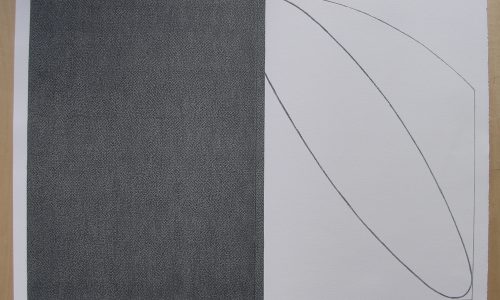
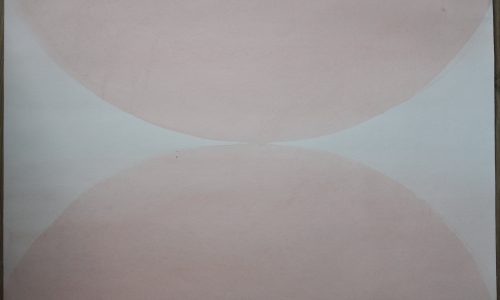
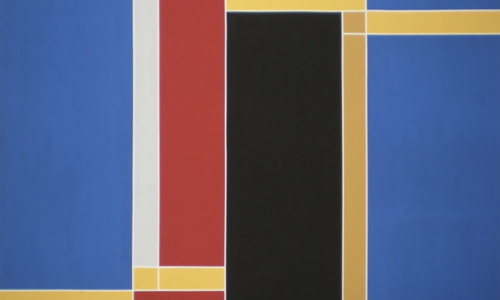
Discovering “new” artists is one of the nicer thing of writing a daily blog. And writing a blog on this artist is a pleasurable experience since i like his art .  Mix total astraction wit constructivist art and use very delicate colors and you get an impression of the art Eggenschwiller stands for. Born in 1930 het must have known the abstract painters from his generation, but this does not show. His art is original and although not very well known, deserves to be presented in exhibitions and galeries. This is one of the goals the Eggenschwiller-Wiggli foundation has set for themselves.

Schermafbeelding 2019-11-06 om 15.17.43

Eggenschwillers works must be known with a much larger public than these are known now. Works by Franz Eggenschwiller are present in the Solothurn Museum and www.ftn-books.com has the most important publication on this artist available.

eggenschwiler