Posted on Leave a comment

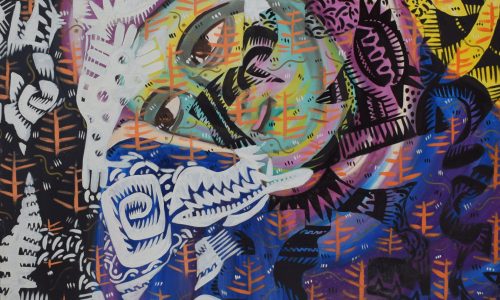
Liesbeth Bijkerk (1957)

This is what Liesbert Bijkerk says on her work:

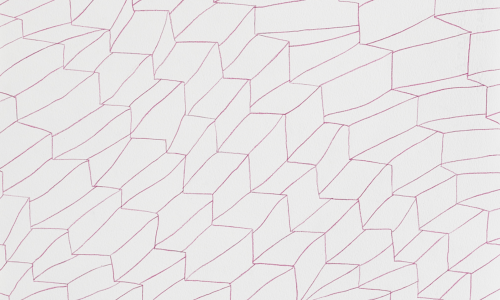
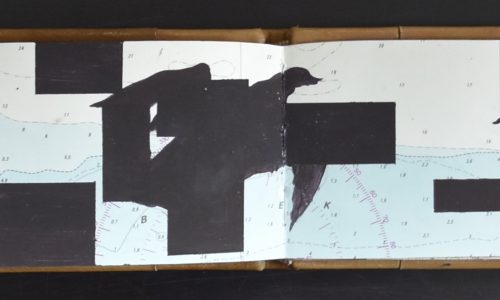
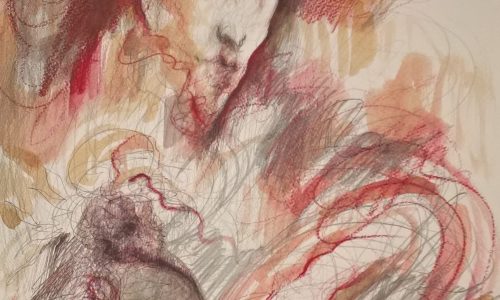
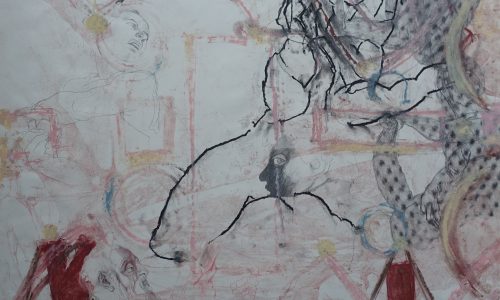
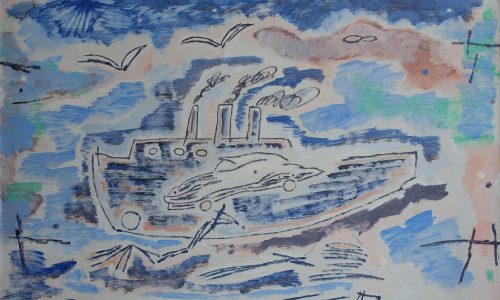
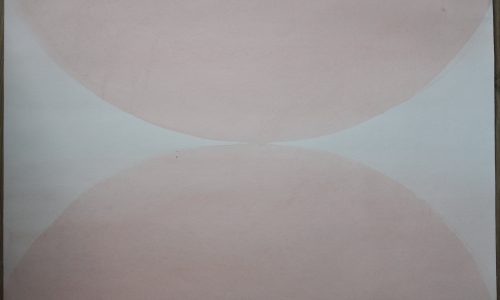
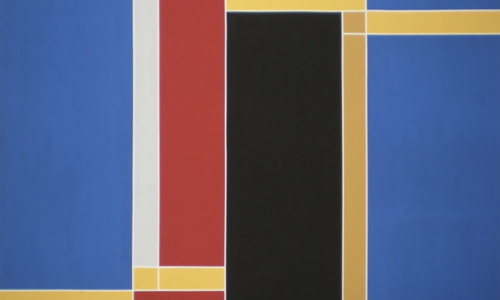
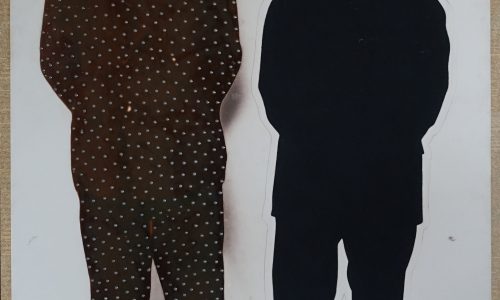
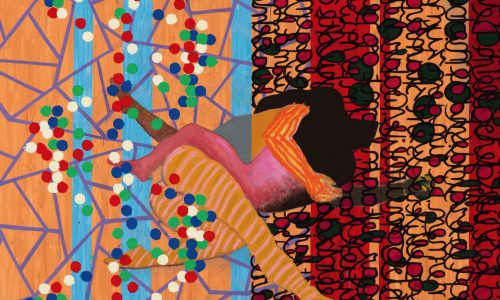
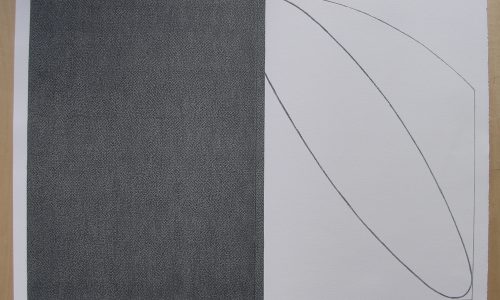
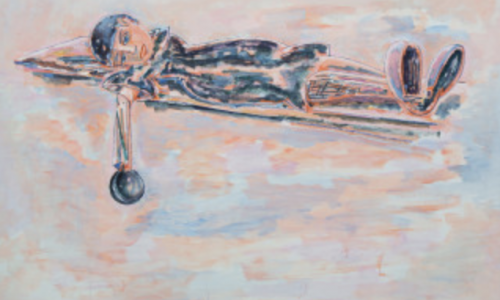
My starting point is not the visual reality, I do not depict anything. You could see my work as traces of memories. The inspiration can be something I have seen, or read, or heard. They can be personal experiences but also works of others: paintings, frescoes, drawings, texts, and musical pieces. After these things have occupied me directly for a while, they become mental impressions without tangible form. They detach from the sensory experience. With these kinds of impressions, I want to compose independent images, detached from everything that surrounds us daily.

Painting, for me, is creating: making something out of nothing. In the initial layers, I work with pigment, rabbit glue, and thin acrylic paint. I do not use photos or sketches. What happens on the canvas or paper is created in the moment when I work on it. In this process, I want to give randomness the maximum chance. Much of it happens associatively. One image almost directly follows from the other. This way of working gives me the greatest freedom. The painting does not always fit within the frame of the paper or canvas. Sometimes, I cut out the interesting pieces. When working on paper, they usually become collages. When working on canvas, I stretch the cut-out pieces on a smaller frame. After that, I add the final layers with oil paint. Here, I strive for maximum control. With oil paint, I can mix the exact colors I need to finish the canvas, and sometimes I use scraps of paper to find the right form. In an intuitive way, I search for the essence of the image. Each painting is like a puzzle without a reference picture. Gradually, it becomes clear how all the pieces should fit together. The final result is always more intense and powerful than the image I started with.

www.ftn-books.com has the 2007 WERK OP PAPIER catalog now available.

Posted on Leave a comment

André Ostier (1906-1994)

Hailing from a bourgeois family in Paris, he commenced his professional journey as a bookseller at “À La Page” before transitioning into the realm of journalism. However, it was his eventual foray into photography that truly defined his career. Crafting a remarkable portfolio of portraits capturing the essence of artists and fashion, his works found their way into the pages of renowned illustrated publications prior to the outbreak of the war. Not one to stay grounded, he embarked on extensive travels, seizing the opportunity to capture captivating images during his journeys and immerse himself in the vibrant social circles of the artistic and cultural spheres.

As the war commenced, he found himself stationed in the southern regions of France, where he devoted himself to capturing the likeness of actors such as Micheline Presles and Pierre Jourdan, as well as renowned painters including Henri Matisse, Aristide Maillol, and Pierre Bonnard. Returning to Paris, he delved into documenting the occupied city, along with the enigmatic Château de Versailles, where sandbags intertwined with sculptures etched an indelible image in the collective memory. These powerful visuals, featured in Vogue français in 1945, would later inspire the esteemed poet Paul Eluard.

His defiance against the occupying forces eventually led to his apprehension in 1944, and he found himself imprisoned within the confines of Santé. Grappling with the uncertainty that stemmed from his Jewish background, he was granted freedom when General Leclerc’s troops triumphantly marched into Paris. Seizing the moment, he trailed alongside the troops, encapsulating their indomitable spirit through a series of portraits featuring the celebrated writer André Malraux.

With the war behind him, André Ostier, whose name had already become synonymous with excellence, cultivated friendships with luminaries such as Christian Dior and Jacques Fath, both masters of the groundbreaking new-look fashion movement. It was within their elegant creations that he found inspiration, meticulously immortalizing their innovations through the lens of his camera. Subsequently, the likes of Yves Saint-Laurent, Pierre Cardin, Coco Chanel, and Marcel Rochas joined the distinguished list of subjects, their unique personalities radiating through his empathetic photography.

Continuously driven by wanderlust, he embarked on numerous adventures, traversing the realms of India, China, Thailand, North Africa, and Europe, each offering a plethora of captivating scenes eager to be immortalized.

The legacy of André Ostier drew to a close in January 1994, leaving behind a substantial body of work that serves as a testament to the sociological, intellectual, and artistic milestones that shaped the marvels of 20th-century modernity, providing a profound understanding of the eras that paved the way for its inception.

www.ftn-books.com has the 1982 Mois de la Photo publication on the photographs by OSTIER available.

Posted on Leave a comment

Evelyne Axell (1935-1972)

EVELYNE Axell is a rare European representative of the vibrant movement known as Pop Art. Hailing from a middle-class background, she received a catholic education from the esteemed Institut des dames de Marie. However, this would later fuel her lifelong disdain for Christian morality. In 1953, she honed her skills in ceramics at the Namur School of Art, before shifting her focus to drama school in Brussels. It was not until 1963 that she abandoned her acting career to fully immerse herself in the world of painting, finding inspiration in the works of renowned artist Magritte. Drawing influence from the buzzing art scene of 1960s New York, including iconic names such as Jim Dine, Andy Warhol, and Marisol, she delved into Pop Art and embraced experimentation with unconventional plastic materials. This edgy approach involved cutting and layering, creating captivating effects of depth and transparency. Axell’s art was undoubtedly shaped by the tumultuous political and social events of the era, such as the Vietnam War, the Black Panthers movement, and most significantly, the sexual liberation of women.

www.ftn-books.com has the Snoeck Ducaju book on Axell now available.

Posted on Leave a comment

Jan Eric Visser (1962)

Sculptor Jan Eric Visser (1962) studied at the Kampen Academy of Art and Willem de Kooning Academy in Rotterdam. His artwork has been presented both nationally and internationally, including at the Stedelijk Museum in Schiedam, L’étrangère Gallery in London (GB), CODA Museum in Apeldoorn, Verbeke Foundation in Kemzeke (B), RAM Gallery in Rotterdam, Art Affairs in Amsterdam, Artipelag Museum in Stockholm (SE), Casa Brasileira Museum in Sao Paulo (BR), and 21_21 Design Sight Museum in Tokyo (JP). Jan Eric’s work is featured in various museum and corporate collections, such as the Aalst Museum (B), Verbeke Foundation (B), Stedelijk Museum in Schiedam, and Aegon Art Collection. In 2021, Jan Eric Visser worked as an artist-in-residence at VierVaart Groede, a temporary studio in the Netherlands funded by the Mondriaan Fund. In the same year, he was awarded a working grant for Proven Talent.

www.ftn-books.com has the Gorcums Museum catalog now available.

Posted on Leave a comment

Ferd Verstraelen (1939-1994)

Throughout his active career, he served as a pivotal muse for a diverse range of visual artists such as Mathieu Knippenbergh and Harr Scheffer, as well as writer and poet Huub Beurskens, and filmmaker Ben Verbong.

The artistic and cultural oeuvre of Ferd Verstraelen (1939-1994) comprises of many facets. With his great talent for theater and his unique charisma, he was cast as Jesus Christ in the Tegelen Passion Plays not once, but twice, receiving tremendous praise both regionally and nationally for his performance. Additionally, Ferd worked as an autonomous artist and emerged as an innovative printmaker. He possessed a free spirit, dedicating himself wholeheartedly and with great concentration to his works. Unfortunately, due to his non-conformist and tragic life, many of his interesting artworks have been lost.

The exhibition “In the Light” also showcases juvenilia, “documents humains” (including drawings from diaries, personal photographs, poems, and clippings), as well as unique and moving images from archives. Alongside this, a new audio-visual documentary, directed by Helmie Brugman, will be shown. It sheds light on the life and work of Verstraelen and the search for his lost artworks. The life of the charismatic and photogenic Ferd Verstraelen can be compared to a diamond in many ways. Every time the reader looks, reads, or listens, they will discover new facets.

www.ftn-books.com has the Bommel van Dam book for his exhibition now available.

Posted on Leave a comment

Anselm Kiefer at Museum Voorlinden

Is Kiefer one of the great artists of our time…..certainly YES!

Is the Kiefer exhibition at Museum Voorlinden worth visiting? My personal answer is no. Far too crowded,. too many objects in one and the same room and expensive at euro 22 ,00 per person. Because of the many people present you can not take a distance from the large objects, showcases and paintings. It felt so crowded that it was unpleasant and after half an hour we decided to leave the museum. One of my personal observations was the analogy i felt with the 90’s and 00’s paintaings by Frank van Hemert.

Left and right are van Hemert paintings from the late 90’s and 00’s in the middle there is a work by Kiefer ca. 1996/97

I really love these sunflower paintings . whoever the artist, both convince me being great art. The large Kiefer paintings are very worth visiting at Voorlinden however , the bicycle objects and large showcases can not convince me and because they are over half the exhibition i thought it a disappointing visit.

All paintings , objects and cases deserve space and because this is limited at Voorlinden and the spaces were shared with far too many people the overall experience was disappointing.

The exhibition can be visited until the 25th of February and for those seeking catalogs on this artist please visit www.ftn-books.com

Here are some photographs i took at the exhibition:

Posted on Leave a comment

Pinterest pages by FTN books & Art

I have been filling some Pinterest pages with items i have in my inventory and which i think are nice tos hare with other collectors. It contains some great and important poster and book designs from the last 70 years. Please share these and hopefully you will enjoy these Pinterest boards too.

I have created four boards which are filled regularly with all original photo’s by FTN . Feel free to join the boards and use the photographs for noncommercial usage. I expect to post over 15.000 items on Pinterest in the coming year.

There now are boards on the inventory of FTN books & Art, Stedelijk MUseum Amsterdam, Wim Crouwel, Willem Sandberg

https://nl.pinterest.com/ftnbooksandart/wim-crouwel/ https://nl.pinterest.com/ftnbooksandart/stedelijk-museum-amsterdam/ https://nl.pinterest.com/ftnbooksandart/ftn-books-and-art/ https://nl.pinterest.com/ftnbooksandart/willem-sandberg/
Posted on Leave a comment

Helen Vergouwen (1960)

Helen Vergouwen’s sculptures (Rucphen, 1960), mainly executed in corten steel, are approachable from various angles. Every time, the observer gains new impressions. Facets constantly emerge as one moves around the sculpture. The open form that is still present at one point disappears into the background just as easily

Vergouwen pays great attention to the skin of the sculpture. Due to the rusty, dark character of the statues, in a natural environment you almost get the feeling that they blend in completely. It is the place where these sculptures belong. They come into their own when they have spent some time outside. Afterwards, these spatial architectures also fit naturally into their place.

www.ftn-books.com has recently acquired a large library containing books of books on dutch contemporary artists. Among them there are several on Helen Vergouwen.

Posted on Leave a comment

Julio Herrera Zapata (1932-2001)

  In 1965, he traveled to France with his second Cuban wife as an invitee to the Paris Biennale that year, and they decided to stay, residing in the Casa de Cuba at the Cité Internationale. His works were exhibited at the Salon de la Jeune Peinture in Paris in 1967 and 1968. In his final year, he received the First Prize at the I Lignano Biennale (Italy) for his work “Science au service de l’Homme.”

After exhibiting several pieces at the Sorbonne during the events of May ’68, a few months later the couple managed to obtain permission from Cuban authorities to allow their young daughters Magda and Siena to leave the country, and they settled on Boulevard Saint-Jacques, where they fixed up the studio that he would work in until the end.

Following his early Parisian works, French art critic Alain Jouffroy described him in Opus International issue n.18 (June 1970) as:

“creator of a highly powerful work, which allows us to admire its irresistible ascent. His latest works, depicting movement as the theme and eroticism as the subject, bring us into a raw intimacy where the clumsiness of bodies in love is only topped by their frenzy, their dominant violence.”

www.ftn-books.com has now the Galerie Tallien catalog from 1973 available.

Posted on Leave a comment

Alfonso Albacete (1950)

Once introduced to the art of painting at the studio of Juan Bonafé (1901-1969) in La Alberca, Albacete went on to further hone his craft by studying Fine Arts and Architecture in Valencia and Madrid.

His early creations flirted with the intellectual pursuit of Conceptual Art and the bold and vibrant expression of Pop Art, ultimately culminating in a deliberate return to painting in the late 1970s. Embracing a distinct and definitive style heavily influenced by an exacting use of color and a systematic approach to brushwork, he held his premier solo exhibition at Galería Chys in Murcia in 1972.

One of Albacete’s distinct approaches to his art is his fondness for working in themed series, each of which he methodically explores. Notable among these series are those centered on bathers, the painter himself, the city of Vienna, and the mythological figure of Narcissus. In the mid-1980s, his utilization of structured geometric patterns gave way to a heightened emphasis on light and shadow, as well as an increased incorporation of symbolic motifs. While consistently drawing on figurative elements, the early 1990s saw a shift in Albacete’s focus as he delved into a more experimental and introspective exploration of the space within his paintings and the concepts that surround it.

In 1988, the Museo Español de Arte Contemporáneo hosted the first retrospective of Albacete’s work, which in subsequent years has become prized and preserved in esteemed collections and museums both in Spain and abroad.

www.ftn-books.com has the Barcelona Maeght exhibition catalog from 1993 now available.