Posted on 2 Comments

Olphaert den Otter (1955)

Schermafbeelding 2021-08-23 om 13.30.57

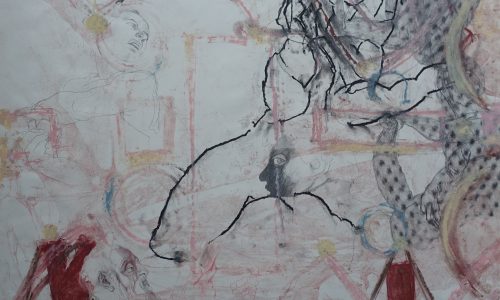
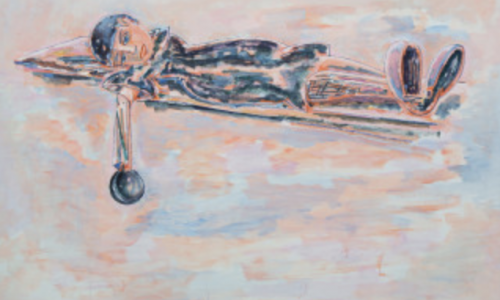
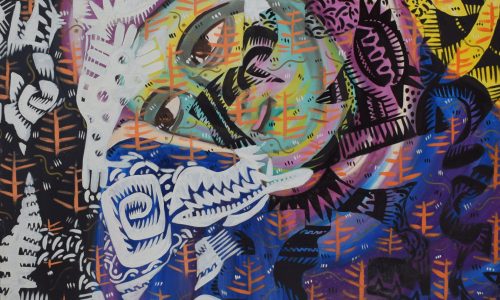
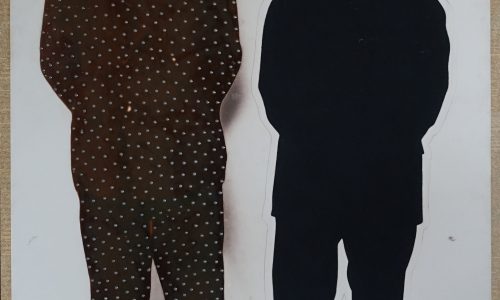
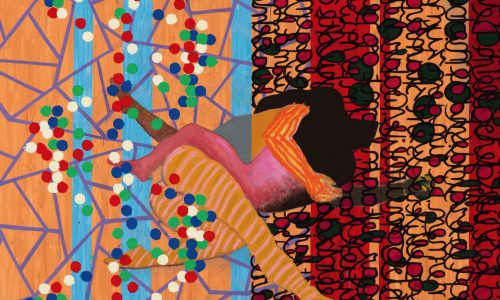
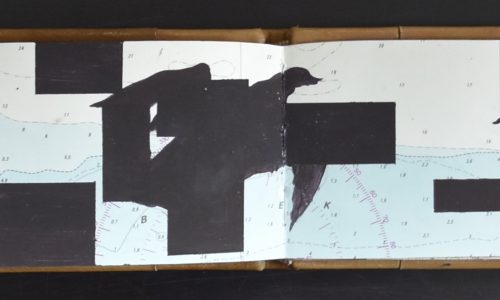
First time i encountered work by Olphaert den Otter , was at the galerie van Kranendonk in the mid Nineties. After this occasion i saw works by den Otter in several group exhibitions ( if i remember well one at the Haags Gemeentemuseum). In a mix of realism and surrealism , den Otter presents his paintings and always surprises. One can discover several layers in his works and they never stop to amaze. In the last 2 years some of his paintings have become on sale at the Venduehuis auction, but i was not lucky enough to win. It shows that den Otter has established himself as one of the commercial succesful artists in the Netherlands, but i will keep trying to win at auction and maybe in the future we can add a work to our collection.

Schermafbeelding 2021-08-23 om 13.45.30

Olphaert den Otter (Poortugaal, 1955) studied at the Willem de Kooning Academie (1976 – 1981). He works with egg tempera, often in large series. One of these, de Refuge Morphology series consisting of 127 works, was exhibited in 2008 in Museum Boijmans Van Beuningen. From time to time, Den Otter creates murals in pastel on location (Malta Contemporary Art and the KetelFactory, Schiedam) and animations. Alongside his activities as visual artist, he also sings countertenor in the Retorisch Kwartet and frequently lectures on cultural and philosophical themes.

Posted on 1 Comment

Who is Who ….in Modern Art, version 1995

For those who want a crash course in Modern Art it is sufficient to study the english/ Japanese catalogue RIPPLE ACROSS THE WATER . A  publication  with over 350 pages, published on the occasion of the exhibition with the same name  in 1995. Some names: Francis Bacon, Jan Fabre, Marlene Dumas, de Cordier, Nauman, Pistoletto etc……..

Not only very worth collecting, but also published as an artist book. This makes the publication an absolute ” must have ” for those that take an interest in Modern Art of the last 50 years.


Posted on 2 Comments

Carlo de Roover (1900-1986)

Schermafbeelding 2021-08-20 om 15.08.09

de Roover is a Belgian artist who moves in his works between realism and abstraction. At one time one encounters a nice nude painting and a few months later  one finds from almost the same year, an abstract painting. For me personally i think his abstract paintings are far more convincing than his realistic ones. It does not mean that his realistic paintings are not good, but i find them  to be “13 in a dozen” and not that attractive. However his abtract art is different and some of his paintings are nice enough to collect.

Carlo de Roover is hardly known outside Belgium , so if yiou are interested in this artit it is best to focus on Belgina collections and auctions. One exception…. www.ftn-books.com has the 1979 ICC catalogue now available.

Posted on 2 Comments

Haags Gemeentemuseum ( continued )

In the mid Eighties , financing the museums in the Netherland required some changes. One of the changes was we looked for cheaper printing possiblilties and found these with a Belgium printer and lithographer. Snoeck Ducaju became one of the new partners of the museum together with de Buck for the lithography. Both have become household names in the printing world, but at that time it was a kind of a gamble, since the distance made it much harder ( only telephone and fax were available). Still the first results were excellent. Just look at these 2 timeless beautiful publications , designed by Donald Janssen and printed by Snoek in 1986 and 1987. Many others would follow but these are still standing out and are proof of the quality publications published in those years.

Both are available at www.ftn-books.com


Posted on 1 Comment

Lovis Corinth (1858-1925)

Schermafbeelding 2021-08-18 om 15.50.32

Lovis Corinth (21 July 1858 – 17 July 1925) was a German artist and writer whose mature work as a painter and printmaker realized a synthesis of impressionism and expressionism.

Corinth studied in Paris and Munich, joined the Berlin Secession group, later succeeding Max Liebermann as the group’s president. His early work was naturalistic in approach. Corinth was initially antagonistic towards the expressionist movement, but after a stroke in 1911 his style loosened and took on many expressionistic qualities. His use of color became more vibrant, and he created portraits and landscapes of extraordinary vitality and power. Corinth’s subject matter also included nudes and biblical scenes.

Schermafbeelding 2021-08-18 om 15.50.53

Corinth was born Franz Heinrich Louis on 21 July 1858 in Tapiau, in Prussia. The son of a tanner, he displayed a talent for drawing as a child. In 1876 he went to study painting in the academy of Königsberg. Initially intending to become a history painter, he was dissuaded from this course by his chief instructor at the academy, the genre painter Otto Günther. In 1880 he traveled to Munich, which rivaled Paris as the avant-garde art center in Europe at the time. There he studied briefly with Franz von Defregger before gaining admittance to the Academy of Fine Arts Munich, where he studied under Ludwig von Löfftz. The realism of Corinth’s early works was encouraged by Löfftz’s teaching, which emphasized careful observation of colors and values. Other important influences were Courbet and the Barbizon school, through their interpretation by the Munich artists Wilhelm Leibl and Wilhelm Trübner.

Except for an interruption for military service in 1882–83, Corinth studied with Löfftz until 1884. He then traveled to Antwerp, where he greatly admired the paintings of Rubens, and then in October 1884 to Paris where he studied under William-Adolphe Bouguereau and Tony Robert-Fleury at the Académie Julian. He concentrated especially on improving his drawing skills, and made the female nude his frequent subject. He was disappointed, however, in his repeated failure to win a medal at the Salon, and returned to Königsberg in 1888 when he adopted the name “Lovis Corinth”.

In 1891, Corinth returned to Munich, but in 1892 he abandoned the Munich Academy and joined the Munich Secession. In 1894 he joined the Free Association, and in 1899 he participated in an exhibition organized by the Berlin Secession. These nine years in Munich were not his most productive, and he was perhaps better known for his ability to drink large amounts of red wine and champagne.

Corinth moved to Berlin in 1900, and had a one-man exhibition at a gallery owned by Paul Cassirer. In 1902 at the age of 43, he opened a school of painting for women and married his first student, Charlotte Berend, some 20 years his junior. Charlotte was his youthful muse, his spiritual partner, and the mother of his two children. She had a profound influence on him, and family life became a major theme in his art. Another of his students was Doramaria Purschian.

www.ftn-books.com has some titles on Corinth available.

corinth glockner

Posted on 3 Comments

Stephen Gilbert ( 1910-2007)

Schermafbeelding 2021-08-17 om 16.34.09

Stephen Gilbert (right, together with Constant)

Stephen Gilbert (15 January 1910 – 12 January 2007) was a painter and sculptor from Scotland. He was one of the few British artists fully to embrace the avant garde movement in Paris in the 1950s.

Schermafbeelding 2021-08-17 om 16.35.19

At one time he even was considered to be one of the members of the COBRA mouvement, but now, some 60 years after COBRA most critics think Gilbert knew the Cobra artists but do not consider him to be one them. Still his paintings and drawings deserve to be appreciated. His almost child like works are close to Cobra, but some of his more abstract works are typical for the end of the Fifties.  It really depends upon the work. Some are great art and others are far from that qualification.  The galerie 1900-2000 tried to push his works into the art market in 1987 with a special Stephen Gilbert exhibition ( catalogue avaiable at www.ftn-books.com), but was not successfull. If you like his works, the works by Stephen Gilbert cab be found at smaller auction houses for still reasonable prices than the great CObra names fetch for thier art.

Posted on 2 Comments

Remo Bianco (1922-1988)

Schermafbeelding 2021-08-17 om 15.35.10

This blog is devoted to the “golden” paintings by Remo Bianco. The studio Delise catalogue , which contains many examples of these golden paintings, is now available at www.ftn-books.com.  The reason is that the paintings remind my of the golden minimal painting by Tomas Rajlich. Different but somehow they have a same approach to the canvas. They devide the canvas into equal parts  and the golden layer is vissible in each adn every square.

The Tableaux Dorés series was executed by Bianco from 1957 as a development from his Collages. They represent one the most well-known cycles of the artist, and also the one that lasted the longest amount of time.

Bianco observed: “In 1957, in Milan, I applied some small sheets of gold leaf to a collage surface, after having painted it as a monochrome. The result was a two colour artwork, like a herald. This experience was probably the most ongoing of my researches. I continued this research for years, sometimes alongside other new Collages and other research”.

The two-colour backgrounds, oil or enamel paint, to which the gold leaf is subsequently applied, often have a white part alongside a red, blue or green surface, as well as other coloured surfaces. There are also some Tableaux Dorés with a monochromatic background or made with straw or fabric. These works stand out because of the light that radiates from the golden “tessera” (squares) the surfaces of which, irregular and frequently appearing veiled by shadows, create a counterpoint to the preciousness and fragility of the material. As expressions of a “contemplative maturity”, the Tableaux Dorés can be interpreted as “a sort of curtain that the artist brings down so that the viewer’s eyes can investigate the surface and beyond it but, at the same time, they shun theatricalism, instead proposing absolute silence” (P. Biscottini 2005).

Tnere are several Bianco publications available at www.ftn-books.com

remo bianco x


Posted on Leave a comment

Richard Meitner (1949)

Meitner operates on the crossroads of scienceand art and is inspired by scientific glass objects.

The intellectual, poetic, and always changing work of the American artist Richard Craig Meitner reflects a variety of influences and ideas, from Japanese textiles and Italian painting and applied arts to science and the natural world. The colorless glass surfaces of his quixotic objects often incorporate assorted materials such as rust, enamel, bronze, tile, paint, and print. Meitner revels in unusual juxtapositions of forms and ideas, in unanswered questions, and in the intersections between art and science.


“Perhaps we can say that art and science are attempts, by very different methods, to get at the same truths. Both are directed at finding out more about ourselves, and the universe we inhabit, by studying and recording. Science attempts to explain the universe by assuming causality, linear time, and the existence of hidden rules or patterns which, if diligent enough, we can discover and understand. Art attempts to explain the universe more intuitively, emotionally, and even magically. Science depends largely on the genius of the intellect, and art on the genius of the spirit.”

The above publication is available at www.ftn-books.com

Posted on Leave a comment

Another scarce Benno Wissing publication

Schermafbeelding 2021-08-16 om 15.00.59

Blog readers know of the importance of Benno Wissing for dutch typography and design and today i present one of the really scarce publications by Wissing he made for the Museum Boymans van Beuningen in 1951. A smaller sized catalogue which has the typical Wissing qualities of transparent , but personal design by Wissing. It is on the exhibition ” 19e EEUWSE EN MODERNE SCHILDERKUNST UIT HET MUSEUM VAN SCHONE KUNSTEN TE LUIK “. A catlogue which i did not know existed but what appears to appear one of earliest of designs Wissing made for the Museum Boymans van Beuningen in 1951. The condition is still excellent and looking and searching for this publication on the inytern et i did not find another copy for sale….so scarce andf now available at www.ftn-books-com.

kunst luik


Posted on Leave a comment

Christian Rohlfs (1849-1938)

Christian Rohlfs

Painter, printmaker. Took up painting as a teenager while convalescing from an infection that ultimately cost him a leg. Began formal studies in Weimar in 1870. Initially painted large-scale landscapes, working successively through academic, naturalist, Impressionist, and Neo-Impressionist styles. In 1901 left Weimar for Hagen at urging of collector Karl Ernst Osthaus, who offered him a studio in the modern art museum he was establishing there. Through this exposure to the avant-garde, including meeting Edvard Munch in 1904 and Emil Nolde a year later, and seeing Van Gogh’s choppy brushstrokes and vibrant coloring, his work moved into its final, Expressionist phase.

Made first of 185 prints at age sixty, in 1908, after seeing an exhibition of Brücke prints. Aside from two lithographs, worked exclusively in woodcut and linoleum cut. Rarely editioned his work, preferring to create unique or variant impressions by hand-printing his own blocks, which he inked with a brush and then printed through rubbing or by applying pressure from a weighted cigar box. Concentrated mostly on figurative subjects, as well as biblical themes in response to World War I. Stopped making new motifs in 1926, but continued printing new impressions from old blocks.

In 1937 Nazis expelled him from the Prussian Academy of Arts, condemned him as degenerate, and removed 412 of his works from public collections.

In the late Fifties and Sixtie there was a raised interest in Rohlfs and as a result some exhibitions were organized with his works. www.ftn-books.com has some of these publications available.