Piet Dirkx cigarbox 739
Piet Dirkx cigarbox 739

Day 4 of my “forgotten artists” blogs is devoted to Vassilakis Takis. Now 92 years of age, but forgotten by most. It used to be different because in the 60’s his name was quite known among art lovers , specially the one interested in Kinetic art. His Grec origins never showed in his works , no classical sculptures for him, but investigating the relations between art and science, resulting in Kinetic works which were original. Still he never became the household name as others from his generation have become. No Soto, Staudt or Agam stature for Takis, but he had his moments in art, which resulted in some nice and very hard to find catalogues. 2 of them available at www.ftnbooks.com. Since the early 1950s, he has been exploring these new aesthetic territories, creating three-dimensional works of art that incorporate invisible energies as a fourth, active element. Takis, who describes himself as an “instinctive scientist,” employs powerful, elemental forces to generate the forms, movements, and musical sounds of both his static and kinetic works but never became famous for his kinetic art and that is a pity, because his approach is original, which resulted in somne nice works of which some of them are in some pubic collections ( mainly in France).



Piet Dirkx cigarbox 738

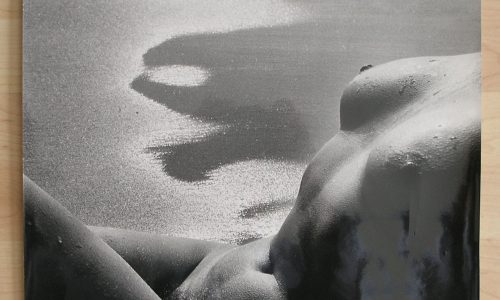
I never had seen a Montyn work until the early ~Seventies. At that timne i bought my first Jan Montyn etching. A blue bird, simplified on a typical Montyn background. It was a fairly large etching and i had it on the wall for over 10 years and then i changed it for a photograph of Lucien Clergue. It is in a drawer for 3 decades now, but i still like it . It is the same with all other Montyn etchings. They have something dreamlike and combine realism with abstract parts and all have great technique. Some years after i bought this etching i read the autobiography of Jan Montyn in which he tells the story of his early life. Specially the days he spent in the Foreign Legion, was shipwrecked as a sailor for the Kriegsmarine and was sent to the Eastern Front near Koerlandand and particpated in the battles over there. A colorfull figure, who perhaps did not always make the right (political) choices in his life, but his art still stands out and deserves to be appreciated apart from these. An excelllent title , published on the occasion of 75th birthday in 1999 is available at www.ftn-books.com


Piet Dirkx cigarbox 737
The first time i saw these sculptures by Heringa / van Kalsbeek was at the time i was still working at the Gemeentemuseum Den Haag.

It was 1999 and i was impressed. These resin sculptures looked almost accidental. But they are far from it. These sculptures are created by guidance and when finished they have shape, form, volume and color thought out by the artists. Since 1999 they have had their installations shown in many venues. One of them was the DE FUNDATIE in 2006 which catalogue is now available at www.ftn-books.com.

Heringa /van Kalsbeek are important contemporary artists and are included in the dutch series of portraits on dutch modern art ” HOLLANDSE MEESTERS”

Pie Dirkx cigarbox 736
This was after the presentation at the Haags Gemeentemuseum ( 1968) the 2nd exhibition within a short period of time Donald Judd received in the Netherlands. This time ( 1970) in the van Abbemuseum curated by Jean Leering, but what makes this for me even more special are 2 reasons.
The first is …i had never found the Judd catalogue before. I knew it existed , but never one was offered anywhere and secondly the design was done by one of the greats in dutch graphic design …Jan van Toorn.

And ….now i have one! it was hidden between a lot of books , but i found an excellent copy. What makes it even more special is that the cover is executed in gold and i believe that the design is done by Judd himself and executed in silkscreen. In those days editions where rarely more than 1000 copies and my guess is this edition is even less. So there you are…finally at www.ftn-books.com this rare Donald Judd / Don Judd for sale. It is one of the rare occasions that you can offer a truly rare publications and this one certainly is.

Piet Dirkx cigarbox 735

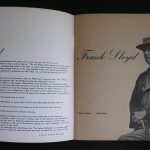
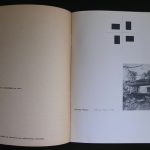
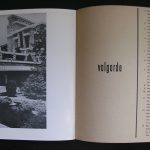
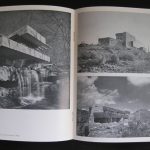
One of the first projects and designs Benno Wissing did for the Boymans van Beuningen Museum must have been this Frank Lloyd Wright catalogue “fllw”. The year is 1952 and the chosen size is different from the normal sized catalogues the Boymans had published until that date. But the size and lay out suits the subject of architecture. This is one of the hardest to find catalogues on Frank lloyd Wright and i was lucky to find a copy. The condition is not the best possible and i would rate it 6 out of 10 points , but still it is there and now available at www,ftn-books.com. This is the best from both worlds. Great graphic design meets top class architecture.