Posted on 10 Comments

Dimitris Tzamouranis (1967)

Dimitris Tzamouranis is a painter in the classic sense of the word. His representational paintings are testament to his outstanding artisanal abilities. He paints on large-format canvases, which he primes traditionally in multiple layers, or on copper plates in small formats. His world of motifs also follows the traces of art history back through many past centuries. Nevertheless, his art is exceptionally contemporary, blending the present with traditional content, techniques, and themes. Tzamouranis is as interested in current social and political topics as he is in interpersonal encounters and individual dispositions.

Born in 1967 in Kalamata on the Peloponnese peninsula, he moved to Berlin in 1990 at the age of 23, having graduated from the Fine Arts University in Thessaloniki where he majored in painting and graphic arts. For the next three years, he studied at the Berlin University of the Arts. Video soon became the central medium for him. He lived for a year in Istanbul thanks to a scholarship awarded by the Senate of Berlin. Drawing on his experience in the bustling metropolis, oscillating between modernity and tradition, the East and the West, he shot Die Flut (52 min.) in 1999. In Berlin in 2001, he shot Selbstschnitt, ein Portrait von Wolfgang Harth (Self-cut: A Portrait of Wolfgang Harth, 9 min.) in which a doctor operates on himself.

Tzamouranis’ grandfather was a church painter, and the artist was brought up in a very religious family. These two facts from his life, combined with the artist’s education, ultimately pushed him towards figurative painting. Since around 2001, he has painted very personal works using a realistic visual language. He soon ventured beyond pure imagery and introduced mysterious elements and characters into his painted scenes. Reality and dreams subtly intertwine, visualisations of the paintings seem magical, and illumination, light, and shadow add a film-like dramatic effect. A principle he continued to pursue until today in repeatedly new variations and narratives. His numerous studies of characters, portraits, and self-portraits contain an exceptional closeness and intimacy. In this slightly surreal or paradoxical depiction, the artist captures deep human fears and central themes of our lives: love, longing, hope, pain, and the search for meaning. Tzamouranis is particularly interested in the non-verbal communication between the main characters, with their encounter sometimes performed in silent motionlessness, and at other times with solemn energy.

Tzamouranis always works with models, both young and old, and often people that he is close with. With their help, he tests the constellations of several figures and specific positions to then transfer them into his works. Apart from his own imagination and the scenes he discovers through theatrical directing, he is inspired by themes from the history of art. He introduces historical, mythological, and biblical concepts, often only partially, into the present, creating an irritating yet fascinating blend of modernity and imagery that has been passed on throughout the centuries. The clothes and hairstyles of his models suggest they are people from the twenty-first century. Their poses, which we have recorded in our collective memory thanks to history’s most famous works of art, often seem strangely remote and incomprehensible in the context of a contemporary environment. Again and again, the artist creates coherent works. He has recently worked with young people taking vocational training. In the realm of non-verbal communication, Tzamouranis displays a particular interest in the interplay between the main characters. Their encounters range from moments of silent stillness to intense vitality.

When it comes to his creative process, Tzamouranis consistently collaborates with models, both young and old, often choosing individuals he has a close relationship with. With their assistance, he experiments with various compositions and specific poses, which he later incorporates into his artworks. In addition to drawing inspiration from his own imaginative mind and scenes derived from theatrical direction, Tzamouranis finds motivation in themes found within the history of art. He skillfully incorporates historical, mythological, and biblical concepts, albeit only partially, into the contemporary landscape. This creates a captivating mixture of modernity and imagery that has endured through the ages.

Despite the fact that the attire and hairstyles of his models reflect the twenty-first century, their poses possess a certain enigmatic quality, reminiscent of iconic works of art from history. Within a contemporary setting, these poses often appear distant and difficult to grasp. Nonetheless, the artist consistently produces coherent and thought-provoking pieces of art. Notably, Tzamouranis has recently worked with young individuals pursuing vocational training, further expanding his artistic horizons.

www.ftn-books.com has the galerie Michael Haas publication from 2010 now available.

Posted on Leave a comment

Alex van Warmerdam (1952)

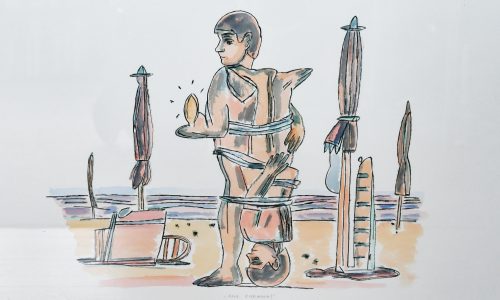
Alex van Warmerdam (born in 1952) pursued his education at the Graphic School and the Gerrit Rietveld Academie. He is currently engaged in the fields of scriptwriting, acting, design, and directing for both theater and film. His notable achievements include winning the Golden Calf for Best Director twice, for Abel (1986) and The Northerners (1992), and the Golden Calf for Best Screenplay thrice, for Ober (2006), The Last Days of Emma Blank (2009), and Borgman (2013). Additionally, he has received numerous awards at international film festivals. In 2016, Alex, along with his brother Marc, was honored with the Golden Calf for Film Culture.

Regarding his directorial work in film and theater, van Warmerdam has established a strong international reputation. However, it is less well-known that he is also a fantastic all-round artist. www.ftn-books.com is now offering the monograph from 2010 that was published in conjunction with the exhibition at the Stedelijk Museum Schiedam.

Posted on Leave a comment

Hannes Postma (1933-2020)

Upon close examination, the experiences depicted in Hannes Postma’s drawings are not particularly pleasant. At the very least, the subjects are stretched out like sandwiches or compressed into bundles of limbs. They are constantly in intense motion, rising up, floating, or being shot across the plane, colliding, getting caught in explosions, and being torn apart by sharp-edged surfaces. Their hands and feet detach, multiply, and fly off into space. Their heads transform into balloons, which then expand back into bodies further on. They collide with all sorts of cosmic furniture (shelves, boxes, clothes hangers, hats, undulating earth crusts) that render space unsafe…It is, of course, not without significance that Hannes Postma composes with shapes that evoke our own world, rather than circles and squares. His space is a genuine space, even though near and far have become interchangeable, an immense space in which the earth appears fragmentary…The events, the sharp edges reach us through the drawn flesh. Wordless balloons float out of our field of vision, resembling smoke clouds or drops of blood. The boxes contain surprises (not only pleasant ones, Postma calls them Pandora’s boxes), embryos, pieces of landscape and water; perhaps they are also hiding places. Helpless little people confront the cosmic authority of enormous coats and hats, in a world where everything, including themselves, is simultaneously itself and something else or at least in the process of becoming something else.

“Hannes Postma is an image-maker, someone who, like a magician, conjures up people and spaces. But he is also a viewer of those images, who, with some irony, observes all that struggle and is capable of playing pranks with the mysterious. Without imposing his personality on us, he speaks a highly personal language.” This is evident in the title, Hocus Focus. The title and the lithographs make a clear statement, creating new insights through a small intervention. Postma associates a new word-meaning, demonstrating that language is a living entity. The title is a pun. The traditional magic spell is “hocus pocus pilatus pas,” wherein something briefly disappears or reappears. It is the sensation of the curtain opening, the story commencing, and the tension of the moment of wonderment being felt with a transformative power.

www.ftn-books.com has several Postma publications available.

Posted on 9 Comments

(Anthony) NELLÉ (1894-1977)

The exhibition entitled “Anthony Nellé: Art Deco Stage Designs to Anti-Nazi Posters” was showcased at the Burchfield-Penney Art Center in 1997. This highly popular exhibition showcased Nellé’s original stage designs and World War II poster designs, along with a range of costumes, furniture, and other objects sourced from collections in Western New York. These collections exemplify the elegant and sophisticated Art Deco style. A concise biography of Nellé can be found in his book titled “Nellé,” which was compiled and edited by Sanford Shire, featuring text from Sanford Shire, Marjorie Luesebrink, and Rachel Chodorov. This illustrated book, published by Rizzoli in 1981, spans 128 pages.

Zdislaw Antoni Nellé, born on July 21, 1894, in Warsaw, Poland, hailed from a family immersed in the world of theater and ballet. His father, Stanislau Nellé, served as a conductor for the Russian Imperial Opera Orchestra, while his mother, Florentyna Kuklinska Nellé, was a dancer. Antoni’s exposure to these art forms fostered a deep appreciation and passion within him. Consequently, in 1905, he enrolled at the Russian Imperial School of the Theatre in Warsaw, where he honed his skills. Graduating in 1913, Nellé went on to perform in notable productions such as Swan Lake and Lizkinka, a Georgian folk dance commemorating the royal Romanoff family’s 300th Year Jubilee, as part of the Bolshoi program. He eventually rose to become a premier dancer at the Warsaw Imperial Opera. Later, Nellé ventured to Odessa, assuming the role of director and performer in the city’s opera company. Unfortunately, his marriage to the prima donna in 1915 ended tragically, as she passed away just six weeks after their union. Nellé returned to Warsaw, but due to the German invasion in 1916, he was conscripted into the Russian Imperial Air Corps and assigned to a motorcycle reconnaissance patrol.

Following his military service, Nellé embarked on a tour throughout Russia as a choreographer, director, and dancer with the Zon Theatre Corporation. He garnered acclaim and, in 1921, received an invitation to join the renowned Anna Pavlova’s ballet company in England. This opportunity led to an extensive tour spanning from London to Canada and the United States.

Nellé’s time in the U.S. proved pivotal, as he drew inspiration from jazz and incorporated more modern dance interpretations into his work. Consequently, he decided to remain in the country and joined the Greenwich Village Follies touring company in 1922. Noteworthy designer Erté crafted costumes for Nellé and his duet partner, Russian ballerina Anna Nurova. Following this tour, they participated in a Sol Hurok production called “Night of Love,” which took them to Mexico.

Nellé’s focus gradually shifted and he increasingly devoted his efforts to choreography and stage design. His next dance partners were Ardath De Sales, followed by Margaret Donaldson. Together, they occasionally performed live stage “prologues” in large theaters prior to silent films. On May 20, 1929, Anthony and Margaret tied the knot at her family’s residence in Gowanda, New York, marking the beginning of his connection to Western New York. They resided in New York City initially, but later relocated to Hollywood, where Nellé produced stage presentations and prologues.

As the era of silent films gave way to “talkies,” the couple embarked on a trip to Warsaw in 1931, where they were treated like celebrities. However, due to unfavorable economic conditions, they were compelled to move to Paris in 1933, and subsequently settled in Blackpool, England. Their Folies Bergère style productions were warmly received at the Prince of Wales Theatre in London.

In 1935, after spending the summer in Gowanda, they decided to move to Berlin. Nellé chose to voice modest criticism of the burgeoning Nazi regime, while continuing his work staging dances and designing sets for Scala Girls’ revues until 1937. Secretly, Nellé also created miniature stage sets depicting underground artillery base, hangars, and submarine pens, enabling him to clandestinely communicate anti-Nazi information. In 1939, they were forced to flee Germany due to the worsening economy, ultimately resettling in Gowanda.

Following a period of modest success teaching and choreographing in New York City, Nellé joined the American war effort. In December 1941, he shared his drawings of German war installations with military authorities and received letters of commendation for his patriotic contribution from President Franklin D. Roosevelt and General George Marshall. Despite his inventive blueprints for a “Permanent Invisible Submarine Base,” designed for the Army, Navy, and Air Force, being deemed unfeasible for production, Nellé attempted to work as a camouflage artist but was denied due to his non-American citizenship. He nevertheless designed anti-Nazi posters, which eventually landed him a job as a draftsman and illustrator at Bell Aircraft in Niagara Falls, New York. Eventually, in 1943, Nellé became an American citizen.

After the conclusion of the war in 1944, Nellé made a comeback in the theater scene, performing in St. Louis, Pittsburgh, New York, New Jersey, and Chicago. In 1956, following the passing of Margaret’s mother, the couple retired to Gowanda. However, they still made occasional trips to Buffalo and New York until health issues hindered their travels. On December 31, 1977, Anthony Nellé passed away at the age of 83, followed by Margaret fourteen months later.

www.ftn-books.com has the 1981 Rizzoli book on NELLÉ now available.

Posted on 9 Comments

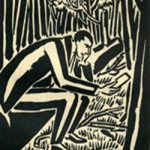
Helmut Viking Fredrik Eggeling (1880-1925)

From c1911 to c1915 he lived in Paris, probably after separating from his wife. There he was acquainted with Amedeo Modigliani, Jean Arp, Othon Friesz, Moise Kisling. Modigliani painted his portrait in 1916. At this point his art was influenced by Cubism, but soon grew more abstract. He never dated and only rarely signed his works.[3]

In the years c1915-1917 he lived first at Ascona and later other places in Switzerland, with his wife Marion, née Klein. During this time, he started working on his ‘universal language’, a theory of harmony for painting which was to open up a way for meaningful communication between viewer and artist.[4]

During one of his stays at the Mount Verita Lebensreform colony at Anconà, Italy, Eggeling met the author Yvan Goll, one of the principle advocates of film as art amongst German literary circles. In 1920, Goll published the article entitled Das Kinodram where he states emphatically that “the basis of all future art is the cinema.” During 1918 Goll helped Eggeling with first preliminary works for the latter’s abstract film (probably Horizontal-Vertikal-Messe) cutting geometrical forms and mounting them onto the celluloid support. According to Claire Goll, the two also discussed the foundations of abstract film which Goll still called Kinomalerei [cinema-painting].[5]

In c1918 Viking and Marion settled down in Zürich. There he re-connected with Jean Arp and took part in several Dada activities, befriending Marcel Janco, Richard Huelsenbeck, Sophie Taeuber, and the other dadaists connected to the Cabaret Voltaire. In March 1919 he also joined the group Das neue Leben [New Life], started the year before in in Basel by Arp, Fritz Baumann, Augusto Giacometti, Janco, Taeuber, and Otto Morach, among others. The group supported an educational approach to modern art, coupled with socialist ideals and Constructivist aesthetics. In its art manifesto, the group declared its ideal of “rebuild[ing] the human community” in preparation for the end of capitalism. In April 1919 Eggeling was co-founder of the similar group .

Radikale Künstler [Radical Artists], a more political section of Das neue Leben group, that also counted Hans Richter

www.ftn-books.com has the scarce Hoffmann Stiftung catalog from 1953 available with the Eggeling cover.

Posted on Leave a comment

Jörg Herold (1965)

Born in Leipzig in 1965, Jörg Herold pursued his studies in painting at both the Academy of Visual Arts Leipzig and the Kunsthochschule Weißensee in Berlin. Throughout his career, he has displayed his artwork in various solo exhibitions at museums and Kunstvereine. Noteworthy showcases include the Museum der bildenden Künste Leipzig in 1999, the Von der Heydt-Museum Wuppertal and the Staatlichen Museum Schwerin in 2000, and the Galerie der Stadt Wolfsburg and the Kunstverein Bielefeld in 2005. In 2005, the Städtische Galerie der Stadt Wolfsburg organized a solo exhibition dedicated to Jörg Herold in honor of being awarded the art prize “Junge Stadt sieht junge Kunst” (Young city sees young art), accompanied by an extensive monograph on his works.

Jörg Herold has also actively participated in numerous exhibitions both in Germany and internationally. Notable appearances include the Venice Biennale in Venedig (1995), documenta X in Kassel (1997), exhibitions focused on 40 years of video art at the Museum der bildenden Künste Leipzig, the ZKM Karlsruhe, and the Ludwig Forum Aachen (2006, 2009), as well as showcases in South Korea at the Seong-nam Art Center and the Berlinische Galerie (2012). In addition to his exhibitions, Jörg Herold has embarked on artistic endeavors in various countries such as Georgia, Japan, Southeast Asia, Iceland, and Ukraine among others.

www.ftn-books.com has the Herold 1999 for the Kunstpreis Leipzig now available.

Posted on 15 Comments

Carlos Manrique (1951)

This is what Manrique says about himself…..

A brief introduction to myself. Originally from Venezuela, I pursued my studies at Gristobal Roja Art School in Caracas when I was 17 years old. Following that, I had an amazing experience furthering my knowledge of art by working in studios with three artists – Régulo Perez, Carlos Cruz Diez, and Luis Gevara Moreno. Among my various projects, one particularly exciting opportunity was to travel with an interesting group of artists directed by Jacobo Borges to present “Vision of Venezuela” in Peru, three months before moving to Europe in 1977. It was during my journey through Italy, Great Britain, Belgium, Norway, and Austria that I found my creative inspiration in the city of Cologne, Germany, when I was 26 years old. I continued my studies in graphic design at the Cologne Art School, under the guidance of Professor Pravoslov Sovak, and completed my degree. My art combines influences from African and Latin American cultures, along with cultural influences from Germany, where I have resided for over 30 years.

I would like to express my gratitude to Germany and its people for giving me the opportunity to further develop myself in the field of art.

It is my honor to present my artwork to you, and I hope you enjoy them. Thank you for taking the time to view my works.

www.ftn-books.com has the Museum Bochum catalog now available.

Posted on 12 Comments

David Maxim (1945)

While the adjectives “heroic” and “theatrical” have been used to describe Maxim’s work, it is the way in which he portrays the human figure that takes center stage. Maxim’s non-representational, mixed media paintings, which are monumental in size, create a strong bodily presence. These paintings often incorporate 3-dimensional elements that reach out towards the viewer. In addition, Maxim’s mixed media paintings utilize mark making and shapes that dynamically suggest the gestures of the human body. For example, a simple combination of rectangles and spheres can hint at a reclining figure.

Furthermore, Maxim’s artwork includes several pieces that feature 3-dimensional figures extending from the canvas. These figures either crawl across the canvas or engage in a tug-of-war, resembling marionettes. They are presented in front of dramatically painted canvases that evoke an emotional response and resist being tied to a specific location. Although the setting for these figurative artworks, whether they are wall pieces or sculptures, remains a mystery to the viewer, Maxim’s knowledge of art history is evident in his work. For instance, his piece “Blind Leading the Blind” references the Flemish Renaissance painter Pieter Bruegel.

The figures, especially the anonymous and faceless ones that populate Maxim’s work, metaphorically represent philosophical notions of the human condition. Maxim consciously constructs situations that depict common struggles. In “The Elusive Thought,” a figure attempts to cast a net, though the target remains uncertain. In “A View of the World,” another figure looks up into space through a framed screen that limits their vision. Despite addressing struggles, Maxim’s work exudes a classical beauty that highlights our connections rather than our differences. It is this delicate balance between theatrical expressionism and conscious serenity that establishes Maxim as an artistic legend.

David Maxim’s work has been exhibited extensively in California, across the United States, and in Europe.

www.ftn-books.com has the UNSEEN PICTURES publication now available.
Posted on Leave a comment

Alexis Milne


An artist residing in London, dedicated to exploring the themes surrounding recent political protests and various forms of autonomous subcultural uprisings, such as Hip Hop and Rave cultures. My main focus revolves around the subsequent dissemination of these movements through media and the subsequent recuperation. Through my work, which encompasses video scratch collage, installations, and interventionist performances, I utilize alter egos, the grotesque, and cartoonist parody as powerful tools for commenting on the decline of authenticity, particularly in relation to riots transformed into spectacles.

The production of the video ‘Riot’ was born out of my experiences during the G20 demonstrations against the financial system in 2008, which took place at the prestigious Bank of England. It was during this time that the world economy began its descent into recession. The demonstration felt like an exaggerated, stadium-scale specter on a grand film set. Forward intelligence police units were closely monitoring and documenting activists who, in turn, documented the actions of the police. This endless cycle of impotent documentation, accompanied by the ominous drone of surveillance helicopters overhead, formed the backdrop for the events. ‘Riot’ delves into the historical and contemporary state of protest, representing the never-ending cycle of civil unrest experienced second-hand through the lens of the media. It reinforces the diffusion of aggression and passivity. The concept behind the video has evolved into largescale performance riots, such as ‘Chamber music for the disenfranchised’ and ‘Prague Uprising.’ These performances, set to a live punk soundtrack, aim to encourage assembled crowds to actively engage physically with footage of riots within the confines of an institutional location.

Following the completion of my Fine Arts MA at Goldsmiths, my video and performance piece, ‘Riot,’ gained recognition, and I was selected to participate in the European-wide Start Point prize. Eventually, I secured the overall prize in the Czech Republic at GASK, which led to my first solo exhibition at GAVU Cheb in 2011. Elizabeth Price, a prominent figure in the art world, selected my video work for the Selected Tour, which included a screening of ‘Jobseekers’ at the Whitechapel Gallery in 2012. My video work ‘The Delinquents’ was curated by renowned collage video artist George Barber for the Reality Check exhibition at the South London Gallery in 2012. Additionally, it was showcased at the Moscow International Biennale for Young Art in the same year. In 2013, I organized the video collage exhibition ‘Bunker Mentality’ in a disused World War II bunker, which featured ‘Riot Act SE6,’ a live performance reenactment based on Crimewatch footage from the 2011 London riots.

www.ftn-books.com has the 2011 galerie Vytvarneho now available.

Posted on Leave a comment

Henri Jacobs (1957)

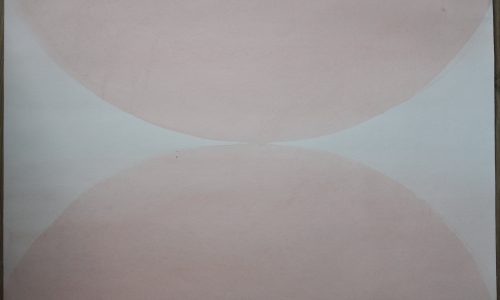
Since 2003, Henri Jacobs has been engaged in an ongoing series of drawings. These drawings, known as the Journal Drawings, originated from a project he undertook as a teacher. In this project, Jacobs instructed his students to depict anything that had a significant impact on them or caught their attention throughout a given day. Inspired by this exercise, he adopted it as a method for his own artistic practice, resulting in an ongoing collection of drawings. Within this series, he explores different motifs and forms, continuously abandoning them to make room for new research and experimentation.
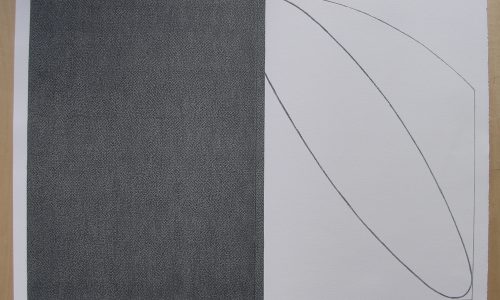
Jacobs’s drawings showcase a virtuosic technique, skillfully executed yet playful. The images range from abstract geometric shapes and patterns to stylized portraits, landscapes, and architectural forms. Frequent allusions to art history and renowned artists such as Matisse and Jasper Johns also appear. Essentially, the Journal Drawings serve as a continual process of creative exploration, as Henri Jacobs constantly challenges himself to redefine and reinvent his drawings.

www.ftn-books.com has the van Abbemuseum catalog designed by Arlette Brouwers now available.