Posted on Leave a comment

Thijs Rinsema (1877-1947)

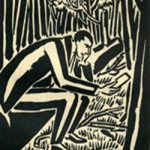
Thijs Rinsema, a cobbler from Drachten, a town in the Frisian region, gained recognition as a prominent member of the famous art movement De Stijl. His work was displayed at the Centre Pompidou in Paris and the Tate Modern in London.

The Museum Drachten is hosting the first major retrospective exhibition of Thijs Rinsema’s (1877-1947) work. The exhibition also pays tribute to his equally exceptional brother, Evert Rinsema (1880-1958). Additionally, the Museum Belvédère in Heerenveen has a small exhibition featuring Thijs’ Stijl furniture pieces and some of his paintings.

These craftsmen are skilled in creating perfect pairs of shoes with a piece of leather, but they are also well-read and have an interest in philosophy and modern art. Thijs paints while Evert writes and, during his military service, gets to know the artist Theo van Doesburg. This encounter opens up a whole new world for the brothers.

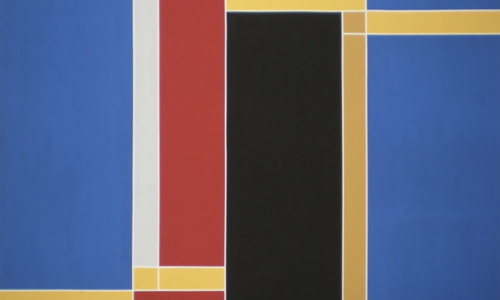
Thijs is deeply moved by De Stijl and, in the early 1920s, transforms his shop and living room. To the amazement of the people of Drachten, these spaces are adorned with the primary colors of the art movement: white walls with yellow, red, and blue accents. It becomes an incredible sight to behold.

Rinsema is already painting at this time. He learns to paint by imitating medieval art as well as works by modern artists like Picasso and Kandinsky. Following Van Doesburg’s advice, he begins creating still lifes and portraits. “Family, neighbors, and acquaintances are all subject to his artistry,” writes Thijs Rinsema’s grandson in his study ‘Thijs and Evert Rinsema, Independent and Versatile’.

Posing for Thijs is a challenge. The cobbler-painter works slowly, and customers in the shop disrupt the process. “Naturally, they all found it quite peculiar in Drachten,” says Thijs’ grandson. However, the eccentric cobbler is unperturbed and enjoys his newfound status.

In 1923, the Dadaist Kurt Schwitters visits Drachten. Van Doesburg had written to him about two remarkable individuals in Friesland, which Schwitters finds fascinating. At the round table in the Stijl room, he creates collages with Thijs using newspaper clippings, leaves, and advertising materials. These collages, now worth a fortune, are displayed at the exhibition.

The pinnacle of their friendship is a gathering in 1923 in a hall at a local hotel. Schwitters performs and recites his poems, one of which is in the Frisian language. He also presents his famous sound-image poem with the lines: “We strive to remain w88888” (referring to the town name Dr8888 – Drachten). Thus, Drachten becomes forever connected to Dada.
www.ftn-books.com has 2 important publications on Rinsema now available.

Posted on Leave a comment

Lea Halpern (1901-1985)

Born in Poland in 1901, Lea Halpern (1901-85) was a potter who had the opportunity to pursue her studies in Berlin, Amsterdam, and Vienna. Upon arriving in New York City in 1939 to showcase her work, she decided to stay and settle in Baltimore. Unlike being recognized as a mere craftsman, Halpern saw herself and was seen as an artist, creating pottery pieces intended for visual appreciation rather than practical use. Her creations, named Stormy Sky, Drifting Clouds, Frozen Fire, and Tiger Lily, demonstrate a fusion of poetic and naturalistic elements, with evident inspiration from Asian culture. Although her mature works showcase an exceptional command over intricate reduction glazes, this impressive skill was attained through extensive hours of dedicated research and experimentation.

www.ftn-books.com has now the 1976 Baltimore Museum catalog available.

Posted on 15 Comments

Gustave Moreau (1826-1898)

I remember the year i was living in Paris to be filled with visiting museums. One of the first I visited was the Moreau Muzeum. I really do not know if it still the same venue. but I remember that I was impressed , pulling out large panels from the walls , filled with canvasses. Together with the Jeu de Paume and the Roding museum these are the museums I still remember very well and I was reminded of that visit when I listed the Stadsgalerij Heerlen catalog on Moreau, which is now available at www.ftn-books.com

Gustave Moreau, the French artist, gained his reputation as a painter of symbolic allegories. It was in 1864 at the Salon in Paris that Gustave Moreau first made a breakthrough with the painting ‘Oedipus and the Sphinx’. His most important works include ‘Salomé’ and ‘Saint Sebastian and the angels’.

Education
Born on April 6, 1826, in Paris, Gustave Moreau studied at the art academy in Paris and subsequently under Théodore Chassériau, a pupil of Jean-Auguste-Dominique Ingres, whose work is considered part of the romanticism movement.

Italy
Gustave Moreau made his debut at the Salon in Paris in 1852 with ‘Pieta Plaza’. This work clearly showed the influence of Théodore Chassériau and Eugène Delacroix. From 1857 to 1860, Moreau worked in Italy, where he studied the work of Andrea Mantegna, Benozzo Gozzoli, and Michelangelo. In 1881, he was commissioned to create illustrations for a collection of fables by Jean de la Fontaine. Moreau spent five years working on this project.

Mythology and Bible
Gustave Moreau painted a large series of artworks based on stories from mythology and the Bible. Towards the end of his life, he became a teacher at the art academy in Paris. Albert Marquet, Henri Matisse, and Georges Rouault were all students of Gustave Moreau at the École des Beaux-Arts.

Gustave Moreau passed away on April 18, 1898, in Paris. In his will, he left his house and studio along with all the artworks present there to the French state. His residence on Rue de La Rochefoucauld was opened to the public in 1903. The Musée Gustave-Moreau exhibits significant works by Gustave Moreau, such as ‘Jupiter and Semele’ (1895), ‘The Chimeras’ (1884), and ‘The Return of the Argonauts’ (1891-1897).

Posted on Leave a comment

Neil Wilkin (1959)

A lifetime dedicated to creation has been fueled by Neil Wilkin’s intense passion for the art of glassblowing and an unwavering appreciation for the beauty of the natural world and its varied formations. The seamless connection between these two elements lies at the heart of his artistic endeavors.

In Neil’s own words, “The very foundation of our surroundings, as shaped by the captivating geology beneath us, plays a paramount role in influencing the aesthetic and environmental aspects of our lives. Explorations across the vast landscapes of Madagascar and Australia, as well as the intricate terrain of the British Isles, have yielded an abundant source of inspiration; encompassing geological wonders and a multitude of stunning flora and fauna.”

Through the medium of glass and the intricate processes of its formation, Neil delves into an exploration and celebration of the extraordinary wealth of diversity that surrounds him, seeking to capture its essence in his work. The choice of colors, ranging from bold and vibrant to gentle and soft, allows for an absorbing and refracting of light, ultimately shaping both the physical and aesthetic aspects of his creations. In recent years, Neil has embarked on a new artistic journey, combining the optical properties of solid glass with the fluidity and richness of molten glass, resulting in a fresh perspective on his craft. Additionally, he ventures into the realm of stainless steel fabrication for the creation of large-scale, site-specific installations that seamlessly integrate both indoor and outdoor spaces.

www.ftn-books.com has the SEEDS CHANGE book from 2001 now available.

Posted on Leave a comment

Geert Mul (1965)

For more than 25 years, Geert Mul has been exploring the possibilities of incorporating poetry into the realm of new media. This exploration has led to the creation of a diverse range of experimental artworks including prints, light-objects, video installations, and interactive/generative computer installations. Mul’s works revolve around the interplay of technology, media, and perception, with a particular focus on engaging the wider public through commissioned artworks in public spaces.

Mul’s artistic journey began in 1985 when he studied art at the HKA Arnhem, specializing in computer animations, video, and kinetic sculptures. Following his studies, he embarked on a journey through Mexico, the United States, and Asia, eventually spending a year in Tokyo. Since 1993, Mul has made Rotterdam, Holland his home base for both living and working. In the mid-1990s, Mul made his mark as one of the pioneers in the field of VJing within the alternative Techno scene. These early endeavors gradually evolved into interactive audio-visual environments, commissioned artworks, and installations that have been showcased in various settings, including public spaces, museums, and festivals. Mul’s impressive body of work includes over 20 commissioned art installations, with exhibitions held at prestigious venues such as the Museum Boijmans van Beuningen in Rotterdam, the Stedelijk Museum in Amsterdam, the National Museum of Modern Art in Kyoto, Japan, the Museo Nacional Reina Sofia in Madrid, the Institute Valencia Arte Moderne, and the Museum of Contemporary Art in Chicago.

In addition to his artistic endeavors, Geert Mul also shares his expertise as a teacher, imparting knowledge and guiding young talents in the field of “Unstable Media” at the Gerrit Rietveld Academie.

www.ftn-books.com has the Witteveen + Boos publication now available

Posted on 6 Comments

Paul Delvaux (continued)

The first time i encountered a large canvas was at the Haags Gemeentemuseum. It was hanging in one of the stairways of the museum and I must have been 15 years of age. The surrealistic scene with woman in white dresses and nude figures impressed me and it was one of my favorite paintings in the museum . ….until I learned it was removed(sold?) because it was not the painting which was important for the museums collection, the reason …… the museum hardly had any surreal paintings. I never understood this because at one time it was added to the collection and the painting was important enough to be on show for some decades. Where it is now ….i do not know….but for me it was one of the most important Delvaux paintings I encountered in all these decades of museum visits.

I always remember this painting when I encounter publications by Delvaux and I now can offer 2 additional Seventies Delvaux publications.

Posted on Leave a comment

Gustave Camus (1914-1984)

Camus is like Fernand Leger meets Gilbert & George

Gustave Camus, a Belgian expressionist painter, was born on April 4, 1914, in Châtelet and passed away on June 9, 1984, in Mons. At the age of 14, he began apprenticing as a house painter, but he abandoned this occupation as soon as his art could sustain him in 1939. He received drawing lessons from sculptor Eugène Paulus at the Charleroi Industrial School (1930-1934) and from Leon Van den Houten at the University of Labor (1932-1937). In 1933, he co-founded the group Living Art in the Land of Charleroi along with Georges Wasterlain. Following the war, critics acknowledged his talent, and he taught painting and drawing at the Academy of Fine Arts in Mons (1951-1976), of which he served as the director from 1961 to 1966 and from 1975 to 1976. While he is considered an Impressionist (1930-1946), he is closer to Fauvism than Monet. It was after a trip to Brittany that he embarked on his second period, which would profoundly influence his work (1946-1950).

www.ftn-books.com has now some Camus publications available.

Posted on 8 Comments

Leo Gestel (continued)

I have written before on Leo gestel, but now I like to emphasize the importance of the commemorative LEO GESTEL catalog published on the occasion of his commemorative exhibition at the Stedelijk Museum Amsterdam.

Only 20 pages but the cover contains 4 small original prints by Gestel making this one of the important 40’s catalogs published by the Stedelijk Museum.

Posted on 9 Comments

Sylvie Zijlmans / Hewald Jongenelis

Recently i acquired a Boymans publication by these two artists.. T”en To ONE” is published like an artist book by Museum Boymans van Beuningen and deserves to be present in every collection of artist books and it occurred to me that the collection of special catalogs by Boymans van Beuningen is growing more important by the year. Many important publications were published in the last 3 decades and for me the Boymans publications are becoming more important than the ones the Stedelijk Museum Amsterdam published during the last 3 decades. Stil the 50’s, 60’s and part of the 70’s publications by the Stedelijk Museum are among the most important ever published.

the TEN TO ONE book is now available at www.ftn-books.com

Posted on 13 Comments

Avery Preesman ( continued)

Avery Preesman originates from a musical background. In the early ’90s, the self-taught artist has the opportunity to study at De Ateliers in Amsterdam, where he is recognized for revitalizing abstract painting. In ’94, he secures the second place in the Prix de Rome competition, and from ’96 to 2006, he exhibits internationally, including at the Museum of Contemporary Art in Ghent and with a traveling exhibition in America. He wins several other awards and resides at Donald Judd’s Chinati Foundation in Texas. After 2006, he becomes less prominent in the art scene.
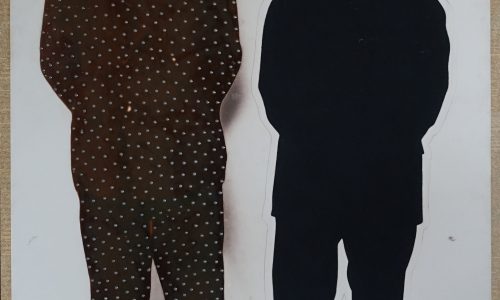
Preesman’s body of work can be divided into drawings and paintings. The artist himself does not divide his oeuvre, but refers to it as “pictorial sculptures.” “However plastic and sculptural my work may be, it is always created from a painter’s perspective,” he asserts. According to Preesman, the small painting ‘Bellamyplein’ (1992) was a defining piece that influenced all his subsequent paintings and sculptures. It is based on photos of the eponymous square in Amsterdam and demonstrates Preesman’s eye for architectural structures.

From the outset, Preesman’s paintings bear a heavy paint mass. Sometimes he incorporates coconuts or beans onto and into his canvases. His works have a solid feel, composed of thick layers. Within those layers, Preesman scratches as if he wants to liberate the space between them. It appears as though he wants to treat paintings simultaneously as carriers of imagery and as objects. Occasionally, his works feature letters or fragments of text. For instance, the letter ‘T’ references architecture: the symbol combines a vertical supporting element with a horizontal load-bearing element. The artist also draws parallels to how hip-hop musicians manipulate language, sound, and rhythm.

Through his exploration of space within the painting, Preesman quickly liberates it from traditional constraints. In ’93, he creates the first of his characteristic cage-like wall sculptures: straight or slanted wooden beams or metal profiles joined together in an open structure, with the ribs wrapped in a rich mixture of plaster with sand and/or cement. Preesman aims to avoid his artworks occupying all the available space, reserving space for our gaze. Hans Den Hartog Jager once wrote that Preesman “inflates the lines in his paintings into the third dimension and develops them as ‘concrete line systems.’ By pushing abstraction from the second into the third dimension, the works can claim real space and do not remain trapped in an illusionistic

www.ftn-books.com has the Preesman/NAI now available.