The sculptor Lon Pennock creates both large and small abstract sculptures in steel. Numerous grand works of his can be found dotting the public spaces, particularly in the urban edges. They display a simplicity of form – abstract volumes, such as blocks, beams, and plates, come together to form an abstract composition that appears to have taken form by happenstance, playing with sculptural principles like weight, rhythm, and volume. The titles of his pieces harken back to these sculptural themes – balance, stacking, bridge, wall, or gate.
www.ftn-books.com has several publications on Pennock now available.
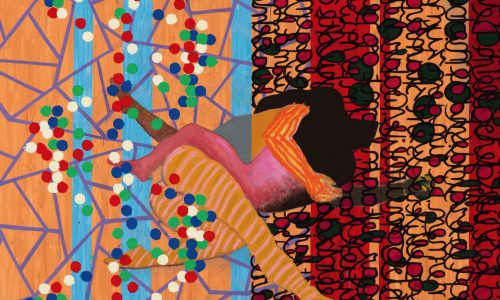
With a deft hand, Chris Ofili masterfully merges abstraction and figuration in his intricate and kaleidoscopic paintings and works on paper. Rising to prominence in the 1990s, he captivated audiences with his complex and playful multi-layered pieces adorned with his signature blend of resin, glitter, collage, and even elephant dung. Vibrant, symbolic, and brimming with mystery, his works draw inspiration from the idyllic landscapes and rich traditions of Trinidad, his home since 2005. By fusing various aesthetic and cultural influences such as Zimbabwean cave paintings, blaxploitation films, Ovid’s Metamorphoses, and modernist painting, Ofili’s pieces delve into the interplay of desire, identity, and representation.
www.ftn-books.com has the TATE published book on Ofili now available.
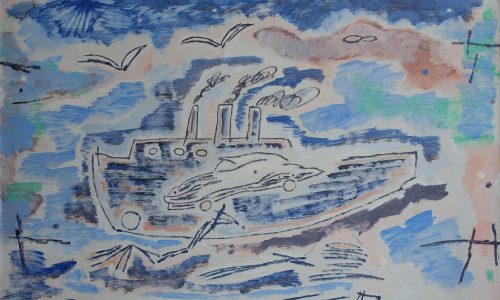
In the midst of the Indonesian War of Independence in 1947, director Willem Sandberg organized the first exhibition of Indonesian brothers Agus and Otto Djaya at the Stedelijk Museum in the Netherlands. This marked the first time that non-Western contemporary artists were given a solo exhibition at the Stedelijk. The Djaya brothers’ work was fueled by their involvement in the Indonesian struggle for independence after the proclamation of the Republic of Indonesia in 1945. The Stedelijk Museum’s research over the past year into the presence of the two brothers in the Netherlands sheds new light on their accomplishments. These new insights will be featured this summer at the Stedelijk in a thought-provoking exhibition spanning two rooms, a symposium, and other activities.
New research by independent curator and researcher Kerstin Winking into the work of the Djaya brothers in the Stedelijk’s collection reveals that there is a wealth of information about the brothers in Dutch archives. Agus and Otto Djaya were in Europe from 1947-1950, mostly in the Netherlands, where they secretly worked to promote Indonesian independence. The Stedelijk will showcase a selection of paintings from this period. In addition to works from the collections of the Stedelijk, the National Museum of World Cultures, and Leiden University Library, the exhibition will include revealing archival material demonstrating the entanglement of art and politics, as well as the brothers’ surveillance by the Dutch secret service and support from Dutch intellectuals for their efforts in the struggle for independence.
www.ftn-books.com has now the Willem Sandberg designed catalog from 1947 available.
Born in Tilburg in 1944, van den Nieuwelaar studied at the Academy for Visual Arts in Breda. Before establishing his own studio in 1969, he worked for various architectural firms. Designer and architect Aldo van den Nieuwelaar was renowned for his creations of lamps, furniture, cabinets, and rugs. One year prior to becoming an independent designer, in 1968, Aldo van den Nieuwelaar designed an innovative series of fluorescent lamps where the light source served as the starting point. The shape of the light source determined the design of the different fixtures in the TC Series (Tubular Construction) with the TC-6 Circular Lamp being its most iconic symbol.
www.ftn-books.com has now a great poster with van den Nieuwelaar designs available.
Herman Hertzberger is renowned as one of the most influential figures in international architecture over the past fifty years. He champions a contemporary, humane style of architecture that remains rooted in place and history, while also embracing innovative forms. Hertzberger is widely recognized as the foremost designer of schools, a genre for which his designs have single-handedly redefined. His groundbreaking designs for offices and workspaces often serve as the most compelling modern reinterpretation of this genre.
In this monograph, acclaimed architecture critic Robert McCarter delves into Hertzberger’s most significant works through a detailed analysis of the design process and underlying principles, particularly where they reflect Hertzberger’s integration of modern tradition, architectural history, and urban space experience.
Robert McCarter is an experienced architect, writer, and professor of architecture at Washington University in St. Louis. His monographs on Louis I. Kahn and Frank Lloyd Wright were both shortlisted for the 2006 International Book Awards of the Royal Institute of British Architects (RIBA).
WWW.FTN-BOOKS.COM HAS NOW THE NAI PUBLICATION ” NOTATIONS” AVAILABLE.
In the beginning, Marijke van Warmerdam crafted sculptures encompassing a wide array of mediums: wood, plaster, metal, glass, textiles, and rubber. However, her artistic pursuits have since expanded to a diverse repertoire, incorporating video, photography, audiotape, silkscreen, and even wrapping paper and stickers. Through her commissions and installations, she delves into the realm of intangibility, boldly experimenting with concepts such as time and movement. This is most apparent in her 16-mm films, where she chooses and captures moments from life, setting them into fluid motion.
For instance, in “Handstand” (1992) a girl can be seen repeatedly performing a handstand, while in “Douche” (1995) a man stands under a shower, the actions playing out ad infinitum. The films are presented in a continuous loop, with no discernible beginning or end, seamlessly connecting the two. The duration between the return of the exact image is intentionally ambiguous, creating a mesmerizing rhythm that draws the viewer into the enthralling world of repetition. Observation turns into fixation, as the repetition conjures a sense of enchantment while simultaneously diminishing the significance of the actions being shown. Time simultaneously moves forward and stands still, as there is no overarching narrative to follow. The focus is on the process, not the storytelling.
Despite their close resemblance to reality, these short films exist in the realm of art, specifically in the museum setting. They are projected onto a white wall or screen within the exhibition space, rather than a typical movie theater. The projector is always visible, emphasizing the artifice of the medium. As a viewer, you physically move through the projections, further blurring the line between the art and reality. It’s as though you’re entering a liminal space, but never fully immersing yourself.
Yona Friedman is renowned as an influential figure in the avant-garde urbanism movement of the 1960s. His most notable contribution is the idea of a Spatial City, also known as “La Ville Spatiale” (1956), which aimed to offer the utmost flexibility through the use of “megastructures” placed above existing cities and other locations. The inhabitants would have the opportunity to design their own living spaces within these structures. Friedman’s goal was to equip people from all corners of the world with the tools and foundational structures necessary to shape their own living environments, empowering them with greater independence and self-reliance.
www.ftn-books.com has the scarce FRIEDMAN book published by NAi now available.
The work of Eindhoven artist Tina van Onna focuses on developing creative processes that place a significant emphasis on consciousness and spirituality. In December and January, she created three abstract wall paintings in geometric patterns on the walls of Atelier 2. These paintings include “Mirror of the Self,” “Mirror of Our Interactions,” and a Red Circle that expresses how people can interact in an ideal situation. Van Onna held two workshops in which she guided participants through breathing and listening exercises to connect with themselves and each other. Afterwards, the participants were encouraged to communicate about how they interact with themselves and others, and to document their experiences on paper. The project culminated in a final performance, which was attended by the participants and other interested individuals. By using unique vocabulary and employing synonyms and antonyms, this revised text showcases the intricacies of both enigmatic complexity and linguistic dynamism, crafting a captivating and truly original piece of writing.
www.ftn-books.com has the poster made for the Ingrid Blom Foundation now available.
Since the mid 1960s, Giampaolo Babetto has been a leading figure in the Avant-Garde goldsmiths’ scene. As one of the renowned veterans of the Padua School, he has greatly influenced the world of art jewellery in Italy and beyond. His artistic range extends beyond jewellery, encompassing silver objects, furniture design, and architectural projects.
Each piece of jewellery I create becomes a part of me. It is a constant challenge because it must be a living object, not just a display piece, and it must radiate even more beauty when adorned on a woman’s neck, wrist, or fingers. – Giampaolo Babetto
Babetto’s work is a reflection of various contemporary art movements such as concrete art, minimal art, kinetic art, and pop art, all created with a purist and plastic approach. His designs are instantly recognizable for their simplicity and clean lines. He draws inspiration from the architecture of his homeland, particularly the villas by Palladio, and finds poetic beauty in geometry. His jewellery is innovative, made up of abstract elements, modular units, or ingenious links, giving them an architectural or sculptural quality. Babetto’s preferred medium is gold, known for its malleability and warm sheen, which he combines with unconventional materials like plastic, glass, and ebony. He also incorporates vibrant primary colors like red and blue through dusted pigments or uses enamel and traditional niello-based techniques. These materials serve to highlight and contrast the increasingly pure and essential geometrical forms that are synonymous with the Padua School.
The artist attains an individual artistic lexicon in which the utilization of geometric shapes is directed towards complete minimalism, with keen attention on the concept stripped of all mere ornamentation. For Babetto, the approach is systematic, introspective, and logical; its execution, on the other hand, is impulsive, swift, and impassioned. “I am a fusion of rationality and spontaneity. When a concept or idea consumes my mind, I strive to actualize it in the most direct manner possible. Once I have discovered the mechanism, I dedicate myself entirely to its swift achievement.” The outcome is compositions brought to the farthest point of form and line, enabling viewers to instantly perceive the formal tension and impact of the design. Each one exudes his passions, his adoration for architecture, and his exceptional eye for detail.
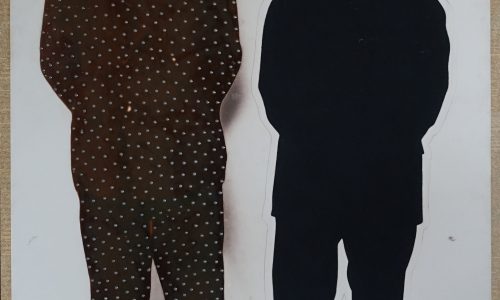
In his response to the excessive proliferation of images that bombard us daily and fabricate a simulated reality (as seen in the CNN coverage of the Gulf War), Edwin Zwakman crafts a carefully constructed, fictional scenario that nonetheless appears undeniably real. He employs clever tricks and fabricates falsehoods to reveal uncomfortable truths, in sharp contrast to the overt lies perpetuated by those in positions of power. Though power and authority are hinted at rather than explicitly portrayed, their stereotypical presence adds a potent impact. These pervasive stereotypes have been ingrained in our collective consciousness, which Zwakman masterfully juxtaposes to create contradictory scenes that stir up previously undefined but vaguely familiar anxieties. Through this dissonance between images, he unveils the true depth and magnitude of the abyss that lies just beneath the surface.
www.ftn-books.com has the van Abbemuseum catalog Façades now available.
Artist/ Author: Oliver Boberg
Title : Memorial
Publisher: Oliver Boberg
Measurements: Frame measures 51 x 42 cm. original C print is 35 x 25 cm.
Condition: mint
signed by Oliver Boberg in pen and numbered 14/20 from an edition of 20