Posted on Leave a comment

Marianne van der Heijden (1922-1998)

Van der Heijden was the daughter of Antonius Cornelis Josephus (Anton) van der Heijden (1893-1974), a teacher at the lekeninternaat Rolduc. During the war years, she was educated at the Stadsacademie in Maastricht, under the tutelage of Jef Scheffers. In 1945, she moved to Amsterdam, where she studied at the Rijksacademie under Heinrich Campendonk and Gé Röling. Among her fellow students in Amsterdam were Jef Diederen, Gène Eggen, Harry op de Laak, and Frans Nols, all of whom are considered part of the group known as the Amsterdam Limburgers.

Van der Heijden and Max Reneman both competed for the Prix de Rome in 1951. The jury was unable to decide which of the two should receive the gold medal. As a result, the prize was not awarded, and the accompanying travel grants were not paid by the ministry. The Italian government provided a subsidy, enabling the two to make a study trip to that country. Ultimately, Van der Heijden studied at the Accademia delle Belle Arti in Ravenna. Upon returning to the Netherlands, she, alongside Diederen and Nols, established her studio at Kasteel Erenstein near Kerkrade. She then moved to Maastricht in 1959.

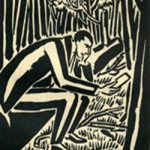
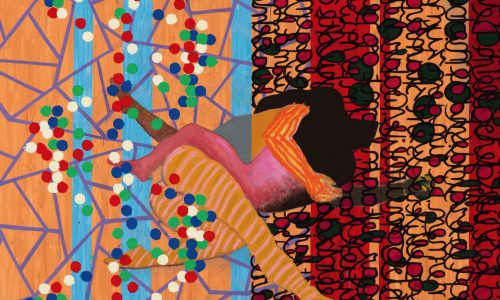
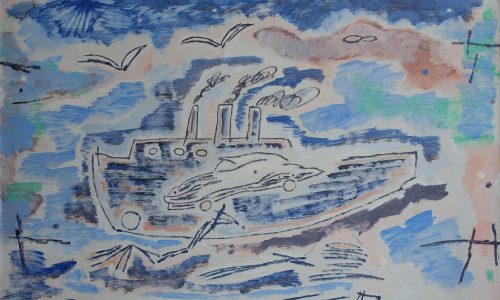
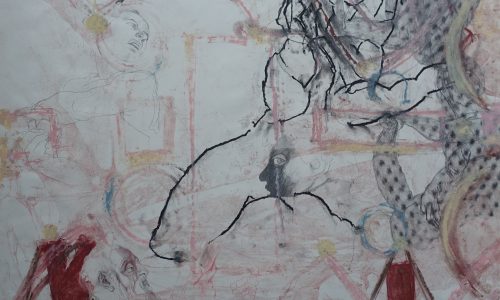
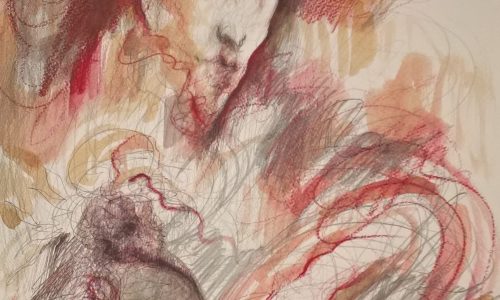
Her work encompassed sgraffito, mosaic, wall paintings, and tapestries. From 1954 to 1966, she also created stained-glass windows, which were executed by the workshops of Gerard Mesterom and Hubert Felix.[3] After this, she no longer accepted commissions from churches and focused on graphic work, such as woodcuts and etchings. In the late 1980s, she started creating paper collages. After the death of her life partner, Bruno Borchert, in 1994, she produced pastel works depicting the final stages of human life.

Van der Heijden was a member of the Algemeen Katholieke Kunstenaars Verbond, the Vereniging van Beoefenaars der Monumentale Kunsten, and the Beroepsvereniging van Beeldende Kunstenaars.

The artist passed away in 1998, at the age of 75. Her possessions were placed under the care of a foundation and were donated to the Museum van Bommel van Dam

www.ftn-books.com has the publication on this donation to the museum now available.

Posted on Leave a comment

Bård Breivik (1948-2016)

Bård Breivik (23 November 1948 – 10 January 2016) was a Norwegian sculptor and art instructor, renowned for his enigmatic and dynamic works. His journey towards artistic excellence began at the renowned Bergen Academy of Art and Design and St. Martin’s School of Art in London, where he honed his skills and mastered his craft.

Breivik’s passion for teaching and sharing knowledge led him to hold a prestigious professorship at the Royal Institute of Art in Stockholm from 1982 to 1985. However, he never abandoned his own artistic endeavors and continued to create thought-provoking and evocative pieces throughout his life.

His contributions to the art world were highly acclaimed, with the ‘Fibre’ exhibition in the autumn of 1981 receiving widespread recognition. Breivik’s talents also extended to scenography, as demonstrated in his work for the performance ‘Pyramider’ at the Henie-Onstad Art Centre.

In 1982, he was selected to participate in the influential group exhibition ‘The Sleeping Beauty – Art Now, Scandinavia Today’ at the prestigious Guggenheim Museum in New York. Furthermore, in 1984, Breivik’s works were displayed at the Toyama Modern Art Museum in Tokyo as part of an international group exhibition. The following year, he was honored to represent the Nordic region in the Venice Biennale, exhibiting at the Nordic pavilion.

Breivik’s creations transcended the realms of traditional art and pushed the boundaries of imagination. His legacy continues to inspire and fascinate art enthusiasts around the world.

www.ftn-books.com has the VORTEX 2005 exhibition catalog available.

Posted on Leave a comment

Rinus van den Bosch (1938-1996)

“Dagdieven,” declared Rinus van den Bosch, the renowned visual artist, with a mischievous twinkle in his eye. He, a quintessential native of The Hague, roamed dreamily yet determinedly through his beloved city, delighting in all it had to offer. A masterful sketch artist, he painted, sang, composed, wrote poetry, and made music. Never had a child been born with more talent and less opportunity, some would say.

www.ftn-books.com has the 2009 Retrospective exhibition catalog at the BOymans Museum now available.

Posted on Leave a comment

Gijs Bosch Reitz (1860-1938)

Located on the corner of Wally Moesweg and Oud Blaricummerweg, on the left stands the home of renowned painter Bosch Reitz. Sigisbert (Gijs) Chrétien Bosch Reitz was born in Amsterdam on February 20, 1860. This artistic maestro, famed for his stunning pieces, tragically fell from a moving Gooische steam tram in 1938. As he stumbled home, his foot became entangled in the tram’s wheels, ultimately resulting in its crushing. He managed to make his way to a nearby hospital in Amsterdam, via taxi. However, his foot had been so terribly mangled that he succumbed to his injuries a few weeks later on April 9, 1938, and was laid to rest at Zorgvliet in Amsterdam.

www.ftn-books.com has the most important monograph on Bosch Reitz now available.

Posted on Leave a comment

Günter Brus (1938-2024)

The subtle, frivolous drawings do not give away his true nature. His eyes portrayed like modern Art Nouveau posters, with graceful lines, twisted fairytale figures, and pretentiously gazing fashion models, just like his fellow countrymen Egon Schiele and Gustav Klimt had represented half a century earlier. However, Günter Brus was one of the most intense performance artists of his time, the 1960s, and a pioneer for generations to come. The Austrian passed away last weekend at the age of 85.

After his time at the Academy of Fine Arts in Graz and Vienna, he founded the Wiener Aktionismus in 1964, together with Otto Muehl, Hermann Nitsch, and Rudolf Schwarzkogler. It was an experimental group of body artists who did not hesitate to physically resist against the Austrian conservatism, good taste, and the lasting, post-war fascism in their home country.

The quartet surely did not create art for the faint-hearted: anti-bourgeois, shameless, and controversial. Nitsch became famous for his ritualistic slaughters (pigs), crucifixions (humans), and blood paintings; Muehl organized pee contests, managed a commune (literally), and was accused of child abuse; Schwarzkogler enjoyed wrapping himself, mutilating himself with a corkscrew, and having intercourse with fish and chickens (although the myth about him cutting off his own penis turned out to not be true).

The pinnacle of Brus’ oeuvre is his public performance in 1968, in which he sings the national anthem while masturbating, smears himself with feces, and drinks his own urine (which he then vomits back up). This results in a six-month prison sentence and a ban from Austria. He fled to Berlin, where he remained in exile until 1976.

He started quite moderate, actually. In 1960, he painted himself, his wife, and his studio with black and white paint. From self-painting to self-mutilation, the work gradually evolved. Culminating in his last action, Zerreissprobe (1970), where he cut open his own skin with a razor.

Using the body as a “canvas” has become common in the art world since the Viennese actionists. Just look at Marina Abramovic, who in one of her performances, used a razor to cut a communist star into her own stomach. Thanks to her and other performance artists, the work of Brus (and his colleagues), despite controversies and convictions, has become acceptable again. And what was once unthinkable: in 1996, he received the prestigious Großer Österreichischer Staatspreis. But by then, he had already turned to “proper” drawing.

www.ftn-books.com has a substantial selection of Brus and Wiener A§ktionismus publications.

Posted on Leave a comment

Peter Zegveld (1951)

Peter Zegveld is a visual artist and playwright, born in 1951 in The Hague and a graduate from the Royal Academy of Art in The Hague. His artistic oeuvre is distinguished by simplicity and accessibility, and is frequently exhibited in major museums throughout the Netherlands. His theatrical performances are visually stimulating, evocative, and cinematic. With boundless freedom and an unconventional approach, Zegveld ventures across diverse disciplines, allowing his audience to encounter and uncover absurdities. In addition to creating shows for theaters, festivals, and his autonomous art, he has also produced works for Orkater and television series for VPRO. Peter Zegveld serves as the artistic director of the Caspar Rapak Foundation.

www.ftn-books.com has the Irma Boom designed book ” Exploded View# now available.

Posted on Leave a comment

Eddy Roos (1949)

Eddy Roos (1949) stands as a renowned visual artist hailing from Amsterdam and a graduate of the Rijksacademie in Amsterdam (1965-1973), where he received instruction from sculptors Cor Hund, Piet Esser, and Paul Grégoire. He also studied under Giacomo Manzu in Italy after his time at the academy. Roos is known for his extensive research of the works of his predecessors, a practice he continues to this day by regularly visiting museums to sketch and study.

The essence of life force brought to life through dance is a prominent theme in Roos’ work. This is reflected in his powerful and expressive, yet sensual drawings and sculptures, as well as choreographies, dance films, and etchings.

Roos’ magnum opus is the project known as the sculpture garden at Borg Verhildersum in Leens, Groningen, which he began in 1975 and consists of 13 sculptures. This unique project in Europe combines sculptures and garden architecture all designed by one artist. The guiding principle in the design of the garden and architecture of the sculptures is the golden ratio, creating a harmonious unity. This project is Roos’ life’s work, and he is determined to complete and perfect it. He hopes that the project will be supported and sustained by individuals, sponsors, and funds through the establishment of the Foundation Sculpture Garden so that the final piece of this project can be realized.

In addition to the sculpture garden, Roos has also completed various other projects, including the Spain Monument (Amsterdam), Air Dancer (Rotterdam), and the Jipsinghuizen Monument (Jipsinghuizen). His work can also be found in numerous private collections and museums, both in the Netherlands and abroad, including collections such as Groeneveld, Singer Museum, Hermitage Amsterdam, Museum Beelden aan Zee, Hannema-de Stuers Fundatie, Drents Museum, De Havixhorst, Museum Ton Schulten, the collection of Prof. Bardonnet in Paris, and the Atelier Eddy Roos Museum.

www.ftn-books.com has the monograph on Eddy Roos now available.

Posted on Leave a comment

Nicolas Dings (1953)

Showcased in Nicolas Dings’ work is a three-dimensional world, straddling the line between melancholy and longing. He manipulates bronze, ceramics, and plastic, along with found objects and text, to craft a kaleidoscopic oeuvre that offers commentary on the world around him. A substantial book, “Zimmer Frei” (Van Hoof Gallery/ Van Spijk Publishers) was released in 2019, showcasing his forty-year career. In a previous catalogue, “Annus Horribilis” from 1993 (Kunstvereniging Diepenheim), he painted a picture of the times, which has now become a harsh reality. In 2020, museums closed their doors, exhibitions were cancelled, and events were postponed. As a visual artist, Dings could only react by continuing to work; after all, his studio was the safest place on earth. The audience dwindled to just one person: the artist himself. As we gradually return to our normal routines, the result will be a disrupted universe. Nicolas Dings does not depict the crisis through references or admonitions, but through signs on the walls (and on the floor), evoking a longing for a better world. He resides and creates in Wijdewormer and Besmont La Rue Charles, France. His body of work includes sculptures, drawings, texts, and installations in public spaces.

www.ftn-books.com has several Dings titles now available.

Posted on Leave a comment

Frank van Hemert (continued )

A brief tale about a prominent artist whom I have been following for over 3 decades, and whose marvelous collection I have built. His name has now resurfaced as I have acquired 3 significant early works. All three pieces originate from the esteemed collection of Gallery Nouvelles Images, and two of which were featured in the Van Hemert exhibitions at the Hague Municipal Museum. After being sold by Nouvelles Images, these works found their way into private collections, but I suspect that the gallery has repurchased them. Two of the works, executed on hard board with mixed media, will for certain remain in my personal collection, while the third (a gouache) might be available for purchase, as it bears a striking resemblance to a drawing already in my possession. www.ftn-books.com offers a nearly complete collection of Frank van Hemert’s catalogs for sale, sure to leave any enthusiast enthralled.

Here are the three acquisitions to our collection:

Posted on Leave a comment

Mishka Henner (1976)

Mishka Henner is a notable contributor leading the pack of contemporary artists reshaping the role of photography in the digital era. He perceives the capturing of imagery through an incessant array of automated and manual cameras as a cohesive depiction of the world, with boundless intricacy available to all with online access. A significant portion of his craft navigates this expansive digital landscape, honing in on critical themes of cultural and geo-political significance. His creative process often entails thorough investigative research coupled with the intricate construction of visuals crafted from materials procured online.
Born in 1976 in Brussels, Belgium, Henner relocated to the United Kingdom in 1984. He holds a Master’s degree from Goldsmiths College in London and in 2013, was bestowed with the Infinity Award for Art by the International Center of Photography. He was a finalist for the Deutsche Börse Photography Prize that same year, and in 2014, made the shortlist for the Prix Pictet for his expansive works centering on landscapes shaped by the beef and oil industries in America. Henner’s pieces were featured in the group exhibit New Photography at the renowned Museum of Modern Art in New York in 2015. A prominent solo showcase, Counter Intelligence at Orebro Konsthall in Sweden, showcased his works from various series in the spring of 2017.

www.ftn-books.com has the NO MAN’s LAND publication now available.