Posted on Leave a comment

Albwert Oehlen (1954)

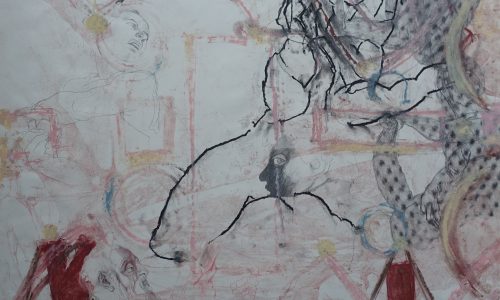
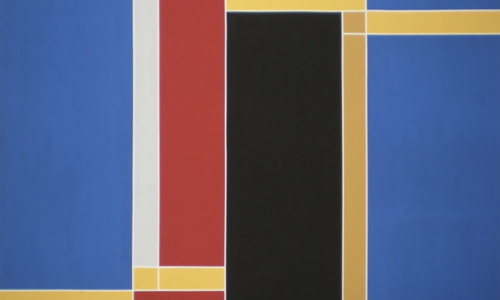
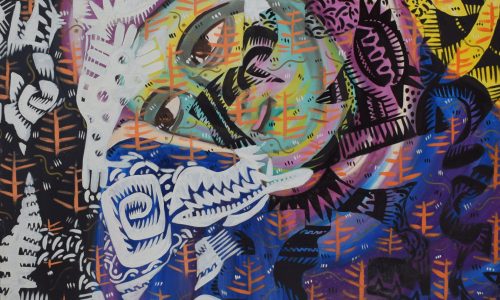
From 1978 to 1981, Oehlen pursued his studies at the Hochschule für bildende Künste Hamburg in Germany, establishing himself swiftly in the art scenes of Berlin and Cologne. He became a member of the Junge Wilde group, alongside Martin Kippenberger and Werner Büttner, who aimed to create art that defied categorization and challenged the existing artistic conventions. Oehlen’s artistic practice involved examining the fundamental aspects of painting – color, gesture, motion, and time – in order to deconstruct the medium. This approach led him to experiment with various styles and techniques.

Throughout his career, Oehlen continued to explore new possibilities by incorporating technology into his work. He embraced inkjet printers, computer-aided design programs, and referred to the pixelated lines of computer screens. By doing so, he constantly altered the parameters he had set for himself, presenting new obstacles and challenges. For instance, he imposed limitations on his palette and combined perambulating black lines with carefully blended gradations in his Baumbilder (Tree Paintings). Additionally, he utilized techniques such as erasure and layering to juxtapose bright and muddy colors in his Elevator Paintings, a nine-part work created in 2016. In the late 1990s, Oehlen even spray-painted over collaged imagery on canvas, using large industrial printers typically employed for billboards.

Notably, Oehlen embraced the concept of “bad” painting, which allowed for a deliberate embrace of awkwardness and ugliness in his work. He incorporated unsettling gestures, crudely drawn figures, visceral smears of artificial pigments, as well as bold hues and flesh tones. Through this approach, Oehlen demonstrated that painting offers infinite possibilities for exploring form, and highlighted the artist’s ability to manipulate these combinations to create new perceptual challenges for the viewer.

www.ftn-books.com has the Kunsthalle Zurich book ao available.

Posted on 1 Comment

Roger Bezombes (1913-1994)

Roger Bezombes, a French artist specializing in painting, sculpture, medal-making, and design, underwent his education at l’École des Beaux-Arts in Paris. In his artistic endeavors, Bezombes adopted the vibrant color palette famously used by Henri Matisse. His paintings and studies of landscapes and figures often drew inspiration from his observations of exotic cultures, particularly those in the Mediterranean and North Africa. Bezombes had a strong affinity for travel, exploring countries such as Belgium, Germany, Italy, Greece, Crete, Israel, North Africa, and the United States. His works received regular exhibitions in Paris through prestigious events like the Salon d’Automne, the Salon des Artistes Independants, and Les Tuileries. Influenced by notable artists like Gauguin, Van Gogh, and Matisse, Bezombes developed a distinctive and widely cherished style that has captivated audiences around the globe. Additionally, he contributed to various artistic ventures, including tapestry designs for Aubusson, posters (such as the notable image employed by Air France), and costumes and sets for ballet performances at the Metropolitan Opera House in New York. Bezombes represents the quintessential French artist of our time — passionate, dedicated, and continuously engaged. These exceptional qualities resonated profoundly in his artwork, leading to its high demand and collection both within France and internationally.

www.ftn-books.com has now the Documents publication on Bezombes available.
Posted on Leave a comment

John Latham (1921-2006)

Throughout his extensive career, which spanned over five decades, Latham established himself as a highly influential and distinct figure within the realm of contemporary art. Despite not aligning with any particular artistic movement, his contributions to various mediums such as painting, assemblage, performance, book art, conceptual art, and film were of great significance. At the core of his diverse artistic endeavors was a revolutionary worldview that challenged conventional systems of thought and showcased a visionary perspective.

Latham perceived the conflicts and struggles that plagued humanity as a result of ideological disparities. He believed that these differences stemmed from the absence of a singular theory that could comprehensively explain the universe and humankind’s place within it. His evolved theoretical framework aimed to provide a unified comprehension of existence.

By intertwining artistic, philosophical, and scientific concepts, Latham’s theory of “event structure” directly challenged the perspectives of scientists and cosmologists. According to this theory, the explanation for everything that exists lies not in the form of atomic particles and waves but in the recurring and finite duration of time-based “events.” The fundamental unit of existence, in this theory, is the “least event” – the briefest deviation from a state of nothingness. These recurring events establish patterns and serve as the foundation for reality’s structures. As events persist for longer durations, they give rise to more intricate phenomena, including objects, mental images, and ultimately, the entire cosmos.

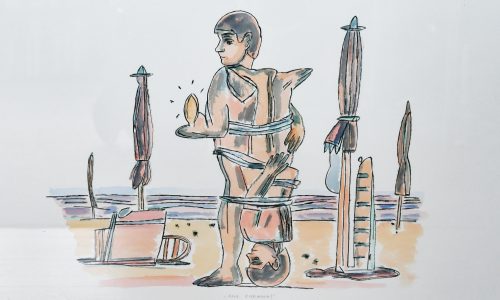
Latham’s artwork serves as a tangible manifestation of these ideas. Dating back to 1954, his utilization of spray paint exemplifies the process of “coming into being.” This concept is visually represented through the accumulation of tiny paint droplets, symbolizing the transition from nothingness (portrayed by the blank canvas) to the emergence of form (highlighted by the burst of spray). These underlying notions can be observed in his earliest painting on display, “Man Caught up with a Yellow Object” (1954), as well as in later works such as the “One Second Drawing” (1972).

Since 1958, books have taken on a central role in Latham’s artistic expression—they are frequently burned, painted, and fragmented. Books serve as a powerful symbol of human thought and intellectual exploration. The way they emerge from many of his canvases conveys the notion of a human presence coming into existence. However, books also signify diverse systems of belief. A significant portion of Latham’s later works incorporate books alongside glass, a fragile material prone to shattering. Through this juxtaposition, Latham delivers a clear message: the imperative need for a unified worldview in an increasingly divided world.

www.ftn-books.com has the 1991 Stuttgart catalog available.
Posted on Leave a comment

Hans Biezen (1947)

A new era for Dutch photography begins in the early 1970s. It is no longer just the content of the photo that the photographer focuses on. It goes beyond that. Space, light, and timing are played with. Constantly searching for hidden elements, creating light and shadows, abstractions, and a certain surrealistic feeling. All of this suggests a world beyond the frame of the photo. This work pays tribute to the great masters who were able to portray space, light, and the depth of bright tones in their paintings in a mysterious way (source: Lorenzo Merlo, Contemporary photography in the Netherlands 1980).

During the same period, Rudi Fuchs is appointed as the director of the Van Abbemuseum in Eindhoven. Thanks to him and the aforementioned developments, artists from Eindhoven are once again in the spotlight. Fuchs actively participates in conversations in the ateliers in Eindhoven, thus getting to know the attitudes and positions that will partly determine the policy of the Van Abbemuseum. Hans Biezen, René Daniëls, Piet Dirkx, and Stijn Peeters are some of the well-known Brabant artists of that time. Inspiring projects such as the artists’ initiative De Fabriek arise in the vicinity of the Van Abbemuseum, something that would still be unthinkable in the Randstad (source: Michiel Morel, under the smoke of Van Abbe 2011).


Hans Biezen finds himself at the heart of the art world in Eindhoven during these developments. As a sculptor by training, Biezen is self-taught in the field of photography. This is not a coincidence, as he wants to photograph as honestly and unbiasedly as possible. Photography is more than sculpting to him; it is a means to interpret reality in his own way and with feeling. Initially, Biezen focuses his photography on situations that allow him to take beautiful and powerful photos. But at some point, he begins to see this as a limitation of his photographic possibilities. Therefore, Biezen simplifies his photography into mainly a documentary form.

www.ftn-books.com has now one of the very first Biezen publications he made for the van Abbemuseum available.

Posted on Leave a comment

Fon Klement(1930-2000)

This blog is meant to be a long overdue tribute to one of the artists I have admired in the first decade I was collecting art. I purchases my First KLEMENT at Arta in the early 70’s and realized when I visit my doctor, who has several Klements’ on the wall) that his art Is still appealing to me and has survived for 5 decades now.

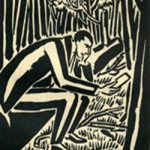
Fon Klement’s journey as an artist began as a self-taught individual. After gaining recognition as a figurative painter and woodcutter, he ventured into the world of multicolored graphic sheets in 1960, using his distinctive technique known as “the relief cut board”. Gradually, recognizable forms made space for more abstract motifs, presented in a muted color palette.

The timing of Fon Klement’s rediscovery of the watercolor technique was impeccable, as he found himself at a crossroads in his artistic journey. The desire for change became increasingly strong, leading him on a quest that took him on a ten-week exploration of the Provence region. In his improvised studio in the southern French town of Lorgues, flowers were in abundance. Poppies, irises, roses, delphiniums, and hibiscus seduced the artist to continue pursuing the path he had previously embarked on: painting and watercoloring still lifes of flowers.

Since 1961, Fon Klement has been a member of Xylon, the international association of woodcutters, which regularly exhibits graphic art across Europe. The exhibition “Prints today in the USA”, featuring a comprehensive overview of Dutch artists’ prints including Fon Klement’s works, traveled extensively throughout the United States for many years. Fon Klement was awarded the Audience Prize during the “Grafiek Nu” graphic art biennial in Laren in autumn 1990, and later at the first international graphic art biennial in Maastricht in summer 1993.

www.ftn-books.com has now the van SPIJK publication on Fon Klement available.

Posted on Leave a comment

Barbara & Michael Leisgen (continued)

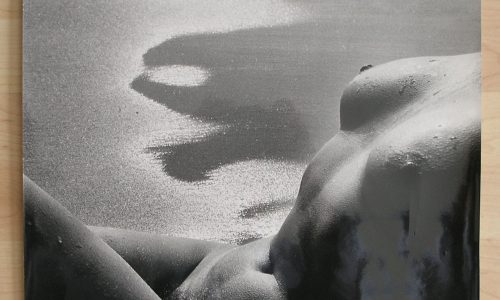
The works produced by Barbara and Michael Leisgen during the 1970s represented a contrast to the prevailing style of conceptual photography, which was predominantly dominated by the typological school of Bernd and Hilla Becher in Düsseldorf. The various works showcased below are part of the Mimesis series, which has been in practice since the early 1960s. These works involve the documentation of natural imprints, exploration of the human body, and experiments related to Land Art.

One of Barbara Leisgen’s distinctive techniques involves imprinting her silhouette onto the landscape, leaving a fleeting trace. This is achieved by extending her arms to follow the contours of undulating countryside in works such as the Paysage mimétique and Mimesis series. Another technique involves incorporating the sun into an arc drawn by her arm while she is positioned centrally in the image, as seen from behind. This approach goes beyond mere imitation of nature through physical gestures; it also encompasses the act of tracing and channeling nature. The (re)appropriation of the landscape is a subjective experience, with Barbara Leisgen’s silhouette displayed within the landscape, leaving an ephemeral mark.

These photographs evoke the imagery of German Romanticism, specifically the paintings of Caspar David Friedrich. Friedrich’s painting Morgenlicht, in particular, serves as a figurative inspiration for the Leisgens’ Mime-sis works. However, their approach also deviates from Friedrich’s perspective of nature as sacred. One could argue that their viewpoint is influenced by an anthropocentric romantic outlook, similar to the French Romantic tradition. Nevertheless, despite the sublime nature of the photographed scenes and the meticulousness of the prints, which hint at the possibility of a wide spectrum of colors in the luminous light, the images also evoke a sense of naivety and inherent nostalgia found in souvenir photographs. The viewers are placed in a reflective position, observing a woman posing within a natural expanse. Through this approach, Barbara and Michael Leisgen can be seen as pioneers of contemporary landscape photography, bridging modernist and postmodernist perspectives.

www.ftn-books.com recently acquired the scarce ” LA TENTATIVE DE SAUTER PAR DESSUSL’HORIZON from 1975

Posted on 4 Comments

Rene Portocarrero (1912-1985)

Born in El Cerro, Havana in 1912. He began painting at an early age and entered the San Alejandro Academy of Fine Arts at the age of 14. He was too temperamental to adapt to this training, so he left the institution and began working independently. His work was exhibited for the first time at the Havana Art Salon. In 1939 Porto Calero became a professor at the Institute of Free Painting and Sculpture under the guidance of Eduardo Abella. The artist traveled to Haiti, Europe and the United States, and in 1945 had an exhibition at the Julien Levy Gallery in New York. He also created numerous murals and ceramics.
Porto Carrero’s work is in the permanent collections of the Museum of Contemporary Art in Su00e3o Paulo, Rio de Janeiro, New York and San Francisco. At the National Gallery of Canada. At the Bellas Artes in Caracas. Milwaukee Art Center, Pan American Union in Washington. Contemporary art in Paris. Houston Museum of Art. Museum of Art, Indianapolis. Bellas Artes, Montevideo. Bellas Artes, Buenos Aires. Contemporary Art Institute, Lima, Peru. It is also at the National Museum in Havana.

He painted vigorously from childhood, but never planned his own works. In his spontaneity, he had no idea what he was going to do until his brush hit the canvas. The artist died in Havana on April 7, 1985.

www.ftn-books.com has now the Henschel Verlag book available.


Posted on Leave a comment

Bruno Capacci (1906-1996)

Bruno Capacci was born in Venice in 1906 but spent his youth in Florence. He settled in Paris in 1930, where he became a member of the “Italians of Paris” along with De Chirico, Severini, Magni, Magnelli and Leonor Fini. The capacchi of the “Metaphysical Age” was influenced by De Chirico and the great Renaissance masters such as Uccello, della Francesca and Ghirlandaio. In 1930 he met and married the Belgian artist Suzanne Van Damme at the famous brasserie “Le Dome”. The couple were the surrealist poets Paul u00c9luard, Paul Collinet, Marcel Lecomte, Louis Soutenaire and Henri Bauchaud, Andru00e9 Breton, Marcel Duchamp, Henri Michaud, Jean Cocteau and Louise de Villemorin. , Federico Fellini, Jean Paulin, and actor Louis Jouvet. Close others. In 1947, the “Surrealist Pope” invited Andre Breton Capacz and Van Damme to the “Surrealist International Exposition” to be held at the Margut Gallery in Paris, and invited Arp, Bellmer, Brauner, Calder, Duchamp, Ernst, Giacometti, Gorky, Lamb, Matta, Milo, Picabia, Man Ray, Tanguy, Tanning, etc. Capacchi’s paintings became more and more sophisticated and poetic. He also published surrealist poetry in the book La balustrade du Possible. His photographs reveal his boundless imagination, his delicate color palette and, above all, his extraordinary joie de vivre. His favorite themes include moonscapes and fantastic bestiary, reminiscent of Klee and Brauner.
When the couple moved to Florence in the 1950s, they built a beautiful house with stunning views of the surrounding Fiesole hills. Inspired by the great idol Andrea della Robbia, Capacchi began making a line of ceramics that he displayed throughout his home and sold to a variety of clients, including numerous wealthy Americans. Each year the couple exhibited in galleries in the United States: Chicago (Marshall Field Gallery 1959), New York (Thibault Gallery on Madison Avenue 1961), Los Angeles, Baltimore and Dallas (Calhoun Gallery 1961).

Capacci also had a taste for marble and mosaics, and produced many decorative panels inspired by ancient Etruscan and Byzantine art. A versatile artist and poet, Capacz made porcelain plates in his Havilland factory in Limoges, Christofle in Paris, and his ateliers in Rosenthal, Germany. In the 1970s Capacz and Van Damme returned to Brussels and lived in a house near Avenue Louise.
His first 1990 exhibition in the Group 2 gallery was a tribute to Suzanne Van Damme, followed by his 1991 solo exhibition of Capacci. Capacci died in Brussels in 1996, shortly after the opening of Van Damme’s Capacci exhibition at the same gallery.

www.ftn-books.com has the Group 2 catalog now available.