Posted on Leave a comment

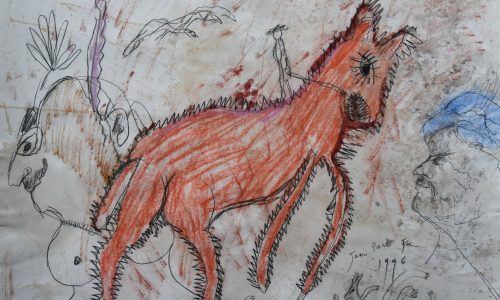
John Latham (1921-2006)

Throughout his extensive career, which spanned over five decades, Latham established himself as a highly influential and distinct figure within the realm of contemporary art. Despite not aligning with any particular artistic movement, his contributions to various mediums such as painting, assemblage, performance, book art, conceptual art, and film were of great significance. At the core of his diverse artistic endeavors was a revolutionary worldview that challenged conventional systems of thought and showcased a visionary perspective.

Latham perceived the conflicts and struggles that plagued humanity as a result of ideological disparities. He believed that these differences stemmed from the absence of a singular theory that could comprehensively explain the universe and humankind’s place within it. His evolved theoretical framework aimed to provide a unified comprehension of existence.

By intertwining artistic, philosophical, and scientific concepts, Latham’s theory of “event structure” directly challenged the perspectives of scientists and cosmologists. According to this theory, the explanation for everything that exists lies not in the form of atomic particles and waves but in the recurring and finite duration of time-based “events.” The fundamental unit of existence, in this theory, is the “least event” – the briefest deviation from a state of nothingness. These recurring events establish patterns and serve as the foundation for reality’s structures. As events persist for longer durations, they give rise to more intricate phenomena, including objects, mental images, and ultimately, the entire cosmos.

Latham’s artwork serves as a tangible manifestation of these ideas. Dating back to 1954, his utilization of spray paint exemplifies the process of “coming into being.” This concept is visually represented through the accumulation of tiny paint droplets, symbolizing the transition from nothingness (portrayed by the blank canvas) to the emergence of form (highlighted by the burst of spray). These underlying notions can be observed in his earliest painting on display, “Man Caught up with a Yellow Object” (1954), as well as in later works such as the “One Second Drawing” (1972).

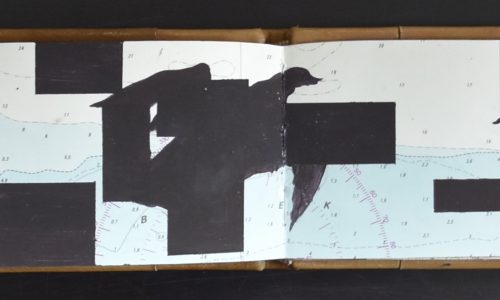
Since 1958, books have taken on a central role in Latham’s artistic expression—they are frequently burned, painted, and fragmented. Books serve as a powerful symbol of human thought and intellectual exploration. The way they emerge from many of his canvases conveys the notion of a human presence coming into existence. However, books also signify diverse systems of belief. A significant portion of Latham’s later works incorporate books alongside glass, a fragile material prone to shattering. Through this juxtaposition, Latham delivers a clear message: the imperative need for a unified worldview in an increasingly divided world.

www.ftn-books.com has the 1991 Stuttgart catalog available.

Posted on Leave a comment

Pierre Lahut (1931-2013)

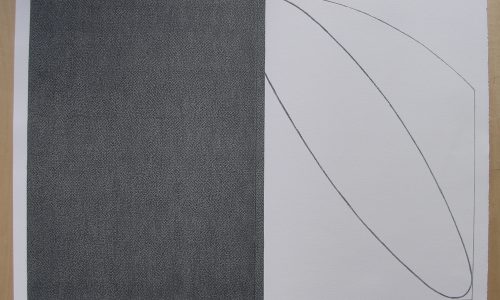
The work of Pierre Lahaut (1931-2013) remains a valuable witness to the development of the Belgian art movement in the second half of the 20th century. It fits several successive trends: Symbolism, Minimalism, New Subjectivity, Geometry. Two-time winner of the Young Belgian Painting Award, Pierre Lahaut is a member of the group ‘Jeunes Figuratifs belges’ and is also known as co-founder of the group ‘Ax 59’. The artist was also a recognized and enthusiastic teacher in academia. He taught at Tell Kameren (ENSAV) for 17 years, where he founded the Drawing and Stimulation Graphics Atelier. The exhibition at the Royal Museums of Fine Arts of Belgium (RMFAB) includes some 40 works that symbolize the 1960s, a turning point for Rao. This selection marks Pierre Laot’s transition to the non-figurative and lyrical according to geometric predominance. In 1967 the same paintings and watercolors were exhibited at the Fine Arts Centre. Fifty years later, RMFAB invites you to rediscover these works, enhanced by a new technological infusion of digital experiences. To enhance this experience, the Multimedia Cylinder offers a complete overview of the life and work of Pierre Rao’s life and work through additional content such as touchscreens, videos, photographs, archives, high-definition projections… This project is in line with the desire of the Royal Museums of Fine Arts of Belgium to continuously innovate the public experience of museums. A multimedia cylinder is placed in the center of the room for at least three years. In this way, newly selected works from the collection of modern and contemporary art are digitally complemented and refined.

www.ftn-books.com has the Orion gallery catalog from 2002 now available.
Posted on Leave a comment

Burton Brothers (1866-1914)

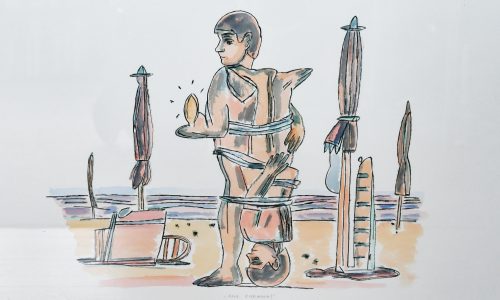
One of the most significant photographers in nineteenth-century New Zealand is Alfred Burton. He is particularly renowned for his collection of photos depicting the Māori people in the Whanganui and King Country regions. These photos, titled “Through the King Country with a camera: a photographers diary,” were published in 1885 as a supplement to his catalogue, “The Māori at Home,” in the Otago Daily Times.

Alfred Henry Burton (1834–1914) and Walter John Burton (1836–1880) were born in Leicester, England. Their father, John Burton, was a well-known photographer in the area. His company, John Burton and Sons, had the privilege of working with Queen Victoria and other members of the Royal Family.

In 1866, Walter Burton moved to Dunedin and successfully established his own photography studio. However, with the time-consuming nature of photography in the 1860s, Walter had more work than he could handle. As a result, in 1868, he convinced his older brother, Alfred, to join him, and they became partners in the Grand Photographic Saloon and Gallery on Princes Street, Dunedin.

While Walter focused on portrait photography, Alfred embarked on extensive travels, frequently venturing to Fiordland, the Southern Lakes, and South Westland. His collection of photographs, titled “Views of Fiordland,” played a crucial role in advocating for the area to be designated as a national park.

Nevertheless, the challenges of scenic photography in the 1860s were significant. Poor roads and river crossings on horseback posed risks to the cumbersome photographic equipment. In response, the Burton Brothers commissioned the construction of a photographic van in 1869. This mobile darkroom featured a collapsible roof for travel, eliminating the need to set up a dark tent and saving valuable time for developing photos.

In 1873, the Burton Brothers unveiled their first panoramas of Dunedin, including a breathtaking shot taken from Bedford House atop Bell Hill. This elevated perspective created an effect reminiscent of an aerial photograph.

Around the same time, the Burtons devised an innovative photo montage to promote their business, resembling a photographic CV. This masterpiece consisted of 780 portraits and earned recognition as one of the most ambitious commercial collages of its time. Among the notable personalities showcased were James Cook, Queen Victoria, and Julius Vogel.

Unfortunately, the partnership between Alfred and Walter ended on a bitter note in 1877.

www.ftn-books.com has the Volkenkunde book from 1987 now available.

Posted on Leave a comment

Dorien Melis (1938-2021)

Johan Claassen describes his work as “minimal, musical visual poetry”. What can I add? Dorien Melis (1938-2021) made small paintings, primarily on canvas or panel, in which lines were drawn along somewhat larger shapes to depict memories. These memories must have something to do with the city’s reflections Like the water, the horizon at dusk, or the cold light of the morning sun streaming into the bedroom through a light curtain. Her works have titles such as Life of Water, Little Cantatas, Songs of the Night, and Between the Lines. A painting depicting how vulnerable people are protected. A minimalist, musical visual poem.

www.ftn-books.com has 2 small Melis publications available.

Posted on Leave a comment

Renie Spoelstra (1974)

The intention of the huge charcoal drawings of Renie Spoelstra is to let the viewer experience an atmosphere of deliberate apathy; hours and days go by in a split second, every moment frozen in time and every moment equal to the other. Consequently, characteristics of actual observations are diminished, making the unique more common and indefinite, so that they can function as a substitute for many similar places.

Renie Spoelstra’s arduous process of drawing always begins with a journey. For close to a decade, she has travelled to coasts, lakes and forests throughout North America and Europe, looking for landscapes that evoke overwhelming existential feelings.

Spoelstra uses film footage as a starting point for her charcoal drawings. The suede like and velvety texture is achieved by the many layers of charcoal, which are skillfully positioned on top of each other to re-create an almost cinematographic scene. The balance between darkness and soft beams of light is rendered through the many shades of black and grey, creating a notion that something may be lurking below the surface.

Themes of intensity, secrecy and mystery are reoccurring in Spoelstra’s works. There is an alluring and mythical feel of a place. The series ‘Stretching Universe’ refers to the scientific fact that our universe is expanding, while here on earth it feels as though it is shrinking with the rise of xenophobia, narrow-mindedness and the continuous threats of climate change. Fleeing, or escaping to nature is not as easy as it may seem.

Renie Spoelstra studied at St. Joost, Breda and at the Academie Minerva, Groningen. She has exhibited in the Netherlands and abroad, notably at institutions like the Louvre-Lens, Albertina, Vienna, Museum Boijmans van Beuningen, Rotterdam, the Kunsthal Rotterdam, Museum Belvedere Heerenveen, Rijksmuseum Twenthe and Stedelijk Museum Schiedam. Her work is included in renowned collections such as the Centre Pompidou, Paris, MACBA Barcelona, Collection Frac Picardie Amiens, Stedelijk Museum Schiedam, Centraal Museum Utrecht, Cobra Museum voor Moderne Kunst, Amstelveen, Museum Voorlinden, Wassenaar, the Guerlain Foundation, Paris, De Nederlandsche Bank, Bouwfonds Collection, The National Collection of the Netherlands, Teylers Museum Haarlem, The Louis Dreyfus Family Collection NY, De Ru Collectie and many other (private) collections worldwide.

www.ftn-books.com has now the DARKNESS IS A PLACE publication available.

Posted on Leave a comment

David Urban (1966)

Why a blog on David Urban. The reason is simple. Urban exhibited at Barbara Farber in 1996. Unknown and available at that time at reasonable prices. Now almost 30 years later, paintings from that gallerist and its artists from that decade come again to the market. One of these artists is David Urban. Well known in Canada and the US and lesser known in Europe, but still there are some paintings to be found in European private collections and museums. One of the last auctions from last auctioning season had such a painting by David Urban. THE GOLDEN NUMBER from 1996. I was able to buy this painting for the FTN collection and it will be for sale in a few weeks. If you are interested , please contact me at wilfriedvandenelshout@gmail.com

The work of David Urban is defined by bold collisions of line and shape, clashing tones and kinetic brushstrokes. Urban builds his dynamic paintings, layer upon layer, incorporating the traditions of still life and landscape, abstraction and realism. Rhythmic geometries conjure up networks of boards, beams and girders. His work explores the physical presence of sound, with a strong sense of connectivity and rhythmical structure. Urban produces forms that engage the viewer, pursuing an endless investigation into how and why we perceive images. Urban focuses on the history and methodology of color and painting itself, embedding powerful brushstrokes and charcoal drawings in thick layers of paint. His work explores the interplay of representation and abstraction while presenting his two distinct streams of contemporary painting.
Urban is a true Renaissance man and scholar of art history, literature and music. He has a master’s degree in English Literature and is trained in several instruments. He studied the work of early Modernist painters such as Piet Mondrian and Henri Matisse. His artwork is the culmination of this creative effort and research.
Urban graduated from York University in 1989 with both BA and BA.

Posted on Leave a comment

Kurt Löb (1926-2015

Kurt Löb

If i must choose one of the best illustrators working from the Netherlands in the last century it would be Kurt Löb.

Born in Germany he fled to the Netherlands and build a career in illustrating books, magazine and at the same time produced many great paintings and drawings. The style “fin du siecle” with loose abstract elements. He must have been influenced by Austrian Art from the 1900’s , but in his career he definitely created a style of his own. These drawings belong to the very best dutch/ german illustrators.

www.ftn-books.com has  a nice signed copy of the Löb / Bild + Buch publication available.

Signed Bild + Buch
Posted on Leave a comment

Aki Kuroda (1944)

Born in Kyoto in 1944, Akihiko Kuroda had a lifelong interest in art and painted his first work at the age of four. His family had a great influence on Kuroda as a boy. His father brought magazines like Le Minotaur from Paris. Through these magazines, Kuroda discovered the work of painters such as Picasso and Dali, inspiring him during the early stages of his artistic career. These resources were invaluable to the self-taught. In the 1960s, Kuroda traveled around Europe, finally deciding to settle in Paris in 1970. Kuroda struggled during his early years in Paris, until chance encounters with French-American writer and filmmaker Marguerite Duras, Spanish artist Joan Miru00f3, and gallery owner Adrian Margut decided his fate. Until I changed it, I was going to give up and go back to Japan. Aki Kuroda’s famous participation in the 11th Paris Biennale in 1980 signaled the beginning of his career. Kuroda flouted traditional hierarchies and in 1993 became the youngest artist to have a solo exhibition at the National Museum of Modern Art, Tokyo. Prominent artists Yoshitomo Nara and Takashi Murakami acknowledged Kuroda’s influence on their careers in their memoirs. In 2007, Kuroda became the first Japanese artist to be exhibited at the Beijing Imperial Museum and TS1 Museum in China. In Japan, Aki Kuroda’s work is in several public collections around the world, including the National Museum of Modern Art, Tokyo and the National Museum of Art, Osaka. In France, it is housed in the collections of the Marguerite Aime Mag Foundation in Saint-Paul-de-Vence, Paris, and the Museum of Modern and Contemporary Art, Strasbourg. In Ireland, Hugh Lane City Museum of Contemporary Art, Dublin. And in Holland at the Peter Steibson Foundation in Amsterdam.

www.ftn-books.com has the Maeght publication from 1986 now available

Posted on Leave a comment

Otto Muehl (1925-2013)

Otto Muehl (16 June 1925 u2013 26 May 2013) was an Austrian artist, best known as a co-founder and one of the principal figures of Viennese Actionism and founder of the Friedrichshof Commune. It is In 1943 Muehl had to serve in the Wehrmacht. There he enrolled in officer training. He was promoted to first lieutenant and took part in infantry combat during the Battle of the Bulge in 1944. After the war, he studied German and history at the Vienna Academy of Fine Arts, as well as art education. In 1972 he founded the Commune Friedrichshof, considered by some to be an authoritarian offshoot, which existed for several years before falling apart in the 1990s. In 1991, Muehl was sentenced to seven years in prison for sex and drug offenses against minors. He was released in 1997 after six and a half years in prison and founded a small commune in Portugal. After his release, he also published his memoir from prison (Out of Prison).

www.ftn-books.com has the 2008 Sammlung Friedrichshof book now available.

Posted on Leave a comment

Gianfranco ASveri (1948)

Gianfranco Asveri was born in 1948 in Fiorenzuola d’Arda, province of Piacenza. After graduating from the Department of Technology and Science, he found a reason to live in art in 1969, where he devoted himself to painting. For many years he lived and worked with dogs at Gasperini in the Piacenza hills.
After an early stage of self-expression in the traditional pictorial language, from the 1980s onwards his paintings took on a more instinctive and personal gesture, using rich colors and fabrics and emphasizing his brut expressionism. approached. Expressing a highly instinctive and emotional style of painting, Asveri attacks the surface with arrogant and primitive gestures, thereby coexisting with other, less perceptible matrices of expression, memories of artistic images. can. Asveri’s paintings are born from observations of reality, with deep and vibrant inspiration. animals that the artist collects and cares for, animals that he lives with and worships, and animals to which he devotes his paintings, paintings and poems.
He was ranked among the 10 emerging Italian painters by his Il Sole 24Ore newspaper and was recognized through numerous solo exhibitions in Italy and abroad.

www.ftn-books.com has the CHarta publication on Asveri available.