Posted on Leave a comment

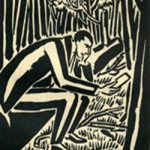
Peter Zegveld (1951)

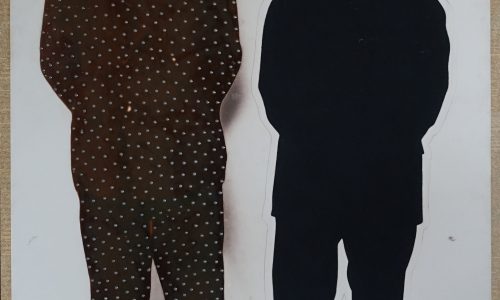
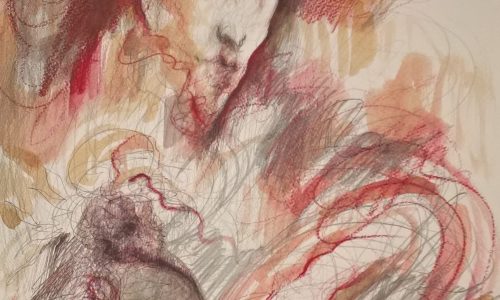
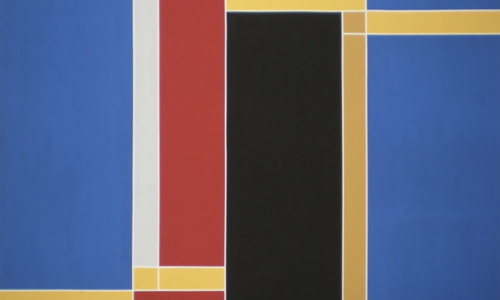
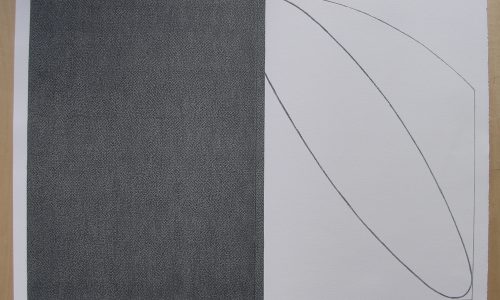
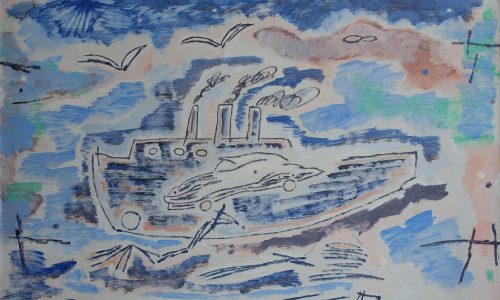
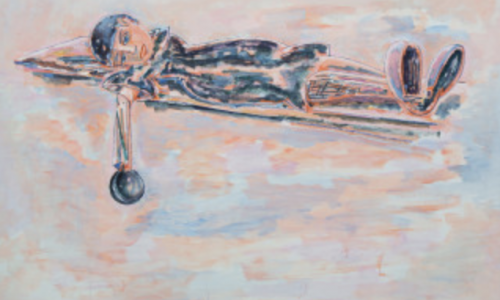
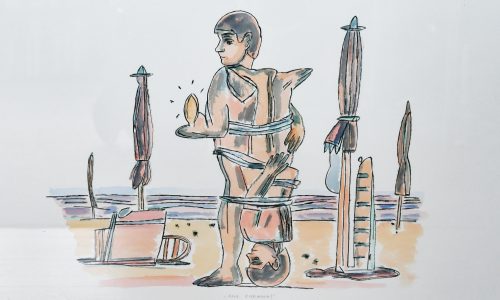
Peter Zegveld is a visual artist and playwright, born in 1951 in The Hague and a graduate from the Royal Academy of Art in The Hague. His artistic oeuvre is distinguished by simplicity and accessibility, and is frequently exhibited in major museums throughout the Netherlands. His theatrical performances are visually stimulating, evocative, and cinematic. With boundless freedom and an unconventional approach, Zegveld ventures across diverse disciplines, allowing his audience to encounter and uncover absurdities. In addition to creating shows for theaters, festivals, and his autonomous art, he has also produced works for Orkater and television series for VPRO. Peter Zegveld serves as the artistic director of the Caspar Rapak Foundation.

www.ftn-books.com has the Irma Boom designed book ” Exploded View# now available.

Posted on Leave a comment

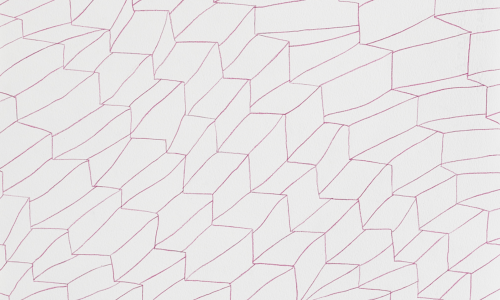
Nicolas Dings (1953)

Showcased in Nicolas Dings’ work is a three-dimensional world, straddling the line between melancholy and longing. He manipulates bronze, ceramics, and plastic, along with found objects and text, to craft a kaleidoscopic oeuvre that offers commentary on the world around him. A substantial book, “Zimmer Frei” (Van Hoof Gallery/ Van Spijk Publishers) was released in 2019, showcasing his forty-year career. In a previous catalogue, “Annus Horribilis” from 1993 (Kunstvereniging Diepenheim), he painted a picture of the times, which has now become a harsh reality. In 2020, museums closed their doors, exhibitions were cancelled, and events were postponed. As a visual artist, Dings could only react by continuing to work; after all, his studio was the safest place on earth. The audience dwindled to just one person: the artist himself. As we gradually return to our normal routines, the result will be a disrupted universe. Nicolas Dings does not depict the crisis through references or admonitions, but through signs on the walls (and on the floor), evoking a longing for a better world. He resides and creates in Wijdewormer and Besmont La Rue Charles, France. His body of work includes sculptures, drawings, texts, and installations in public spaces.

www.ftn-books.com has several Dings titles now available.

Posted on Leave a comment

Anselm Kiefer “Twin Towers” at Museum Voorlinden

It all began in early January 2024. We frequently walk our dogs in the Museum Voorlinden area, an inspiring environment that is perfect for displaying large-scale sculptures in a natural setting. Last year, it was the approximately 60 human figures by Anthony Gormley, and this year, two impressive towers suddenly arose in the midst of the dunes. At first, I thought it was a work by Atelier van Lieshout, but upon inquiry, it turned out to be a masterpiece by Anselm Kiefer.


In early January, certain pathways to the dune area were closed off and a bridge was reinforced. Shortly after, the 800-meter path was elevated by 80 cm and leveled, with plates added for heavy machinery to drive on. It was a sudden transformation. Walls of stacked cubes were delivered and it became clear that a sculpture would be installed, as two foundations were laid for erecting a structure. It turned out to be two towers of different sizes. I estimate that one tower is about 19 meters tall and the other about 16 meters. It’s fascinating to see this artwork being built over the weeks, as not only the artwork itself is admirable, but also the technical and financial efforts that were put into making it happen. Now, approximately 6 weeks after the project began, the installation is complete. A unique location for a unique Kiefer piece, one that is a “must-see” for anyone who visits the Museum Voorlinden, to admire and appreciate the accomplishment in a setting like no other

www.ftn-books.com has a range of Anselm Kiefer titles now available.

Posted on Leave a comment

Gerti Bierenbroodspot (1940)

Born in Amsterdam in 1940, Gerti Bierenbroodspot has emerged over the years as one of the most renowned, beloved, and multifaceted artists in the Netherlands. Her greatest inspiration is Leonardo Da Vinci, known as l’uomo universale – the universal man. Bierenbroodspot’s repertoire includes painting, sculpture, bronze casting, tapestry design, ceramics, and stained glass.

Renowned writer Gerrit Komrij included a short poem by Gertie Bierenbroodspot in his seminal work on Dutch poetry. In addition to poetry, she also writes beautifully lyrical prose. She has aspirations to one day compose an opera, with the libretto already conceptualized.

The central theme in Gertie Bierenbroodspot’s work is the labyrinth of time in which we wander. In her core, she is a devotee of the god Shiva, who dances to destroy creation in order for the new to emerge. This theme is ever-present in her work and the way in which she gives it form.

For years, Gertie Bierenbroodspot was part of an archaeological team conducting research in the Jordanian city of Petra. She has also been involved in archaeological research in other countries in the Middle East. In 1995, she was knighted by King Hussein of Jordan.

www.ftn-books.com has now the title with the works on Egypt and Pompeii available

Posted on Leave a comment

Drewes de Wit (1944)

Drewes de Wit has been a practicing artist for 50 years. His work is rooted in the fundamental art of the 1970s, where process and research holds greater value than the final product. De Wit, however, takes it a step further, with the process remaining significant but the eventual outcome guiding the way. The sleek and polished surface, along with the seemingly blurred imagery in his paintings, create a subtle yet refined aesthetic. However, the intention is not to evoke poetry or mysticism. Instead, it is grounded in scientific principles, reminiscent of examining tiny creatures under a microscope or deciphering symbols from a forgotten language. De Wit’s work is a captivating journey for the viewer, an adventurous exploration of intricate details that never cease to fascinate.

www.ftn-books.com has the scarce ( ed of 150 copies) 2011 book now available.

Posted on Leave a comment

Louis C. Kalff (1897-1976)

Louis C. Kalff (1897-1976) was a designer and art director at Philips for advertising, products, exhibitions, and stands, as well as being an architect. Growing up in a prosperous environment in Amsterdam, his father was a lawyer who later became a journalist and the art and editor-in-chief for the Algemeen Handelsblad. Kalff attended HBS and the Quellinusschool for a year before studying architecture in Delft in 1916. During his studies, he designed posters, banners, and costumes for student celebrations. In 1923, he completed an internship with architect D.F. Slothouwer.

Kalff applied to work at Philips through a letter, stating that the company’s advertising was not modern enough and lacked “standing.” In 1925, he was put in charge of the commercial and artistic propaganda departments. In articles and memoirs, Kalff claimed that he wanted to standardize the Philips brand and emphasized the unity and international aspect of the company’s image. He also designed products, stands, exhibitions, and light shows for Philips. In 1929, he became the head of the so-called Light Advisory Bureau, and in 1946, he was appointed as the art director. In that same year, he advocated for a central design department that would also conduct research. However, it was not until 1954 that such a department was established under his successor R. Veersema.

In 1958, Kalff worked with Le Corbusier and composer Edgar Varèse on the Philipspaviljoen for the World Fair in Brussels, where their Poème Électronique was performed. In 1966, he designed the Evoluon, a technology center in Eindhoven. Kalff also built several villas, gave lectures, and was involved with the KIO and the Eindhoven Academy for Industrial Design. In 1941, he wrote the book Kunstlicht en architectuur (Artificial Light and Architecture).

www.ftn-books.com has the book on Kalff by van Dam now available.

Posted on Leave a comment

Carl Andre , one of the last true original minimal artists .(1935- 2024)

The year 1988, the Haags Gemerentemuseum organized , together with the van Abbermuseum , the largest of Carl Andre exhibitions. It included sculptures, drawings , multiples and Andre was set to open the exhibition , but he could not…. he was accusedf fort murder on his wife and could therefore not travel. So i missed to meet one of the artists i truly admired and still admire. Carl Andre will prove to be one of the most influential of all 20th century artists and will be missed.

Carl George Andre was welcomed into the world on September 16, 1935, in Quincy, Massachusetts, as the youngest of three siblings. His father, George, an immigrant from Sweden, taught himself English and pursued a career as a naval draftsman, focusing on creating freshwater plumbing systems for ships. In addition, he was an avid amateur woodworker, and his basement workshop became a favorite place for young Carl to explore his creativity. His mother, Margaret (Johnson) Andre, was an office manager but later dedicated her time to managing the family’s household.

Carl attended the prestigious Phillips Academy in Andover, Massachusetts, and briefly studied poetry under John Crowe Ransom at Kenyon College in Ohio.

His surviving family members include his fourth wife, Melissa Kretschmer, and his sister, Carol. He spent most of his life in Lower Manhattan.

www.ftn-books.com has some of the most im,portant Carl Andre publicvsations still available.

Posted on Leave a comment

Roger Vivier (1907-1998)

Roger Vivier, also known as the Fabergé of footwear, was born in 1907. He was a true master in his craft, creating shoes that were a fusion of function and artistry. His unrivaled talent led him to begin his sculpture studies in 1924 at the Paris School of Fine Arts. However, he soon abandoned this path to pursue shoemaking and start an apprenticeship.

With a deep-rooted fascination for the world of theatre and music halls, Vivier also dabbled in stage design. It was during one such occasion backstage that he had the pleasure of meeting renowned performers Josephine Baker and Mistinguett. Intrigued by their individual styles and needs, Vivier began creating custom-made shoes for them.

In 1937, following the overwhelming success of his footwear creations, Vivier opened his first boutique on the fashionable rue Royale in Paris. He quickly became renowned for his expertise in heels – the Aiguille stiletto, first launched in 1954, and the sinuous Virgule heel, considered the manifesto of his eponymous label since 1963. Vivier’s passion for feminine elegance and his innate ability to transform shoes into works of art earned him a well-deserved place as a master artisan, collaborating with celebrated French embroidery houses.

His designs caught the attention of exceptional women, with Queen Elizabeth II donning a pair of his shoes on her coronation day in 1953. Vivier’s acclaimed creations were sought after by the most prominent personalities of his time: the Duchess of Windsor, Princess Soraya of Iran, Hollywood icons Marlene Dietrich and Elizabeth Taylor, and French star Brigitte Bardot. One of his most iconic designs, featuring a silver buckle, made its first appearance in the film “Belle de Jour” on actress Catherine Deneuve.

Roger Vivier’s legacy lives on, with his masterpieces continuing to inspire and adorn the feet of women across the globe. His name will forever be associated with impeccable craftsmanship, unparalleled elegance, and timeless sophistication.

www.ftn-books.com has now 2 titles on Vivier available.

Posted on Leave a comment

Liesbeth Bijkerk (1957)

This is what Liesbert Bijkerk says on her work:

My starting point is not the visual reality, I do not depict anything. You could see my work as traces of memories. The inspiration can be something I have seen, or read, or heard. They can be personal experiences but also works of others: paintings, frescoes, drawings, texts, and musical pieces. After these things have occupied me directly for a while, they become mental impressions without tangible form. They detach from the sensory experience. With these kinds of impressions, I want to compose independent images, detached from everything that surrounds us daily.

Painting, for me, is creating: making something out of nothing. In the initial layers, I work with pigment, rabbit glue, and thin acrylic paint. I do not use photos or sketches. What happens on the canvas or paper is created in the moment when I work on it. In this process, I want to give randomness the maximum chance. Much of it happens associatively. One image almost directly follows from the other. This way of working gives me the greatest freedom. The painting does not always fit within the frame of the paper or canvas. Sometimes, I cut out the interesting pieces. When working on paper, they usually become collages. When working on canvas, I stretch the cut-out pieces on a smaller frame. After that, I add the final layers with oil paint. Here, I strive for maximum control. With oil paint, I can mix the exact colors I need to finish the canvas, and sometimes I use scraps of paper to find the right form. In an intuitive way, I search for the essence of the image. Each painting is like a puzzle without a reference picture. Gradually, it becomes clear how all the pieces should fit together. The final result is always more intense and powerful than the image I started with.

www.ftn-books.com has the 2007 WERK OP PAPIER catalog now available.

Posted on Leave a comment

Anselm Kiefer at Museum Voorlinden

Is Kiefer one of the great artists of our time…..certainly YES!

Is the Kiefer exhibition at Museum Voorlinden worth visiting? My personal answer is no. Far too crowded,. too many objects in one and the same room and expensive at euro 22 ,00 per person. Because of the many people present you can not take a distance from the large objects, showcases and paintings. It felt so crowded that it was unpleasant and after half an hour we decided to leave the museum. One of my personal observations was the analogy i felt with the 90’s and 00’s paintaings by Frank van Hemert.

Left and right are van Hemert paintings from the late 90’s and 00’s in the middle there is a work by Kiefer ca. 1996/97

I really love these sunflower paintings . whoever the artist, both convince me being great art. The large Kiefer paintings are very worth visiting at Voorlinden however , the bicycle objects and large showcases can not convince me and because they are over half the exhibition i thought it a disappointing visit.

All paintings , objects and cases deserve space and because this is limited at Voorlinden and the spaces were shared with far too many people the overall experience was disappointing.

The exhibition can be visited until the 25th of February and for those seeking catalogs on this artist please visit www.ftn-books.com

Here are some photographs i took at the exhibition: