Posted on Leave a comment

Paul de Lussanet (1940)

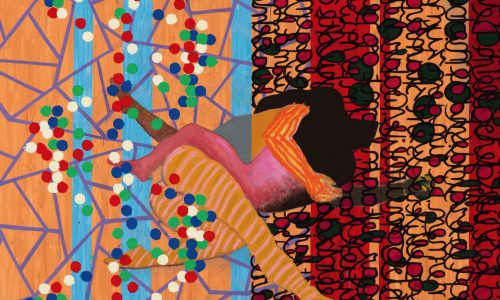
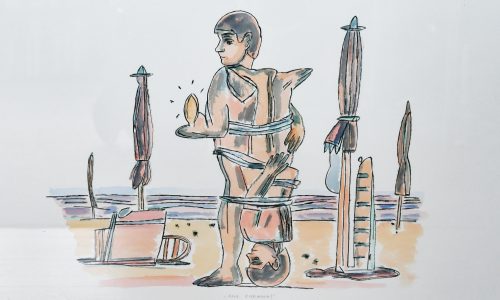
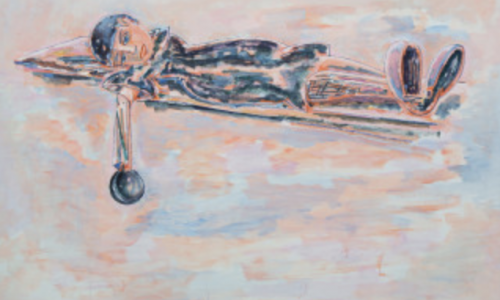
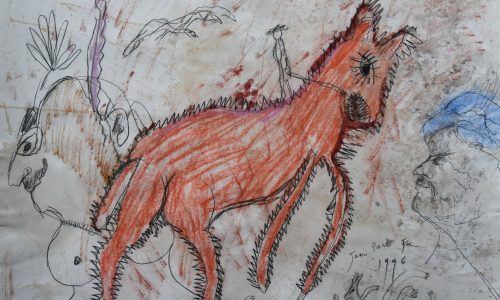
De Lussanet’s breakthrough as a painter was thanks to Harmsen van Beek and Gerard Reve. Reve opened De Lussanet’s first exhibition in Laren and Frederike wrote a glowing review of him in Vrij Nederland. “And suddenly I belonged. You only needed two people in the media spotlight, and you were there.”

That she wrote about him was one thing, but what she wrote about him was also remarkable. At first glance, De Lussanet paints beautiful, fragile girls and sexually challenging, pulled-apart nudes, glamorous women heavily reliant on makeup.

He confronts these two types of femininity. The sweetness flees, becoming artificial when compared to the “witch’s brew of chemicals, erotic glimmers, and shadows,” according to Harmsen van Beek. This creates the opposite effect of what the beauty industry promises. Instead of youth, beauty, and money, this work highlights physical decay and ugliness.

In this way, according to De Lussanet, it exposes the deceit “that almost every woman practices at home.” She interprets De Lussanet’s work not as a pornographic extension of the advertising fantasy, but rather as an attack on the “perverted art of advertising,” a “denunciation of fake beauty.”

www.ftn-books.com has the galerie Quintessens catalog from 1989 now available.

Posted on Leave a comment

Jörg Madlener (1939)

Jörg Madlener was born in Germany in 1939, and later spent 35 years residing in Belgium before ultimately settling in the United States. His art has received widespread recognition across Europe and the United States, including the Venice Biennial and São Paulo Biennial. Solo exhibitions have been held at esteemed events such as FIAC in Paris, Art Basel, ARCO Madrid, and Art Fairs in Chicago and Los Angeles. Notable museums such as the Solomon Guggenheim Museum, le Museum of Modern Art in Brussels, and the Albertina in Vienna have collected his work. Madlener has also shared his knowledge and expertise, teaching at the Technical University in Darmstadt, Germany and various academies in Brussels. Passionate for all forms of art, he has also contributed his talent to designing sets for theater and opera productions around the world.

In 1989, a retrospective exhibition was held to commemorate thirty years of Madlener’s paintings. A decade later in April 1999, another retrospective was dedicated to ten years of his exquisite varen églomisé paintings. This prestigious event was held at the Brussels City Hall, Grand-Place, with an esteemed committee chaired by an important figure showing their honor and support for Madlener’s creations.

www.ftn-books.com has the 1982 Bruxelles catalog available.

Posted on 15 Comments

Ferdinand Pire Ferdinand (1943)

Ferdinand Pire, born in Brussels in 1943, hails from a line of illustrious painters. His father, Marcel, imparted his knowledge to him before he further honed his skills at the prestigious academies in Brussels and Cape Town. In his youth, Pire captured the beauty of landscapes and African culture in his paintings during his time in Congo and South Africa.

Upon his return to Europe, Pire devoted himself to mastering the chiaroscuro technique until 1980, heavily influenced by his stay in Italy. Following a period of Fauve art and contemporary intimacy, he delved into the world of glomyized art. His predecessor in Belgium, the renowned Floris Jespers who passed away in 1965, introduced Pire to this enigmatic and intricate technique. Pire was immediately drawn to it, fueled by curiosity at first, but then with immense passion. He embarked on a journey to uncover the secrets and complex alchemy behind the relatively unknown technique. Slowly but surely, he achieved complete mastery, and by 1987, he had reached the pinnacle of artistic excellence.

In 1989, a retrospective exhibition celebrating Pire’s thirty years of painting was held in his honor. And in April 1999, another retrospective showcasing a decade of varen églomisé paintings took place in the grandiose setting of Brussels City Hall, at the famous Grand-Place. The event was chaired by a prominent committee that came together to pay tribute to and support Pire’s remarkable achievements in art.

www.ftn-books.com has the Becker catalog now available.

Posted on Leave a comment

Miguel Angel Campano (1948)

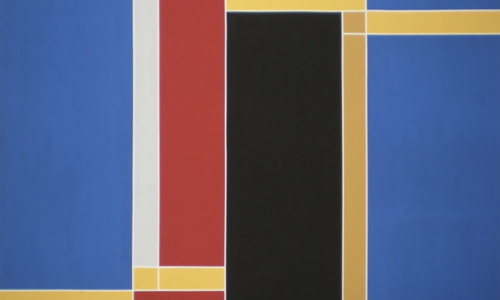
Born in Madrid in 1948, he pursued studies in Architecture and Fine Arts in Madrid and Valencia. With dual residency in Paris and Soller (Mallorca), his artistic journey has been marked by a shift from automatism to geometric abstraction, heavily influenced by renowned artists from Cuenca – Gerardo Rueda and Gustavo Torner.

In the 1980s, his abstract style fractured into two distinct paths, veering between a bold simplification of form and an intense commitment to realism. Driven by a deep passion for the rich history of painting, he organizes his works into thematic series that pay homage to both modern masters like Delacroix and Cézanne, as well as classical traditions represented by the likes of Poussin. He also reinterprets the principles of cubism in his depictions of still lifes and Mallorcan landscapes.

In recent years, his work has undergone a significant transformation, shedding formal constraints and embracing a more muted palette. Rigorous and imaginative, his compositions embody a balance of mystery and dynamism, inviting the viewer to delve deeper into their enigmatic complexities.

www.ftn-books.com has the Guimoit catalog from 1988 now available.

Posted on Leave a comment

Isa Genzken (1948)

Architecture as a source of inspiration has been a constant in her work since the 1980s and 1990s. This has led to architectural forms and principles of organization, but also to the integration of art into new buildings, in collaboration with the Belgian architecture duo Paul Robbrecht and Hilde Daem.

Isa Genzken emerged onto the scene in the 1980s, a period in which art took on new eclectic paths after the conceptual deconstruction of modernism. Her work is in a tense relationship with modernism and minimalism, translating into various media such as sculpture, installation, film, and artist books.

Like buildings, Genzken’s works seem to “frame” reality. At first glance, they offer a conceptual and material frame to interpret the rampant chaos of reality. In some sculptures, this results in ruinous concrete structures on metal pedestals.

In Fenster I and II, created for the exhibition ‘New Images’ (1993), the fragmented and eroded gives way to a sleek and smooth finish. Genzken placed two window sculptures amidst the shrubbery of Middelheim-Laag. Their hidden position between the bushes and the (too) high steel structure acting as a pedestal, makes them not very functional. You don’t look through them, but rather up at them. They frame the trees and branches of the surrounding area, but these Fremdkörper mainly draw attention to themselves.

The use of materials – transparent epoxy resin that reveals the internal iron reinforcement – reinforces this dysfunctional effect. The translucent resin is sensitive to changes in daylight and highlights the frame in relation to what is framed.

www.ftn-books.com now has the Neue Nationalgalerie publication available.

Posted on Leave a comment

Mary Bauermeister (1934-2023)

Mary Bauermeister was born in 1934 in Frankfurt am Main. After studying at the art academies of Ulm and Saarbrücken, she moved to Cologne in 1956. Her studio at Lintgasse 28 in Cologne was an important meeting place for avant-garde artists and musicians around 1960. Performers, composers, and Fluxus artists such as Nam June Paik, John Cage, Karl Heinz Stockhausen, David Tudor, Wolf Vostell, Christo, and Benjamin Petterson gathered here to organize the latest music performances, events, and happenings. Paik performed his legendary action Etude for Pianoforte (1959-1960), where after playing a piece by Chopin, he cut Cage’s tie and squeezed a bottle of shampoo on the heads of Tudor and Cage.

Mary Bauermeister’s oeuvre includes sculptures, assemblages, drawings, performances, and music. When Bauermeister participated in one of the “international summer courses for new music” in Darmstadt in 1961 under the direction of Stockhausen, she developed her Malerische Konzeption, a model for applying serial compositional techniques to the visual arts.
Black and white photo of Mary Bauermeister in front of her work ‘Wabenbild’
Mary Bauermeister in front of ‘Wabenbild’. Stedelijk Museum Amsterdam, 1962.

Her reliefs and sculptures, incorporating drawings, texts, found objects, natural materials, and fabrics, reference various concepts: from natural phenomena and astronomy to mathematics and language, as well as her own “spiritual-metaphysical experiences.” Karl Heinz Stockhausen wrote about her work: “It is typical that she does not strive for a personal style recognizable by motifs, techniques, routines, and material explorations, but instead considers every material or object (found or artificially made), every technique, every stylistic provision as material.”

www. ftn-books.com has the Stedelijk Museum and galerie Schüppenhauer both available.

Posted on Leave a comment

Aki Kuroda (1944)

Born in 1944, Aki Kuroda relocated from Kyoto to Paris in 1970 to pursue his artistic calling. Through his early works, he showcased a mature and sensitive perception, garnering praise from art critics and collectors alike. As his art gained recognition, Kuroda’s exhibitions spanned the continents, exhibiting his pieces in Europe, the United States of America, and even across the globe in Chicago, the South of France, and at the Yugoslaia Museum of Modern Art. In 1976, his skill and talent were acknowledged with the prestigious European Painting Prize Ostende Belgium.

Kuroda’s first solo exhibition was held in 1978 in Bermerhaven, Germany, and he continued to showcase his works at the esteemed Galerie Maeght in Paris. As his reputation grew, his masterful pieces were also exhibited at other prominent European galleries, starting from the year 1980.

From the very beginning of his career, Kuroda has experimented with a diverse range of art forms, spanning from traditional drawing and photography to more contemporary forms such as painting and sculptural work. He has also delved into the world of theatre and opera, designing set pieces that showcase his artistic brilliance. Apart from this, he has also dabbled in editing magazines, creating installation works, and even performing live art pieces.

Kuroda’s almost metaphysical approach has resulted in his involvement in a variety of projects, such as his collaboration with renowned architect Tadao Ando in creating a mural for a residential building in Osaka, Japan. He has also worked with the Contemporary Museum of Art in Strasbourg, France, and in the 1990s he created captivating stage sets for the Paris Opera Ballet. In addition, he has lent his artistic vision to various prestigious projects, promoting the intellectual and aesthetic rigor of theatrical endeavors, often collaborating with universities. In 2003, he worked with Richard Rogers to design a theatre and education center in his hometown of Kyoto, Japan. For this project, he created masterful sculptural walls and murals, along with painting the theatre’s safety curtains and mosaic floors.

www.ftn-books.com has now the Maeght Barcelona catalog from1993 available.

Posted on Leave a comment

Patrick Fleury (1951)

Space-time and the interplay between the visible and the invisible are the two primary axes that define the essence of Patrick Fleury’s achievements. The dialogue between nature and the artworks that present themselves to it, plays with the rules of perspective and its illusions. The sun creates shadows that vanish into darkness, embodying the duality of day and night. These works exist both within the flow of time and outside of it.

www.ftn-books.com has a photo press set on a Fleury exhibition ow available.

Posted on 1 Comment

Rineke Marsman (1955)

Rineke Marsman’s paintings, created since 1996, are dominated by figures and portraits of children. After the discovery of the monumental book “Children’s Monument”, published in France and edited by Serge Klaasfeld, Lineke Marsman long used the photographs published there as a starting point for his paintings. Did. Not to achieve a moral effect, but rather to express the concept of impermanence in a certain way. This transience was achieved in two ways for her. One concerns the content of the work and the other concerns the painting techniques used. The photographs presented in the book have been copied onto the canvas as accurately as possible. She then paints the selected images, applying layers of transparent paint, often brushing them off, to create moments when presence and disappearance are visually integrated, sometimes in diffused light. I asked for it. We hope that the new images will evoke lasting memories through the sought-after mystical power. A new painting, if the painting is good, brought back memories as a moment of respect. This series ended in February 1999 when her almost complete series Le Memorial des Enfants was exhibited at the Van Her Riecum Museum in Apeldoorn. Her current work focuses on the possibilities of painting itself, and photographs of children remain the starting point for her paintings. They are still children and are destined to live unstable lives on the margins of society. Sometimes they disappeared without a trace or died. By combining abstractions such as flowerbeds and landscapes with new subjects in more complex paintings, the possibilities of painting expand and more complex content can be expressed.

www.ftn-books.com was lucky to acquire several Marsman titles.

Posted on Leave a comment

André Masson (1896-1987)

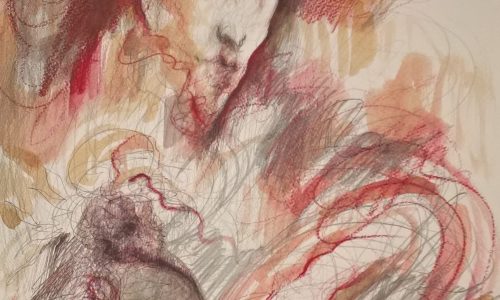
French painter, sculptor, illustrator, designer, and writer, born in Baragny (Oise). He spent most of his youth in Brussels, working as a pattern designer in an embroidery studio and also studying at the Acadu00e9mie des Beaux-Arts. He then moved to Paris and studied at the Ecole des Beaux-Arts from 1912 to 1914. He served in the French army from 1914 to 1919 and was seriously wounded. From 1919 to 1922 he lived in the south of France before returning to Paris, where he met Gris and Derain, and later Miru00f3 and Breton. In 1923, he held his first solo exhibition at Galerie Simon in Paris. He painted forests, card players, still lifes, and later experimented with automatic drawing. He participated in the Surrealist movement from 1924 to 1929. In addition to his sand paintings, he also created other works that explore the effects of chance, such as paintings depicting the transformation of animal and human forms, with an emphasis on violence and eroticism, and themes such as germination, combat, and slaughter. did. He lived in Spain from 1934 to 1936. He painted bullfights and Spanish mythology. From 1941 to 1945, he lived in exile in the United States in New Preston, Connecticut, where he created work inspired by the primal forces of nature. He returned to France in 1945 and in 1947 he settled in Provence. He painted landscape themes such as mountains and waterfalls for several years, after which he created several almost completely abstract paintings. His work also includes theater sets and costumes, book illustrations, and a series of small sculptures. He has written various books, including 1971’s  Mythologie d’Andre Masson.
www.ftn-books.com has several Masson titles available