Posted on Leave a comment

Robert Zandvliet (1970)

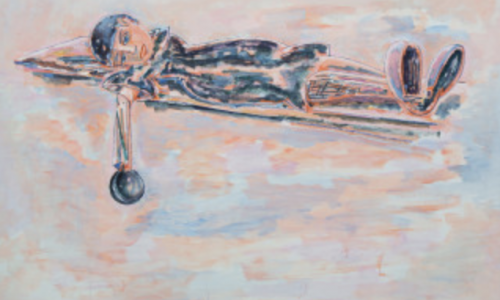
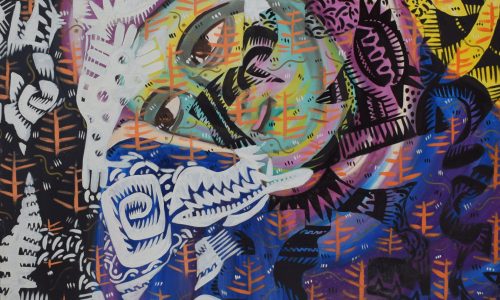
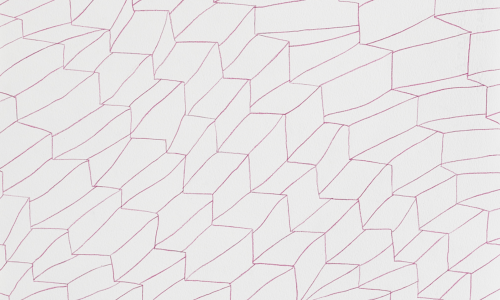
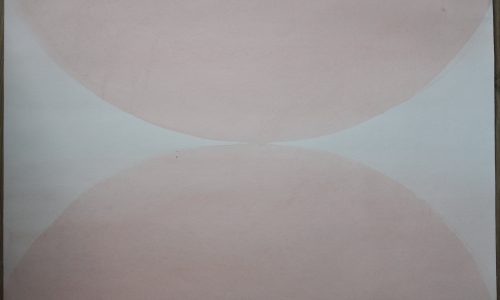
Over the past 3 decades, s Robert Zandvliet has developed a versatile as well as consistent oeuvre. That diversity is expressed the choice of motif, but also in the manner of painting, in the degree of figuration and abstraction, in the character of the brushstroke and in the use of or perhaps even the very avoidance of color. The coherence among the works has to do with their subject matter. From the very start Zandvliet has been fascinated with the medium of painting. As a theme found throughout his work, the desire to fathom its potential is given shape in all sorts of ways.

Zandvliet uses the tradition of painting as a guiding thread. Aside from traditional genres such as the still life, landscape and, in recent years, the human figure, specific works by other artists can also serve as points of departure. Whether he opts for a commonplace utilitarian object, a ‘coulisse’ landscape, an etching by Rembrandt or a painting by Picasso, the motifs are no end in themselves but rather a means by which to relate to painting; to its grammar and vocabulary, its pictorial richness, its eloquence and energy.

Zandvliet operates in the realm between abstraction and figuration. This is precisely where painting, in his view, has the opportunity to unfold and reveal its true diversity. The motif provides the painting with a foundation. It prompts the choice of painterly means and possibilities and, in that way, continues to have resonance in the finished painting. During the process of painting, the image becomes autonomous. Abstraction keeps the personal anecdote at a distance. The paint takes over the narrative. The development of Zandvliet’s oeuvre follows no straight course. One can sooner speak of circling movements. In his search for the purest form, Zandvliet frequently shifts his focus. New motifs give rise to other painterly challenges, and applied artistic solutions are further developed or set aside in order, once again, to make new discoveries possible.

For a number of years Zandvliet concentrated on the control of the brushstroke, the basis of painting. In his paintings he developed the movement of the brush into a distinct handwriting of his own. The acquired virtuosity became an obstacle for him, however, and in 2014 the dancing or sometimes fluid movements of the brush gave way to the recurring imprint of a paint roller. Zandvliet now painted his immense canvases in a single session and, with Seven Stones and the 2017-18 series Stage of Being, he pinned his hopes on the ‘momentum’ and the physical and mental energy that this could generate.

After a period in which robustly applied black gesso predominated, color has returned in full glory to his recent works. Zandvliet’s investigation into the essence of individual colors led to a range of ways in which to apply the paint. Striking in his recent paintings are the tactility and subtle nuances of the painted surface.

In his pursuit of the ultimate image, Zandvliet also goes back to motifs and painterly solutions from previous work. With the boulders placed centrally on the image surface in his Seven Stones, he went back to his earliest paintings of commonplace utilitarian objects; in Stage of Being the screen from his early ‘cinema’ works returned. With the landscapes from recent years, his earlier, nearly abstract approach to the genre was given a new twist. Motifs recur; they acquire new uses and new levels of meaning. As Zandvliet’s oeuvre grows, the paintings take on new interrelationships. These make his body of work even more tightly woven and challenge the viewer to discover its wealth of meaning.

www.ftn-books.com has some highly collectible Zandvliet titles now available.

Posted on Leave a comment

Komar & Melamid ( 1943 & 1945)

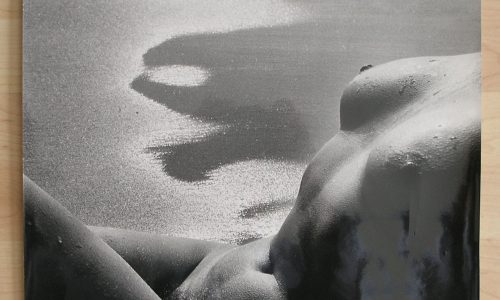
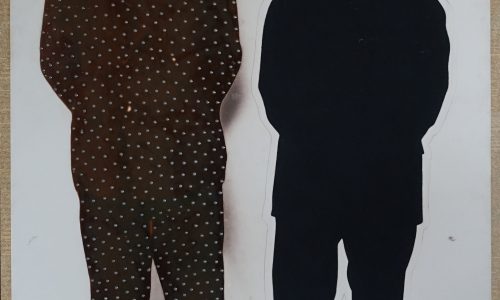
Vitaly Komar and Alexander Melamid are Moscow-born artists who emigrated to Israel in 1977 and then to New York in 1978. The two artists first collaborated on a joint exhibition entitled Retrospectivism in Moscow in 1967, and from 1972 started signing all their works with both names, regardless of whether they were made collaboratively. They continued to collaborate until the early 2000s, referring to their work as ‘not just an artist, but a movement’. Komar and Melamid are the founders of Sots-art (socialist art), a critical, nonconformist, conceptual form of pop art, based on the appropriation and subversion of socialist realist iconography and street propaganda, creating humorous, often grotesque, posters, paintings and banners. Both artists took part in the notorious ‘Bulldozer Exhibition’ held in a vacant plot in Moscow’s Belyayevo in 1974, which showcased nonconformist art by Moscow avant-garde artists that was swiftly destroyed by the authorities with bulldozers and water cannons.

www.ftn-books.com has some interesting Komar & Melamid publications available.

OLYMPUS DIGITAL CAMERA
Posted on Leave a comment

Joanne Greenbaum (1953)

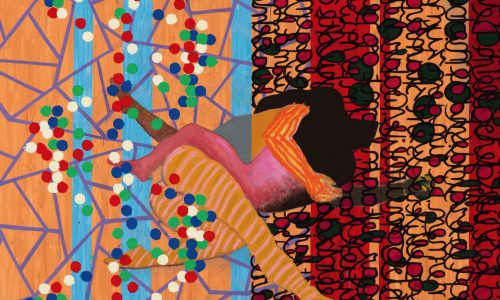
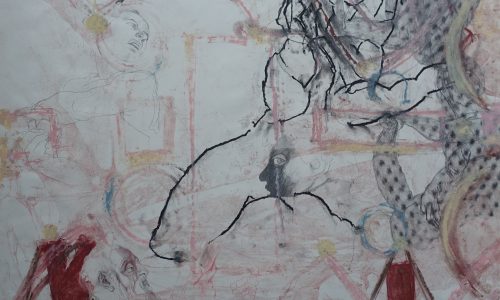
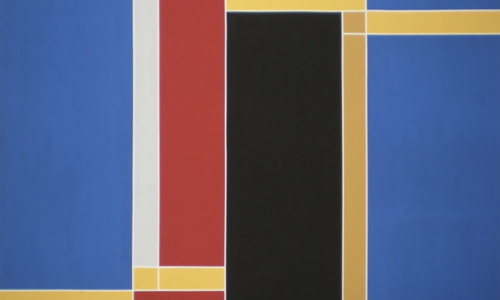
Joanne Greenbaum studied at Bard College, where she worked under the direction of Elizabeth Murray (1940-2007). Her painting is based on experimentation and the hybridisation of various forms, and maintains close ties with drawing, which acts as a sort of outline or framework. It has been shown in many museums and institutions worldwide. Her work shown at the exhibition The Triumph of Painting at the Saatchi Gallery in 2007 exceeds and frees itself from the traditional rules of abstraction. The nature of the artistic gesture is fundamental in her work, distancing itself from the gestures of expressionist painting. Abstract elements are arranged following an acute sense of colour and rhythm: pictures such as Trend Report (2004) and Prom King (2006) associate outlines and systems based on utopian architectural forms, to which she adds multiple arabesques and colour blocks, forming complex and playful compositions. Along with her paintings, her drawings, for which she follows a process close to automatic writing, resemble labyrinths that alternate between balance and imbalance, between order and chaos.

In her oil paintings from the late 90s, the canvas is left almost entirely blank, its surface interspersed with repeated circular motifs or linear architectural shapes. Éric de Chassey described the imaginative and psychological logic that animates them in Peinture, trois regards (2000): “She [the artist] contrasts a stable, utopian construction with impossible places and temporary heterotopias, following a logic of inner questioning; she assigns to her current paintings an origin in the process she begun ten years ago – a process of ‘introspection, which ended with self-doubt becoming the subject [of the work] itself’ ”. While white is still present in her latest paintings, colour has tended to take over Greenbaum’s works lately, giving them strength and structure.

www.ftn-books.com has the Haus Konstruktiv book from 2008 now available.

Posted on Leave a comment

Walter Gropius (1883-1969)

Walter Gropius was the founder of the Bauhaus and remained committed to the institution that he invested in throughout his life. He was a Bauhaus impresario in the best possible sense, a combination of speaker and entrepreneur, a visionary manager who aimed to make art a social concern during the post-war upheaval. After his departure as the Bauhaus’s director, Gropius recommended his two successors: Hannes Meyer and Ludwig Mies van der Rohe. The conservation of the Bauhaus’s legacy after its forced closure is another of Gropius’s accomplishments. He was also able to continue his career in exile in America as an avant-garde architect.

A native of Berlin, Gropius came from an upper middle-class background. His great-uncle was the architect Martin Gropius, a student of Karl Friedrich Schinkel, whose best-known work was the Königliche Kunstgewerbemuseum (royal museum of applied art) in Berlin, which now bears his name. In 1908, after studying architecture in Munich and Berlin for four semesters, Gropius joined the office of the renowned architect and industrial designer Peter Behrens, who worked as a creative consultant for AEG. Other members of Behrens’s practice included Ludwig Mies van der Rohe and Le Corbusier. Gropius became a member of the Deutscher Werkbund (German Work Federation) as early as 1910.

The same year, Gropius opened his own company. He designed furniture, wallpapers, objects for mass production, automobile bodies and even a diesel locomotive. In 1911, Gropius worked with Adolf Meyer on the design of the Fagus-Werk, a factory in the Lower Saxony town of Alfeld an der Leine. With its clear cubic form and transparent façade of steel and glass, this factory building is perceived to be a pioneering work of what later became known as modern architecture. For the 1914 exhibition of the Deutscher Werkbund (German Work Federation) in Cologne, Gropius and Adolf Meyer designed a prototype factory which was to become yet another classic example of modern architecture.

www.ftn-books.com has several titles on the Bauhaus available. Among them the 1971 BAUTEN UND PROJEKTE.

Posted on Leave a comment

Jens Pfeifer (1963)

Jens Pfeifer studied fine arts at the Royal College of Art London and at the Rietveld Academie Amsterdam. Pheifer has a practice as visual artist, making sculptures, drawings and site-specific work. His work is represented in numerous collections. As an adviser and teacher he has been connected to various art academies, amongst which: Hochschule für Kunst und Design Halle, AKI Enschede, Sandberg Instituut and the Rietveld Academie, where he has been the head of the glass department since 2012.

www.ftn-books.com has the COLORING BOOK by Jesn Pfeifer now available.

Posted on Leave a comment

Max Slevogt (1868-1932)

Max Slevogt is one of the three important exponents of German Impressionism – the other two being Lovis Corinth and Max Liebermann (Fig. 1). Slevogt was a prolific and highly versatile artist who worked in a wide range of artistic media. He produced oil paintings, watercolors, drawings and prints. He also completed fresco schemes and stage designs for theater and opera. [1] Additionally, still life was one of his preferred genres.

In his early Berlin years Slevogt’s output of still lifes was small – he produced only very few after his move to the city in 1901 and then no more than a handful around the year 1914. His real interest in the still-life genre did not emerge until the 1920s when he was to produce some of his most vibrant and arresting compositions.[2] Floral still lifes were to be less frequent in his work than still lifes of vegetables or fruit.

Slevogt depicts two bunches of summer flowers in a pair of vases. These are seen from a slightly raised viewpoint and are placed in a sharp diagonal to the picture plane. They are set on the corner of a table jutting into the pictorial space. The jutting corner of the table is a spatial device also found in late nineteenth-century French painting.
Despite the rapidity of Slevogt’s brushwork the flowers are botanically identifiable. Their striking color is reflected in the cut glass facets of the vases. The composition is dominated by the red roses in the larger of the two vases. Some of the roses have passed their peak and are already hanging their heads – suggesting the melancholy of an Indian summer. The smaller, chromatically more refined bunch in the foreground is still in full bloom.

Slevogt’s preoccupation with the still lifes of Manet was particularly marked during his Berlin years. Many of his still lifes reference elements of the compositional structure of Manet’s still lifes. This is still evident in his later works – an example is his predilection for diagonals.

www.ftn-books.com has the book on his complete graphic works now available.

Posted on Leave a comment

Gé-Karel van der Sterren (1969)

Gé-Karel van der Sterren (Stadskanaal, July 29, 1969) is a Dutch painter. The visual artist Van der Sterren, born in Stadskanaal, was trained from 1990 to 1996 at the art academy in Enschede. Soon after his training he exhibited at home and abroad. His work has been shown in Amsterdam, The Hague, Reykjavik, Dijon and New York. In 2009 Van der Sterren made for the Gemeentemuseum Den Haag the monumental canvas Oopsie Daisy of 14 meters long and three meters high, in which he visualized his view on the contemporary consumer society. The work of Van der Sterren was awarded the following prizes: Royal Prize for Free Painting – 1999 Prix de Rome – 1999 Jeanne Oosting Price – 2007

www.ftn-books.com has 2 publications available on Ge-Karel van der Sterren.

Posted on Leave a comment

Jus Juchtmans (1952)

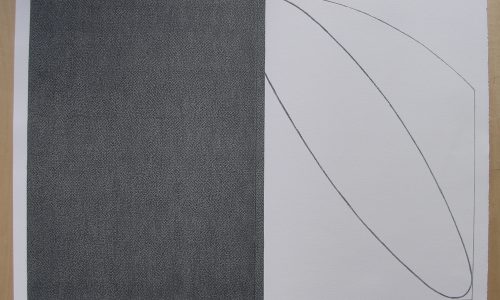
Known for his apparently monochrome paintings, and clearly related with minimal art, that rejected the dominance of visual perception and presented the idea of artworks as objects to be experienced, to be made aware of, and no longer to be seen for their visual impact, Jus Juchtmans works with a translucent painting that he applies to the canvas in different consecutive layers, not necessarily of the same color.

Sometimes there are even thirty different layers, and in this way, colors that we haven´t perceived at first sight appear under the apparently dominant color.

The result is an extremely shiny surface that resists the viewer, and looking at them is often a frustrating process that makes the spectator to feel uneasy. This reflection as well as the reflection of the gallery’s surroundings, is an integral part of the work. He wants the spectator to become conscious of the viewing conditions of his work, particularly the transitory and time specific nature of those conditions.

Born in Morstel in 1952, Jus Juchtmans studied Fine Arts and Design in Antwerp, where he has developed his artistic career from the beginning.

Since then, he has grown up to become a well-known artist, participating in different group shows in museums and institutions, among other ones the Ludwig Museum, with Callum Innes and Nicola Rae, the Kunsthalle of Recklinghaussen, and Budapest, the Kunstmuseum Celle, etc.

In the late years he has reinforced his career with individual shows in London, Munich, Cologne, Graz, Berlin, Paris and New York.

His works can be found in museums like the SMAK of Gante, The Contemporary Art museum of San Diego, the PMMPK of Belgium, the Karl Ernst Osthaus Museum of Hagen… and in collections like the Peter Stuyvesant Collection of Amsterdam, Fondation Carmignac, Porquerolles and F. van Lanschot Bankiers.

www.ftn-books.com has the DIPTYCHON IV catalog from Gent now available.
Posted on Leave a comment

Terry Winters (1948)

Over the last four decades, Terry Winters has expanded the concerns of abstract painting by engaging contemporary concepts of the natural world. Many of his earliest paintings depict organic forms reminiscent of botanical imagery. Over time, his range of themes expanded to include the architecture of living systems, mathematical diagrams, musical notation, and new orders of data visualization. His brilliant palette reflects his continual experimentation with materials. Throughout his paintings and works on paper a metaphoric sensibility reveals itself in the expressive language of resonant forms and figures. Winters has described being motivated to describe how “abstract processes can be used to build real-world images.”

Terry Winters (b. 1949) lives and works in New York City and Columbia County, New York. He has had one-person exhibitions at numerous museums, including the Whitney Museum of American Art in New York, the Whitechapel Art Gallery in London, the Kunsthalle Basel, and the Metropolitan Museum of Art in New York. Most recently, the Drawing Center in New York organized a survey of his drawings in 2018.

www.ftn-books.com has the PRINTED WORKS book from 2001 now available.

Posted on Leave a comment

Helen Britton (1966)

From a young age, Helen Britton used art as a form of communication and was soon making jewellery. She still has a cow horn bracelet she made when she was 12 and some earrings made from old beads and fuse wire.

As an artist-jeweller, Britton approaches her practice without distinguishing between forms of creative production: “Some bodies of work contain jewellery, sculpture and drawings; some only one or another — it depends on what I am trying to say.”

Britton is one of the world’s most established artist-jewellers and is known for creating colorful pieces that are just as likely to include recycled plastics as precious stones.

“Preciousness is a construct and culturally driven. All materials are interesting and carry their stories with them,” she says. “I choose the materials because of what they have to say and for no other reason.”

Over the years, she has set blackened silver rings with diamonds and sapphires, or combined silver and pearls with plastic or glass. Her creations are part of jewellery collections of museums such as the Metropolitan Museum of Art in New York and the Stedelijk Museum in Amsterdam.

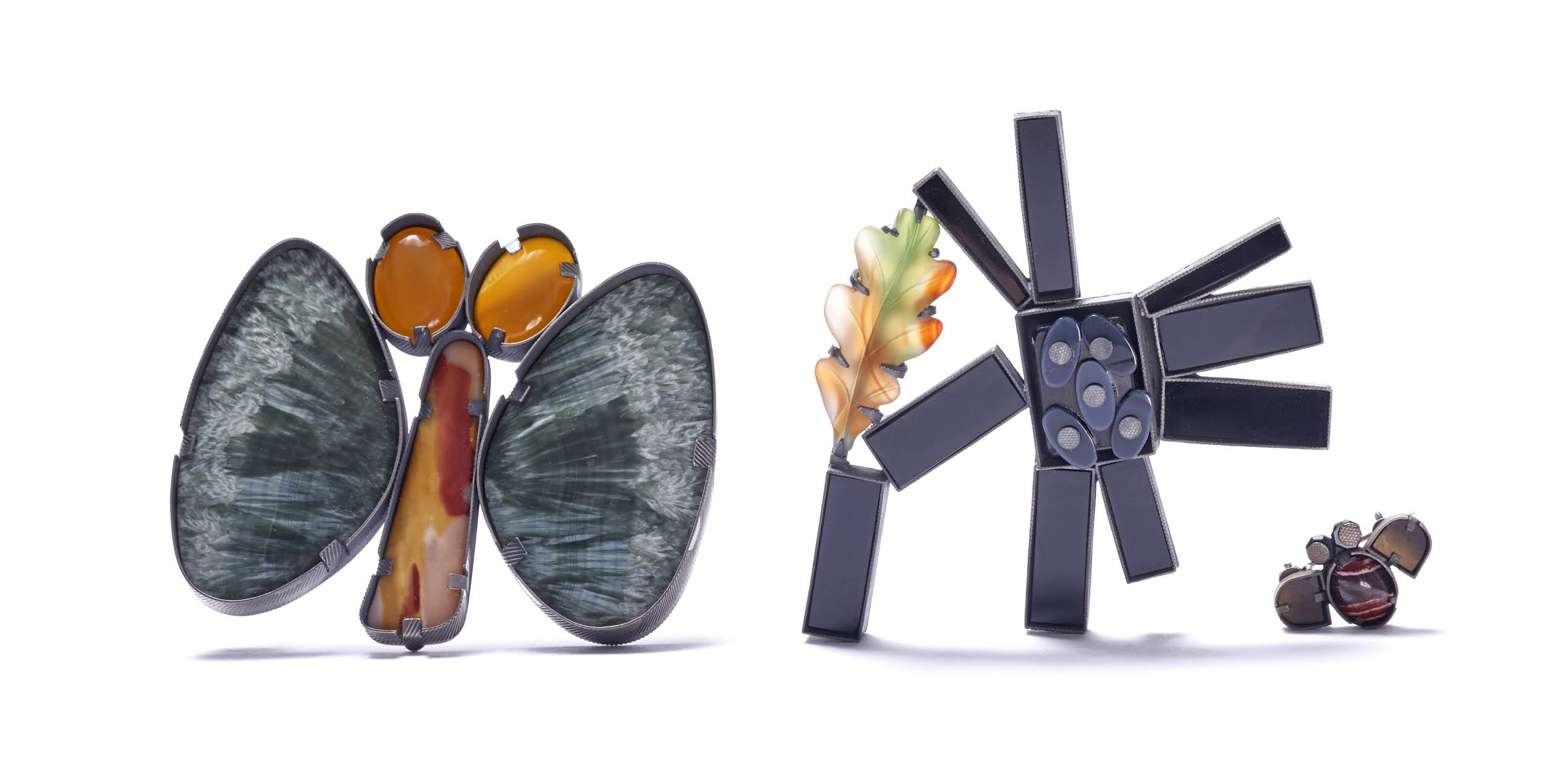
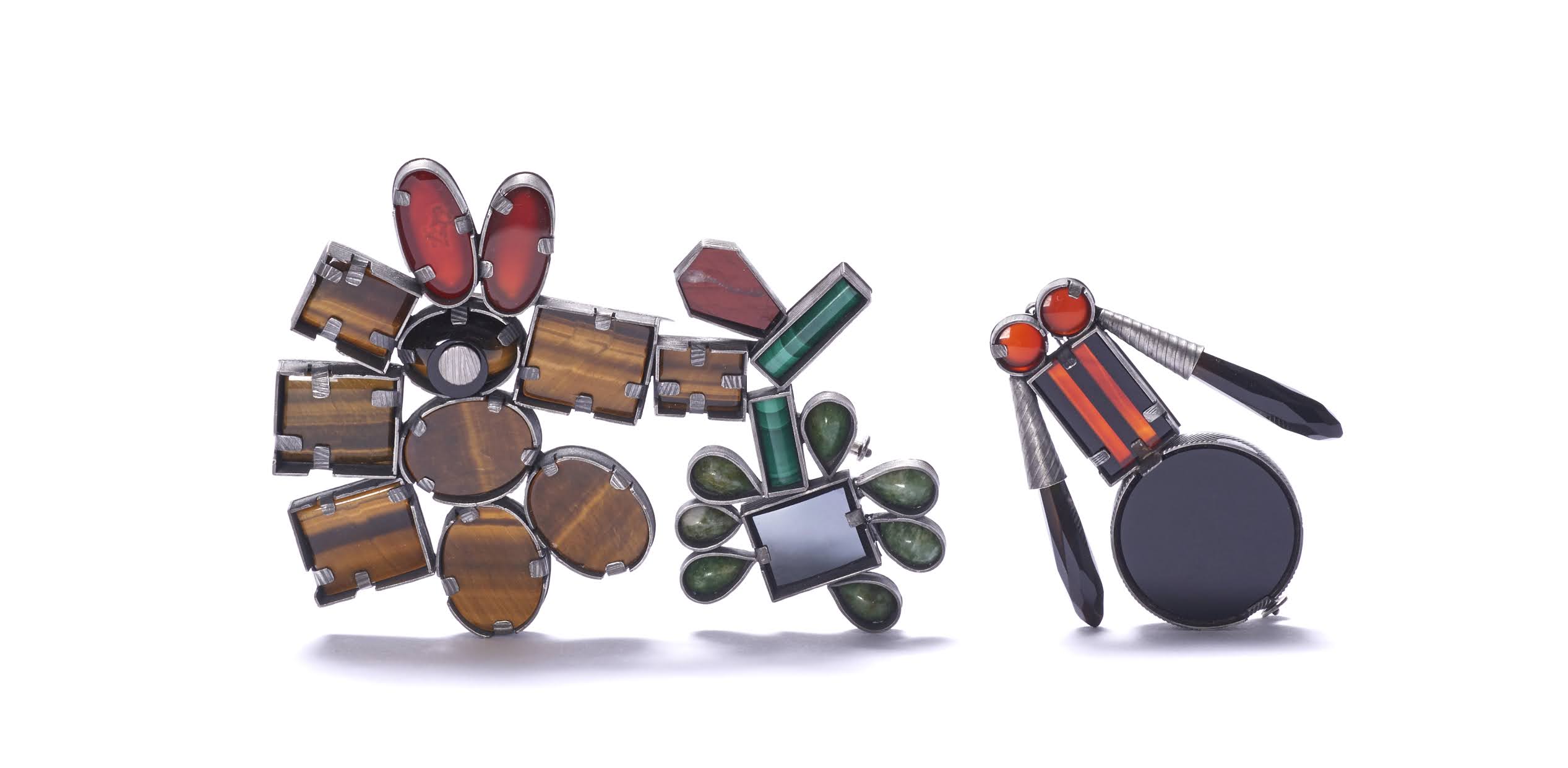
In her most recent body of work, Arachne’s Garden, Britton played with stones she had collected over her lifetime, such as jasper, agate, garnet, malachite and onyx. Like pictograms constructed in stone, she says the brooches and pendants formed on her table almost by themselves, “while sliding the piles around, animals and insects and flowers appeared, like watching clouds or reading tea leaves”

Britton’s preference for repurposing materials is deliberate and she notes that with our planet’s resources being constantly depleted, “it is difficult to justify the production of even more things. All I can do is carefully use up what I already have.”

www.ftn-books.com has now the catalog with Special cover from 2010 available.

Of her creative process, Britton explains: “It’s hard to say succinctly what I do. Sometimes I don’t know myself. I only know that the work wants to be made, that the selection of materials and choice of art form are dependent on the theme and when a work is finished, I can stand back and see if I have given it enough power and autonomy to live a life in the world without me. That’s the wonder of the creative process. A lot of it remains a mystery even to me.”

Sienna Patti, who has championed artist- jewellers since founding her gallery in Lenox, Massachusetts, in the late 1990s, remarks that while some artists who create jewellery as an extension of their practice have their work outsourced, Britton creates everything herself. Artist-jewellers like Britton, she points out, “choose to communicate their concept intentionally in a jewellery form as opposed to a painter or sculptor who decides to make jewellery”.