Posted on 3 Comments

Piet Tuytel (continued)

Another reason to emphasize the importance of Piet Tuytel. I more and more appreciate his works and since a few months I am looking to OCTAGOON nr. 8 . A sister work from the same series has been a gift by NOG and is now on permanent display in the entrance hall of the Stedelijk Museum Schiedam. Here is Oktagoon nr. 8

Some sculptures appropriate space, while others structure and define it. The works of Piet Tuytel (Alblasserdam, 1956) are among the latter sort. Tuytel likes the flat landscape of the polders, whose emptiness is made palpable by the occasional appearance of a farm or a power pylon. At times even those sparse elements are missing and you need—as he says—to start slamming poles in the ground in order to focus on something.
Tuytels sculptures involve that type of intervention. In order to give ‘shape’ to space, he makes use of existing objects. At first those ranged from pipes and tubes to bathtubs and chairs; later he opted for more neutral objects that were less charged with meaning. Over the past ten years, he has worked with construction materials such as T-bars and H-beams, heightening their spatial effect with the aid of color and a well-considered placement on a metal base plate. In De Pont’s project space this use of elementary forms expands to include a new element. The wall sculptures, to be on view as of March 21, consist of radiators, sometimes in combination with treaded aluminum plates.

The wall sculptures have the standard sizes of two types of radiators: long and narrow ones (50 x 250 cm) and square ones (90 x 90 cm). He shows a number of them from the front and others from the back side. With the connections for pipes and the attachment points for brackets being clearly visible, the radiators remain recognizable as such. As an artist Tuytel has always sought turning points at which the ordinary allows itself to be experienced in terms of art, but rarely has the existing object taken on its new role so matter-of-factly and serenely as it does here. The heavy and unwieldy radiators have been transformed into abstract fields in which light and shadow play a leading role. In a series of four, the strict vertical rhythm of the convectors is counteracted in a much less predictable horizontal pattern. What seems, from a distance, to be thin lines proves, on closer inspection, to be the frayed cuts of a power tool. The position, the number and the distribution of the incisions bring motion into the square field in various ways and cause the visual space to recede or contract.

In his intuitive search for rhythm, Tuytels takes an approach which hardly differs from that of an artist like Mondrian, but his concern for materiality is that of a sculptor. In the series of vertical wall sculptures, narrow radiators have been turned sideways and combined with aluminum plates. The choice of this material, used for such things as loading ramps, has been deliberate. Due to its raised surface, some amount of space remains between the radiator and the plate. And the slight curve caused by the rolling process gives the material a certain spatial quality. Tuytel exploits this by spray-painting the aluminum black or by polishing it to a mirror-like shine. The black or silvery color of the aluminum plate and the white of the radiator each have their own three-dimensional effect. Tuytel makes use of that in constructing the wall sculptures, in which he ‘stacks’ various spatial qualities. In others the dynamics between figure and ground are evoked through the use of plates cut in angular shapes. The visually expansive effect of these forms is further heightened by the bright red in which the plate has been spray-painted.
Tuytel’s wall sculptures attest to the intense observation of an artist who takes inspiration from the spatial dimension of landscape and translates this into a play of formal relationships. The precision with which Tuytels zooms in on his subject parallels his location of a point by latitude north and longitude west, manifest in the exhibition’s title 51° 34′ 4″ N 5° 4′ 29″ E: these are the coordinates of the project space at De Pont.

www.ftn-books.com has now the Piet Tuytel book” Ruimte” available

Posted on Leave a comment

K.R.H. Sonderborg (1921-2008)

German Informel is closely associated with K.R.H. Sonderborg. Inspired by the gestural painting of American Abstract Expressionism, his paintings and drawings reveal a fascination with technical constructions and their traces of movement. It shows the form in its process of creation. In doing so, Sonderborg used a spontaneous application of paint. He thus created a dynamic structural system. His brushstrokes were rather strokes with the painting tool, executed in a quick gesture. His preferred colours were black and white with red elements, which he applied with a rubbing or wiping technique. From the 1970s onwards, his work increasingly approached a controlled, almost representational formal language. He limited himself to a few high-contrast colour tones, usually black on white. He distilled motifs from private and press photographs, isolating them from their narrative context and using them as a basic optical structure to inspire him. He remained true to his preference for technical constructions, whereby the graphic structure of car windscreen wipers and overhead cables inspired him just as much as harbour cranes or gas tanks. 

www.ftn-books.com has multiple Sonderborg publications available.

Posted on Leave a comment

Sterling Ruby (1972)

Sterling Ruby (*1972) has created a complex, ever-evolving artistic universe that oscillates between raw abjection and aestheticizing abstraction. His ceramics, sculptures, installations, textile works, videos and paintings are associated with a post-humanist view on culture. The Los Angeles-based artist is working on a map of our collective unconscious, with a particular focus on social topologies, as well as traumas and ruptures in post-war art history.

Ruby’s oeuvre is diverse, formally and thematically, and difficult to characterize. While his SP (spray painting), BC (bleach collage) or more recent WIDW (window) series include color abstractions with a composition and materiality that explores traditional and contemporary senses of beauty, they also bristle with a clear subtext of psychological unrest. The artist’s geometric solids series consists of monumental minimalist sculptures made of Formica composite that Ruby has covered with graffiti, scratchiti, smears, fingerprints and other vandalizing methods. His SCALES series comprises mobile sculptures that merge modernist forms with such unusual readymades as paint buckets and industrial steel drums. Ruby’s SOFTWORKS recall labyrinthine bundles of amorphous, stuffed fabric figures with an unsettling corporeality. Apart from their aesthetic dimension, some of Ruby’s STOVE sculptures also serve as functional wood-burning stoves. The artist’s ceramics, which he produces in a variety of series and sizes, have organic shapes and sumptuous glazes and are often reminiscent of charred animal and human remains. His large-scale, totem-like sculptures made of polyurethane resin have a similarly visceral effect, echoing the visual repertoire of horror and science fiction films. Ruby has drawn on plexiglas with nail polish, made disturbing analogue and digital photo collages, and repurposed vehicles such as an LAPD squad car and a salvaged American submarine into sculptures.

The range of media the artist uses is mirrored in an aesthetic strategy that he himself describes as “schizophrenic.” Yet for all their multifaceted character, Ruby’s works share a common denominator. His creations clearly spring from an interconnected network and often make direct reference to one another, sometimes at the level of an ingenious recycling of used materials. Common to all of his paintings and objects is a sustained resistance to the ideological limitations of minimalism and conceptual art, their “high culture” social practices and legacy, which continue to dominate the art system today. He advances the evolution of an art-historical game with the abject and the refined, the origins of which are traceable to the work of artists such as Mike Kelley, Rosemarie Trockel, and Bruce Nauman.

Sterling Ruby draws inspiration from a number of intellectual influences, including Judith Butler’s gender theory, mathematical catastrophe theory and the philosophy of Gilles Deleuze and Felix Guattari. His oeuvre explores such contemporary phenomena as supermax prisons, American politics and consumption and the social treatment of mental illness. Ruby’s works resemble outgrowths of a social and psychological landscape determined by fear, repression, violence, and stigmatization—a landscape we live in, yet so often turn a blind eye to. They also create the lexicon for a language of chaos, transgression, and radical diversity—a source of simultaneous eruption and awakening.

www.ftn-books.com has the Phaidon publication on Sterling Ruby now available.

Posted on Leave a comment

Robert Zandvliet (1970)

Over the past 3 decades, s Robert Zandvliet has developed a versatile as well as consistent oeuvre. That diversity is expressed the choice of motif, but also in the manner of painting, in the degree of figuration and abstraction, in the character of the brushstroke and in the use of or perhaps even the very avoidance of color. The coherence among the works has to do with their subject matter. From the very start Zandvliet has been fascinated with the medium of painting. As a theme found throughout his work, the desire to fathom its potential is given shape in all sorts of ways.

Zandvliet uses the tradition of painting as a guiding thread. Aside from traditional genres such as the still life, landscape and, in recent years, the human figure, specific works by other artists can also serve as points of departure. Whether he opts for a commonplace utilitarian object, a ‘coulisse’ landscape, an etching by Rembrandt or a painting by Picasso, the motifs are no end in themselves but rather a means by which to relate to painting; to its grammar and vocabulary, its pictorial richness, its eloquence and energy.

Zandvliet operates in the realm between abstraction and figuration. This is precisely where painting, in his view, has the opportunity to unfold and reveal its true diversity. The motif provides the painting with a foundation. It prompts the choice of painterly means and possibilities and, in that way, continues to have resonance in the finished painting. During the process of painting, the image becomes autonomous. Abstraction keeps the personal anecdote at a distance. The paint takes over the narrative. The development of Zandvliet’s oeuvre follows no straight course. One can sooner speak of circling movements. In his search for the purest form, Zandvliet frequently shifts his focus. New motifs give rise to other painterly challenges, and applied artistic solutions are further developed or set aside in order, once again, to make new discoveries possible.

For a number of years Zandvliet concentrated on the control of the brushstroke, the basis of painting. In his paintings he developed the movement of the brush into a distinct handwriting of his own. The acquired virtuosity became an obstacle for him, however, and in 2014 the dancing or sometimes fluid movements of the brush gave way to the recurring imprint of a paint roller. Zandvliet now painted his immense canvases in a single session and, with Seven Stones and the 2017-18 series Stage of Being, he pinned his hopes on the ‘momentum’ and the physical and mental energy that this could generate.

After a period in which robustly applied black gesso predominated, color has returned in full glory to his recent works. Zandvliet’s investigation into the essence of individual colors led to a range of ways in which to apply the paint. Striking in his recent paintings are the tactility and subtle nuances of the painted surface.

In his pursuit of the ultimate image, Zandvliet also goes back to motifs and painterly solutions from previous work. With the boulders placed centrally on the image surface in his Seven Stones, he went back to his earliest paintings of commonplace utilitarian objects; in Stage of Being the screen from his early ‘cinema’ works returned. With the landscapes from recent years, his earlier, nearly abstract approach to the genre was given a new twist. Motifs recur; they acquire new uses and new levels of meaning. As Zandvliet’s oeuvre grows, the paintings take on new interrelationships. These make his body of work even more tightly woven and challenge the viewer to discover its wealth of meaning.

www.ftn-books.com has some highly collectible Zandvliet titles now available.

Posted on Leave a comment

Komar & Melamid ( 1943 & 1945)

Vitaly Komar and Alexander Melamid are Moscow-born artists who emigrated to Israel in 1977 and then to New York in 1978. The two artists first collaborated on a joint exhibition entitled Retrospectivism in Moscow in 1967, and from 1972 started signing all their works with both names, regardless of whether they were made collaboratively. They continued to collaborate until the early 2000s, referring to their work as ‘not just an artist, but a movement’. Komar and Melamid are the founders of Sots-art (socialist art), a critical, nonconformist, conceptual form of pop art, based on the appropriation and subversion of socialist realist iconography and street propaganda, creating humorous, often grotesque, posters, paintings and banners. Both artists took part in the notorious ‘Bulldozer Exhibition’ held in a vacant plot in Moscow’s Belyayevo in 1974, which showcased nonconformist art by Moscow avant-garde artists that was swiftly destroyed by the authorities with bulldozers and water cannons.

www.ftn-books.com has some interesting Komar & Melamid publications available.

OLYMPUS DIGITAL CAMERA
Posted on 1 Comment

Joanne Greenbaum (1953)

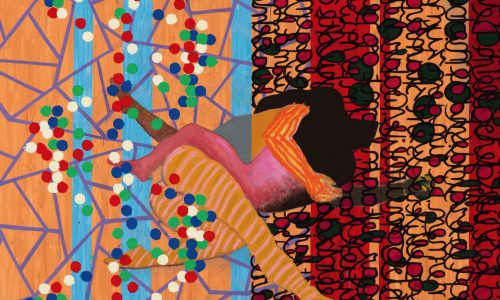
Joanne Greenbaum studied at Bard College, where she worked under the direction of Elizabeth Murray (1940-2007). Her painting is based on experimentation and the hybridisation of various forms, and maintains close ties with drawing, which acts as a sort of outline or framework. It has been shown in many museums and institutions worldwide. Her work shown at the exhibition The Triumph of Painting at the Saatchi Gallery in 2007 exceeds and frees itself from the traditional rules of abstraction. The nature of the artistic gesture is fundamental in her work, distancing itself from the gestures of expressionist painting. Abstract elements are arranged following an acute sense of colour and rhythm: pictures such as Trend Report (2004) and Prom King (2006) associate outlines and systems based on utopian architectural forms, to which she adds multiple arabesques and colour blocks, forming complex and playful compositions. Along with her paintings, her drawings, for which she follows a process close to automatic writing, resemble labyrinths that alternate between balance and imbalance, between order and chaos.

In her oil paintings from the late 90s, the canvas is left almost entirely blank, its surface interspersed with repeated circular motifs or linear architectural shapes. Éric de Chassey described the imaginative and psychological logic that animates them in Peinture, trois regards (2000): “She [the artist] contrasts a stable, utopian construction with impossible places and temporary heterotopias, following a logic of inner questioning; she assigns to her current paintings an origin in the process she begun ten years ago – a process of ‘introspection, which ended with self-doubt becoming the subject [of the work] itself’ ”. While white is still present in her latest paintings, colour has tended to take over Greenbaum’s works lately, giving them strength and structure.

www.ftn-books.com has the Haus Konstruktiv book from 2008 now available.

Posted on Leave a comment

Walter Gropius (1883-1969)

Walter Gropius was the founder of the Bauhaus and remained committed to the institution that he invested in throughout his life. He was a Bauhaus impresario in the best possible sense, a combination of speaker and entrepreneur, a visionary manager who aimed to make art a social concern during the post-war upheaval. After his departure as the Bauhaus’s director, Gropius recommended his two successors: Hannes Meyer and Ludwig Mies van der Rohe. The conservation of the Bauhaus’s legacy after its forced closure is another of Gropius’s accomplishments. He was also able to continue his career in exile in America as an avant-garde architect.

A native of Berlin, Gropius came from an upper middle-class background. His great-uncle was the architect Martin Gropius, a student of Karl Friedrich Schinkel, whose best-known work was the Königliche Kunstgewerbemuseum (royal museum of applied art) in Berlin, which now bears his name. In 1908, after studying architecture in Munich and Berlin for four semesters, Gropius joined the office of the renowned architect and industrial designer Peter Behrens, who worked as a creative consultant for AEG. Other members of Behrens’s practice included Ludwig Mies van der Rohe and Le Corbusier. Gropius became a member of the Deutscher Werkbund (German Work Federation) as early as 1910.

The same year, Gropius opened his own company. He designed furniture, wallpapers, objects for mass production, automobile bodies and even a diesel locomotive. In 1911, Gropius worked with Adolf Meyer on the design of the Fagus-Werk, a factory in the Lower Saxony town of Alfeld an der Leine. With its clear cubic form and transparent façade of steel and glass, this factory building is perceived to be a pioneering work of what later became known as modern architecture. For the 1914 exhibition of the Deutscher Werkbund (German Work Federation) in Cologne, Gropius and Adolf Meyer designed a prototype factory which was to become yet another classic example of modern architecture.

www.ftn-books.com has several titles on the Bauhaus available. Among them the 1971 BAUTEN UND PROJEKTE.

Posted on Leave a comment

Jens Pfeifer (1963)

Jens Pfeifer studied fine arts at the Royal College of Art London and at the Rietveld Academie Amsterdam. Pheifer has a practice as visual artist, making sculptures, drawings and site-specific work. His work is represented in numerous collections. As an adviser and teacher he has been connected to various art academies, amongst which: Hochschule für Kunst und Design Halle, AKI Enschede, Sandberg Instituut and the Rietveld Academie, where he has been the head of the glass department since 2012.

www.ftn-books.com has the COLORING BOOK by Jesn Pfeifer now available.

Posted on Leave a comment

Max Slevogt (1868-1932)

Max Slevogt is one of the three important exponents of German Impressionism – the other two being Lovis Corinth and Max Liebermann (Fig. 1). Slevogt was a prolific and highly versatile artist who worked in a wide range of artistic media. He produced oil paintings, watercolors, drawings and prints. He also completed fresco schemes and stage designs for theater and opera. [1] Additionally, still life was one of his preferred genres.

In his early Berlin years Slevogt’s output of still lifes was small – he produced only very few after his move to the city in 1901 and then no more than a handful around the year 1914. His real interest in the still-life genre did not emerge until the 1920s when he was to produce some of his most vibrant and arresting compositions.[2] Floral still lifes were to be less frequent in his work than still lifes of vegetables or fruit.

Slevogt depicts two bunches of summer flowers in a pair of vases. These are seen from a slightly raised viewpoint and are placed in a sharp diagonal to the picture plane. They are set on the corner of a table jutting into the pictorial space. The jutting corner of the table is a spatial device also found in late nineteenth-century French painting.
Despite the rapidity of Slevogt’s brushwork the flowers are botanically identifiable. Their striking color is reflected in the cut glass facets of the vases. The composition is dominated by the red roses in the larger of the two vases. Some of the roses have passed their peak and are already hanging their heads – suggesting the melancholy of an Indian summer. The smaller, chromatically more refined bunch in the foreground is still in full bloom.

Slevogt’s preoccupation with the still lifes of Manet was particularly marked during his Berlin years. Many of his still lifes reference elements of the compositional structure of Manet’s still lifes. This is still evident in his later works – an example is his predilection for diagonals.

www.ftn-books.com has the book on his complete graphic works now available.

Posted on Leave a comment

Gé-Karel van der Sterren (1969)

Gé-Karel van der Sterren (Stadskanaal, July 29, 1969) is a Dutch painter. The visual artist Van der Sterren, born in Stadskanaal, was trained from 1990 to 1996 at the art academy in Enschede. Soon after his training he exhibited at home and abroad. His work has been shown in Amsterdam, The Hague, Reykjavik, Dijon and New York. In 2009 Van der Sterren made for the Gemeentemuseum Den Haag the monumental canvas Oopsie Daisy of 14 meters long and three meters high, in which he visualized his view on the contemporary consumer society. The work of Van der Sterren was awarded the following prizes: Royal Prize for Free Painting – 1999 Prix de Rome – 1999 Jeanne Oosting Price – 2007

www.ftn-books.com has 2 publications available on Ge-Karel van der Sterren.