a little promotion for an exhibition which must not be missed for those interested in conceptual art and the history of one of the most important galleries in the world from past century. Art & Project is arguably the most important galerie in the Netherlands from past century and has presented many of the nowadays great names in MOdern Art. They published over a period of 2decades a few hundred of important publications on MOdern art. Among these the famous bulletins of which 156 were published. The exhibition will be opened until the 25th of February 2024. A must visit .
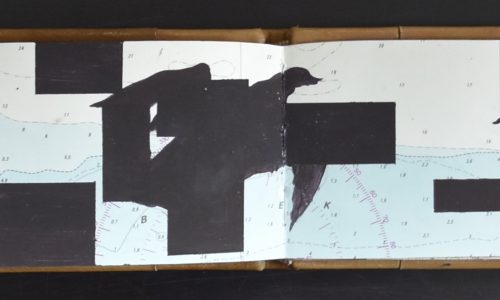
www. ftn-books.com has 64 different bulletin titles available and furthermore, letters, invitations, publications and catalogs. Here is a selection of the Bulletin ‘s available
A few months ago i wrote a blog on Kees Timer. The Rotterdam artist who is growing more important by the years. This importance was recognised in an early stage by the museum Bpoymans van Beuningen who presented 2 major one man show with this local artists and made with both exhibitions important publications. Last week I finally added the 1973 catalog to my inventory so now I am one of the very addresses that offers both publications on Kees Timmer.
Raised in Villa Pueyrredón, Buenos Aires, Mordillo enjoyed his early years as the son of Spanish parents and developed a passion for drawing. In pursuit of his artistic aspirations, he acquired the title of Illustrator from the School of Journalism in 1948. Working with the animation team Burone Bruch, Mordillo beautifully brought to life classic children’s stories such as Perrault Tales, Schmid Tales, The Musicians of Bremen, and The Three Little Pigs, which were published by Codex. In 1952, Galas Studios was founded by Mordillo and his colleagues, focusing on animation production. Simultaneously, Mordillo pursued a promising career as an illustrator, making contributions to local magazines.
On the 7th of November, 1955, Mordillo embarked on an adventure to Lima, Peru, where he found himself employed as a freelance designer for the reputable advertising company McCann Erickson. In 1958, his skills in illustration were showcased in Aesop’s Fables and Samaniego for Editorial Iberia Lima.
After completing greeting-card illustrations for Hallmark Cards, a renowned company based in Kansas City, Mordillo set off to the United States in 1960, joining the esteemed Paramount Pictures Studios in New York. A significant milestone in his career was his involvement in the creation of two iconic characters, Popeye and Little Lulu, for a film performance. Additionally, he conceived two characters for the short film Trick for Tree.
Three years passed, and on the 20th of August, 1963, Mordillo experienced another transformative turn of events. This time, he embarked on a European journey, eventually arriving in Paris on the 19th of September. Initially, Mordillo found himself contributing humorous letters to Mic-Max Edition. In July 1966, he began collaborating with Le Pelerin magazine, followed shortly by Paris Match. By 1968, Mordillo’s work was gaining recognition around the globe, particularly in Germany’s Stern magazine. It was in Paris that he met his wife, Amparo Camarasa, and together, they tied the knot in 1969. This union blessed them with two children: Sebastian Jerome in 1970 and Cecile Isabelle in 1972.
In 1980, Mordillo relocated to Mallorca, Spain, where he assumed the role of President for the International Association of Authors of Comics and Cartoons (CFIA), headquartered in Geneva, Switzerland. After spending 18 fruitful years in Spain, Mordillo returned to France in 1998. The subsequent year saw him participate in the esteemed Creative Workshop Zermatt in Switzerland.
In 2007, Mordillo delved into new artistic endeavors, experimenting with various materials such as acrylics, pastels, and crayons. The subsequent year, in collaboration with Art Petrus, Mordillo masterfully reproduced his artwork with astounding detail. During the same year, he released the Mordillo Collection, a numbered and autographed publication available on the internet.
www.ftn-books.com has the 1974 Stalling publication by Mordillo available.
Amsterdam is the place where Helly Oestreicher resides and works. Her education was at the renowned Rietveld Academy, where she also took the role of an instructor for numerous years. What distinguishes her artwork is its distinctiveness and modernity. You won’t find any landscape paintings or portraits of individuals within her studio. Furthermore, she deviates from the conventional materials typically used by artists, such as wood, stone, or bronze. Instead, she employs self-molded glass, porcelain, or clay as her base materials, all created within her own oven. Occasionally, she incorporates pre-existing discarded materials like iron nuts, tree bark, or seashells, giving rise to entirely new creations.
www.ftn-books.com has 2 important Oestreicher publications now available.
A painter, draughtsman, and commercial artist, Schwann was born in 1893 in Germany and passed away in 1969 in East Berlin. He later worked in the German Democratic Republic (GDR) under the pseudonym Nilgreen.
Since 1912, Schwann mainly worked in Berlin and focused on creating industrial landscapes during the 1920s. In 1925, he became the leader of a group called “the abstract ones,” which later changed its name to “the up-to-date ones.” In the 1930s, influenced by East Asian painting, Schwann began experimenting with vibrant landscape watercolors. This artistic shift aligned with the Soviet cultural policy in the GDR, where socialist realism became the dominant artistic style starting in 1949.
Schwann studied at the Strassburger College of Arts and Crafts from 1908 to 1912. From 1912 until 1915, he trained under Emil Orlik and Emil Rudolf White at the teaching institute of the Museum of Arts and Crafts in Berlin. In 1921, he joined the storm movement. Then, in 1925, he assumed the leadership of the group known as “the abstract ones,” which later evolved into “the up-to-date ones.” In 1928, Schwann became a member of the Communist Party of Germany (KPD). Following the Nazi seizure of power in 1933, he faced an exhibition ban. After the end of World War II in 1945, Schwann served as a professor at the University for Screen and Art in Berlin Charlottenburg until 1951. During the years 1947 to 1949, he collaborated with Karl Hofer in publishing the magazine “Screen and Art.” In 1955, he became a professor at the Academy of Art Berlin Weissensee, where he remained until 1958.
Peter BISCHOF, born in 1934 in Vienna, underwent his studies at the Academy of Fine Arts in Vienna during the 1950s under the guidance of Boeckl and Gütersloh. Peter Bischof’s artistic achievements were honored with numerous solo exhibitions, the first of which took place in 1959 at the Viennese gallery adjacent to St. Stephan. He was a valued member of the artistic inner circle surrounding Msgr. Otto Mauer. From 1958 onward, he actively participated in exhibitions and graphic biennials both nationally and internationally, including Europe, America, Japan, and India. As a member and later vice-president of the Vienna Secession from 1970 to 1971, he contributed to the development of the art movement. His early representations conveyed dynamic, almost dance-like physicality, which later transitioned into a contemplative and static portrayal of the human body. The artist resided and worked in Kösslwang, Upper Austria.
As part of the late 1960s Toronto counterculture, AA Bronson (b. Michael Tims, 1946, Vancouver), Felix Partz (b. Ronald Gabe, 1945, Winnipeg, d. 1994), and Jorge Zontal (b. SlobodanSaia-Levy, 1944, Parma, d. 1994) united in 1969 to form the single entity known as General Idea. From their earliest projects, such as the staging of The 1970 Miss General Idea Pageant, to later activist initiatives during the AIDS crisis, General Idea delved into multimedia, conceptual, and performance art as a means of engaging with mainstream culture and its repressions.
Currently touring from the National Gallery of Canada in Ottawa to the Stedelijk Museum in Amsterdam and the Gropius Bau in Berlin, General Idea’s definitive retrospective showcases their groundbreaking work. In addition to their well-known pieces, the group’s drawings have also received extensive recognition, exhibited at the Drawing Center in New York and MAMCO in Geneva.
While most of the group’s drawings have never been seen, they hold a significant place in General Idea’s collaborative and co-authored approach. Created by Jorge Zontal during brainstorming sessions, these drawings bear the “GI” signature, added shortly before Zontal’s death, and are considered to be a joint effort. After the group’s move from Toronto to New York in 1985, their drawings became more regular, reflecting their increasing isolation from the global art scene and the impact of the pervasive AIDS epidemic. As time passed, their initial joy was subdued by the loss of friends, as well as the deaths of Jorge and Felix themselves, which the group had to confront and incorporate into their work.
The hand-drawn nature of these motifs follows a logic reminiscent of General Idea’s affinity for mass production and reflects the virality of their AIDS-centric works. In their ever-changing and persistent nature, these drawings offer a captivating glimpse into General Idea’s unique artistic perspective and unconventional ideas of authorship, exposing the limitations of representation while acknowledging its pressing importance.
www.ftn-books.com has now this scarce publication available. It contains five off-set prints
Jan Boom was born in Rotterdam and grew up in a Calvinist family. Religion, along with still life, would later become the common thread within his body of work. He painted still lifes, portraits, religious scenes, and cityscapes. Jan Boom was one of the promising young painters of Rotterdam.
The artist then decided to change course and move to the countryside. He settled in a small farmhouse in Leerbroek, located 50 kilometers away. For many, his decision was incomprehensible. Even Jan Boom himself occasionally had doubts about his choice. Suddenly, he was cut off from the city, from the government program for artists, and from other fellow artists. Despite his isolation, a few admirers continued to purchase his work.
Jan Boom’s departure to the countryside had a significant influence on his art. The tranquility of the rural surroundings seems to be reflected in his work. He continued to paint portraits, religious scenes, and landscapes, but still life became his main subject. He painted a small bouquet, fruits, jars, bottles, or other objects from “the kitchen cabinet.”
After a brief period of schooling, Eric Kengen embarked on a journey of exploring different occupations, all the while pursuing his passion for drawing.
In 1982, a series of events culminated in his inaugural exhibition, which paved the way for him to fully immerse himself in the realm of painting. This art form became a vehicle for constructing his own identity. With the passing of time, a distinctive world took shape, characterized by a unique blend of ancient gestures, intricate connections, and a human form positioned under the auspices of the enigmatic and indecisive.
Enigmatic allure, the paradoxical pursuit of truth. Delicacy, loyalty, ancestry, sensuality, symbolic representations, and kinship: each element plays a significant role, eloquently expressed through lucid and unambiguous language.
Born in Loznica on 12 June 1923, Mića Popović, a renowned painter from the second half of the 20th century, grew up in Belgrade after his family relocated there when he was four. He completed his primary and grammar school education in the city. Following World War II, he started attending the Academy of Fine Arts in 1946 as a student of Nedeljko Gvozdenović, but later that same year, he transferred to the class of Ivan Tabaković. Alongside his classmates from Tabaković’s class, he formed the well-known Zadar Group in the spring of the following year. However, they were expelled from the Academy for neglecting their classes in the autumn. Although the others were eventually readmitted, Mića Popović continued his artistic journey as a freelance painter.
In 1950, Popović held an extraordinary solo exhibition featuring 160 paintings and accompanied by a catalogue containing his reflections on modern art. After the exhibition, he embarked on a journey to Paris with his wife, Vera Božičković Popović, exploring various Mediterranean destinations along the way. Upon their return to Belgrade in 1952, Popović curated an exhibition titled “The Village of Nepričava” at the Museum of Vuk and Dositej. During this period, he delved into the theory of art and published his first book on the subject, titled “Clashes and Harmonies,” in 1954. Subsequently, he showcased his exhibition “Fog to the Bones” at the Art Pavilion in Kalemegdan Park, followed by numerous exhibitions both in the country and abroad.
In the late 1950s, Popović began painting during his Informalism period, showcasing his works for the first time in 1960 at the Museum of Applied Arts in Belgrade. He became a regular exhibitor at the October Salon and joined the art group Lada in 1965. Throughout the 1960s, he received various awards for his artwork and expanded his horizons to theater and direction. In 1963, he directed his first feature film, “The Man from the Oak Forest,” followed by a theater production titled “Viktor or Children in Power” at Atelje 212 two years later. Additionally, he directed films such as “Roj,” “Kameni despot i jedina mogućnost narodne pesme,” “Hasanaginica,” “Delije,” and “Burduš.”
Subsequently, in terms of painting, Popović returned to figuration but in a unique manner. In 1971, he organized a solo exhibition titled “Scene Painting” at the Museum of Modern Art. He then embarked on a series of international travels, visiting China, Thailand, India, and Iran. While exhibitions continued to follow, his major solo exhibition at the Cultural Centre of Belgrade in 1974 was unexpectedly cancelled just before its opening.
In 1980, Popović and his family headed to America, embarking on an extensive journey throughout the country.
Artist/ Author: Oliver Boberg
Title : Memorial
Publisher: Oliver Boberg
Measurements: Frame measures 51 x 42 cm. original C print is 35 x 25 cm.
Condition: mint
signed by Oliver Boberg in pen and numbered 14/20 from an edition of 20