Posted on Leave a comment

Pierre Eugène Clairin (1897-1980)

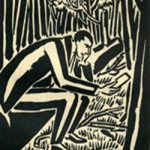
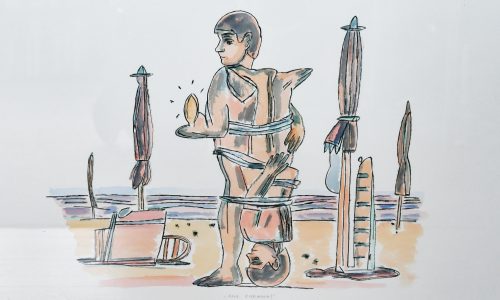
Born in 1897, Pierre Eugene Clairin was a multifaceted artist, excelling in the fields of painting, illustration, and writing. His journey in the art world commenced under the tutelage of Fernand Cormon, studying painting in his studio. Furthering his education, in 1919, he embarked upon studies with Paul Serusier at the Academie Ranson. Exhibiting his works in both Pont Aven and New York, Clairin experienced immense success in the latter. Immersing himself in the cultural landscapes of Morocco and Algeria, he drew inspiration from these rich environments. Additionally, Clairin donned the hat of an aviator during the First World War. Later on, in the 1950s, he lent his artistic prowess to illustrate the works of Montherlant and Camus. Finally, in 1980, Pierre Eugene Clairin passed away.

www.ftn-books.com has the 1957 Cailler publication on Clairin available.

Posted on Leave a comment

Frans Baake (1958), Unveiling the Artistry and Rarity: Exploring Baake’s Limited Edition Artist Books

Introduction to Frans Baake and his limited edition artist books

Frans Baake is a renowned artist known for his exceptional talent in creating limited edition artist books. Born and raised in Delden the Netherlands, Baake’s passion for art  has culminated in the creation of unique and captivating works of art. His limited edition artist books have gained significant recognition in the art world for their exquisite craftsmanship and artistic vision.

Limited edition artist books are a special form of art that combines the aesthetics of visual arts with the written word. Unlike traditional books, limited edition artist books are produced in a limited quantity, making them highly sought after by collectors and art enthusiasts. These books are not mass-produced, ensuring that each copy is a masterpiece in its own right.

The significance of limited edition artist books in the art world

Limited edition artist books hold a special place in the art world due to their rarity and artistic value. These books bridge the gap between literature and visual arts, creating a unique and immersive experience for the reader. The limited quantity of these books adds to their allure, making them highly coveted by collectors.

Artists like Frans Baake use limited edition artist books as a medium to express their creativity and push the boundaries of traditional storytelling. These books often incorporate various art forms such as painting, printmaking, collage, and sculpture, resulting in a multi-dimensional and visually stunning artwork. The fusion of different art forms within the pages of these books allows artists to convey their message in a truly distinctive and impactful manner.

Exploring the artistic process behind Frans Baake’s limited edition books

Frans Baake’s artistic process is meticulous and intricate, reflecting his dedication to creating exceptional limited edition artist books. Each book is a labor of love, with Baake meticulously handcrafting every aspect of the book, from the binding to the illustrations.

Baake begins his artistic process by carefully selecting the materials for his books. He values the tactile experience of holding a book, so he chooses high-quality paper, leather, and fabrics that enhance the overall aesthetic and durability of the book. The materials he selects often have a symbolic significance, adding another layer of meaning to the artwork.

Once the materials are chosen, Baake dives into the creation of the artwork. He employs various artistic techniques, including printmaking, painting, and collage, to bring his vision to life. Each page of his limited edition artist books is a masterpiece, showcasing his technical skill and artistic prowess. Baake’s attention to detail is evident in every stroke of the brush and every cut of the paper, resulting in a visually stunning and emotionally evocative artwork.

Limited edition artist books are highly coveted by collectors due to their rarity and artistic value. Unlike mass-produced books, limited edition artist books are produced in a limited quantity, making each copy a rare find. This limited availability adds to the collectability and value of these books.

Collectors are drawn to limited edition artist books as they offer a unique opportunity to own a piece of art that is not only visually stunning but also conceptually rich. The limited quantity ensures that each book is unique, making it a valuable addition to any art collection.

Furthermore, limited edition artist books often appreciate in value over time, making them an attractive investment for collectors. As the demand for these books increases and the editions become sold out, the value of the books can rise significantly. Collectors who acquire limited edition artist books not only have the pleasure of owning a beautiful piece of art but also have the potential to see their investment grow.

How to acquire Frans Baake’s limited edition artist books

Acquiring Frans Baake’s limited edition artist books can be a challenging task due to their limited availability. These books are often sold through specialized art galleries, art fairs, or directly through the artist’s studio. It is essential to stay informed about upcoming exhibitions or releases to have the opportunity to acquire one of Baake’s masterpieces.

Additionally, joining mailing lists or following art galleries and institutions that represent Baake can provide valuable information about the availability of his limited edition artist books. It is also worth considering reaching out to art dealers or art consultants who specialize in contemporary art and can assist in acquiring Baake’s books.

The impact of limited edition artist books on the art market

Limited edition artist books have had a significant impact on the art market, shaping the way we perceive and collect art. These books have become highly sought after by collectors, leading to an increase in demand and market value.

The rise of limited edition artist books has also led to a greater appreciation for the artistry and craftsmanship involved in their creation. Artists like Frans Baake are pushing the boundaries of what is possible within the medium, resulting in a renaissance of bookmaking as an art form.

Furthermore, limited edition artist books have democratized the art world by making art more accessible to a wider audience. These books offer an affordable entry point into collecting art, allowing individuals to own a piece of art without breaking the bank. This accessibility has expanded the reach and influence of artists like Frans Baake, making their work more widely recognized and appreciated.

Other notable artists and their limited edition artist books

Frans Baake is not the only artist creating limited edition artist books. Many other notable artists have embraced this medium to express their creativity and share their artistic vision.

One such artist is Anselm Kiefer, a German painter and sculptor known for his large-scale mixed-media works. Kiefer’s limited edition artist books often incorporate his signature use of unconventional materials, such as lead and straw. These books are highly sought after by collectors for their unique combination of visual and textual elements.

Another artist worth mentioning is Kara Walker, an American artist known for her provocative and thought-provoking artworks. Walker’s limited edition artist books explore themes of race, gender, and identity, challenging societal norms and expectations. Her books are visually stunning and intellectually stimulating, making them highly desirable among collectors.

The value of investing in limited edition artist books

Investing in limited edition artist books can be a rewarding endeavor both personally and financially. These books offer a unique opportunity to own a piece of art that is not only visually captivating but also conceptually rich. As the demand for limited edition artist books continues to rise, the value of these books can appreciate significantly over time.

Moreover, collecting limited edition artist books allows individuals to support and promote the work of talented artists like Frans Baake. By acquiring these books, collectors become custodians of art, ensuring that these masterpieces are preserved and appreciated for generations to come.

Conclusion: Celebrating the artistry and rarity of Frans Baake’s limited edition artist books

Frans Baake’s limited edition artist books are a testament to the artistry and creativity that can be found within the pages of a book. His meticulous craftsmanship and attention to detail have resulted in visually stunning and emotionally evocative artworks that captivate and inspire.

Limited edition artist books, like those created by Frans Baake, hold a special place in the art world due to their rarity and artistic value. These books bridge the gap between literature and visual arts, creating a unique and immersive experience for the reader. The limited quantity of these books adds to their allure, making them highly coveted by collectors.

Collecting limited edition artist books is not only a way to acquire beautiful and meaningful works of art but also an opportunity to support and promote the work of talented artists. By investing in these books, collectors become custodians of art, ensuring that these masterpieces are preserved and appreciated for generations to come.

CTA: If you’re interested in exploring the world of limited edition artist books, I encourage you to visit Frans Baake’s website or contact your local art gallery to inquire about the availability of his works. Acquiring one of Baake’s masterpieces is a unique opportunity to own a piece of art that celebrates the artistry and rarity of limited edition artist books.

www.ftn-books.com holds currently several titles by Frans Baake in sites inventory

artists books by Frans Baake
Posted on Leave a comment

Leon Adriaans (1944-2004)

Leon A. Adriaans was a Dutch painter widely known as the “last true Brabander” and the “inventor of Brabant art”, according to Maarten Beks (1994). Born in Helmond in 1944, he was the fifth child of Leo and Alberta Adriaans. Leo’s father was a factory manager in a textile mill. Unfortunately, their family had to endure the loss of their third child, Winus in September 1946. Years later, Leo decided to change his name to Leowinus, which he later shortened to Leon.

During his time in primary school, one of his teachers, Harry Crijns, recognized his talent for drawing. Additionally, stonecutter André Driessen also encouraged Leon Adriaans to become an artist. However, his parents sent him to a secondary school, after which he applied to attend the art academy in ‘s-Hertogenbosch. He was accepted on the condition that he would get his secondary school diploma while attending evening classes. Leon Adriaans studied there from 1963-1967, but was ultimately disappointed with the prevailing art theories at that time.

Adriaans’ artistic growth was largely influenced by the “zware Van Nelle club,” which consisted of his colleagues from his student days, including Henk van der Rijdt, John van der Rijdt, Richard Menken, and Frans Schouten. Henk van der Rijdt also introduced the group to Jacques van der Heyden, who was known as JCJvanderheyden. The group frequently experimented with various mediums of art, such as video, film, and sound. Adriaans interpreted Arte Povera within the context of the “zware Van Nelle club,” working primarily with inexpensive and easily obtainable materials to create a new kind of visual language.

From 1970 onwards, Adriaans used animal feed bags as his painting canvas. In the mid-70s, Adriaans rented out a stable and field in the Sterrenbos, just south of Den Bosch. This allowed him to pursue his love for animals. Aside from being an artist, he also managed to live as a farmer. In 1975, Adriaans had his first exhibition at the Utrecht cultural center ‘t Hoogt. He described his work in the following words: “My very first exhibition has begun. It is centered around black, white, suffering, women, my work, animals, and the unknown” (Van den Hoven, 2008, 64).

www.ftn-books.com has the important GESMOLTEN RIJP IN DOOLBROEK book now available.

Posted on Leave a comment

Jan Knap (1949)

Jan Knapp was born in Chrdimi, Czech Republic in 1949. From 1970 to 1972 he studied architecture in Prague and painting at the Academy of Fine Arts in Dusseldorf. In the 70’s he immigrated to the United States (he stayed from 1972 until 1982, living mainly in New York). At the end of the 1970s he founded the “Normalgruppe” together with Milan Kunc and Peter Angermann. The group is a rare group that brings together three resident artists, Kunc from Cologne, Angermann from Nuremberg and finally, at least formally, Chrudimi and Knap from New York. Knap’s pilgrimage continued into his 1980s. First he studied theology in Rome from 1982 to 1984, then from 1984 to 1989 he lived and worked in Cologne, and finally from 1989 to 1992 he lived and worked in Modena. Currently he lives and works in Cologne, Modena and the Czech Republic.

www.ftn-books.com currently has the Centraal Museum catalog on Knap available.

Posted on Leave a comment

John Latham (1921-2006)

Throughout his extensive career, which spanned over five decades, Latham established himself as a highly influential and distinct figure within the realm of contemporary art. Despite not aligning with any particular artistic movement, his contributions to various mediums such as painting, assemblage, performance, book art, conceptual art, and film were of great significance. At the core of his diverse artistic endeavors was a revolutionary worldview that challenged conventional systems of thought and showcased a visionary perspective.

Latham perceived the conflicts and struggles that plagued humanity as a result of ideological disparities. He believed that these differences stemmed from the absence of a singular theory that could comprehensively explain the universe and humankind’s place within it. His evolved theoretical framework aimed to provide a unified comprehension of existence.
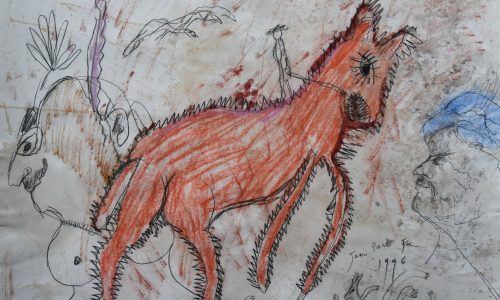
By intertwining artistic, philosophical, and scientific concepts, Latham’s theory of “event structure” directly challenged the perspectives of scientists and cosmologists. According to this theory, the explanation for everything that exists lies not in the form of atomic particles and waves but in the recurring and finite duration of time-based “events.” The fundamental unit of existence, in this theory, is the “least event” – the briefest deviation from a state of nothingness. These recurring events establish patterns and serve as the foundation for reality’s structures. As events persist for longer durations, they give rise to more intricate phenomena, including objects, mental images, and ultimately, the entire cosmos.

Latham’s artwork serves as a tangible manifestation of these ideas. Dating back to 1954, his utilization of spray paint exemplifies the process of “coming into being.” This concept is visually represented through the accumulation of tiny paint droplets, symbolizing the transition from nothingness (portrayed by the blank canvas) to the emergence of form (highlighted by the burst of spray). These underlying notions can be observed in his earliest painting on display, “Man Caught up with a Yellow Object” (1954), as well as in later works such as the “One Second Drawing” (1972).

Since 1958, books have taken on a central role in Latham’s artistic expression—they are frequently burned, painted, and fragmented. Books serve as a powerful symbol of human thought and intellectual exploration. The way they emerge from many of his canvases conveys the notion of a human presence coming into existence. However, books also signify diverse systems of belief. A significant portion of Latham’s later works incorporate books alongside glass, a fragile material prone to shattering. Through this juxtaposition, Latham delivers a clear message: the imperative need for a unified worldview in an increasingly divided world.

www.ftn-books.com has the 1991 Stuttgart catalog available.

Posted on Leave a comment

Pierre Lahut (1931-2013)

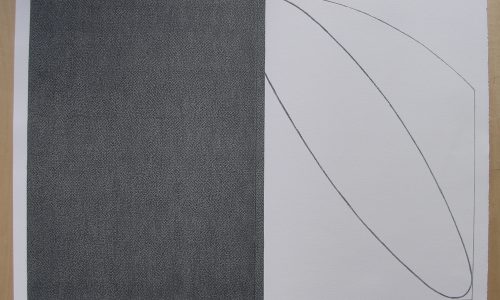
The work of Pierre Lahaut (1931-2013) remains a valuable witness to the development of the Belgian art movement in the second half of the 20th century. It fits several successive trends: Symbolism, Minimalism, New Subjectivity, Geometry. Two-time winner of the Young Belgian Painting Award, Pierre Lahaut is a member of the group ‘Jeunes Figuratifs belges’ and is also known as co-founder of the group ‘Ax 59’. The artist was also a recognized and enthusiastic teacher in academia. He taught at Tell Kameren (ENSAV) for 17 years, where he founded the Drawing and Stimulation Graphics Atelier. The exhibition at the Royal Museums of Fine Arts of Belgium (RMFAB) includes some 40 works that symbolize the 1960s, a turning point for Rao. This selection marks Pierre Laot’s transition to the non-figurative and lyrical according to geometric predominance. In 1967 the same paintings and watercolors were exhibited at the Fine Arts Centre. Fifty years later, RMFAB invites you to rediscover these works, enhanced by a new technological infusion of digital experiences. To enhance this experience, the Multimedia Cylinder offers a complete overview of the life and work of Pierre Rao’s life and work through additional content such as touchscreens, videos, photographs, archives, high-definition projections… This project is in line with the desire of the Royal Museums of Fine Arts of Belgium to continuously innovate the public experience of museums. A multimedia cylinder is placed in the center of the room for at least three years. In this way, newly selected works from the collection of modern and contemporary art are digitally complemented and refined.

www.ftn-books.com has the Orion gallery catalog from 2002 now available.

Posted on Leave a comment

Hans Biezen (1947)

A new era for Dutch photography begins in the early 1970s. It is no longer just the content of the photo that the photographer focuses on. It goes beyond that. Space, light, and timing are played with. Constantly searching for hidden elements, creating light and shadows, abstractions, and a certain surrealistic feeling. All of this suggests a world beyond the frame of the photo. This work pays tribute to the great masters who were able to portray space, light, and the depth of bright tones in their paintings in a mysterious way (source: Lorenzo Merlo, Contemporary photography in the Netherlands 1980).

During the same period, Rudi Fuchs is appointed as the director of the Van Abbemuseum in Eindhoven. Thanks to him and the aforementioned developments, artists from Eindhoven are once again in the spotlight. Fuchs actively participates in conversations in the ateliers in Eindhoven, thus getting to know the attitudes and positions that will partly determine the policy of the Van Abbemuseum. Hans Biezen, René Daniëls, Piet Dirkx, and Stijn Peeters are some of the well-known Brabant artists of that time. Inspiring projects such as the artists’ initiative De Fabriek arise in the vicinity of the Van Abbemuseum, something that would still be unthinkable in the Randstad (source: Michiel Morel, under the smoke of Van Abbe 2011).


Hans Biezen finds himself at the heart of the art world in Eindhoven during these developments. As a sculptor by training, Biezen is self-taught in the field of photography. This is not a coincidence, as he wants to photograph as honestly and unbiasedly as possible. Photography is more than sculpting to him; it is a means to interpret reality in his own way and with feeling. Initially, Biezen focuses his photography on situations that allow him to take beautiful and powerful photos. But at some point, he begins to see this as a limitation of his photographic possibilities. Therefore, Biezen simplifies his photography into mainly a documentary form.

www.ftn-books.com has now one of the very first Biezen publications he made for the van Abbemuseum available.

Posted on Leave a comment

Fon Klement(1930-2000)

This blog is meant to be a long overdue tribute to one of the artists I have admired in the first decade I was collecting art. I purchases my First KLEMENT at Arta in the early 70’s and realized when I visit my doctor, who has several Klements’ on the wall) that his art Is still appealing to me and has survived for 5 decades now.

Fon Klement’s journey as an artist began as a self-taught individual. After gaining recognition as a figurative painter and woodcutter, he ventured into the world of multicolored graphic sheets in 1960, using his distinctive technique known as “the relief cut board”. Gradually, recognizable forms made space for more abstract motifs, presented in a muted color palette.

The timing of Fon Klement’s rediscovery of the watercolor technique was impeccable, as he found himself at a crossroads in his artistic journey. The desire for change became increasingly strong, leading him on a quest that took him on a ten-week exploration of the Provence region. In his improvised studio in the southern French town of Lorgues, flowers were in abundance. Poppies, irises, roses, delphiniums, and hibiscus seduced the artist to continue pursuing the path he had previously embarked on: painting and watercoloring still lifes of flowers.

Since 1961, Fon Klement has been a member of Xylon, the international association of woodcutters, which regularly exhibits graphic art across Europe. The exhibition “Prints today in the USA”, featuring a comprehensive overview of Dutch artists’ prints including Fon Klement’s works, traveled extensively throughout the United States for many years. Fon Klement was awarded the Audience Prize during the “Grafiek Nu” graphic art biennial in Laren in autumn 1990, and later at the first international graphic art biennial in Maastricht in summer 1993.

www.ftn-books.com has now the van SPIJK publication on Fon Klement available.

Posted on Leave a comment

Barbara & Michael Leisgen (continued)

The works produced by Barbara and Michael Leisgen during the 1970s represented a contrast to the prevailing style of conceptual photography, which was predominantly dominated by the typological school of Bernd and Hilla Becher in Düsseldorf. The various works showcased below are part of the Mimesis series, which has been in practice since the early 1960s. These works involve the documentation of natural imprints, exploration of the human body, and experiments related to Land Art.

One of Barbara Leisgen’s distinctive techniques involves imprinting her silhouette onto the landscape, leaving a fleeting trace. This is achieved by extending her arms to follow the contours of undulating countryside in works such as the Paysage mimétique and Mimesis series. Another technique involves incorporating the sun into an arc drawn by her arm while she is positioned centrally in the image, as seen from behind. This approach goes beyond mere imitation of nature through physical gestures; it also encompasses the act of tracing and channeling nature. The (re)appropriation of the landscape is a subjective experience, with Barbara Leisgen’s silhouette displayed within the landscape, leaving an ephemeral mark.

These photographs evoke the imagery of German Romanticism, specifically the paintings of Caspar David Friedrich. Friedrich’s painting Morgenlicht, in particular, serves as a figurative inspiration for the Leisgens’ Mime-sis works. However, their approach also deviates from Friedrich’s perspective of nature as sacred. One could argue that their viewpoint is influenced by an anthropocentric romantic outlook, similar to the French Romantic tradition. Nevertheless, despite the sublime nature of the photographed scenes and the meticulousness of the prints, which hint at the possibility of a wide spectrum of colors in the luminous light, the images also evoke a sense of naivety and inherent nostalgia found in souvenir photographs. The viewers are placed in a reflective position, observing a woman posing within a natural expanse. Through this approach, Barbara and Michael Leisgen can be seen as pioneers of contemporary landscape photography, bridging modernist and postmodernist perspectives.

www.ftn-books.com recently acquired the scarce ” LA TENTATIVE DE SAUTER PAR DESSUSL’HORIZON from 1975