Posted on Leave a comment

Marcel Vertès (1895-1961)

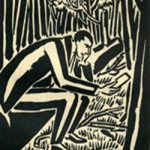
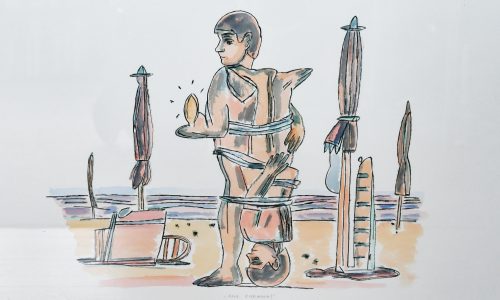
Marcel Vertes was a Hungarian/French artist born in 1895 and passed away in 1961. He was an exceptional painter, printmaker, and illustrator of the 20th century. Vertes relocated from his birthplace of Hungary to Paris during World War I. He resided and worked in the famous Quartier Latin, alongside prominent artists such as Boutin, Forain, and Toulouse-Lautrec. The art of Marcel Vertes reached its pinnacle in the 20th century, focusing on scenes of street life in Paris, portraits of women, and depictions of circus and cabaret acts. Vertes left behind a legacy of original lithographs and drawings that excellently captured the spirit of 1920s Paris.

An enigmatic aura surrounds the oeuvre of acclaimed artist Marcel Vertes, a Hungarian-French mastermind born in 1895 and departing this world in 1961. A versatile virtuoso of the twentieth century, Vertes dabbled in painting, printmaking, and illustrating with unparalleled skill. Amid the tumultuous years of the Great War, Vertes left his homeland of Hungary to seek solace in the vibrant streets of Paris. Settling in the illustrious Quartier Latin, he immersed himself in the company of renowned artists such as Boutin, Forain, and Toulouse-Lautrec. However, it was in the roaring twenties that Vertes’ art reached its zenith. His focus lay in capturing the essence of Parisian street life, portraying the beauty of women, and illustrating the mesmerizing world of circus and cabaret. The legacy of Marcel Vertes continues to thrive through his collection of original lithographs and drawings, perfectly encapsulating the spirit of the dazzling city of Paris.

www.ftn-books.com has the 1956 DOCUMENTS publication now available.

Posted on Leave a comment

Musée Würth in Erstein

For me, when we finally had discovered it, it is now an absolute must visit in the Alsace region. Combine this with the Beyeler, Kunstmuseum Basel and the Modern art museum in Strasbourg and you will have seen 3 of the most importan modern art collections in the world.

Musée Würth

Reinhold Würth’s passion for art collecting, spanning almost six decades, encompasses an impressive 500-year scope of art history, encompassing works from the late Middle Ages to the present day. Delve into this remarkable collection, and you will discover Southern German Renaissance portraits alongside examples of courtly grandeur and exquisite craftsmanship. Admire the collection of hand-painted posters promoting a traditional Italian puppet theater, known as the “Opera dei Pupi,” along with international Christmas nativity scenes. Additionally, marvel at the captivating arrangements of works by renowned artists such as Anselm Kiefer, Max Ernst, and the iconic duo Christo and Jeanne-Claude.

The late Impressionist and Expressionist movements first ignited Reinhold Würth’s passion for art collecting. From there, he expanded his collection to include classic abstract art, particularly from the École de Paris, and figurative works from the 1960s and 1970s. Exhibitions also play a vital role in inspiring and enriching his collection, providing an opportunity to explore new artistic expressions from various nations, such as Austria, Mexico, and Poland.

The collection also proudly boasts works by exceptional artistic personalities, including Georg Baselitz, Fernando Botero, David Hockney, and Alex Katz. Sculptures of the highest caliber can also be found, represented by artists such as Horst Antes, Hans Arp, Max Bill, Anthony Caro, Eduardo Chillida, Tony Cragg, Richard Deacon, Antony Gormley, Alfred Hrdlicka, and Marc Quinn, among many others.

At this moment the Wurth museum is closed but will be open again soon.

Posted on Leave a comment

Jaap de Vries (1959-2014)

Jaap de Vries was a Dutch painter who alternately lived and worked in Breda and London. In addition to paintings and watercolours, he also made films, photographs and sculptures.

The human body and the landscape are a representation of his ideas about loneliness, violence and decay. His use of watercolour on aluminium creates an eerie and ethereal atmosphere in his work. Painting, for him, is about creating space for the shadows within us, for the world of desires tainted by fears.

He enjoys experimenting with various materials and continuously develops his own techniques. At times, he cuts with a stanley knife, while other times, De Vries wipes the pigment off the aluminium surface with a warm washcloth. Through my imperfect portraits, I create a metaphor for the real experience. It is the paint itself that inflicts wounds, apparently, its blood flowing ability capable of doing the same as real cutting, and a face is still able to speak and torture us with the question of what experience lies behind it, and apparently, paint alone can carry that power.

When he turned his attention from human anatomy to nature a few years ago, he was looking for a positive counterpart. His starting point was a boring patch of forest, with the intention of creating an intriguing image through the technique of depiction. “I wouldn’t want to walk through that forest,” a colleague said when he saw one of the paintings. This was an important statement for him: while he needed the drama of depiction in human anatomy to achieve his desired goal, in these paintings, he could display the violence of depiction through the depiction of a few innocent trees.

Posted on Leave a comment

Andreas Giannoutsos (1953)

He was brought into the world in Larissa. During 1971 to 1976, he underwent his education at the Athens School of Fine Arts courtesy of a scholarship, studying under the tutelage of Dimitris Kalamaras in the sculpture workshop and Vassilis Vassiliadis in applied arts and set design.

In 1979, he commenced his tenure in Secondary Education, where he remained until 2011, imparting his knowledge of art as a trainer in the specialized areas of didactic syntax and chromatology at the institutional Regional Training Centers. The following year marked his first solo exhibition in our city, proudly displayed at the Gallery of Iraklis Vlachouli on Kapodistriou. He was elected as a member of the Board of the Municipal Gallery of Larissa in both 1980 and 2008, with the honor of fathering its mark.

A monumental point in his life came in 1996 with his appointment as Director of the Visual Arts Center of Larissa, a cultural institution under the jurisdiction of the Ministry of Culture dedicated to promoting and decentralizing the arts. Despite the immense challenges involved in elevating, operating and consolidating the institution, he and his team tirelessly worked towards their ultimate goal and personal objective, with his exemplary leadership, dynamic marketing and successful establishment of the institution as a state-of-the-art hub. As with any beautiful dream, his tenure eventually came to an end, brought to a deplorable close due to the institution’s lack of sustainable action, duration and dynamism.

www.ftn-books.com has 1 Giannoutsos publication available.

Posted on Leave a comment

Marjolijn Mandersloot ( 1959)

We are having fun with the sculptures of Marjoline Mandersloot. And although recognizable human and animal forms are important sources of inspiration, they function primarily as metaphors. Every sculpture seems to have great acting talent. The expression of posture and materials creates a unique character that is sure to impress. Omitting details, enlarging the proportions, or focusing on certain parts of the sculpture creates a pleasant confusion and, in some cases, even a smile. Ambiguity inhibits the perception of a story and prompts us to discover new interpretations. Are we really seeing what we think we are seeing? The heavy bronze sculptures appear to be made of liquid candle wax or soft rubber. This elegant item is made from thick saddle leather and exudes a traditional sense of luxury. The title adds a humorous twist. Material experience generally appears to be inconsistent with “true” experience. We are tempted to explore the boundaries between imagination and reality. And the real charm of sculpture lies in its surprising feel.

www,ftn-books.com has the Frame book on Marjolijn Mandersloot now available.

Posted on Leave a comment

Jemima de Jonge (2001)

I had an appointment in THE HAGUE and half an hour left before my meeting, so I visited HEDEN and was impressed. A young dutch artist had transformed the complete gallery in a “dark” special place. I do not think it is there anymore but when there is chance to visit one of Jemima’s projects do not hesitate to visit it…..you will be impressed too…

Jemima de Jonge (2001) grew up in Rotterdam. In June 2023, she graduated with honors from her KABK (Royal Academy of Arts) in The Hague.
She uses films like the recent Uprooted to fuse drawing, sculpture, installation, and performance in her single gesture. It’s like a true interdisciplinary child of the time.
Jemima used her drawings from her early childhood to visualize her own thoughts and ideas. In them, (inner) adult tragedies and tensions sometimes collide with childish solutions. She plays with the contrast between rough sketches and clear details.
Jemima exhibits high awareness of her surroundings and uses it to manipulate space. It defines the boundaries between reality and imagination. At this boundary, viewers are drawn into her work through a variety of media and means. They create slightly bizarre experiences and stories with a unique sense of humor that focus on lonely characters.
Jemima de Jonge’s film developments, such as her short films Uprooted (2021) and Enter Amazons (2022), highlight how her drawings, sculptures, installations, and performances naturally blend into gesture. It shows.

www.ftn-books.com has the DE SPELONK publication now available.

Posted on Leave a comment

Jaap de Vries (1959-2014)

Jaap de Vries was a Dutch painter who alternately lived and worked in Breda and London. In addition to paintings and watercolours, he also made films, photographs and sculptures.

The human body and the landscape are a representation of his ideas about loneliness, violence and decay. His use of watercolour on aluminium creates an eerie and ethereal atmosphere in his work. Painting, for him, is about creating space for the shadows within us, for the world of desires tainted by fears.

He enjoys experimenting with various materials and continuously develops his own techniques. At times, he cuts with a stanley knife, while other times, De Vries wipes the pigment off the aluminium surface with a warm washcloth. Through my imperfect portraits, I create a metaphor for the real experience. It is the paint itself that inflicts wounds, apparently, its blood flowing ability capable of doing the same as real cutting, and a face is still able to speak and torture us with the question of what experience lies behind it, and apparently, paint alone can carry that power.

When he turned his attention from human anatomy to nature a few years ago, he was looking for a positive counterpart. His starting point was a boring patch of forest, with the intention of creating an intriguing image through the technique of depiction. “I wouldn’t want to walk through that forest,” a colleague said when he saw one of the paintings. This was an important statement for him: while he needed the drama of depiction in human anatomy to achieve his desired goal, in these paintings, he could display the violence of depiction through the depiction of a few innocent trees.

www.ftn-books.com has recently added some de Vries publications to its inventory.

Posted on Leave a comment

Kik Zeiler (1948)

Kick Seiler was already involved with Mokum gallery before he started painting. He lived on the top floor above the gallery. When Duque took an afternoon off, Kick would sometimes sit in the gallery, surrounded by the art that so fascinated him. He liked the atmosphere, but what impressed him most was the intensity of the art. Duque inspired him and gave Kiku his first chance. It was not surprising to him that after some time his work began to hang on the walls of Mokum. Kik has been selling well since its premiere. After that, he received many commissions for portrait painting, which is a genre of painting, and mastered it brilliantly. But Kick deals with more than just portraits. He considers it his job to paint the whole world. He can also regularly admire his still life paintings, parts of cities, and genre paintings depicting multiple figures in specific settings.

www.ftn-books.com has the Drents Museum catalog on his paintings available.

Posted on Leave a comment

Ernst Fuchs (1930-2015)

The artistic aptitude of Fuchs was recognized early in his life. At the tender age of 15, he was granted admission to the esteemed Academy of Fine Arts in Vienna.

It was during his time there that he first encountered his fellow students, namely Anton Lehmden, Arik Brauer, Wolfgang Hutter, and Rudolf Hausner. Together, they established the revolutionary Vienna School of Fantastic Realism, a movement that would redefine the art world.

Under the guidance of Professor Albert Paris Gutersloh, Fuchs and his colleagues delved into the techniques of the Old Masters, seeking to imbue their work with a sense of clarity and intricacy. They also utilized allegory and religious symbolism to add depth to their pieces.

Inspired by the works of Austrian symbolist artist Gustav Klimt – renowned for his bold and textured paintings such as “The Kiss” – Fuchs began to develop his own distinctive style, characterized by an emphasis on texture and color.

Renowned for his revival of the traditional mixed technique, Fuchs employed egg tempera to create volume and added a glaze of oil paints mixed with resin to achieve a dazzling effect. His masterpieces can be found in the Jewish Museum in Vienna, Austria, showcasing his unparalleled talent.

In 1950, Fuchs relocated to Paris, where he resided for 12 years. During this period, he embarked on travels to Italy, Spain, England, and the United States, where he crossed paths with renowned artists like Salvador Dali, Giorgio de Chirico, and Jean Cocteau, forming meaningful friendships.

In 1961, Fuchs returned to Vienna and began writing about the art of painting, producing several books on the subject. By the mid-1970s, he had also become a highly sought-after opera stage director and designer, taking on projects such as Mozart’s “Magic Flute” and Wagner’s “Parsifal” and “Lohengrin.”

In 1972, Fuchs purchased and renovated the dilapidated Otto Wagner villa in Hutteldorf, transforming it into the renowned Ernst Fuchs Museum. Through his remarkable talents and unwavering dedication to the world of art, Fuchs left an indelible mark on the art world, etching his name into history.

WWW.FTN-BOOKS.COM has two Ernst Fuchs titles available.
Posted on Leave a comment

Anna Verweij-Verschuure (1935-1980)

After Anna Verweij stopped attending the art academy in the late fifties, she began to experiment with materials and techniques. In 1958, she decided to simply go by the name “Anna”. She used leftover materials to create jewelry and small wall hangings. Soon, she devoted herself entirely to textile, the material that would remain her faithful companion throughout her entire career. In the sixties, she delved into designing large, exuberantly colored wall hangings.

In the following decade, her textile work became increasingly detailed and acquired a more conceptual nature. During this period, the concept of textile as visual art was constantly under discussion. This material was still primarily associated with applied art. With her work, Anna gave an inspiring and relativizing twist to this discussion. For her, the boundary between the two “arts” was not a fixed concept.

My Place at the Table

One of Anna’s most notable works is My Place at the Table 2 (1972/73). A pristine white cotton tablecloth is laid over a wooden table, adorned with a refined black embroidered flower border. One of the narrow edges of the cloth culminates in a chaotic array of stitches. In an earlier work, Alice Writes to Alice (1971), Anna shows how a winding strip of fabric transforms into a mysterious script. With a light sense of humor, Anna comments on the contradictions in human behavior and the conflict between inner and outer appearances in pieces like this. Experimental use of flannel, jute, cotton, silk, and printers, in combination with plastic and foam rubber, is characteristic in these works. Her love for nature also makes frequent appearances in her oeuvre, for example in her design drawings of flower fields based on compositions by Piet Mondrian.

In the year of 1978, Anna fell gravely ill. In the final period of her life, transformations of shape take center stage. She creates silhouettes of female figures, modeled after her own body. An exemplary piece is The Leap (1979), which depicts a figure pole vaulting: a clear allusion to the transition between life and death. A large portion of her body of work was realized in the last two years of her life, with her most significant exhibitions also taking place during this time. In 1979, her solo exhibition opened at the Stedelijk Museum in Amsterdam, and in 1984, she was posthumously honored by Museum Boijmans Van Beuningen.

This catalog is now available at www.ftn-books.com