Posted on 1 Comment

Raoul de Keyser (1930-2012)

Raoul de Keyser

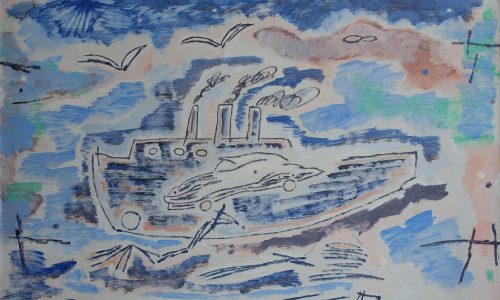
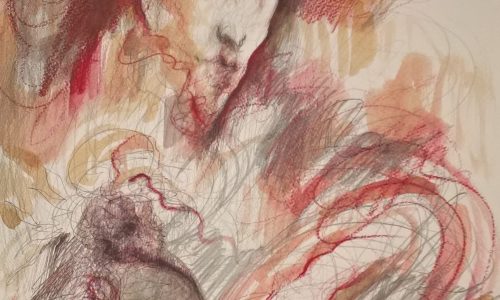
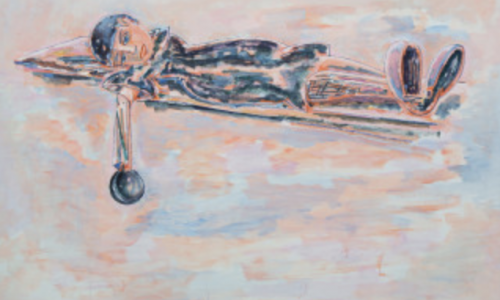
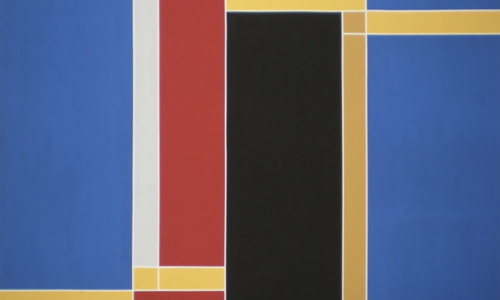
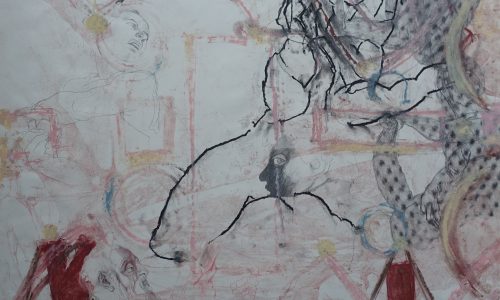
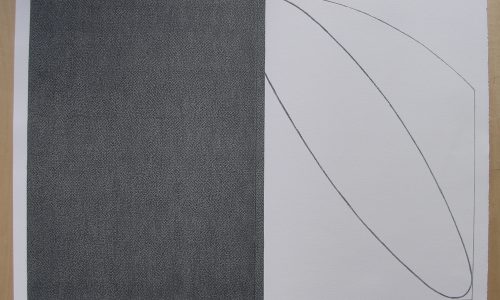
Growing more important every year since his death in 2012 , de Keyser’s subtly evocative paintings are at once straightforward and cryptic, abstract and figurative. Made up of simple shapes and marks, they invoke spatial and figural allusions, yet remain elusive of any descriptive narrative. Despite—or precisely because of—their spare compositions, De Keyser’s works convey a visual intensity that inspires prolonged contemplation. Individually as well as collectively, they revolve around the activity of painting, but also move beyond its physical means to become more than the sum of their parts.

De Keyser was born in 1930 in Deinze, Belgium. Since 1999, his work has been represented by David Zwirner. Previous solo exhibitions at the gallery in New York include Come on, play it again (2001); Remnants (2003); Recent Work (2006); Terminus: Drawings (1979-1982) and Recent Paintings (2009); Freedom (2011); and Drift (2016), which was first on view at David Zwirner, London. A solo exhibition at the gallery’s Hong Kong location in 2021 marked the artist’s first solo presentation in Greater China. In 2022, David Zwirner, Hong Kong presented Raoul De Keyser: Replay Again. 

Since the mid-1960s, the artist’s work has been the subject of several solo exhibitions at prominent institutions. In 2000, a large-scale retrospective was presented at The Royal Hibernian Academy, Dublin, which traveled to the Goldie Paley Gallery, Moore College of Art and Design, Philadelphia, and The Renaissance Society at the University of Chicago. A major survey of the artist’s paintings traveled extensively from 2004 through 2005 to the Whitechapel Gallery, London; Musée de Rochechouart, France; De Pont Museum for Contemporary Art, Tilburg, The Netherlands; Museu de Serralves, Porto, Portugal; and the Kunstmuseum St. Gallen, Switzerland. In 2009, his paintings were exhibited in a retrospective at the Kunstmuseum Bonn, Germany and his watercolors were presented jointly at the Museu de Serralves, Porto, Portugal and the Douglas Hyde Gallery, Dublin. 

www.ftn-books.com has currently;y some interesting de Keyser titles available.


Posted on 17 Comments

Marlene Dumas (continued)

Marlene Dumas

From the same source as the Andy Warhol inviataion cards from yesterda’s blog comes another highly collectable invitation. It is the 1989 invitation for the Kunsthalle Bern. This card means that i have all publications for this legendary exhibition now available. Poster, invitation and catalog are all available at www.ftn-books.com

Posted on Leave a comment

Jörg Immendorff (1945-2007)

Jörg Immendorff

During the 1960s Jörg Immendorff studies at the Staatliche Kunstakademie in Düsseldorf. After finishing his set design studies, he went on to focus on the visual arts and is taught by Joseph Beuys. Immendorff gets involved in extra-parliamentary politics during his studies and after organising a number of provocative actions he is expelled from the academy.

From the very beginning Immendorff has been painting figurative and socially critical paintings. His contemporary historical paintings exhibit a close relationship to the Neue Wilde. In the early 1970s several German artists, including A. R. Penck, Anselm Kiefer, Georg Baselitz and Jörg Immendorff gain attention by their expressive style of painting. The Neue Wilde express their dissatisfaction about the social structures on large canvases.

Immendorff is also known for his sixteen-part series, Café Deutschland. In this series Immendorff critiques the Berlin Wall and the capitalist and communist ideologies that led to the separation of East and West Germany.

www.ftn-books.com has the following books on Immendorff available

Posted on Leave a comment

Rini Hurkmans (1954)

Rini Hurkmans / Piëta

From the beginning of her career, Rini Hurkmans is concerned with topics such as absence, loss, disruption, alienation and the related concepts of safety, security, identity and compassion. This can, among others, be perceived in the photo series Pietà, in the films Dear SonThe Flavor of Salt and Don Quixote but also in the sculptures The White Shroud and The Inner Garden.

Life, art and politics are intertwined in a continuous dialogue and each specific period requires its own thoughts, strategies, and forms.
Hurkmans initiated the conceptual artwork Flag of Compassion in 2002 out of the desire to go beyond the framework of cultural consensus and consumption. Since 2008, she is an advisor to the Unda Foundation, which manages the artwork and also organises a series of Making Waves events around themes related to Flag of Compassion. By engaging with the Flag, it is investigated how a work of art can activate ethical questions in society and how it can function both within the arts and in society. Hurkmans is the driving force behind the book Compassion. A Paradox in Art and Society (Valiz, 2017) in which Flag of Compassion is discussed as a case study.

Presently, she conducts further research into the concept of loss in relation to ethics and politics and makes new work based on her working period as Artist in Residence at the Royal Netherlands Institute in Rome (KNIR), partner of the Akademie van Kunsten (KNAW), in 2019. Her research into the press photo of the moment just after Michelangelo’s Pietà (1499) was attacked in 1972 serves as the starting point for her current work, which also builds upon earlier work inspired by this photo since she acquired it in 1992. When the Pietà in the St. Peter’s Basilica was attacked by Laszlo Toth, he destroyed the left arm. Consequently, the initial gesture that reaches out to the public to engage with the theme of the Pietà was annihilated. With the overarching investigation entitled Pietà, A Reconsideration of the Gesture, Hurkmans explores the multi-interpretability of the press photo and the gesture, ultimately reconsidering the gesture in all its forms.

www.ftn-books.com has two Hurkmans titles available

Posted on Leave a comment

Thomas Huber (1955)

Thomas Huber

Thomas Huber’s paintings transport us to an ordered, reconstructed world, which goes beyond the purely perceptible. His perspective portrayals of spaces and places in the mysterious game of light and shadow do not depict reality. The artist’s studio, living space, semi public lecture halls or exhibition rooms and view of the fantastic city of Huber Ville shows precise, constructed fictional spaces, deserted places which are occasionally animated by stylized human or animal figures.

www.ftn-books.com has some nice Huber titles available

Posted on Leave a comment

Walter Nikkels (1940)

Walter Nikkels

It must have been in the late Eighties when i met briefly with Walter Nikkels. Rudi Fuchs had just started his directorship at the Haags Gemeentemuseum and Nikkels was introduced to me. I had known his book designs from the catalogues he designed for the van Abbemuseum and at one time , before Gracia Lebbinks was starting her work for the Gemeentemuseum, NIkkels was asked what he could do for the Museum. Not much because at that time he had too much work, so Gracia Lebbink started her work for the Gemeentemuseum with the Kounellis catalogue ( available at www.ftn-books.com) with one exception at the introduction and opening of the Paleis Lange Voorhout Museum, Donald Judd designed the floors and Walter Nikkels designed two office desks that were in use for some 5 years. Over a period of 30 years now i have been collecting his book designs and i want to share the ones he made for the KONINKLIJKE SUBSIDIE VOOR VRIJE SCHILDERKUNST/ KONINKLIJK PALEIS AMSTERDAM. Book design, executed to perfection and now available at www.ftn-books.com

Posted on Leave a comment

Alfred Reth (1884-1966)

Alfred Reth in his studio

Alfred Reth, Alfred Roth-his real name, was born in 1884 in Budapest (Hungary). Son of a doctor, he moved to Paris in 1905, after he had travelled a lot in Italy. Living in Montparnasse, he attended the academy Jacques Emile Blanche, where he studying drawing. During a second trip to Italy, Alfred Reth studied a few months to the Beaux-Arts in Florence.
He came back to Paris in 1907. The Cubist influence was perceptible in his works, portraits, still lives, landscapes. When he discovered the hindu art in museums, Reth decided to study it scientifically in 1908. Thus he tried to applied mystical principles to his work. A very important exhibition was devoted to him to the Gallery Der Sturm in Berlin in 1913. He exhibited more than 80 cubist paintings and drawings; his originality in Cubism has been to seek “a balance between masses together”.
With the declaration of war in 1914, Alfred Reth enlisted in the French army and was quickly reformed.
From 1910, the artist participated in collectives exhibitions in France and abroad, including yearly Parisian Salons (Salon d’Automne, the Salon des Independants, Salon des Tuileries, etc…). He was a founding member of the Abstraction-CreationFair and the Salon des Réalités Nouvelles. Many Parisian galleries exhibited his work (Denise Rene Gallery, Galerie Berthe Weill…).
During and after the First World War, Alfred Reth returned to a more realistic painting. He probably stopped painting a few years until 1920. In 1920, Reth renewed with the most daring of his artistic past, then leading to solutions that were similar to Delaunay’s chromatic circles.
Gradually, his work evolved toward a whole abstraction, without any concern for representation, association or equivalent.
Alfred Reth died in Paris on September 15th, 1966, after an exhibition he got in Chicago.

www.ftn-books.com has two scarce Reth publications available.

Posted on Leave a comment

Carlos Amorales (1970)

In his artistic research, Carlos Amorales is interested mainly in language and the impossibility/possibility of communicating through means that are unrecognizable or not codified: sounds, gestures, and symbols. Amorales experiments at the limits between image and sign with an array of platforms: animation, video, film, drawing, installation, performance, and sound. His practice is based on different forms of translation: instruments that become characters in his films, letters that become shapes, and narratives unfold as non-verbal actions. As the basis for many of his explorations,

Amorales has used Liquid Archive: a project composed of shapes, lines and nodes instead of words that he started in 1998 and continued to nourish for over ten years. In addition to Liquid Archive, he has developed other alphabets and systems that he uses to translate texts that range from museum labels to short stories. The works of Amorales exist in an alternate world of their own making, parallel to ours; constantly evolving at the same rhythm that they are produced.

www.ftn-books.com has the Amorales /Stedelijk Museum now for sale.

Posted on 17 Comments

Constantin Meunier (1831-1905)

Constantin Meunier

Constantin Meunier, in full Constantin Emile Meunier, (born April 12, 1831, Etterbeek, Belgium—died April 4, 1905, Ixelles), Belgian sculptor and painter, one of the principal social-realist artists of the late 19th century in Europe.

Meunier began his career as a sculptor, but during the years 1857–84 he pursued only painting. After visiting some mines and factories, Meunier demonstrated in his paintings a humanitarian interest in labourers, focusing particularly on the miners of the Borinage, dockworkers of Antwerp, metalworkers, and women labourers.
In 1882, under the sponsorship of the Belgian government, Meunier went to Spain, where he produced paintings primarily on religious subjects. After returning to Belgium, he began to explore in bronze sculpture the social themes that had dominated his earlier paintings. The empathy and respect with which he viewed his subjects (e.g., The Fire-Damp Explosion, 1887) renders Meunier’s work universal rather than political. His notable works include The Docker (1905) and a large sculptural group, Monument to Labour, which was installed in the Place de Trooz, Brussels, in 1930.

www.ftn-books.com has several publications available on Meunier