Posted on Leave a comment

Bert Loerakker (1948)

Dutch Minimalism is a distinctive style in art and design that emerged in the Netherlands in the 1960s. It is characterized by a pared-down aesthetic that emphasizes simplicity, clarity, and functionality. One of the most prominent figures in Dutch Minimalism is Bert Loerakker, whose work has been celebrated for its precision, elegance, and understated beauty. This essay will explore the background and development of Dutch Minimalism, analyze the artistic style of Bert Loerakker, and assess the impact and significance of his work on contemporary art and design.

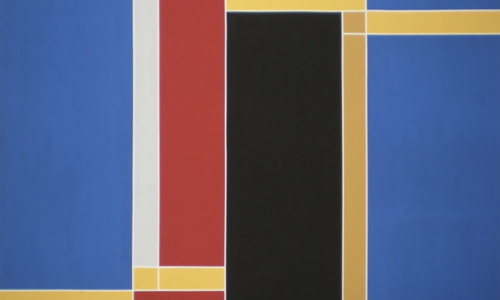
Background and Overview of Dutch Minimalism emerged in the context of the broader Minimalist movement that swept through Europe and the United States in the 1960s. It was a reaction against the excesses of Abstract Expressionism and sought to strip art and design of any extraneous elements. In the Netherlands, Dutch Minimalism was influenced by the country’s long tradition of design excellence, as well as the influence of other minimalist styles such as the Bauhaus and De Stijl. The characteristics of Dutch Minimalism include a focus on geometric shapes, primary colors, and simple forms. It emphasizes the use of industrial materials such as steel, concrete, and glass, and values functionality and practicality over ornamentation. Compared to other minimalist styles, Dutch Minimalism is known for its precision, attention to detail, and subtle use of color and texture.

Bert Loerakker was born in 1948 in the Netherlands and trained as a goldsmith before turning to sculpture and design. He has become one of the most celebrated Dutch Minimalist artists, known for his exquisite craftsmanship and minimalist aesthetic. Loerakker’s work is characterized by its geometric shapes, clean lines, and use of industrial materials such as stainless steel, aluminum, and glass. Loerakker’s signature style involves a meticulous attention to detail and a focus on precision and balance. He often works with modular forms that can be combined in different ways to create complex, multi-dimensional structures. His sculptures and installations are often site-specific, designed to interact with the surrounding environment and create a sense of harmony and balance.

www.ftn-books.com has several Loerakker titles now available and a painting from the former Salco Tromp Meesters for sale.

Posted on Leave a comment

Albert in ‘t Veld (1942)

Albert in t veld dutch artistAlbert in ‘t Veld is a Dutch artist known for his striking and complex abstract works. Born in 1942, in the Netherlands, in ‘t Veld studied sculpture at the Academy of Fine Arts in Rotterdam before transitioning into painting and drawing.

In the 1960s, in ‘t Veld was influenced by the American abstract expressionists, including Jackson Pollock and Morris Louis. He was particularly drawn to the process of pouring paint and working with colors in an unpredictable, fluid way. This interest in abstraction and the spontaneity of the creative process would become a hallmark of his work.

Throughout his career, in ‘t Veld experimented with different materials and techniques, including acrylic paint, ink, and crayon. He also explored different styles, from minimalism to more colorful, expressive works. His compositions are often characterized by bold colors, dynamic lines, and layered textures. His works are fascinating and intricate, and seem to invite the viewer to look closer to uncover the many layers of meaning and symbolism.

One of his most notable works is a large-scale mural commissioned for the Erasmus University in Rotterdam. The massive painting measures over 225 square meters and is composed of 260 individual panels, each one painted by hand. It depicts an abstract landscape that incorporates elements of nature, such as mountains and waterfalls, alongside more geometric shapes and patterns. The mural took in ‘t Veld over a year to complete and is considered one of his greatest achievements.

Throughout his career, in ‘t Veld has received numerous awards and accolades for his work. His paintings and drawings have been featured in exhibitions in galleries and museums around the world, including the Netherlands, France, Italy, and the United States.

In conclusion, Albert in ‘t Veld is a talented, pioneering abstract artist whose work continues to inspire and captivate viewers today. His commitment to exploring the creative process and pushing the boundaries of traditional art forms has helped to cement his place as one of the most iconic Dutch artists of the 20th century.

www.ftn-books.com has an impressive leporello publication with steel coverts now available.

Posted on 1 Comment

Michael Ryan (1953)

A native New Yorker living and working for many years in the silvery light and rich artistic heritage of the Netherlands. In 2002 he was granted residency status based on my importance to the culture of The Netherlands. In 2021 he became a Dutch citizen. Here are some quotes by Michael Ryan:

My working day begins early with yoga and a long walking meditation.

With my mind and body united and focussed in the moment I’m prepared to express myself creatively back in the studio.

Emails, news, internet is for later, after I’ve painted all morning.

My subjects are found at home and close to home as well as in my travels.

In my connection with the world before me.

There is beauty everywhere when the mind is still and the senses fully open.

www.ftn-books.com has the BORZO gallery catalogue available.

Posted on Leave a comment

Jacqueline Böse (1956-1997)

It was a pure coinsidence that i acquired this book on Jacqueline Böse, but leafing through it I noticed and started to appreciate the powerful abstract works. Colorful, abstract and in some cases minimal these paintings all could have been made nowadays. I am writing this in 2023 so in many cases over 35 years have passed nad almost al are still modern enough to convince. The book on Böse is now available at www.ftn-books.com

Posted on Leave a comment

Gijs van Lith (1984)

The works of the multifaceted Dutch artist Gijs van Lith alter the expectations and the customary understanding that a bystander generally has of what a painting can or should be. Analyzing the genesis of his creative act, van Lith is extremely close to what were the fundamental characters of action painting, also known as gestural abstraction or abstract expressionism: a style of painting in which color is spontaneously dripped, launched or stained on canvas, rather than applied carefully. The resulting work emphasizes the physical act of painting itself as in American Abstract Expressionism and in Tachisme, a pictorial style of abstract art which began in France in the 1940s and 1950s – otherwise known as Informal Art – in which the painting is conceived exclusively in its being made of gestures and raw material.

Gijs van Lith’s artistic research is mainly focused on painting but his body of works also includes sculptures and installations. The creative process, the choice of materials and the pictorial strategy – understood as modus operandi – play a fundamental role and are initially positioned as essential substrates for each new creation. Van Lith considers the canvas on which a painting is made as important as the material with which he paints it; and aspects such as materiality, the originality of the act, the relationship between gestural time and timelessness of the work, and the luminosity granted to the physicality of the painting, unquestionably cover all his work. His painting in recent years has acquired a more sculptural dimension, which allows him to create, develop and manage his work in an increasingly dynamic and materially more fluid way. The relationship between process and finished work becomes an interactive dialogue in which there is neither front or back.

Indeed, this is why before his works there is often a suspension of judgment due to a domineering pictorial haze or as he calls it “beast mode”, creative practice in which the artist feels more like an animal guided by his instinct and intuition. Van Lith does not discriminate between conscious actions and possibilities, between luck and deliberate gestures. The result is energetic and dynamic works that exist in a perpetually open dialogue between the conscious and subconscious.

www.ftn-books.com has a few van Lith titles currently available.

Posted on 1 Comment

Marian Breedveld (1959)

Marian Breedveld (1959, the Netherlands) has found her own way in abstract painting. In her paintings, the process, the result, the matter and the unimaginative representation are all equally important. Her goal is to make the boundaries of time and space tangible through matter. Breedveld plays in her work with the possibility that the spectator disappears in that spaciousness, but is always recalled by the presence of the paint as a substance.

Breedveld was artis in residence at De Ateliers’63 in Haarlem. Her work has been exhibited frequently, including at FRAC Auvergne, FRAC Haute Normandie and MUba Eugène-Leroy in France, and Stedelijk Museum Schiedam and Museum Boijmans Van Beuningen in Rotterdam. Her work has been included in various public and private collections, including those of Centraal Museum Utrecht and Gemeentemuseum Den Haag.

www.ftn-books.com has the important Breedveld publication published by Thieme Art now available.

Posted on Leave a comment

Hreinn Friðfinnsson (1943)

Hreinn Friðfinnsson’s conceptual work has been characterized as poetic and playful, dealing often with storytelling, nature and time. It can be almost anything: a photograph, a story, a tracing, an atmosphere, a quasi-scientific experiment, a paint stirring stick or a secret. A split second up in the air between the years 1975 and 1976, one shoe searching for the other one to form a pair. His works are often structured around dualities and reversals. Both in form and content they are hard to pin down. The works remain in state of flux even after their conception, often older works are reused or expanded upon.

Born in 1943 in Baer Dölum, Iceland, Hreinn Friðfinnsson has been living in Amsterdam since 1971. He has exhibited internationally since the 1970s and had solo exhibitions at respected institutions such as the National Gallery (Reykjavík), the Serpentine Gallery (London) and Bergen Konsthall (Norway). In 2019-2020 a major retrospective To Catch a Fish with a Song: 1964-Today took place at KW Institute of Contemporary Art in Berlin and Centre d’Art Contemporain in Geneva. Amsterdam based venues such as Gallery 845 (1970’s), Galerie van Gelder (1990’s), Kunstverein (2015) and Eenwerk (2018) have hosted solo shows.

1971-72

The idea originated in the spring of 1971, but the gates were built in 1972. They were constructed in such a way that they would open when the wind blew from the south. They are situated in a remote place on the south coast of Iceland. The photos were taken on the day that the gates were installed. It was cold and rainy and the wind blew from the north. I have not seen them since. \

The scarce FIVE GATES FOR THE SOUTH WIND publication is now available at www.ftn-books.com

Posted on Leave a comment

Antoine Mortier (1908-1999)

The reality that lies at the basis, leads me to an “abstract” form, I abstract ‘form’. This form is imagined as a basic thought. She is the structure that gives strength to the form. My work is at first ‘form’, the color comes later. My visual language is constructed and is not to make with the ‘informal’.’ (Antoine Mortier, 1986)

www.ftn-books.com has some interesting Mortier titles available

Posted on 2 Comments

Edouard Pignon (1905-1993)

Born in 1905, the son of a militant miner in Bully-les-Mines, near Lens, Edouard Pignon had humble origins that stood him in good stead at the height of the French Communist Party’s prestige in the 1950s. He left his village for Paris in 1927, and worked in the Renault and Citroen car factories, attending evening classes at the Universite Ouvriere in painting and sculpture.

In 1931, when the effects of the Wall Street Crash were taking their toll on the French art market and depression loomed, he joined the Association des Ecrivains et des Artistes Revolutionnaires. Here, in the politicised climate of the Popular Front, which inspired Pignon’s 1936 Portrait of Robespierre, young autodidacts such he and his friend Boris Taslit  …  Displaying 750 of 5843 characters.

www.ftn-books.com has several Pignon publications available .