Posted on Leave a comment

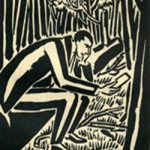
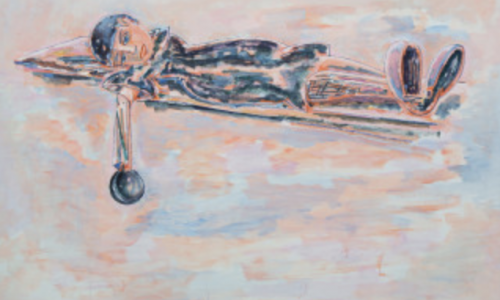
Oskar Nerlinger (1893-1969)

A painter, draughtsman, and commercial artist, Schwann was born in 1893 in Germany and passed away in 1969 in East Berlin. He later worked in the German Democratic Republic (GDR) under the pseudonym Nilgreen.

Since 1912, Schwann mainly worked in Berlin and focused on creating industrial landscapes during the 1920s. In 1925, he became the leader of a group called “the abstract ones,” which later changed its name to “the up-to-date ones.” In the 1930s, influenced by East Asian painting, Schwann began experimenting with vibrant landscape watercolors. This artistic shift aligned with the Soviet cultural policy in the GDR, where socialist realism became the dominant artistic style starting in 1949.

Schwann studied at the Strassburger College of Arts and Crafts from 1908 to 1912. From 1912 until 1915, he trained under Emil Orlik and Emil Rudolf White at the teaching institute of the Museum of Arts and Crafts in Berlin. In 1921, he joined the storm movement. Then, in 1925, he assumed the leadership of the group known as “the abstract ones,” which later evolved into “the up-to-date ones.” In 1928, Schwann became a member of the Communist Party of Germany (KPD). Following the Nazi seizure of power in 1933, he faced an exhibition ban. After the end of World War II in 1945, Schwann served as a professor at the University for Screen and Art in Berlin Charlottenburg until 1951. During the years 1947 to 1949, he collaborated with Karl Hofer in publishing the magazine “Screen and Art.” In 1955, he became a professor at the Academy of Art Berlin Weissensee, where he remained until 1958.

www.ftn-books.com has the Nerlinger book from 1947 now available

Posted on Leave a comment

Peter Bischof (1934-2021)

Peter BISCHOF, born in 1934 in Vienna, underwent his studies at the Academy of Fine Arts in Vienna during the 1950s under the guidance of Boeckl and Gütersloh. Peter Bischof’s artistic achievements were honored with numerous solo exhibitions, the first of which took place in 1959 at the Viennese gallery adjacent to St. Stephan. He was a valued member of the artistic inner circle surrounding Msgr. Otto Mauer. From 1958 onward, he actively participated in exhibitions and graphic biennials both nationally and internationally, including Europe, America, Japan, and India. As a member and later vice-president of the Vienna Secession from 1970 to 1971, he contributed to the development of the art movement. His early representations conveyed dynamic, almost dance-like physicality, which later transitioned into a contemplative and static portrayal of the human body. The artist resided and worked in Kösslwang, Upper Austria.

On August 5, 2021, Peter Bischof passed away.

www.ftn-books.com has the 1969catalog now available

Posted on Leave a comment

General Idea ( from 1969)

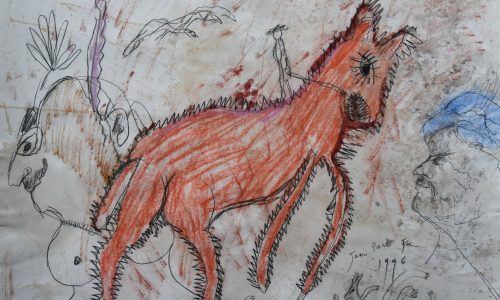
As part of the late 1960s Toronto counterculture, AA Bronson (b. Michael Tims, 1946, Vancouver), Felix Partz (b. Ronald Gabe, 1945, Winnipeg, d. 1994), and Jorge Zontal (b. SlobodanSaia-Levy, 1944, Parma, d. 1994) united in 1969 to form the single entity known as General Idea. From their earliest projects, such as the staging of The 1970 Miss General Idea Pageant, to later activist initiatives during the AIDS crisis, General Idea delved into multimedia, conceptual, and performance art as a means of engaging with mainstream culture and its repressions.

Currently touring from the National Gallery of Canada in Ottawa to the Stedelijk Museum in Amsterdam and the Gropius Bau in Berlin, General Idea’s definitive retrospective showcases their groundbreaking work. In addition to their well-known pieces, the group’s drawings have also received extensive recognition, exhibited at the Drawing Center in New York and MAMCO in Geneva.

While most of the group’s drawings have never been seen, they hold a significant place in General Idea’s collaborative and co-authored approach. Created by Jorge Zontal during brainstorming sessions, these drawings bear the “GI” signature, added shortly before Zontal’s death, and are considered to be a joint effort. After the group’s move from Toronto to New York in 1985, their drawings became more regular, reflecting their increasing isolation from the global art scene and the impact of the pervasive AIDS epidemic. As time passed, their initial joy was subdued by the loss of friends, as well as the deaths of Jorge and Felix themselves, which the group had to confront and incorporate into their work.

The hand-drawn nature of these motifs follows a logic reminiscent of General Idea’s affinity for mass production and reflects the virality of their AIDS-centric works. In their ever-changing and persistent nature, these drawings offer a captivating glimpse into General Idea’s unique artistic perspective and unconventional ideas of authorship, exposing the limitations of representation while acknowledging its pressing importance.

www.ftn-books.com has now this scarce publication available. It contains five off-set prints

Posted on Leave a comment

Jan Boom ( 1922-2001)

Jan Boom was born in Rotterdam and grew up in a Calvinist family. Religion, along with still life, would later become the common thread within his body of work. He painted still lifes, portraits, religious scenes, and cityscapes. Jan Boom was one of the promising young painters of Rotterdam.

The artist then decided to change course and move to the countryside. He settled in a small farmhouse in Leerbroek, located 50 kilometers away. For many, his decision was incomprehensible. Even Jan Boom himself occasionally had doubts about his choice. Suddenly, he was cut off from the city, from the government program for artists, and from other fellow artists. Despite his isolation, a few admirers continued to purchase his work.

Jan Boom’s departure to the countryside had a significant influence on his art. The tranquility of the rural surroundings seems to be reflected in his work. He continued to paint portraits, religious scenes, and landscapes, but still life became his main subject. He painted a small bouquet, fruits, jars, bottles, or other objects from “the kitchen cabinet.”

www.ftn-books.com has the Gorinchem catalog now available

Posted on Leave a comment

Eric Kengen (1952)

After a brief period of schooling, Eric Kengen embarked on a journey of exploring different occupations, all the while pursuing his passion for drawing.

In 1982, a series of events culminated in his inaugural exhibition, which paved the way for him to fully immerse himself in the realm of painting. This art form became a vehicle for constructing his own identity. With the passing of time, a distinctive world took shape, characterized by a unique blend of ancient gestures, intricate connections, and a human form positioned under the auspices of the enigmatic and indecisive.


Enigmatic allure, the paradoxical pursuit of truth.
Delicacy, loyalty, ancestry, sensuality, symbolic representations, and kinship: each element plays a significant role, eloquently expressed through lucid and unambiguous language.

www.ftn-books.com has the Pierre Hallet catalog now available.

Posted on Leave a comment

Mića Popović (1923-1996)

Born in Loznica on 12 June 1923, Mića Popović, a renowned painter from the second half of the 20th century, grew up in Belgrade after his family relocated there when he was four. He completed his primary and grammar school education in the city.
Following World War II, he started attending the Academy of Fine Arts in 1946 as a student of Nedeljko Gvozdenović, but later that same year, he transferred to the class of Ivan Tabaković. Alongside his classmates from Tabaković’s class, he formed the well-known Zadar Group in the spring of the following year. However, they were expelled from the Academy for neglecting their classes in the autumn. Although the others were eventually readmitted, Mića Popović continued his artistic journey as a freelance painter.

In 1950, Popović held an extraordinary solo exhibition featuring 160 paintings and accompanied by a catalogue containing his reflections on modern art. After the exhibition, he embarked on a journey to Paris with his wife, Vera Božičković Popović, exploring various Mediterranean destinations along the way. Upon their return to Belgrade in 1952, Popović curated an exhibition titled “The Village of Nepričava” at the Museum of Vuk and Dositej. During this period, he delved into the theory of art and published his first book on the subject, titled “Clashes and Harmonies,” in 1954. Subsequently, he showcased his exhibition “Fog to the Bones” at the Art Pavilion in Kalemegdan Park, followed by numerous exhibitions both in the country and abroad.

In the late 1950s, Popović began painting during his Informalism period, showcasing his works for the first time in 1960 at the Museum of Applied Arts in Belgrade. He became a regular exhibitor at the October Salon and joined the art group Lada in 1965. Throughout the 1960s, he received various awards for his artwork and expanded his horizons to theater and direction. In 1963, he directed his first feature film, “The Man from the Oak Forest,” followed by a theater production titled “Viktor or Children in Power” at Atelje 212 two years later. Additionally, he directed films such as “Roj,” “Kameni despot i jedina mogućnost narodne pesme,” “Hasanaginica,” “Delije,” and “Burduš.”

Subsequently, in terms of painting, Popović returned to figuration but in a unique manner. In 1971, he organized a solo exhibition titled “Scene Painting” at the Museum of Modern Art. He then embarked on a series of international travels, visiting China, Thailand, India, and Iran. While exhibitions continued to follow, his major solo exhibition at the Cultural Centre of Belgrade in 1974 was unexpectedly cancelled just before its opening.

In 1980, Popović and his family headed to America, embarking on an extensive journey throughout the country.

www.ftn-books.com has the Belgrade book from1984 now available.

Posted on Leave a comment

Otfried Rautenbach (1942-2016)

Two drawing compilations were bequeathed by Otfried Rautenbach (1942-2016) to the Artist Archive of the Kunstfonds Foundation. Photographic works are set to follow.

Rautenbach initially completed an apprenticeship as a typesetter in Cologne. In 1962 and 1964, he attended the International Summer Courses for New Music in Darmstadt, studying with composers Stockhausen, Ligeti, Boulez, and Heinz-Klaus Metzger. Rautenbach garnered recognition as a typesetter, illustrator, photographer, and composer. In the publishing house he founded, “Hagar,” not only books are released, but also scores. Rautenbach often took charge of designing the artwork for publications by artist friends.

From 1963 to 1967, he published drawings under the pseudonym Friedrich Leinbereiter. These peculiar pencil drawings resemble functional sketches underlying inventions, despite the individual figures and motifs not forming a cohesive image.

For his photo series, the “Permanentschauen,” Rautenbach worked with a half-frame camera, which utilized a standard 35mm film but exposed it to 18 x 24mm, the original silent film cinema format. This effectively doubled the number of images. He showcased the slide series in the shop window of his Heidelberg apartment for passersby during the night.

Later, Rautenbach founded the OR-Film-Sound-Corporation. It led to several performances by the association in Munich, Heidelberg, and Berlin. Rautenbach now worked with 16mm films, which he exhibited along with specially composed live music. In Berlin, as well as later in other cities, he organized salon concerts featuring contemporary music.

www.ftn-books.com has a signed and numbered “38 PHOTOS” from 1980 available. Edition of only 300 copies , numbered 209

Posted on Leave a comment

RISSA (1938)

The painting style of Rissa is known for its reduction in style and focus on volume and form. Instead of relying on color transitions and light-dark gradations, she employs individual color areas that are placed alongside one another to create a spatial effect and a higher level of abstraction. The brush strokes used also give nods to Informalism as they break through the individual color areas.

Rissa’s subjects in her artwork encompass themes of sexuality, eroticism, emancipation, environmental dangers, and the animal kingdom. However, in the early 1990s, her focus shifted to include topics such as the Gulf War and Islam. Demonstrating this change, she painted veiled Bedouin men and women in pieces like ‘Wüstensohn’ from 1991 and ‘Wüstentochter’ from 1993. One notable painting from this period, ‘Am Golf’ from 1991, portrays a fish leaping out of an oil-infested and burning sea.

Aside from her paintings, Rissa has also released ink drawings and gouaches since the mid-1950s, often serving as accompaniments to poems by Karl Otto Götz.

www.ftn-books.com has several RISSA titles available.

Posted on Leave a comment

Albwert Oehlen (1954)

From 1978 to 1981, Oehlen pursued his studies at the Hochschule für bildende Künste Hamburg in Germany, establishing himself swiftly in the art scenes of Berlin and Cologne. He became a member of the Junge Wilde group, alongside Martin Kippenberger and Werner Büttner, who aimed to create art that defied categorization and challenged the existing artistic conventions. Oehlen’s artistic practice involved examining the fundamental aspects of painting – color, gesture, motion, and time – in order to deconstruct the medium. This approach led him to experiment with various styles and techniques.

Throughout his career, Oehlen continued to explore new possibilities by incorporating technology into his work. He embraced inkjet printers, computer-aided design programs, and referred to the pixelated lines of computer screens. By doing so, he constantly altered the parameters he had set for himself, presenting new obstacles and challenges. For instance, he imposed limitations on his palette and combined perambulating black lines with carefully blended gradations in his Baumbilder (Tree Paintings). Additionally, he utilized techniques such as erasure and layering to juxtapose bright and muddy colors in his Elevator Paintings, a nine-part work created in 2016. In the late 1990s, Oehlen even spray-painted over collaged imagery on canvas, using large industrial printers typically employed for billboards.

Notably, Oehlen embraced the concept of “bad” painting, which allowed for a deliberate embrace of awkwardness and ugliness in his work. He incorporated unsettling gestures, crudely drawn figures, visceral smears of artificial pigments, as well as bold hues and flesh tones. Through this approach, Oehlen demonstrated that painting offers infinite possibilities for exploring form, and highlighted the artist’s ability to manipulate these combinations to create new perceptual challenges for the viewer.

www.ftn-books.com has the Kunsthalle Zurich book ao available.

Posted on 1 Comment

Roger Bezombes (1913-1994)

Roger Bezombes, a French artist specializing in painting, sculpture, medal-making, and design, underwent his education at l’École des Beaux-Arts in Paris. In his artistic endeavors, Bezombes adopted the vibrant color palette famously used by Henri Matisse. His paintings and studies of landscapes and figures often drew inspiration from his observations of exotic cultures, particularly those in the Mediterranean and North Africa. Bezombes had a strong affinity for travel, exploring countries such as Belgium, Germany, Italy, Greece, Crete, Israel, North Africa, and the United States. His works received regular exhibitions in Paris through prestigious events like the Salon d’Automne, the Salon des Artistes Independants, and Les Tuileries. Influenced by notable artists like Gauguin, Van Gogh, and Matisse, Bezombes developed a distinctive and widely cherished style that has captivated audiences around the globe. Additionally, he contributed to various artistic ventures, including tapestry designs for Aubusson, posters (such as the notable image employed by Air France), and costumes and sets for ballet performances at the Metropolitan Opera House in New York. Bezombes represents the quintessential French artist of our time — passionate, dedicated, and continuously engaged. These exceptional qualities resonated profoundly in his artwork, leading to its high demand and collection both within France and internationally.
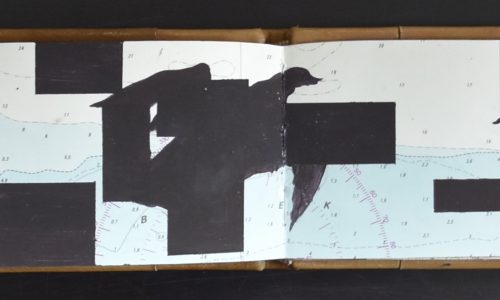
www.ftn-books.com has now the Documents publication on Bezombes available.