Posted on Leave a comment

Ardon (1896-1992)

Ardon

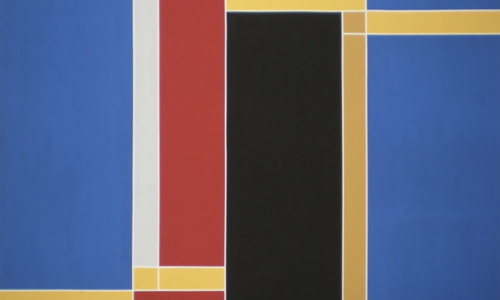
Mordecai Ardon (1896-1992) is considered by many to be Israel’s greatest painter. He studied at the Bauhaus (1921-25) under Klee, Kandinsky, Feininger and Itten. The influence of the Bauhaus and especially of Paul Klee on his artistic development was profound and lasted a life time. The other great source of inspiration were the Old Masters, especially Rembrandt, and El Greco. After graduating from the Bauhaus he studied the painting techniques of the Old Masters under Max Doerner, at the Munich Academy (1926). These dual, seemingly contradicting elements, forged the character of his painting throughout the 70 years of his artistic career. Ardon’s unique position in Modern Art stems from the union of these two opposites in his paintings: A Modern, Expressionist, and mainly Abstract, style, with the classical painting technique of the Old Masters. The depth and richness of his colours owe their quality to this technique. He liberated them from the figurative context of the Old Masters, and turned them into tools for the creation of his original contribution to Modern Art of the 20th Century.
 

www.ftn-books.com has some nice and classic Ardon titles available.

Posted on Leave a comment

Frans Masereel by Benno Wissing (1951)

Frans Masereel

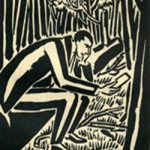
To start with…..I admire both equally. One is one of the greatest graphic artists from the last century…. the other one of the most influential graphic designers of the last century and they worked together for the last Masereel catalogue I just added to my inventory. FM is a small book , even by 50’s standard, but it oozes quality on every page….and it was probably the first time Masereel was presented in the Netherlands, making this even more important. The book is now available at www.ftn-books.com

Posted on Leave a comment

Oliviero Toscani (1942)

Oliviero Toscani

Oliviero Toscani is an Italian photographer, born in 1942, in Milan. He is the ingenious force behind some of the most successful brands and magazines of the world, such as Esprit, Chanel, Fiorucci, Benetton and more. He studied design and photography in Zurich from 1961 to 1965.

Many a times, eminent brands all around the world communicate controversial statements through their advertisements and promotional campaigns. Toscani is one such artist who makes it possible for these huge or elite companies to spread creativity yet taunt at some social, economic or political issue. Through his work, Oliviero Toscani has given insinuation to war, racism, capital punishment and religion.

He is popular for his controversial commercial campaign designing for Benetton, an Italian brand between 1982 to 2000. Most of the time, the ads had a controversial picture often with the logo of the company. Toscani built the company’s identity, image and communication approach in terms of promotion and advertisement.

In 1990, he made the first global magazine, Colors, with Tibor Kalman, an American graphic designer; and this trend gave ideas to many editorial projects.

His work has appeared in magazines like Vogue, Harper’s Bazaar, Stern, Espire, GQ, Elle etc.

www.ftn-books.com has the CHanel Boutique catalog from 1988-89 photographed by Toscani available.

Posted on Leave a comment

Joël Kermarrec (1939-2022)

Joel Kermarrec

Settled in Paris in 1960, and graduated from the École nationale supérieure des Beaux-Arts in Paris in 1964. From 1966, his work was visible in several personal and group exhibitions, Impact at the Musée d’Art Moderne de Céret, Distances to the Museum of Modern Art of the city of Paris in 1969, alongside Jaques Poli and Hervé Télémaque, or Twelve Years of Contemporary Art at the Grand Palais in 1972. In 1987, it was at the Galerie de France that he presents his work, then in 1994 at the Maeght gallery, Barcelona. He regularly exhibits in both public and private institutions.

In 1968, he participated in the establishment of the Art department of the University of Vincennes-Paris VIII. He taught there from 1969 to 1975. He then taught at the École des Beaux-Arts in Marseille-Lumigny, then at the École nationale supérieure des Beaux-Arts in Paris for nearly twenty years.

Joël Kermarrec’s works have entered the collections of various museums and public institutions, such as those of the Museum of Modern Art of the city of Paris, the Center Georges Pompidou, the Maeght Foundation, the FNAC, the CNAP, and FRAC Ile-de-France, PACA, and Languedoc-Roussillon.

www.ftn-books.com has the 1970 galerie Withofs catalogue available

Posted on Leave a comment

Svavar Gudnason (1909-1988)

Svavar Gudnason

Svavar Gudnason (1909-1988) was the leading Icelandic avant-garde artist and one of Europe’s most noteworthy painters of the 1940´s and 50´s. He became acquainted with the famous  Cobra, and was the first Icelandic artist to develop an abstract expressionist style. CoBrA was formed by Asger Jorn, Karen Appel, Constant Corneille, Christian Dotremont,  and Joseph Noiret on November 8, 1948 in the Café Notre-Dame in Paris. Gudnason‘s works are to be found in major modern art museums in Europe and Scandinavia, for example in Louisiana in Denmark and the CoBrA Museum in the Netherlands.

The Cobra Museum catalogue is available at www.ftn-books.com

Posted on Leave a comment

Ossip (continued)

Ossip in his studio

When you follow an artist over a long periodof time, you have knowledge of the development of his art. First there were the less complicated 2-dimensional works, these were followed by 3 dimensional ones and later these 3 dimensional works were executed as mobiles with some even have complicated movements. My personal favorites are the ones that have images in 2 dimensions and were altered and worked over into an object/work typical for and recognizable as a work by OSSIP. I have been able to buy one of these works from his earlier years at auction. It is a work from 2003 on which a woman is depicted crouching in which the figure has cracks all over, making this , beside the crouching stand, fascinating .

www.ftn-books.com has some art and books on Ossip available.

Ossip Hurk vrouw, 2003, signed/dated
Posted on 1 Comment

YSBRANT ( van Wijngaarden ) (1937-2007)

Ysbrant

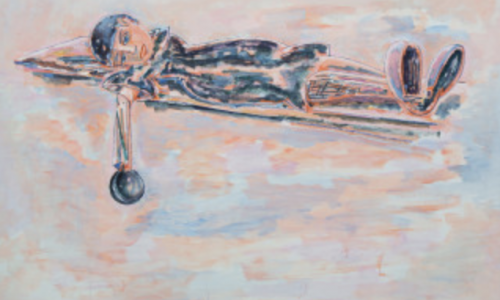
Ysbrant (pseudonym of Van Wijngaarden, Ysbrant) was born in 1937 in The Hague/Netherlands and died in 2021 in Marinella di Selinunte in Sicily. He was a painter, watercolorist, graphic artist and designer of collages. He was educated at the Higher Institute in Antwerp, at the Schule des Sehens of O. Kokoschka in Salzburg and at the Central School of Arts and Crafts in London. He lived and worked alternately between the Netherlands, Belgium and Italy. For his works he usually started from a coincidence such as a photo or an event that caught his attention. In 2001 he was inspired by the Belgian landscape (the Antwerp Kempen) for a series of works. In fact, the subject mattered not to him, but the result. Sometimes Cobra is not far away. He is one of the artists around the De Zwarte Panter gallery in Antwerp. From the press: ‘Things from reality give rise to compositions that, in their turbulent view, nevertheless attest to a good order, an ordered chaos that testifies to an independent vision,’ and ‘Ysbrant is in keeping with the tradition of Cobra. His work is thus disordered and impulsive. He likes chaotic canvases teeming with figures. He portrays them from many points of view with varying perspectives. Sometimes he can be very seductive, for example when he makes use of silver and gold leaf in smaller, non-figurative works.’ Works by him were purchased by the State in 1966, by the Flemish Community in 1982/1983. 

www.ftn-books.com has now the retrospective catalog published by the Mercatorfonds for sale.

Posted on Leave a comment

Jef Geys (1934-2018)

Jef Geys

The work of Jef Geys (1934-2018) constitutes one of the undisclosed territorialities of the neo-avant-garde, of which the artist gave the international art world a cryptic overview in 2002, within the largest platform for self-promotion: documenta in Kassel. The 36-hour-long projection Day and Night and Day was widely mentioned for its duration but hardly for the way it exposed an entire lifetime trajectory, for its manic exhibitory quality combined with its anti-narrativity.

All the photographs that Geys made until 1998 passed by in a photo-filmic overflow that laid out the scope of what he considered as constitutive of his practice. Blurring the lines between the different environments of his topographical or social operations, his pictures were made in his home-town in rural Balen, but also during holiday trips, at the school where he taught ‘positive aesthetics’ from 1966 to 1989, during regional socio-cultural and political actions, and in the depicted sceneries in the Belgian and international art worlds.

Subverting categorisations was a typical gesture for his generation, which used extradisciplinarity as a way to expose the conformism of stylistic and formal classifications based on academic criteria. Jef Geys positively echoed such practices in his tendency to archive and recollect knowledge. His presentations in exhibitions showed a diagrammatical organisation of his research in the form of laconic observations of phenomena, facts and documents. However, his display eluded any kind of narrative or communicative turn by leaving out titles and legends, following an erratic organisation and providing cryptic, hermetic information about what the (photographic) documents represented. Rather than being a mere documentation or proof of a visual fact, the slow sequence of images at documenta became more of a cinematic reverie with a deep autobiographical scope. The use of juxtaposition as a serial and de-dramatizing device, as well as the absence of careful framing and composition, installed Jef Geys’ work along the line of early conceptual photography, with its insistence on the indexical and the document, diagrammatic grids, and the substitution of professional media skills by an impersonal, factual or dilettantish imprint.

For those interested in the entire article on this gifted artist please visit the author: https://www.conceptualfinearts.com/cfa/2021/01/06/jef-geys/

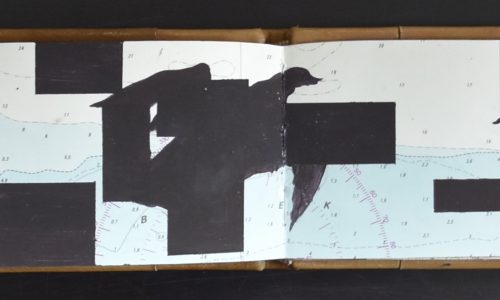
www.ftn-books.com has a scarce item which features Jerf Geys available.
Posted on Leave a comment

Katharina Fritsch (1956)

Katharina Fritsch

Katharina Fritsch’s iconic and singular sculpture plays on the tension between reality and apparition, between the familiar and the surreal or uncanny. Her iconic objects, images, installations and sound works seem able to imprint themselves on the mind, as if they were gestalts or things we have seen and experienced before. Hearts, crosses, skulls, bottles and Madonnas are used to play on the fantasies and images that we share, but they are transformed through colour and material into things open and mysterious: latent notions transfigured into primal forms. Fritsch often recasts characters and elements from her own, private world. In works such as ‘Tischgesellschaft’ (Company at Table), (1988), subjects – usually male – are transformed through colour and material into frozen, hyperreal beings that seem without otherworldly apparitions.
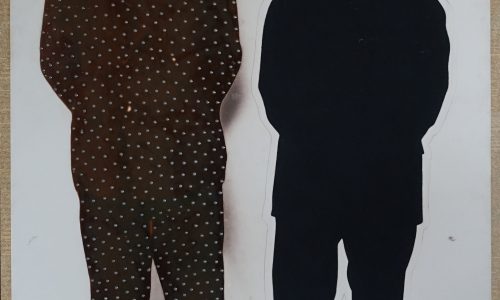
The clarity, austerity and precision of Fritsch’s forms is developed through a lengthy manual sculpting process, a way to achieve the near industrial perfection of their finish. Fritsch also reworks memories or fantasies into strange, unsettling visions that confront the viewer with their bold directness, formal accuracy and startling geometry. In her last solo exhibition at White Cube Hoxton, Fritsch created a dreamlike garden with a series of brightly hued silk-screen postcards of Essen sent to the artist as a child from her grandfather that resonate with both personal and cultural nostalgia. Singular forms are often used repeatedly to create a psychotic proliferation, placed in a strictly gridded tableaux or in perfect concentric circles for example ‘Rattenkönig’ (‘Rat-King’), (1991-1993) or ‘Kind mit Pudeln’ (‘Child with Poodles’), (1995-1996). Fritsch’s work often has unsettling religious or quasi-spiritual associations and is deeply psychological, as if she is attempting to give an image to our deepest fears recovered from the world of myth, religion, cultural history and everyday life.

www.ftn-books.com has Fritsch publications available .