Posted on Leave a comment

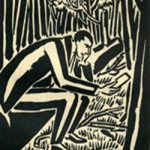
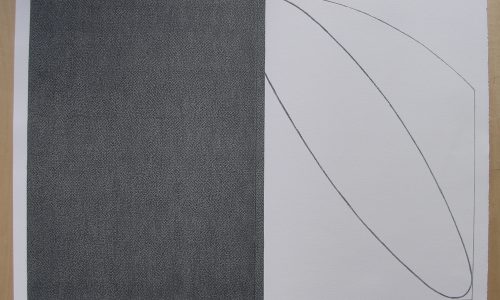
Bewogen Beweging, 1961

In all these years of buying, selling and collecting books I only encountered BEWOGEN BEWEGING once. It as at a bookstall at the Voorhout in Den Haag, but is was already sold. I think I now have one of the largest and most important collections of publications related to the Stedelijk Museum and now….after 2 decades I finally can add BEWOGEN BEWEGING to my inventory and it is now for sale at www.ftn-books.com

I rank this among the most important publications the Stedelijk ever has published. Of course Zero is the ultimate of all Stedelijk editions, but this one surely ranks among the top 5.

Posted on Leave a comment

Manuel Raeder (1977)

Manuel Raeder

Muebles Manuel was founded by Berlin-based graphic designer and publisher Manuel Raeder. Born in 1977, Raeder studied at the London College of Printing and was a resident at the Jan van Eyck Academy in Maastricht from 2001 to 2003. In 2003 he founded Studio Manuel Raeder, an interdisciplinary design studio based in Berlin and Mexico City.
Furthermore, in 2011, Manuel Raeder founded the publishing house BOM DIA BOA TARDE BOA NOITE to distribute and publish artists who have a strong interest in exploring the format of the artist book.

www.ftn-books.com has the IN/Visible artist book by Raeder now available

Posted on Leave a comment

Hayley Tompkins (1971)

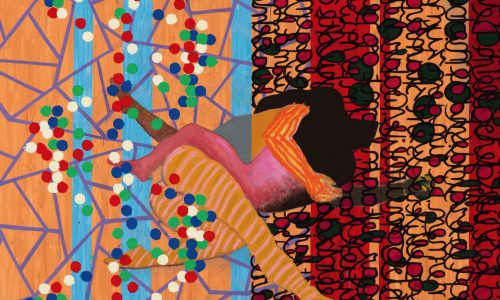
Hayley Tompkins works with painting, photography and found objects to make installations that highlight the process of looking and experiencing space. Through her practice she seeks to understand objects in the world through an examination of the mimetic quality of paint and painting. For Tompkins the act of painting is a process of thinking and exploring, rather than as a means to simply produce paintings. Her work attempts to find new ways to challenge and explore painting’s transformational possibilities, in order to construct a balance between the pictorial and the physical. The exhibition at Bonner Kunstverein is a new commission and is Tompkin’s first major solo exhibition in Germany.

www.ftn-books.com hasthe CONVERSATIONN book by Tompkins now available.

Posted on 6 Comments

Mario Sironi (1885-1961)

Mario Sironi was one of the most famous artists of the first half of the twentieth century. During his career, Sironi adhered to different artistic currents and even founded one together with other artists, as in the case of the Novecento Italiano movement. During the years Sironi was a member of Futurism, the Italian avant-garde movement born in 1909 with the famous manifesto of Filippo Tommaso Marinetti (Alessandria d’Egitto, 1876 – Bellagio, 1944). After that, for a certain period, he was also influenced by the Metaphysical current, founded in the Twenties by Giorgio de Chirico, and by Expressionist painting. In addition, Sironi moved to the forefront to revive mural painting, of which he became the most important exponent of his time.

However, his brilliant artistic career was tainted by his convinced adhesion to the fascist political movement, in which he saw a springboard for the rebirth of Italy and consequently of Italian art. During the years Sironi had close relations with the regime, for which he set up several exhibitions and many pavilions. Moreover, the painter worked as an illustrator for the Popolo d’Italia, the newspaper founded by Benito Mussolini. Because of his closeness to the regime, Sironi’s works were discredited for almost the entire second half of the twentieth century. On the other hand, in recent years there has been an ongoing re-evaluation of Sironi’s corpus that, without erasing the shame of the painter’s adherence to the fascist movement, is bringing to light the masterpieces of one of the greatest modern Italian masters.

www.ftn-books.com has several Sironi titles available.

Posted on Leave a comment

Ton Slits (1955)

Since i recently aquired some Ton Slits publications i tried to find more information on the artists, but beside the occasional exhibition it is hard to find a current biography. Still…. Slits has exhibited many times in the important museums in the Netherlands. Among them the Stedelijk Museum in Amsterdam which catalog is available at www.ftn-books.com

The publications that I have added are scarce. The Wanda ±Reiff one is even the first one I ever encountered. For those admiring Slits do not hesitate to discover the Slits publications at my site.

Posted on Leave a comment

Kunst op Kamers/ de Rijp

During the manifestation ‘Kunst op Kamers’ in de Rijp, art is shown in private houses. The booklet contains the portrait of the artist involved; however, the page showing a sketch of what the artist is planning to make is closed. The reader has to tear the page open to be able to see it.

Committee

The finishing of this book is stunning: the side margins of the brochure have been left untrimmed, which makes the pages bulge towards the centre. The fine slipcase design refers to the nature of the event: peeking at other people’s interiors. Another fine detail is the accompanying mini-booklet, which contains the tickets for all open houses.

Over the years www.ftn-books.com has collected many of the publications related to this art manifestation. Also the book by Irma Boom which was chosen as one of the best designs books from 2008.

Posted on 1 Comment

Karin Trenkel (1966)

This is what Karin Trenkel says on her own site about her work:

I am fascinated by the immense amount of planning and efforts we carry out to design our environment so that it meets the requirements of all who live and work here. This tendency to believe in the potential of forming our own environment is particularly ubiquitous in the Randstad (Amsterdam, Den Haag, Rotterdam and their suburbs); a built up and densely populated area where one can’t help but notice how people have a hand in almost everything one sees. Even nature has become far more a product, designed to have an appearance that can be perceived as natural. Natural, but according to plan!

Where does this do-it-yourself attitude come from? I believe it has taken root in the Dutch; it has become literally and figuratively their second nature, because here in these ‘low lands’ more than 20 per cent of the land has been created through land reclamation. It is a mentality that has become embedded over time to gain more ground, and is apparent everywhere, in everything.

Because I’m an artist rather than an environmental activist, with a penchant for the unexplainable and poetic aspects of our existence, my eye often falls on absurd and surreal phenomena in the infrastructure. An example is how some reclaimed land is given back to ‘nature’ in the form of ‘re-creation’ areas.

These forms of absurdity are encountered in my own landscape creations in subtle and humorous ways. The absurd stems from the interplay between a strict and playful, or serious and naïve approach, and has to do with a driven but easy-going attitude. The materials chosen, as well as their application and use, usually also have absurd overtones. In the installation ‘Landscape with sheep’ for example, this becomes apparent in the depiction of sheep and fleecy clouds: a light and buoyant theme that acquires a heavy counterweight through the immense amount of work required to knot together plastic strips into a 24-square metre textile piece. The plastic used comes from bin liners, which contradicts the naïve-romantic image.

The formal aspects of my work reflect my interest in the bordering area between painting and sculpture. How can I translate an observation of my surroundings into a two as well as three-dimensional image, which makes possible both an optical illusion (intrinsic to the art of painting) and a physical experience (intrinsic to the art of sculpture)? To find a satisfying answer to this question, in recent years I’ve been making large-scale, three-dimensional collages from hand-painted paper, and sometimes from plastic. The presentation space performs the function of a monumental canvas, upon which classical – or clichéd – concepts about landscape/nature are depicted. In addition, the history of landscape painting is an essential point of departure in determining the subject to be depicted and its translation to the ‘canvas’.

I work with the tension between the actual space, the illusionistic quality of what is being portrayed and the physical presence of the materials used. The viewer observes a massive number of scraps of paper or strips of plastic, while the material as a whole depicts a landscape: a kind of three-dimensional impressionism contained within a collage. One’s perception vacillates between close-up and distant, between flat and spatial, and between reality and its abstraction.

For me, installations are like stage sets for, with and in a specific space. The characteristics of the space become points of departure in determining the nature and content of the installation. On location, I assemble the ‘pieces of scenery’ that I’ve constructed in my studio beforehand; if necessary the space is adapted, so that the scenery works with the space to become a new and unique whole. The play and the actors are absent from my installations – when visitors enter the set, they can be considered the actors and as such form an artificial part of the unnatural landscape.

www.ftn-books.com has the HALF DAY CLOSING book now available.

Posted on Leave a comment

André Heller (1947)

André Heller was born in Vienna in 1947. He’s among the world’s most influential and successful multi-media artists.

His achievements encompass garden artwork, chambers of wonder, prose publications and processions including a revival of circus and vaudeville, selling millions of records as a chansonnier of his own songs, amazing flying and swimming sculptures, the avant-garde amusement park Luna Luna, films, fire spectacles, and labyrinths as well as stage plays and shows that have entertained audiences from Broadway to the Vienna Burgtheater, from India to China, and from South America to Africa.

André Heller lives in Vienna, Marrakesh, and on the road.

www.ftn-books.com has the book on his Flying Sculptures from 1986 now available.

Posted on Leave a comment

Emily Carr (1871-1945)

Emily Carr was a painter and writer whose lifelong inspiration was the coastal environment of British Columbia. Her later paintings of the vast Canadian West Coast sky and monumental trees, with their sweeping brushstrokes, demonstrate her continued desire to paint in a “big” way that she felt was in keeping with the expansiveness of her environment.

Carr first studied at the California School of Design in San Francisco from 1890 to 1893 and sketched in the First Nations village of Ucluelet on the west coast of Vancouver Island in 1899. Carr travelled to England in 1899, studying in London and at St. Ives in Cornwall. She returned to Canada five years later, first to Victoria and then moved to Vancouver to teach. In 1907 she travelled by ship to Alaska and determined to depict the monumental arts of the First Nations of the West Coast.

In search of a bigger vision of art, she went to France in 1910, where she was introduced to the work of the Fauves, French artists who were dubbed the “wild beasts” for their daring use of bright colours. In 1912 Carr made a six-week painting trip to fifteen First Nations villages along the British Columbia coast. After exhibiting the results in Vancouver, Carr settled in Victoria, where she lived by renting out rooms, growing fruit, breeding dogs, and, later, making pottery and rugs decorated with Indigenous designs to sell to tourists.

In 1927 Carr was invited to participate in the Exhibition of Canadian West Coast Art in Ottawa. The exhibition included thirty-one of her paintings, as well as pottery and rugs. She came east for the opening, and in Toronto met members of the Group of Seven, beginning a lifelong correspondence with Lawren Harris.

After the success of this trip, Carr returned to Victoria and began the most prolific period of her career. She painted Indigenous subjects until 1931, then took as her principal themes the trees and forests of British Columbia and the coastal skies. In 1937 she suffered a heart attack and devoted much of her time to writing. Her first book, Klee Wyck (1941), received the Governor General’s Award for literature in 1942. She had solo exhibitions in Vancouver, Toronto, and Montreal prior to her death in 1945.

www.ftn-books.com has the 1977 Carr catalog now available.

Posted on 1 Comment

Gijs van Bon (1975)

Gijs van Bon is widely known for his abstract kinetic artworks, light art, and time-specific art installations. In his highly conceptual yet decidedly physical works, elements of technology, art, and theatrical performance seamlessly intersect. Van Bon makes use of an ever-growing repertoire of technical inventions and materials to design his slowly moving and carefully choreographed objects. These multidisciplinary objects and installations often ‘come to life’, becoming autonomous, theatrical events in and of themselves. Both his smaller and larger-scale pieces invite viewers to look closer while simultaneously expanding their notions of time, language and space.

Van Bon (1975) attended Design Academy Eindhoven and received his advanced training at HKU at the Department of theatre Design. From 2001 onward, his work has been shown in galleries, art centres and at events and festivals all over the world. Van Bon lives in Nuenen and works in his dynamic studio ‘La Citta Mobile’ in the city of Eindhoven among other artists and designers.  

www.ftn-books.com has the rare THE MOVING ABSTRACT PIECES book now available.