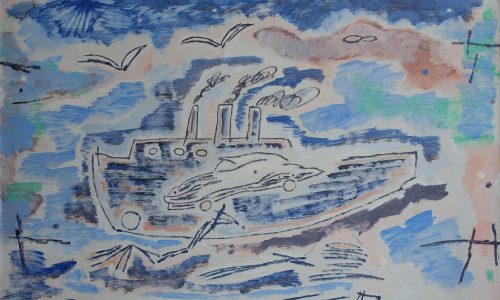
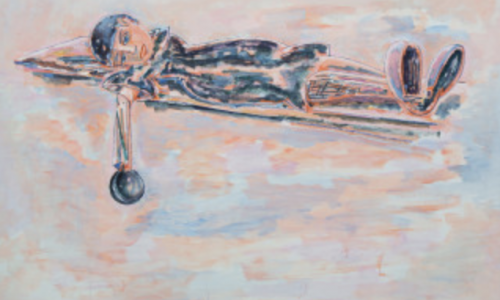
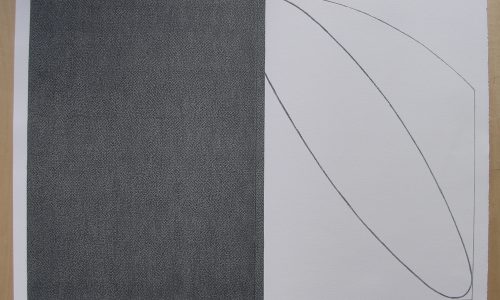
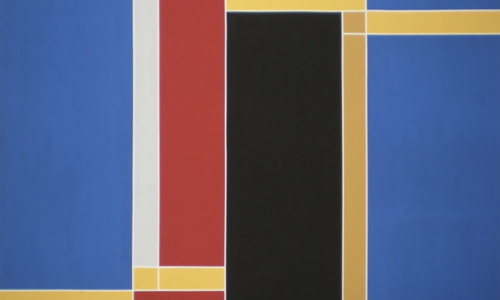
The work of Friso Kramer (1922-2019) has had a profound impact on the international design world, making him one of the most significant designers known in the Netherlands. His unmistakable mark on industrial design can still be seen today.
Born in 1922, Friso Kramer began experimenting with various materials and techniques at a young age. While studying at the Academy of Fine Arts in The Hague, he specialized in industrial design. And his talent did not go unnoticed. One of his most famous designs is the Revolt chair for Ahrend. A sleek and functional chair, made from conventional sheet steel. Unobtrusive and serving, just like his also well-known design of the green mailbox.
Friso Kramer’s designs are functional, timeless, and innovative. They remain relevant from generation to generation, long after they first hit the market.
“If the form does not contribute to the function, it has no right to exist.”
www.ftn-books.com has the scarce Friso Kramer catalog for his fsamous Stedelijk Museum exhibition now available.
Bernard Buffet (1928 – 1999) produced over 8000 works throughout his career, ranging from still lifes, nudes and melancholic self-portraits to cityscapes of Paris and landscapes. He also worked as an illustrator and designer, creating the décor for the opera Carmen, illustrating Jean Cocteau’s La Voix Humaine, Dante’s Inferno, and a few poems by Baudelaire.
Buffet studied drawing and painting at the Ecole Nationale Supérieure des Beaux-Arts’ in Paris and at the young age of 17, he exhibited in a Parisian gallery. From then on, his star was rising: the reviews were raving and his work was included in almost all major Parisian exhibitions in the following years. His work was also warmly welcomed internationally. His paintings during this period can be described as typically post-war. Still lifes – where poverty is evident – are interspersed with poignant Parisian cityscapes. These paintings, all characterized by prominent black lines, combined with a color palette veiled in shades of gray, align with the popular philosophy of existentialism at the time, known from the books by Sartre and Simone de Beauvoir.
During his esteemed career, Bernard Buffet (1928 – 1999) produced over 8000 works, encompassing a range of subjects from still lifes, nudes, and melancholic self-portraits to Parisian cityscapes and landscapes. He also worked as an illustrator and designer, creating the sets for the opera Carmen, illustrating Jean Cocteau’s La Voix Humaine, Dante’s Inferno, and some poems by Baudelaire.
Buffet studied drawing and painting at the Ecole Nationale Supérieure des Beaux-Arts in Paris and held his first exhibition at the age of 17 in a Parisian gallery. Although he was initially seen as a leading artist, his fortune changed. In the 1960s, abstract art gained popularity and Buffet’s still figurative work became controversial in the art world. However, he remained a beloved figure among the general public, leading to commercial success. His exhibitions were managed by Galerie Maurice Garnier, which still represents him today. Garnier ensured that Buffet’s work, although highly debated, was shown in museums all over the world, from Moscow to Tokyo, and from Berlin to Deurne. There is also a clear connection to The Hague, as painters like Ber Mengels and Jurjen de Haan (the New Hague School) were greatly influenced by Buffet’s work.
Since the 1990s, there has been a revaluation of Buffet’s work on an international level. While his work has always remained popular in Japan, more and more art critics in Europe are now appreciating its value as well.
www.ftn-books.com has alarge selection of titles on Buffet now available.
OLYMPUS DIGITAL CAMERAOLYMPUS DIGITAL CAMERAOLYMPUS DIGITAL CAMERAOLYMPUS DIGITAL CAMERAOLYMPUS DIGITAL CAMERA
Luc Tuymans, born in Mortsel in 1958, is a Flemish-Belgian painter. He is widely regarded as one of the most influential contemporary Belgian artists, living and working in Antwerp. Tuymans is married to Carla Arocha, a Venezuelan artist.
Having received his artistic education at the Sint-Lukas Institute in Brussels and studying art history at Vrije Universiteit Brussel, Tuymans’ paintings are figurative in nature. He employs photographic techniques such as cropping, framing, sequencing, and extreme close-ups. In a time when painting was declared dead, he creates uncomfortable figurative monochromatic canvases, sometimes in muted colors. With a cinematic eye, he depicts seemingly innocent, but in reality loaded subjects: a lampshade (from Buchenwald), a broken doll’s body, a hemline and a leg, a cropped view of a body or a face (from the series Der diagnostische Blick, 1992). Several paintings refer to unresolved past events: the Holocaust (Gaskamer, 1986), Belgian colonialism (Leopard, 2000), and Flemish nationalism.
www.ftn-books.com has some highly collectable Tuymans titles available.
Jan Groover is renowned for her formalist imagery of still life, encompassing household utensils and kitchenware. She pursued her studies at Pratt Institute in Brooklyn, New York, graduating with a bachelor of fine arts in painting in 1965. Prior to venturing into photography, Groover taught art at a public school and then went on to pursue a master of fine arts program in art education at Ohio State University. Following her degree, she joined the University of Hartford in Connecticut as a professor. It was during this time that she embarked on her photography journey, replacing her focus on painting with the lens. In her own words, “With photography, I didn’t have to fabricate anything – everything was already there.”
In the late 1970s, Groover began creating her first photographs. These were in the form of color diptychs and triptychs, featuring moving vehicles. With a formalist approach, she aimed to capture time, distance, speed, and color in these images. The closer the vehicle was to the camera, the more blurred it appeared, while a farther distance resulted in a sharper object. Color played a significant role in adding depth to the moving object in Groover’s motion studies.
In 1978, Groover shifted her focus to her kitchen sink for inspiration. She transitioned from street scenes to still lifes of household objects, including stainless-steel utensils, cutlery, bowls, glassware, and even food items. Through experimentation with different combinations of objects, she aimed to achieve a pleasing relationship of shapes, colors, and spaces.
Groover’s approach to still life was a formalist one, as she believed that “formalism is everything.” Focusing on the shapes, lines, colors, and textures of the objects, she often blurred the boundaries between foreground, middle ground, and background. Her enigmatic complexity lies in her ability to create an illusion of depth and space in her seemingly simple compositions. The resulting photographs are a testament to her prowess as a visual storyteller.
Freshness, vitality, and dazzling hues encapsulate Walasse Ting’s (originally named Ding Xiongquan -丁雄泉) depictions of women, flowers, birds, and animals, executed in a forceful and highly individualistic style. Wallasse Ting’s alluring, magical world is one of sensory pleasure, appealing to all who share his passion for the beauty of nature.
Walasse Ting was born in Shanghai in 1929 and briefly studied at the Shanghai Art Academy before leaving China in 1946 to come to Hong Kong, where he exhibited some watercolors in a local bookstore. In 1950, he sailed to France and eventually arrived in Paris with no money, friends, or shelter. He lived as a poor, struggling artist for six years, absorbing the city and being exposed to Western art for the first time, particularly the expressionist movement and the works of Picasso. A significant influence was the Belgian artist, Pierre Alechinsky, who discovered Ting while he slept on bare planks in a small attic room and became his lifelong friend.
Walasse Ting arrived in New York in 1958 at the height of the abstract expressionist period. He befriended American artist Sam Francis, and the movement had a profound impact on his work. Unlike in Paris, Ting was able to paint and sell his work. In his paintings, which at the time were predominantly poetic abstractions in the style of Parisian Chinese artist Zao Wouki, bold drips were visible. It wasn’t until the 1970s that Ting developed his now signature style, using Chinese calligraphic brushstrokes to define the contours, and filling flat color fields with vibrant acrylic paint.
A human wordsmith, Pat Andrea (1942) is an internationally acclaimed master painter and one of the most prominent figures in European realism and new figurative iconography.
In his 40-year career, his work has been showcased in hundreds of exhibitions, including five retrospectives. It has been featured in some of the most prestigious museum collections in the world, such as MOMA (New York), Centre Georges-Pompidou (Paris), Museo Nacional de Bellas Artes (Buenos Aires), and the Stedelijk Museum (Amsterdam).
Born in The Hague in 1942, Andrea studied at the city’s Royal Academy of Art under Co Westerik. He co-founded the ABN Group with Walter Nobbe and Peter Blokhuis, known as the New Hague School, and held his first solo exhibition in 1965. In 1979, he was selected by art critic Jean Clair to participate in Nouvelle Subjectivité at the Palace of Fine Arts in Brussels, alongside artists like David Hockney, RB Kitaj, and Sam Szafran. Andrea served as a professor at the École Nationale Supérieure des Beaux-arts in Paris from 1998 to 2007, and currently resides and works in Buenos Aires and Paris.
In his paintings, classical quality meets grim neo-expressionism as sexuality, fear, and desire seamlessly intertwine to produce images that are both playful and intensely disturbing. One-act dramas of everyday human emotions, Andrea’s creations delve into eroticism and violence through raw yet delicate depictions of men and women.
www.ftn-books.com has several Pat Andrea publications now available.
Born in Zürich in 1902, Richard Paul Lohse had a dream of becoming a painter. However, due to difficult economic circumstances, his wish to study in Paris was not fulfilled. Instead, in 1918 he joined the advertising agency Max Dalang and trained to become an advertising artist. Despite being self-taught, Lohse’s work displayed expressiveness and late cubist elements, especially in his still life paintings.
In the 1930s, his career as a graphic artist and book designer earned him recognition as one of the pioneers of modern Swiss graphic design. In his paintings, he experimented with curved and diagonal constructions. In 1937, Lohse and Leo Leuppi founded Allianz, an association for Swiss modern artists. The following year, he assisted with the organization of the “Twentieth Century German Art” exhibition in London, alongside his brief wife, Irmgard Burchard.
Lohse’s strong political beliefs led him to join the resistance movement, where he met and eventually married Ida Alis Dürner. It was not until 1943 that Lohse made a breakthrough in his painting, standardizing his pictorial methods and developing modular and serial systems. His book “New Design in Exhibitions” was published in 1953, and he became co-editor of Neue Grafik/New Graphic Design in 1958. His systematic and constructive art, as well as his graphic design, gained worldwide recognition through important exhibitions and publications. Lohse passed away in Zürich in 1988, leaving behind a legacy of enigmatic complexity and linguistic dynamism in his works.
OLYMPUS DIGITAL CAMERAOLYMPUS DIGITAL CAMERAOLYMPUS DIGITAL CAMERAOLYMPUS DIGITAL CAMERAOLYMPUS DIGITAL CAMERAOLYMPUS DIGITAL CAMERAOLYMPUS DIGITAL CAMERA
The Rotterdam-based artist Henk Tas (1949) blends various images from popular visual culture, mass media, and advertising in his photographic works. Through vibrant photography, sometimes combined with other techniques, he crafts his ‘magic photos’ which have been acquired by museums such as Boijmans, Centre Pompidou, and others. In fact, Tas would have preferred to become a rockstar, being a visual artist was his second choice. As a result, his work is always bursting with rock & roll vibes and a hefty dose of glamour. The objects he photographs, often rendered unrecognizable, serve as vehicles for emotions in his eyes.
Beside some original works, www.ftn-books.com has some Henk Tas titles available.
Alongside Paul Signac, he focused on the theoretical principles of color interaction. His technique of portraying light through the use of small brushstrokes of contrasting colors became known as divisionism. A less accurate term is Pointillism, as this refers more to the application technique. He tested his theory that the small dots would mix together in the viewer’s eye at a distance for the first time in his large canvas La baignade à Asnières (1883-1884; National Gallery, London), although the colors themselves were still mixed.
In subsequent works, including the large canvas Dimanche d’été à la Grande Jatte (1886; Art Institute of Chicago in Chicago), he placed unmixed colors next to each other, a method that is characteristic of neo-impressionism, of which he was a prominent representative.
In addition to a number of large pieces, Seurat also painted landscapes, genre scenes, and portraits. His design is balanced, taut, and geometric in structure. Not only in technical terms but also in atmosphere, Seurat’s style differs from impressionism, among other things because he soon ceased to pay attention to natural light and created most of his large works in his studio.
In his later large-scale works, he primarily focused on capturing movement, as seen in Le chahut (1889-1890; Kröller-Müller Museum in Otterlo) and Le cirque (1891; unfinished; Musée d’Orsay in Paris).
www.ftn-books.com has some Seurat titles available
Lee Friedlander is a groundbreaking American photographer renowned for his pioneering portrayals of urban streets. His street photography often captures unposed portraits of individuals, striking signs, and subtle reflections of himself in storefront windows, showcasing the unexpected interplay of light and subject matter within the bustling cityscape. In his own words, “I’m not a calculated photographer. You don’t have to search for photos. The material is abundant. You go out and the photos are staring at you.” Born on July 14, 1934 in Aberdeen, WA, Friedlander honed his skills at the Art Center College of Design in Pasadena before relocating to New York in 1956. Influenced by the artistry of Eugène Atget and Walker Evans, he strived to view the world from an outsider’s perspective, spontaneously responding to the endless potential of images surrounding him. Along with Diane Arbus and Garry Winogrand, Friedlander was featured in the groundbreaking exhibition “New Documents” at The Museum of Modern Art in 1967, curated by John Szarkowski. He later gained critical acclaim with the publication of his acclaimed photography book, The American Monument, in 1976. In more recent years, Friedlander released America by Car in 2010, a book accompanied by an exhibition at the Whitney Museum, showcasing a series of photos captured on road trips from the driver’s seat of rental cars. The influential artist continues to reside and create in New York, NY. Today, his compelling photographs are held in prestigious collections such as the Art Institute of Chicago, The Metropolitan Museum of Art in New York, the Los Angeles County Museum of Art, and the Victoria and Albert Museum in London, among others.
www.ftn-books.com has the much sought after MARIA publication now available.
Artist/ Author: Oliver Boberg
Title : Memorial
Publisher: Oliver Boberg
Measurements: Frame measures 51 x 42 cm. original C print is 35 x 25 cm.
Condition: mint
signed by Oliver Boberg in pen and numbered 14/20 from an edition of 20