Posted on Leave a comment

Aart Roos (1919-2009)

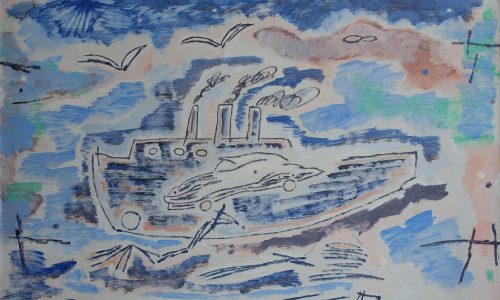
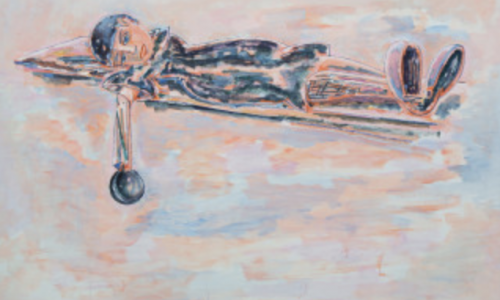
Aart Roos, born in Zaandam in 1919, was a Dutch painter, printmaker, glass and mural painter, monumental artist, draftsman, lithographer, textile artist, and professor at the academy.

Roos gained recognition in the 1950s and ’60s for his expressionist and monumental paintings. His style is classified as abstract expressionism. He received his education in Zaandam and, from 1941 to 1944, studied at the Rijksakademie of Fine Arts in Amsterdam. There he learned portrait and figure drawing from Prof. G.V.A. Röling, who was both his teacher and mentor. Roos also taught Piet Warffemius during his time at the academy.

Among his fellow classmates were Jef Diederen, Pieter Defesche, Karel Appel, Corneille, and Ko Sarneel. After the war, Roos mastered various painting techniques and became an active member of the newly founded Professional Association of Visual Artists (BBK).

Aart Roos drew inspiration from Picasso, Paul Klee, and Constant Permeke in his youth, and later from Willem de Kooning, Robert Motherwell, and Graham Sutherland. His style transitioned from figurative to abstract expressionism immediately after the war. His paintings were vibrant and often explored the drama of human relationships or revealed the drama of nature.

In and around Amsterdam, Aart Roos created numerous monumental works on commission for municipalities and companies. The most famous of these is the fifteen-meter-long mural Birds and Flowers, located in the former Timorschool in Amsterdam, which was completed in 1962.

From 1968 to 1980, Roos served as a professor of monumental art at the Royal Academy of Fine Arts in The Hague. The Stedelijk Museum Amsterdam acquired 19 of his works, as did other museums and institutions. In addition, the Rijksdienst voor het Cultureel Erfgoed (RCE) manages a collection of around twenty of his works. Roos continued to paint until 1995 when a stroke forced him to retire.

www.ftn-books.com has the MONOGRAPH on Aart Roos now available.

Posted on Leave a comment

Hans Broek (1965)

Hans Broek (Veenendaal, 1965) delved into the depths of the Dutch history of slavery in recent years, an abhorrent aspect of our past that has remained inexplicably overlooked for far too long. He visited slave forts along the Atlantic Ocean, worked in countries like Ghana and Senegal, conducted research in Suriname, and eagerly devoured the publications of historians and sociologists who approached the subject from a non-white perspective. This ultimately led to an extensive series of paintings exploring this fraught topic. Entitled “The Things I Used To Do”, De Pont showcased this series for the first time in 2020. The paintings serve as confronting testimony to the dungeons, prison gates, and plantation houses that bear witness to what transpired under Dutch rule. At the same time, they symbolize the inherent shortcomings of humanity.

When Broek left the Netherlands for America twenty-five years ago, he created panoramic paintings of cities along the West Coast of the United States: rolling hills adorned with sleek, plastered villas gleaming under a carefree blue sky. These surprising interpretations of his surroundings revitalized the landscape genre in the mid-1990s. The canvases have a cinematic quality, tinged with a hint of surrealism, because despite the absence of human figures, one can feel the culture’s hold over the environment.

www.ftn-books.com has several Broek publications available.

Posted on Leave a comment

Peter Wörfel (1943)

Born in 1943, Peter Wörfel drew strong creative inspiration from the vivacious decade of the 1960s. The art scene exploded with fervent ideologies and hidden agendas, witnessing the simultaneous emergence of Pop Art and Minimalism as the defining movements. In New York City, Pop Art embraced the culture of mass media and consumption, with prominent artists like Andy Warhol, Roy Lichtenstein, and Tom Wesselmann finding inspiration in television, comics, billboards, and other capitalist products for their masterpieces. Meanwhile, on the other side of the country in California, the foundations of Conceptual Art began to take shape.

The impact of the 1960s was undeniably far-reaching, spanning across the globe. This pivotal decade stirred both hope and anger, giving rise to a plethora of avant-garde philosophies and movements that were truly sensational and awe-inspiring. Historically shaped by the Cold War and the stark division of Europe through the Iron Curtain, the 1960s left an indelible mark on the world stage. The construction of the Berlin Wall in 1961 further exacerbated this division.

The 1960s was a time of redefinition, challenging existing beliefs and norms on matters of gender, race, and justice. Revolutionary movements, such as the civil rights movement and the second wave of feminism, constantly questioned education, morality, and individuality. The era was also marked by the rapid rise of mass consumerism, giving birth to new trends in marketing and advertising.

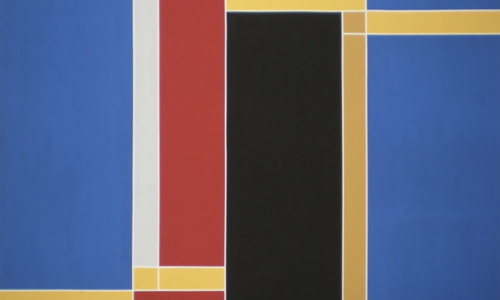
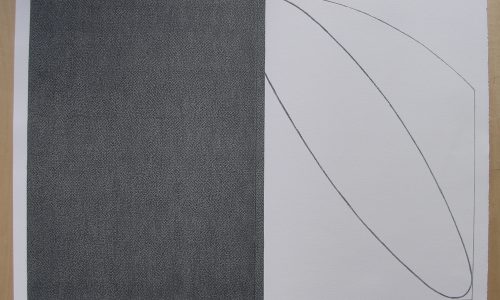
Minimalism pioneered the crucial concept that art should subsist within its own reality, without attempting to imitate the tangible world. Originating from a yearning to uproot conventional beliefs about art, Minimalism evolved into a radical and highly influential movement, with renowned figures like Frank Stella, Donald Judd, and Dan Flavin at its forefront. Artists such as Morris Louis, Kenneth Noland, and Helen Frankenthaler delved deeper into the fundamental ideologies of Abstract Expressionism, stripping away the emotional and highly personal aspect that typically accompanied it. This gave rise to Colour Field painting, which aligned closely with Minimalism. The influential impact of Minimalism was also evident in the works of artists like Victor Vasarely and Bridget Riley, while Pop art emerged as a by-product of the movement, simultaneously critiquing and glorifying popular culture. Resonating through the 1960s wave of radicalism, the iconic contemporary art movements had their own distinct characteristics and varying influences, often specific to different regions or countries. Spatialism, for instance, took root in Italy through the works of Lucio Fontana and Piero Manzoni, with the Zero group in Germany embracing its ideologies. Across Europe, Existentialism left a profound mark on artists like Francis Bacon and Alberto Giacometti, who strove to portray the raw human emotions and existential reflections on death and the looming dread of the insignificance of life.

www.ftn-books.com has several Wörfel publications available.

Posted on Leave a comment

Arja van den Berg (continued)

It has been a while since i last wrote on Arja van den Berg. But last bookmarket i acquired a laree and possibly the most important title on Arja her art. Leafing through the book ,it struck me that she has stayed true to her very own style, making recognizable art in a way only Arja can. Arja always seeking for a new approach to her art. Using unknown materials and finding her subjects near her. The book is now for sale at www.ftn-books.com

Posted on Leave a comment

James Brown (continued)

The reason for this econd blog on James Brown is the recently acquired JAMES BROWN HANDBOOK, which is now for sale at www.ftn-books.com

The late James Brown (September 11, 1951 – February 22, 2020) was an esteemed painter hailing from the United States, who made a name for himself in both Paris and Oaxaca, Mexico. He rose to prominence in the 1980s with his raw, painterly semi-figurative works, reminiscent of the styles of Jean-Michel Basquiat and the East Village movement of that era, yet infused with elements of primitive art and classical Western modernism.

Posted on Leave a comment

Agnieszka Brzeżańska (1972)

Born in Gdańsk in 1972, she pursued her studies at the Academy of Fine Arts in both Gdańsk and Warsaw under the tutelage of acclaimed painter Stefan Gierowski, as well as at Tokyo National University of Fine Art and Music through the Japanese Government Scholarship. Her oeuvre encompasses painting, drawing, photography, film, ceramics, and other media. Brzeżańska delves into diverse realms of knowledge, ranging from physics and philosophy to marginalized systems of cognition ignored by modern science, such as alchemy, parapsychology, esotericism, indigenous knowledge, and matriarchal traditions. Since 2016, she has co-organized Flow/Przepływ, an artistic residency on the Vistula River, with Ewa Cieplewska. She collaborates with BWA Gallery in Warsaw and NANZUKA in Tokyo.

www.ftn-books.com has the 2013 Marlborough publication available.

Posted on Leave a comment

Henk Leppink (1956-2009)

There is hardly any information on Leppink to be found and that is a huge misunderstanding on the importance of this fascinatiing artist.

In honor of the renowned visual artist Henk Leppink, this book was curated by Bas Oudt, Erik Mattijssen, and myself, with accompanying texts by Marjan Unger, Erik Mattijssen, and myself. Designed by Bas Oudt, I also oversaw the text editing process.

This publication was independently commissioned and self-published, with gratitude to friends and family of Henk Leppink and the Mondriaan Fund. The book’s release coincided with the opening of a curated and designed exhibition of Henk Leppink’s work at the renowned Gallery Witteveen / Ron Lang Art.

The book is now available at www.ftn-books.com

Posted on Leave a comment

Loek Grootjans (1955)

In his body of work, Loek Grootjans reveals himself as both an artist and a collector, a scientist and an archivist. In various forms, he thematizes his personal experiences, thoughts, and worldview with a meticulousness that borders on obsession. One of the artist’s underlying ideas is that thinking in terms of top-notch and masterful works is no longer relevant. He previously abandoned painting, his first love, due to its association with mastery.

www.ftn-books.com has the de Beyerd / A LOT book now available.

Posted on Leave a comment

Lode Laperre (1966)

In the late 80s, after Lode Laperre completed his studies in fine arts in Brussels and solidified his conviction to become a visual artist, his profound interest in contemporary painting led to the development of a unique pictorial language, which initially emerged solely through the use of acrylic paint on canvas.

During the period of 1990-1995, Lode Laperre’s early work was repeatedly recognized, with accolades such as the National Prize for Painting Kulturama as laureate (1990) and his first remarkable solo exhibition (Tournai, 1992). The artistic challenges that awaited him in the studio and his increasing artistic activity resulted in various exhibitions, both individually and in groups.

In December 1998-January 1999, when Lode Laperre made his first trip to Southeast Asia, his extraordinary interest in other civilizations and visual cultures flourished. To this day, he frequently returns there, maintaining regular contacts with private and official institutions in the cultural-artistic field of the region, and advancing his artistic mission to create a distinct, oriental-occidental-fused pictorial language laden with personal significance. This intense and authentic artistic engagement culminates in exhibitions in Asia, including China, Taiwan, and Thailand.

Gradually, he also delves into creating ink wash drawings on paper, which align with the same artistic pursuit. Laperre’s artistic scope expands further to encompass sculptural works through the series Coprolites, in which excretions from his painting sessions are reincarnated into paint sculptures – sometimes presented as installations – which he refers to as the “fossilized remains” of his paintings.

www.ftn-books.com has the galerie Link publication in a numbered and signed edition of 100 cps now available.

Posted on Leave a comment

José Heerkens (1950)

The artworks of José Heerkens revolve around the essence of color. With precision, she arranges perfectly coordinated hues along lines and in grids on her canvases. Often, Heerkens leaves a portion of the linen blank, allowing the painting to remain “open enough to enter,” as she puts it. One can almost step into the painting by “walking” with their eyes over the canvas, following the shifting color blocks, the rhythm of lines, the denseness of the paint layer, and the interruptions in the brushstrokes.

www.ftn-books.com has the 2006 HORIZON book now available.